

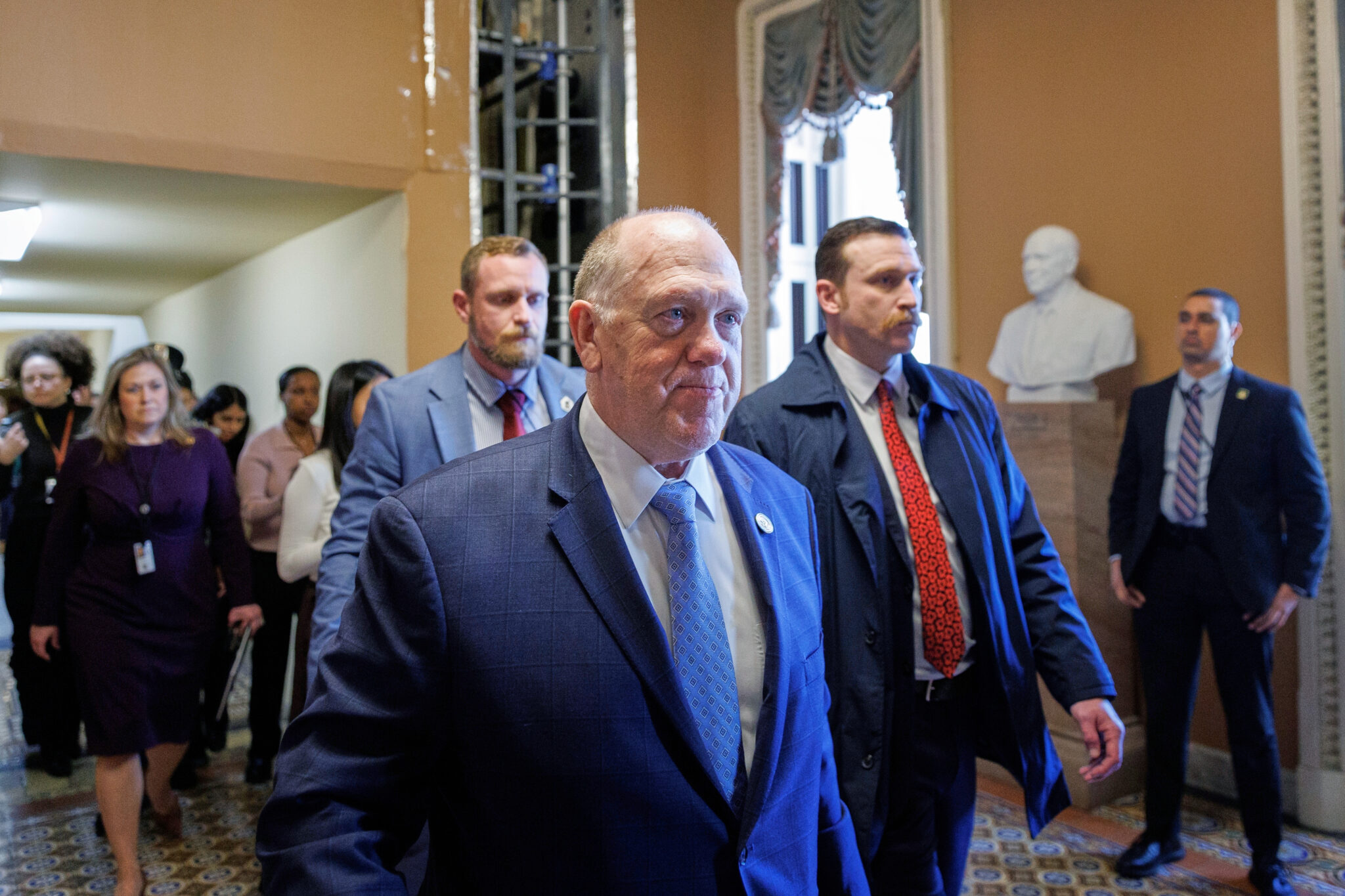
White House and Senators Meet As DHS Shutdown Drags/ Newslooks/ WASHINGTON/ J. Mansour/ Morning Edition/ White House officials and senators met privately as the Homeland Security shutdown stretched past one month. Lawmakers described the meeting as a modest step forward, though major disagreements remain. Airport delays, unpaid workers, and stalled immigration funding continue to raise pressure on both sides.
DHS shutdown talks Quick Looks
- A bipartisan group of senators met with White House border czar Tom Homan.
- The Homeland Security shutdown began on February 14.
- Lawmakers said the talks were a small but important sign of movement.
- Democrats and Republicans remain far apart on immigration enforcement demands.
- More than 120,000 DHS workers are still working without pay.
- TSA staffing issues are contributing to airport screening delays.
- Congress may have to scrap its planned April recess if no deal is reached.
- Republicans rejected a Democratic attempt to fund DHS agencies piecemeal.
Deep Look: White House and Senators Meet As DHS Shutdown Drags
A closed-door meeting between White House officials and a bipartisan group of senators offered a modest sign of progress in the long-running shutdown of the Department of Homeland Security, though lawmakers made clear that a final deal remains distant.
The shutdown, which began on February 14, has dragged on for more than a month and continues to disrupt operations across one of the federal government’s most important departments. At the center of the dispute is immigration enforcement funding, particularly for Immigration and Customs Enforcement and Customs and Border Protection. Democrats have refused to back full funding for those agencies without operational changes following the deaths of Alex Pretti and Renee Good in Minneapolis, while Republicans have insisted the department must be funded in full.
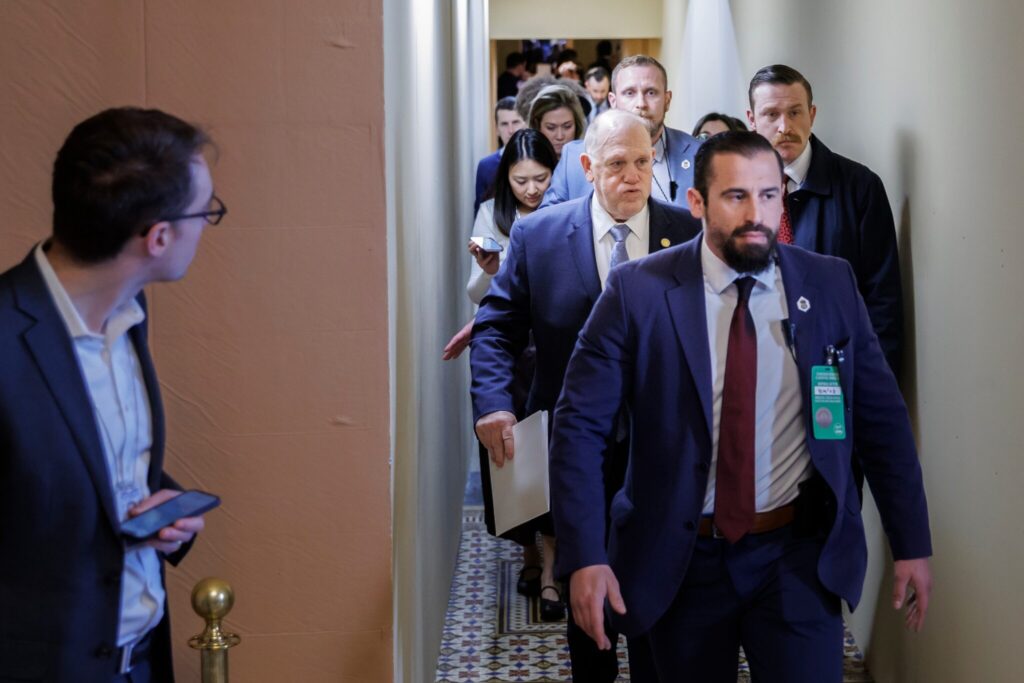
The latest meeting mattered largely because it brought the White House more directly into the negotiations. Border czar Tom Homan joined senators from both parties, including senior appropriators, in a private session that several lawmakers described as useful even if it did not produce a breakthrough. Senate Majority Leader John Thune called the discussion an important step, and some senators suggested the next phase would be a White House counteroffer followed by more talks.
Still, both sides acknowledged that the gaps are substantial. Democrats continue to press for a broad package of policy changes governing immigration enforcement. Their demands include requiring judicial warrants before ICE agents can force entry into homes, mandating clear identification on uniforms, restricting the use of masks, requiring body cameras, allowing independent misconduct investigations, and limiting operations in sensitive places such as schools, churches, and polling sites.
Republicans say those demands have expanded and are making a deal harder to reach. From their perspective, piecemeal funding or restrictions that significantly curb immigration enforcement are not acceptable. That disagreement has kept the standoff in place despite growing operational and political pressure.
One of the most visible effects of the shutdown is now showing up at airports. Transportation officials have warned that longer TSA security lines may worsen as unpaid workers call out sick. With the department partially hobbled, the strain is beginning to affect ordinary travelers in ways that are hard for lawmakers to ignore. That public pressure could become more intense if the shutdown continues into the next pay cycle.
The financial toll on federal workers is also mounting. More than 120,000 Homeland Security employees are still on the job without pay because they are considered essential. That means they must continue working through the shutdown even as household budgets are strained. The situation is especially sensitive because it follows another lengthy shutdown last fall, when some federal workers reportedly needed food assistance to get by.
Democrats attempted again Thursday to pass a narrower funding bill that would reopen most DHS agencies while excluding ICE and CBP, but Republicans blocked the effort. Democrats argue that core operations such as TSA, FEMA, and the Coast Guard should not be held hostage while the two sides remain deadlocked on immigration enforcement. Republicans counter that partial funding only prolongs the dispute and weakens pressure to negotiate a full resolution.
That leaves the shutdown stuck between two incompatible strategies: Democrats want to isolate the most controversial agencies, while Republicans want a comprehensive agreement that restores the entire department. Until one side changes position or a compromise emerges, the impasse is likely to continue.
There is also a calendar problem. Congress is scheduled to leave Washington for the first two weeks of April, but Thune has warned that a recess is hard to justify if Homeland Security remains shut down. That creates a practical deadline and may increase urgency in the coming days.
For now, the talks represent movement, but only a little. The White House is at the table, lawmakers are speaking again, and both parties are signaling at least some willingness to keep negotiating. But with policy differences still sharp and the consequences of the shutdown worsening, the path to reopening Homeland Security remains uncertain.






You must Register or Login to post a comment.