White House: U.S. Would Be ‘Lucky’ If Trump Serves Third Term/ Newslooks/ WASHINGTON/ J. Mansour/ Morning Edition/ The White House suggested America would be “lucky” if Donald Trump remained in office beyond the constitutional limit of two terms. Legal scholar Alan Dershowitz sparked new speculation with a book draft exploring the legality of a third presidential term. Despite the 22nd Amendment, Trump continues to flirt with the idea, fueling both criticism and intrigue.
Trump Third Term Debate Quick Looks
- White House claims America would benefit from a longer Trump presidency.
- Legal scholar Alan Dershowitz explores third term legality in new book.
- Trump continues to tease a 2028 run despite constitutional limits.
- Chief of Staff Susie Wiles downplays serious intent, says Trump is “having fun.”
- Speaker Mike Johnson and others doubt path for another Trump term.
- Trump Store promotes “Trump 2028” hats, fueling speculation.
- Dershowitz proposes Congress could decide if Electoral College abstains.
- White House avoided clarifying if Trump seriously plans to run again.
White House: U.S. Would Be ‘Lucky’ If Trump Serves Third Term
Deep Look
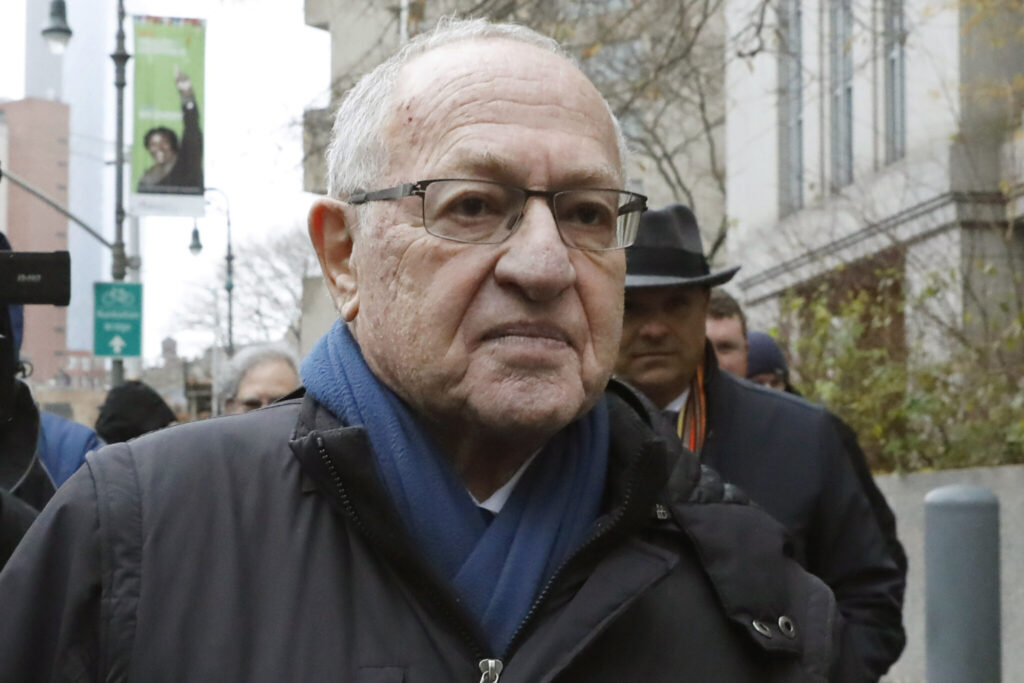
The White House has reignited controversy over presidential term limits by stating that the United States would be “lucky” if Donald Trump remained in office beyond the two-term limit. This statement came shortly after renowned constitutional lawyer Alan Dershowitz revealed that he had shared a draft of his upcoming book with Trump, exploring whether a third term might be legally possible under the U.S. Constitution.
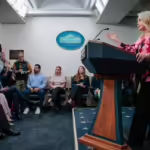
White House spokesperson Abigail Jackson, responding to growing speculation, praised Trump’s leadership and accomplishments, stating:
“There has never been an administration that has accomplished as much in less than one year than the Trump Administration. The American people would be lucky to have President Trump in office for even longer.”
The comments followed Dershowitz’s interview with the Wall Street Journal, in which he said that while he didn’t believe Trump would actually run again, the legal boundaries are less defined than many assume.
“It’s not clear if a president can become a third-term president and it’s not clear if it’s permissible,” Dershowitz said, adding that Trump found the constitutional ambiguity “interesting as an intellectual issue.”
Though the 22nd Amendment clearly bars presidents from being elected to more than two terms, Trump and his allies have repeatedly stirred public interest by hinting at a 2028 campaign. Trump himself has said, on multiple occasions, that he’s “not joking” about wanting a third term and would “love” to run again. His official merchandise line has even introduced “Trump 2028” hats, encouraging supporters to “make a statement.”
Despite the suggestive rhetoric, Trump’s inner circle appears to treat the idea more as political theater than a concrete plan. In a recent Vanity Fair interview, Trump’s Chief of Staff Susie Wiles dismissed concerns about violating the 22nd Amendment. She said that while Trump enjoys how much his third-term talk unsettles opponents, there are no serious discussions about pursuing an illegal re-election.
“He’s having fun,” Wiles said. “He knows his comments are driving people crazy.”
Still, the theory has gained enough traction to warrant formal discussion. Dershowitz, who previously defended Trump during his first impeachment trial, plans to publish his book “Could President Trump Constitutionally Serve a Third Term?” in 2026. The book analyzes the Constitution’s wording and proposes scenarios that could, at least in theory, allow Trump—or any former president—to return under exceptional circumstances.
One such scenario described by Dershowitz involves a contested election in which Electoral College members abstain from voting, leaving the final decision to Congress. If Trump were to win the popular vote and electoral victory were blocked through abstentions, Congress could theoretically determine the outcome—raising questions about how the 22nd Amendment would apply in that situation.
House Speaker Mike Johnson (R-La.) responded to Trump’s earlier remarks by stating in October that he doesn’t “see the path” for a 2028 run. Trump, in turn, acknowledged that “it’s pretty clear” a third-term campaign wouldn’t be constitutionally viable. But he has not fully closed the door on the idea, choosing instead to continue making statements that fuel both speculation and outrage.
While the White House declined to respond to specific questions from Axios about a potential third-term campaign, its supportive tone has already reignited constitutional debates and political tensions. Critics argue that even joking about circumventing the Constitution undermines the rule of law, while supporters see it as a show of confidence in Trump’s leadership.
The 22nd Amendment, ratified in 1951, clearly limits any U.S. president to two elected terms. However, the language leaves some ambiguity around scenarios not involving direct elections, such as congressional appointments in case of extreme constitutional crises—issues Dershowitz says are underexplored and ripe for debate.
For now, the talk of a Trump third term remains largely speculative. Yet, the political impact is undeniable. As the next presidential cycle approaches, Trump continues to dominate headlines—not just for what he’s done, but for what he might still attempt.