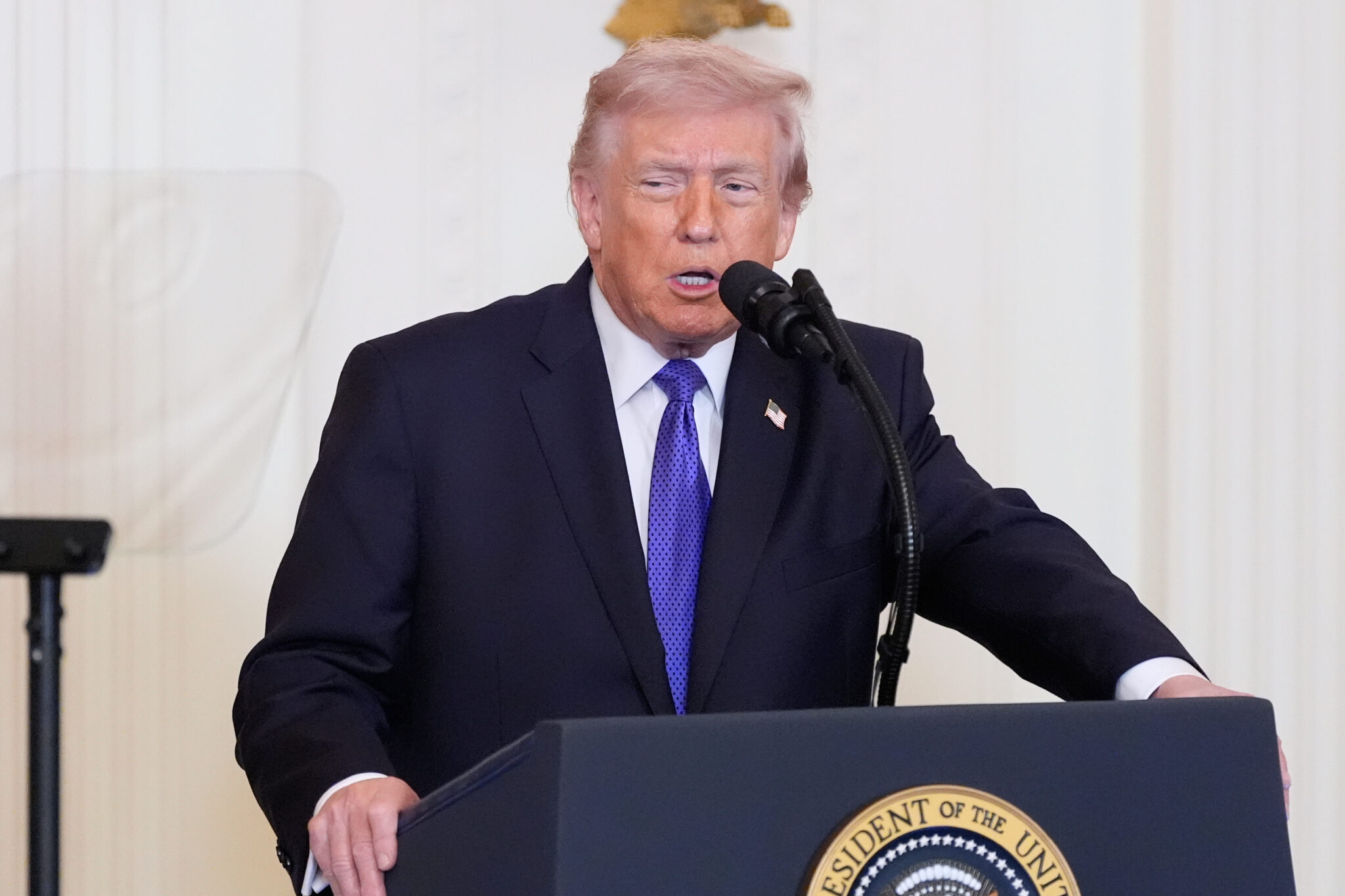
Trump Pushes Back on Mounting Criticism About His Iran War Battle Plan/ Newslooks/ WASHINGTON/ J. Mansour/ Morning Edition/ President Donald Trump forcefully defended his Iran war strategy as criticism intensifies from Democrats and parts of his MAGA base. He declined to rule out ground troops and offered few specifics about an endgame as casualties mount. The White House says the operation is ahead of schedule, despite growing concerns over escalation and political fallout.
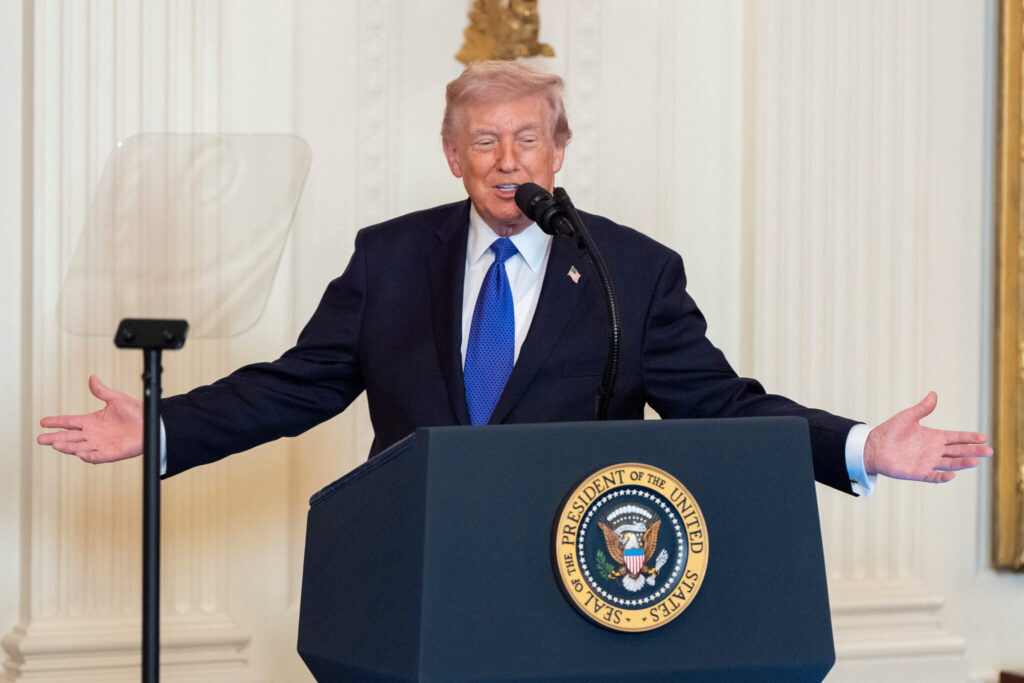
Trump Doubles Down on Iran War Strategy Quick Looks
- Trump dismisses claims of unclear war plan
- Does not rule out U.S. boots on ground
- MAGA allies question foreign intervention shift
- Six U.S. service members killed so far
- Operation projected to last weeks
- No detailed succession plan for Iran outlined
- Intelligence briefings cite broader regional threat
- Experts warn regime collapse may not end nuclear risk
Deep Look
Trump Doubles Down on Iran War Strategy as Conflict Spreads
WASHINGTON — President Donald Trump is rejecting mounting criticism over his handling of the war with Iran, defending both the timing and scope of U.S. military action as the conflict widens across the Middle East.
With energy prices rising, American casualties increasing, and questions growing about the administration’s long-term objectives, Trump and his top aides are portraying the campaign as both necessary and strategically sound.
The president insisted Monday that operations are progressing “substantially ahead of schedule” and could meet objectives within four to five weeks — though he acknowledged the timeline could stretch longer.
“We have capability to go far longer than that,” Trump said.
Refusing to Rule Out Ground Troops
One of the most notable developments came when Trump declined to categorically rule out deploying U.S. ground forces — a move that would mark a significant escalation.
“I don’t say there will be no boots on the ground,” Trump said. “I say probably don’t need them. If they were necessary.”
Defense Secretary Pete Hegseth reinforced that the administration would not telegraph specific operational decisions, calling it “foolish” to publicly outline what the U.S. might or might not do.
The ambiguity has fueled speculation that the campaign could expand beyond air and naval operations.
MAGA Allies Voice Concerns
While Democrats have sharply criticized the administration’s rationale and lack of a clearly defined endgame, dissent has also surfaced within Trump’s own political movement.
Trump returned to office promising to avoid “forever wars” and frequently criticized past administrations for nation-building and regime-change efforts abroad. The current operation — launched after the killing of Iran’s Supreme Leader and dozens of senior officials — has prompted some longtime allies to question whether the president is veering from that “America First” doctrine.
Prominent conservative voices have warned that the conflict risks becoming prolonged and destabilizing. However, other Republican lawmakers have rallied behind Trump, citing Iran’s history of supporting proxy forces and targeting U.S. interests.
Trump dismissed suggestions of a broader rift within his base.
“MAGA loves what I’m doing,” he said in an interview. He described Iran as “a detour we have to take” to ensure long-term security.
Casualties and Escalation
As of Monday, six U.S. service members had been killed in action, with others injured during Iranian retaliatory strikes. Joint Chiefs Chairman Dan Caine acknowledged that additional losses are possible as operations continue.
The conflict has opened multiple fronts, including exchanges between Israel and Hezbollah in Lebanon, further increasing regional instability.
Regime Change or Regime Collapse?
Despite calls for change within Iran, the administration has not detailed who it expects to take power following the death of the country’s top leadership.
Trump initially urged Iran’s Revolutionary Guard Corps to lay down its arms but has not committed to supporting opposition movements directly.
Analysts say achieving outright regime change through airpower alone is unlikely. Some experts suggest the administration may be aiming for a “regime collapse” scenario — weakening Iran’s leadership enough to create internal upheaval without direct U.S. occupation.
Critics argue that even such an outcome would not automatically eliminate Iran’s nuclear capabilities.
“Iran’s nuclear knowledge cannot be bombed away,” said one nonproliferation expert, cautioning that leadership changes do not erase technical expertise.
Questions About the Rationale
In private briefings, administration officials reportedly acknowledged there was no intelligence indicating an imminent Iranian preemptive strike against the United States. Instead, they cited broader concerns about missile development and proxy threats.
Trump has repeatedly argued that Iran was rebuilding elements of its nuclear program and expanding ballistic missile capabilities. U.S. intelligence assessments have indicated Iran could potentially develop an intercontinental ballistic missile within the next decade if it chose to pursue one.
The president has framed the current campaign as part of a decades-long effort to confront Iranian aggression.
Political and Strategic Crossroads
The long-term consequences of the conflict remain uncertain. A swift, contained campaign could bolster Trump’s image as a decisive leader. A prolonged war with rising casualties and economic fallout could reshape domestic political dynamics heading into the midterm elections.
For now, Trump is projecting confidence and resolve — even as critics press for clearer answers about the endgame.
As the war spreads and the stakes rise, the administration’s strategy is entering its most consequential phase.