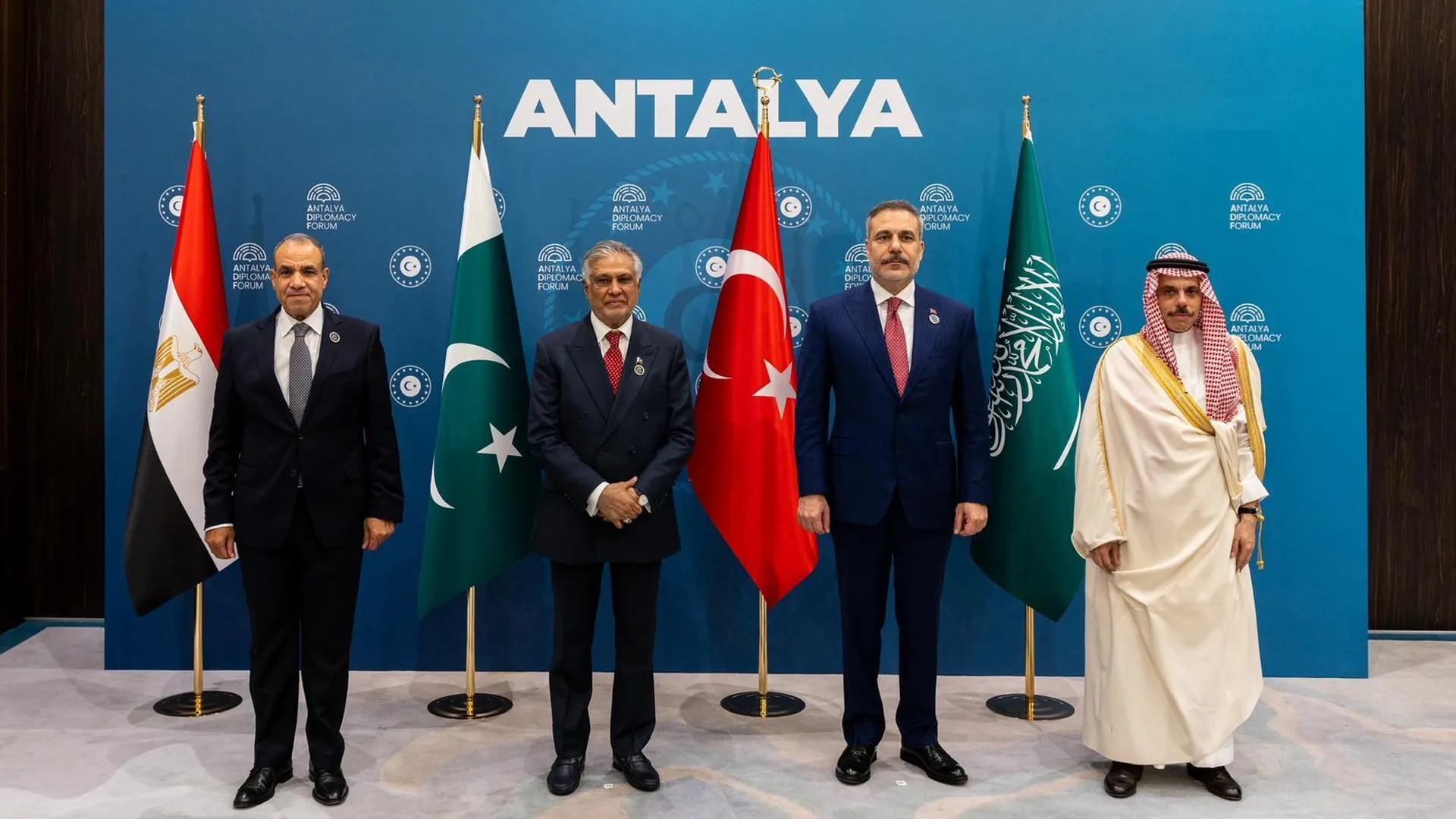
Iran Mediators Meet in Turkey to Discuss Peace Push/ Newslooks/ WASHINGTON/ J. Mansour/ Morning Edition/ Foreign ministers from Pakistan, Turkey, Egypt, and Saudi Arabia met in Turkey to coordinate efforts aimed at ending the war between the U.S. and Iran. The meeting marked the third high-level “quad” discussion since the conflict began, with Pakistan leading mediation efforts and Saudi Arabia playing a key strategic role. President Donald Trump said negotiations with Iran would continue over the weekend, signaling progress despite unresolved differences.
Iran Peace Talks Turkey Quick Looks
- Pakistan, Turkey, Egypt, and Saudi Arabia held a “quad” meeting in Turkey
- The talks focused on ending the war between the U.S. and Iran
- Pakistan remains the main mediator in peace negotiations
- Saudi Arabia is seen as a critical stakeholder in any final deal
- U.S. officials say Saudi positions on the war have shifted multiple times
- Saudi oil and energy infrastructure has suffered damage during the conflict
- Trump said talks with Iran will continue over the weekend
- Sources say progress has been made despite remaining disagreements
Deep Look
Regional Mediators Gather in Turkey
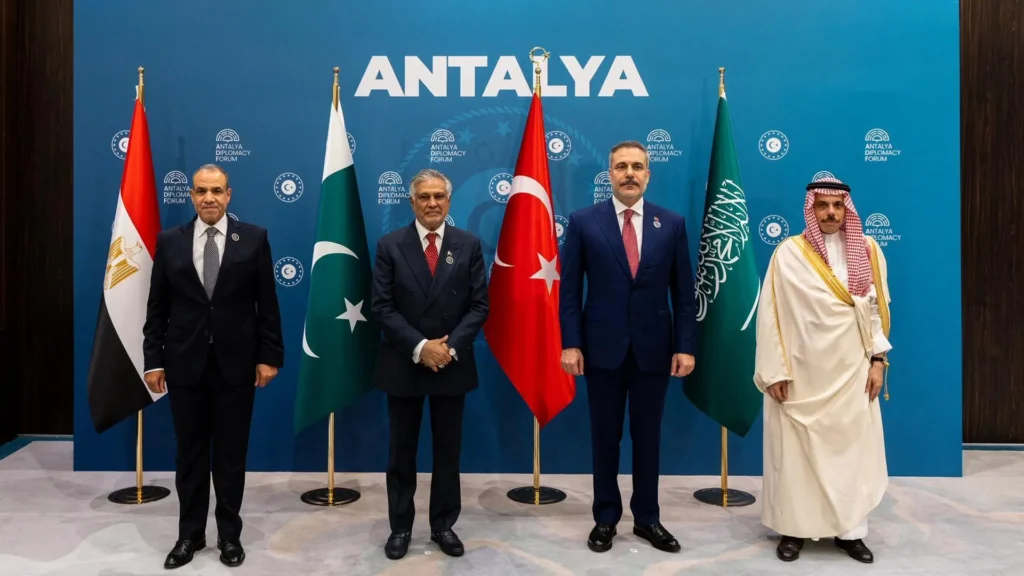
Foreign ministers from Pakistan, Turkey, Egypt, and Saudi Arabia met Friday on the sidelines of the Antalya Diplomacy Forum in Turkey to discuss efforts to secure a peace agreement that could end the war between the United States and Iran.
The meeting marked the third high-level “quad” gathering since the war began, reflecting how regional powers are working behind the scenes to prevent further escalation and push both Washington and Tehran toward a negotiated settlement.
Pakistan has emerged as the lead mediator in the crisis and hosted direct peace talks last weekend between U.S. and Iranian officials. Turkey and Egypt have also played important diplomatic roles, helping keep communication channels open and supporting broader negotiations.
The inclusion of Saudi Arabia is especially significant given its influence across the Gulf region and its close strategic ties with Washington.
Why Saudi Arabia Matters
Sources familiar with the negotiations say the purpose of these “quad” meetings is to maintain coordination among the three mediators while keeping Saudi Arabia closely involved in shaping any future agreement.
Saudi Arabia remains the most powerful country in the Gulf and a major player in both regional security and global energy markets.
Its influence over the Trump administration also makes it an essential part of any long-term peace arrangement.
One source with knowledge of the discussions said bringing Saudi Arabia “inside the tent” reduces the risk that Riyadh could later disrupt or oppose a final agreement.
In diplomacy involving Iran, Saudi participation is often viewed as critical because any peace deal that excludes Riyadh could face major resistance across the region.
The kingdom’s security concerns, energy interests, and regional competition with Iran make it one of the most important stakeholders in the outcome.
Saudi Position Has Shifted Repeatedly
Despite public support for diplomacy, U.S. officials say Saudi Arabia’s position on the war has changed multiple times.
Before the conflict began, Saudi officials publicly supported diplomatic efforts while privately urging the United States to take military action against Iran.
Even in recent days, according to U.S. officials, Saudi representatives expressed concern that ending the war too early could leave Iran’s leadership too strong and insufficiently weakened.
At the same time, Saudi officials have also told mediators that they support a peace agreement and want the conflict to end.
One major reason is the damage already done to Saudi oil and energy infrastructure during the war.
According to a U.S. source and another source with direct knowledge of the discussions, Saudi leaders fear that continued fighting could lead to even greater attacks on their energy facilities, creating both economic and political risks.
This dual strategy—public diplomacy combined with private security concerns—has made Saudi Arabia’s role both influential and complicated.
Pakistan Leads the Mediation Push
Its leadership helped organize the first direct peace talks between the two sides last weekend, which marked a rare face-to-face diplomatic breakthrough after weeks of military escalation.
Pakistani officials have continued working closely with Turkey and Egypt to build momentum for a broader framework agreement.
The goal is not only to stop active fighting but also to secure longer-term commitments involving sanctions relief, maritime security, and ceasefire guarantees across the region.
Turkey’s role as host of the Antalya Diplomacy Forum gave negotiators another opportunity to continue private diplomacy away from direct public pressure.
Egypt’s involvement adds additional Arab diplomatic weight, particularly given Cairo’s long-standing role in regional peace efforts.
Together, the four countries are attempting to create enough regional consensus to support a durable agreement.
Trump Signals Weekend Progress
President Donald Trump told reporters Friday afternoon that negotiations with Iran would continue through the weekend and suggested that the remaining differences may not be difficult to resolve.
“If there are [differences], I’m going to straighten it out… I don’t think there’s too many significant differences,” Trump said.
His comments signaled confidence that diplomacy is moving in the right direction, even as several key disputes remain unresolved.
Sources familiar with the talks told Axios that gaps still exist on major issues, including Iran’s enriched uranium stockpile, sanctions relief, and the future security arrangements involving the Strait of Hormuz.
Still, officials say meaningful progress has been made and both sides appear interested in avoiding a return to full-scale military conflict.
The coming days are expected to be critical as mediators work to turn tentative progress into a formal peace framework.
A High-Stakes Regional Balancing Act
The broader challenge remains balancing U.S. pressure on Iran with the security concerns of Gulf allies and the economic risks tied to oil supply disruptions.
Any agreement will likely require compromises not only between Washington and Tehran, but also among regional powers whose interests do not always align.
Saudi Arabia wants security guarantees.
Pakistan wants regional stability.
Turkey and Egypt want to avoid a wider war.
And the United States wants both a diplomatic victory and stronger restrictions on Iran’s nuclear ambitions.
That makes the Antalya meetings more than symbolic—they represent a coordinated effort to prevent the region from sliding back into open conflict.
With talks continuing through the weekend and ceasefire arrangements still fragile, the role of these mediators may determine whether the next phase is diplomacy or renewed war.