Trump’s Unconventional Strategy Shapes Iran War Messaging/ Newslooks/ WASHINGTON/ J. Mansour/ Morning Edition/ President Donald Trump has taken an unconventional approach to communicating about the Iran war, relying on prerecorded videos and phone interviews instead of a formal Oval Office address. Critics say the strategy lacks clarity and transparency as casualties mount. The White House argues Trump remains highly accessible and directly engaged with the public.
Trump’s Unconventional Strategy Shapes Iran War Messaging Quick Looks
- No immediate Oval Office address after strikes
- Two prerecorded videos released on Truth Social
- Trump gave multiple phone interviews to reporters
- Critics say messaging lacked clarity on objectives
- Netanyahu held rapid public briefings in contrast
- Pentagon briefing favored conservative outlets
- Reporters assigned seats at Defense briefing
- White House defends Trump’s accessibility
Deep Look
Trump Takes Unconventional Approach to Communicating Iran War Strategy
WASHINGTON — In keeping with his nontraditional governing style, President Donald Trump has opted for an unconventional communications strategy in explaining the U.S. war with Iran, drawing criticism from opponents and some media observers who say the administration has not clearly outlined its objectives.
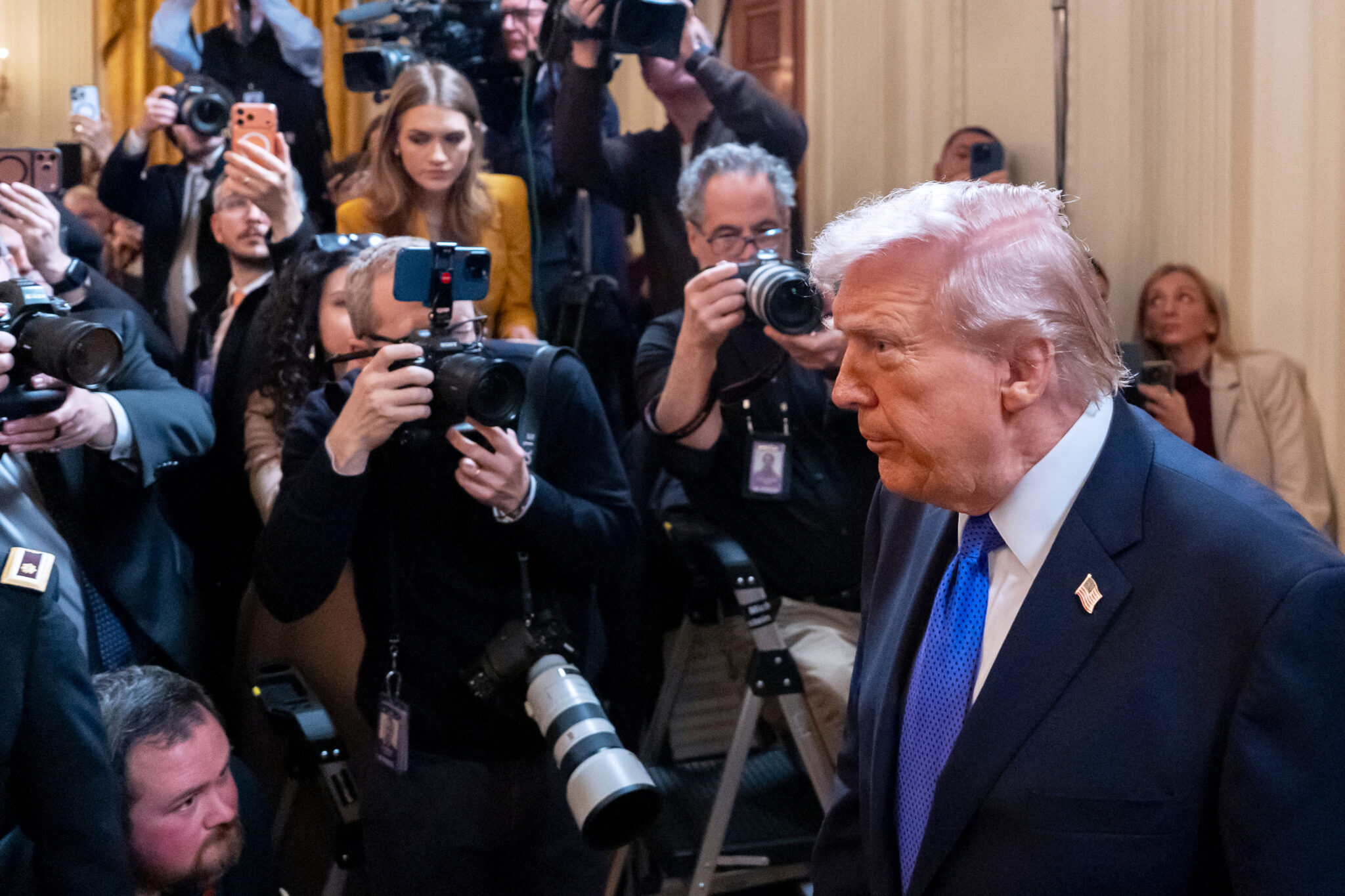
More than 48 hours passed after the initial strikes before any live, on-camera public remarks were delivered by senior officials. Instead of addressing the nation from the Oval Office, Trump released two prerecorded videos on Truth Social, the social media platform owned by his media company, and conducted a series of short phone interviews with reporters.
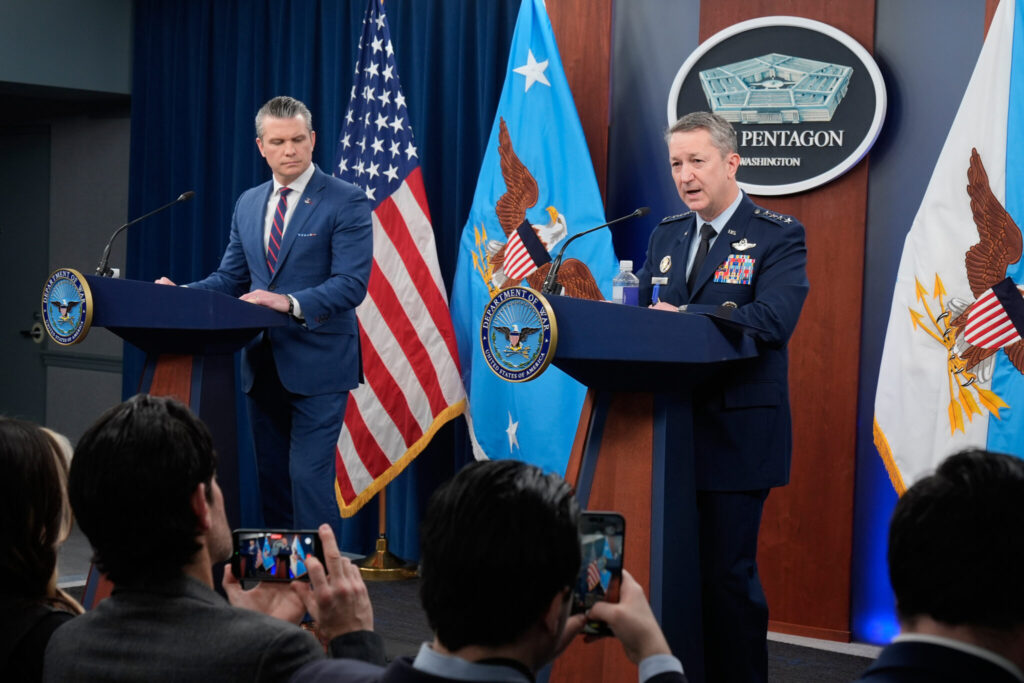
On Monday, Trump briefly referenced the war before a White House ceremony honoring military heroes but did not take questions. Earlier that day, Defense Secretary Pete Hegseth and Joint Chiefs Chairman Gen. Dan Caine held a Pentagon briefing.
Phone Interviews Instead of Prime-Time Address
Rather than following the traditional model of a nationally televised address, Trump spoke directly to more than a dozen journalists by phone. News organizations including ABC, CBS, NBC, CNN, Fox News Channel, CNBC, The Washington Post, The Atlantic, Politico, Axios and The New York Times reported on their individual conversations with the president.
The interviews were largely brief and offered varying levels of detail. Because the conversations were not broadcast live, the public relied on reporters’ summaries to understand Trump’s remarks.
In one interview, Trump reportedly suggested further military escalation was coming, telling CNN that “the big one is coming soon.” In another exchange, he spoke about the killing of Iranian leader Ayatollah Ali Khamenei, using combative language that drew attention online.
Some accounts described Trump offering differing perspectives on Iran’s political future, raising questions about whether the U.S. is pursuing regime change or merely military degradation of Iran’s capabilities.
Critics Say Clarity Was Lacking
The strategy sparked criticism from Democrats and media analysts who argued that a war demands more formal public explanation.
Rahm Emanuel, former White House chief of staff under President Barack Obama, said on CNN that Americans need visible presidential leadership in moments of conflict.
New York Times White House correspondent Peter Baker wrote on social media that Trump did not return to Washington immediately after launching the operation, contrasting his approach with past presidents who delivered national addresses during major military actions.
The White House pushed back forcefully. Communications Director Steven Cheung said Trump spent the majority of his time in secure facilities monitoring developments and speaking with world leaders. He added that Trump’s videos reached hundreds of millions of viewers online.
White House spokeswoman Anna Kelly described Trump as “the most transparent and accessible president in American history,” arguing that direct phone access to reporters reflects a new model of presidential communication.
Contrast With Israeli Leadership
The communications approach also drew comparisons to Israeli Prime Minister Benjamin Netanyahu, who delivered multiple public statements the day the conflict began and addressed reporters at the site of a missile attack in Israel. The Israeli military has held several briefings daily since the fighting escalated.
By contrast, the Trump administration concentrated much of its detailed public explanation within the Pentagon briefing led by Hegseth and Caine.
Pentagon Briefing Sparks Media Tension
At the Defense Department, tensions between the administration and mainstream media outlets were evident. While reporters from major news organizations were present, Hegseth largely called on NewsNation and conservative-leaning outlets including the Daily Caller, Daily Wire, One America News and the Christian Broadcasting Network.
Several traditional Pentagon press outlets had previously left their assigned spaces following disputes over new media access rules implemented last fall.
Hegseth declined to provide operational specifics, saying it would be “foolish” to telegraph military strategy in advance. When pressed about Trump’s suggested four-week timeline, he said the president has “all the latitude in the world” to discuss potential durations.
Assigned seating arrangements also reflected changes in briefing protocols, with some long-standing Pentagon correspondents positioned farther from the podium.
A Different Model of War Messaging
Historically, presidents have used prime-time addresses to rally public support during wartime. Trump’s reliance on social media videos and spontaneous phone interviews represents a continuation of his long-standing preference for direct, decentralized communication.
Supporters argue the approach reflects media realities of the digital age, where messages spread instantly across platforms. Critics counter that fragmented interviews and limited formal addresses may create confusion at a moment when clarity is crucial.
As the Iran conflict continues and U.S. casualties rise, the effectiveness of this unconventional communications strategy may shape public opinion as much as developments on the battlefield.