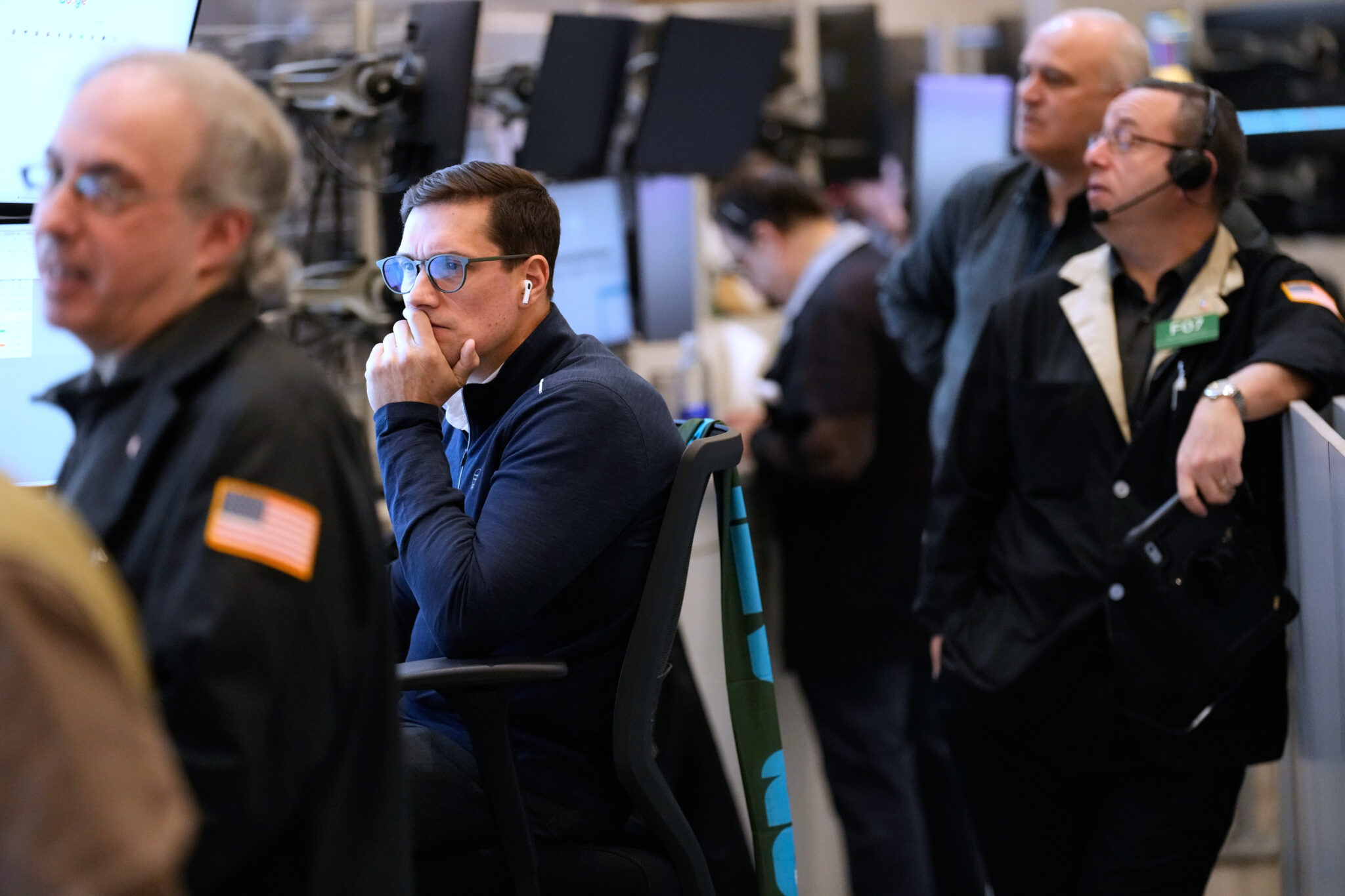
Dow Drops 1,200, Stocks Sell off Around the World, Oil Prices Leap on War Worries/ Newslooks/ WASHINGTON/ J. Mansour/ Morning Edition/ Global stock markets plunged as oil prices surged sharply amid fears the widening Iran war could disrupt global energy supplies. The Dow Jones Industrial Average dropped more than 1,200 points in early trading. Rising fuel costs are stoking inflation worries and complicating Federal Reserve rate-cut expectations.

Dow Plunges 1,200 as Oil Prices Surge Quick Looks
- Dow falls over 1,200 points
- S&P 500 drops 2.4%
- Nasdaq sinks 2.7%
- Brent crude jumps near $84 per barrel
- U.S. crude climbs toward $78
- Gas prices rise 11 cents overnight
- Global markets tumble from Asia to Europe
- Treasury yields climb on inflation fears
Deep Look
Dow Drops 1,200 as Global Stocks Slide and Oil Prices Leap on War Worries
NEW YORK — A worldwide stock market sell-off intensified Tuesday as oil prices soared on fears that the expanding war with Iran could cause prolonged economic damage.
On Wall Street, the S&P 500 fell 2.4% in morning trading, putting it on pace for its worst day since October. The Dow Jones Industrial Average plunged 1,232 points, or 2.5%, while the Nasdaq composite dropped 2.7%.
The sharp losses came after a brief rebound Monday, when markets managed to recover from early declines. That recovery hinged on oil prices staying contained. By Tuesday, that optimism evaporated.
Oil Prices Surge Again
Energy markets drove the downturn.
Brent crude, the global benchmark, surged 7.8% to $83.84 per barrel — up dramatically from around $70 less than a week ago. U.S. benchmark crude climbed 8.8% to $77.52.
The spike followed Iran’s strike on the U.S. Embassy in Saudi Arabia and escalating threats to the Strait of Hormuz, a vital shipping corridor through which roughly 20% of the world’s oil supply passes.
Iranian officials declared the strait closed, raising alarms about a potential choke point in global crude flows.
Higher oil prices directly impact consumers and businesses. The national average price for gasoline jumped 11 cents overnight to approximately $3.11 per gallon, according to AAA.
Inflation Concerns Resurface
Rising energy prices threaten to worsen inflation, which has remained stubbornly elevated. Higher gasoline costs ripple through the economy, increasing shipping expenses and raising prices for goods.
Treasury yields rose as investors recalibrated expectations for inflation and Federal Reserve policy. The yield on the 10-year Treasury climbed to 4.06%, after briefly exceeding 4.10% earlier in the session.
Elevated yields increase borrowing costs for mortgages, auto loans and corporate financing, while also putting pressure on stock valuations.
Traders are now pushing expectations for Federal Reserve rate cuts further into the summer, according to CME Group data. President Donald Trump has continued urging the Fed to lower rates, but sustained inflation could limit the central bank’s flexibility.
Global Markets Hit Hard
The sell-off extended far beyond the United States.
In South Korea, the Kospi index plunged 7.2% in its worst performance in nearly two years as markets reopened after a holiday. Japan’s Nikkei 225 fell 3.1%, despite analysts noting Japan holds substantial energy reserves.
In Europe, Germany’s DAX dropped 3.9%, reflecting surging natural gas prices and concerns about energy security.
On Wall Street, declines were broad-based, with 95% of S&P 500 stocks trading lower. Even major technology companies failed to cushion the blow. Nvidia slipped 2.2%.
Airlines and Travel Stocks Suffer
Airlines were among the hardest hit sectors, as higher fuel costs threaten profit margins and war-related travel disruptions continue.
United Airlines fell 5.4%, American Airlines dropped 5.8%, and Delta Air Lines declined 4.3%.
Cruise operators and travel-related companies also struggled amid fears that rising consumer costs could dampen discretionary spending.
Few Bright Spots
Energy producers benefited from the spike in crude prices. Oil companies posted gains as higher prices boost revenue prospects.
Retailer Target was among the few S&P 500 gainers, rising 3.4% after reporting stronger-than-expected quarterly profits and issuing an optimistic full-year forecast.
Meanwhile, Bitcoin slid toward $67,000, reflecting broader risk aversion across financial markets.
Gold, which had surged in previous sessions as a safe-haven asset, dropped 4.9% to $5,051 per ounce, retreating as higher Treasury yields made interest-bearing assets more attractive.
What Comes Next?
Historically, Middle East conflicts have triggered short-term market volatility but not always long-term damage. However, analysts say oil would likely need to climb above $100 per barrel to cause sustained economic disruption.
The key variable remains whether the Strait of Hormuz remains open and how long hostilities continue.
If energy flows are significantly impaired, inflation could reaccelerate, corporate earnings could weaken and consumer confidence could falter — setting the stage for a more prolonged downturn.
For now, markets are reacting swiftly to uncertainty, and investors are bracing for further volatility as geopolitical tensions reshape the global economic outlook.