Trump Pressures Latin America Leaders to Cut China Ties/ Newslooks/ WASHINGTON/ J. Mansour/ Morning Edition/ The Trump administration has intensified efforts to curb China’s growing influence in Latin America through sanctions, diplomatic pressure, and security warnings. Recent actions include travel bans on Chilean officials, concerns over a Chinese-built port in Peru, and interventions affecting Panama and Venezuela. Experts say the strategy could force Latin American nations to balance competing interests between the United States and China.
Trump Pressure on Latin America China Ties Quick Looks
- The U.S. imposed travel bans on three Chilean officials over a proposed submarine fiber-optic cable project with China.
- Washington warned Peru about allowing Chinese control over the Chancay mega port.
- Panama seized two ports near the Panama Canal previously run by a Hong Kong company.
- The Trump administration says these steps protect U.S. security and regional influence.
- China has invested heavily in Latin America through loans, infrastructure projects, and trade deals.
- Experts warn the pressure may divide the region politically between pro-U.S. and pro-China governments.
- Latin American nations may try to maintain economic ties with both global powers.
Deep Look: Trump Pressures Latin America Leaders to Cut China Ties
The United States has taken increasingly assertive steps to limit China’s expanding economic and strategic presence in Latin America, a move that reflects a broader geopolitical competition between Washington and Beijing.
In recent weeks, the Trump administration has targeted several initiatives linked to Chinese investment across the region. Officials in Washington argue that Beijing’s growing role in infrastructure, energy, and technology projects could undermine U.S. influence in the Western Hemisphere.
One of the most visible actions came when the United States imposed travel restrictions on three Chilean officials connected to a planned submarine fiber-optic cable project involving Chinese partners. U.S. officials fear such infrastructure could potentially give Beijing expanded access to communications networks across the Pacific.
At the same time, the administration has warned Peru about the strategic implications of a Chinese-built mega port in Chancay. The deep-water facility, one of the largest port projects in Latin America, has raised concerns in Washington that it could someday support Chinese naval activity or military logistics in the region.
Pressure has also been applied elsewhere. Earlier this year, Panama moved to seize control of two ports located at opposite ends of the Panama Canal. Those facilities had been managed by a Hong Kong-based company before the Panamanian government intervened amid strong pressure from Washington.
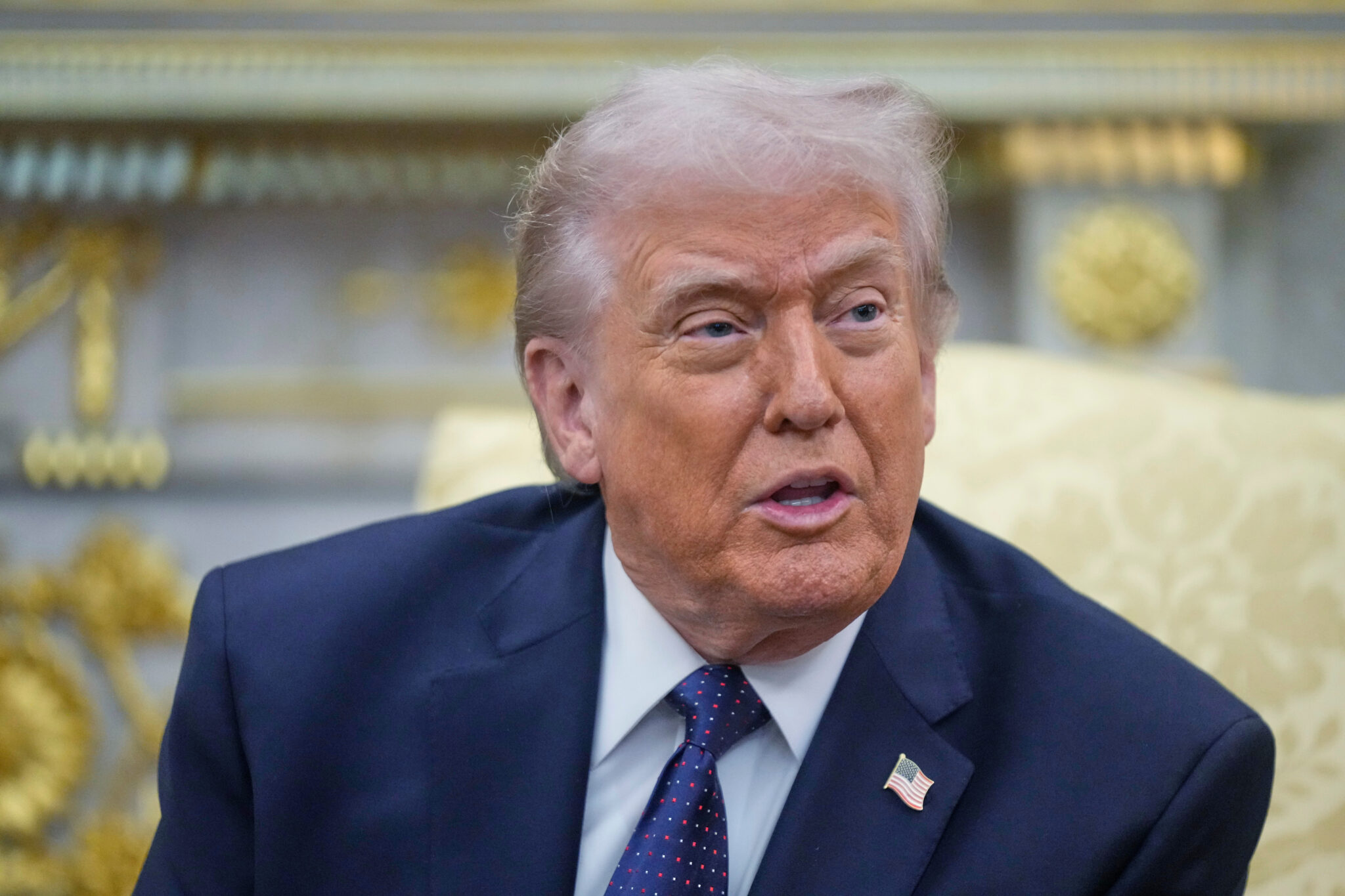
The shift comes as President Donald Trump pushes to reassert U.S. leadership throughout the Western Hemisphere. The White House has framed its actions as part of a broader strategy to prevent rival powers from gaining strategic footholds in the Americas.
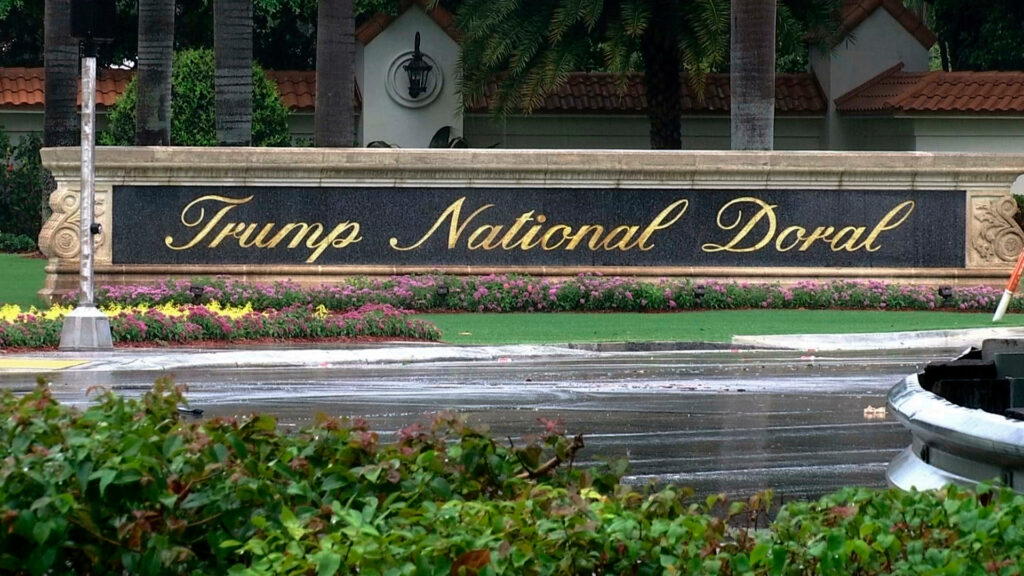
To reinforce that message, Trump is hosting a summit with several Latin American leaders at his golf resort near Miami. The gathering, branded the “Shield of the Americas,” is intended to strengthen cooperation with regional partners and encourage governments to limit their reliance on Chinese investment.
Supporters of the administration’s approach argue that China’s influence has grown too quickly in Latin America and now poses long-term security risks. They believe a stronger response is necessary to protect U.S. interests close to home.
Representative John Moolenaar, a Republican who chairs the House Select Committee on the Chinese Communist Party, said Washington must act to prevent Beijing from gaining control over strategically important infrastructure.
“President Trump is right to focus on defending the Western Hemisphere from China,” Moolenaar said, emphasizing the importance of standing with regional allies.
However, analysts warn that the situation is complicated. Over the past two decades, China has become deeply integrated into Latin America’s economy through trade, loans, and infrastructure investment.
According to research cited by scholars studying China-Latin America relations, only Cuba traded more with China than the United States in 2001. By the early 2020s, nearly every South American nation — except Paraguay and Colombia — was conducting more trade with China than with the U.S.
China’s rapid economic expansion allowed it to offer financing and investment at a scale that many Latin American countries found difficult to ignore. Between 2014 and 2023, China provided roughly $153 billion in loans and grants to Latin American and Caribbean nations, far surpassing the approximately $50.7 billion provided by the United States during the same period.
Many of those investments targeted infrastructure gaps, including transportation networks, energy projects, and telecommunications systems. China has also invested heavily in emerging sectors such as renewable energy and electric mobility.
Experts say this economic footprint makes it difficult for countries in the region to simply disengage from Chinese partnerships.
Francisco Urdinez, a political science professor at the Pontifical Catholic University of Chile, believes Washington’s tougher stance may force governments to make difficult choices.
According to Urdinez, countries that lean politically to the right may align more closely with Washington, while left-leaning governments could deepen cooperation with Beijing. Others may try to navigate between the two superpowers on a case-by-case basis.
Meanwhile, China has also expanded its diplomatic presence in the region. Since 2016, Panama, the Dominican Republic, El Salvador, Nicaragua, and Honduras have switched diplomatic recognition from Taiwan to Beijing, hoping to strengthen economic ties with the world’s second-largest economy.
Taiwan remains a sensitive issue in U.S.–China relations. Beijing considers the island part of its territory and has vowed to reunify it with the mainland, while U.S. law requires Washington to provide Taiwan with defensive military support.
Seven of the twelve countries that still recognize Taiwan are located in Latin America, highlighting the region’s role in the broader geopolitical rivalry between the two global powers.
China’s activities are not limited to trade and diplomacy. Beijing has supplied weapons, police equipment, and training programs for security forces in several Latin American nations, further expanding its presence.
Still, some analysts believe Latin American governments will continue pursuing pragmatic relationships with both sides.
Enrique Millán-Mejía of the Atlantic Council says many countries in the region recognize the economic benefits of cooperation with China but also understand the strategic value of close ties with the United States.
Given the region’s geographic proximity to the U.S., he argues that maintaining strong relations with Washington remains essential.
At the same time, China’s investments in infrastructure, technology, and logistics provide opportunities that many governments do not want to lose.
As a result, Latin America may increasingly find itself balancing the interests of two competing global powers — a dynamic that could reshape political and economic alliances across the hemisphere for years to come.