
January Retail Sales Fall as Americans Reduce Spending/ Newslooks/ WASHINGTON/ J. Mansour/ Morning Edition/ U.S. retail sales declined slightly in January as consumers slowed spending at the start of 2026. Lower sales at auto dealerships, gas stations, and clothing stores weighed on the overall retail picture. Economists say winter weather, economic uncertainty, and a soft job market may be affecting consumer confidence.
US Retail Sales January 2026 Quick Looks
- U.S. retail sales fell 0.2% in January, according to the Commerce Department.
- Economists had expected sales to remain flat for the month.
- Declines at auto dealers and gas stations dragged down overall sales.
- Excluding those categories, retail sales rose 0.3%.
- Online retailers saw a 1.9% sales increase during the month.
- Clothing stores and health retailers reported notable declines.
- Economic uncertainty and winter weather likely contributed to weaker spending.
Deep Look: January Retail Sales Fall as Americans Reduce Spending
American consumers slowed their spending at the start of 2026, continuing a period of sluggish retail activity that began late last year.
According to new data released by the U.S. Commerce Department, retail sales declined 0.2% in January. The figure followed a flat reading in December and came in slightly below economists’ expectations, which had predicted that sales would remain unchanged.
The report was released later than usual due to the 43-day federal government shutdown earlier this year.
While the overall decline was modest, several key retail categories experienced notable drops in sales during the month.
Much of the weakness was tied to reduced sales at motor vehicle and auto parts dealerships. Gas stations also reported lower revenue, largely reflecting falling gasoline prices during January.
When those two categories are excluded from the calculation, the overall picture looks somewhat stronger. Retail sales excluding autos and gasoline increased 0.3%, suggesting that consumer demand remained steady in other areas of the economy.
Weather conditions also likely played a role in shaping spending patterns.
Severe winter storms across parts of the United States kept many shoppers away from brick-and-mortar stores during January. As a result, online retailers saw stronger performance.
E-commerce sales rose 1.9% for the month, reflecting a shift toward digital shopping while consumers avoided harsh weather and travel disruptions.
Still, many traditional retail categories struggled.
Health and personal care stores experienced one of the steepest declines, with sales dropping 3% compared with December. Clothing retailers also reported weaker demand, with sales falling 1.7%.
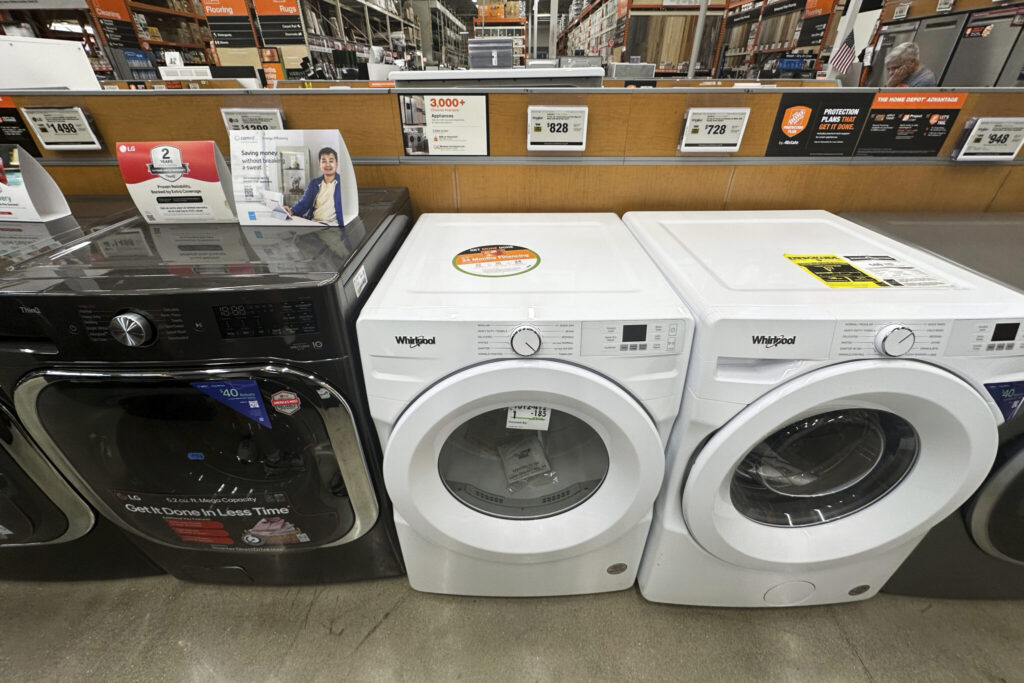
Consumer electronics and appliance retailers also recorded declines during the month, suggesting consumers may be postponing discretionary purchases.
Not all sectors performed poorly, however.
Retailers selling home furnishings and building materials posted gains. These categories include landscaping and gardening supplies, which may have benefited from seasonal home improvement activity in some regions.
The monthly retail sales report provides only a partial view of overall consumer spending. It focuses primarily on goods purchased at retail stores and does not include most services, such as travel, entertainment, and hotel stays.
However, the one service-related category included in the report — restaurants and food services — also showed a slight decline. Spending at restaurants slipped 0.2% in January.
The retail data comes at a time when major U.S. retailers are reporting their financial results from the holiday shopping season.
Those earnings reports have presented a mixed picture of the consumer economy.
Walmart reported strong quarterly results, continuing to attract a wide range of customers with competitive pricing and fast delivery services. The retail giant has increasingly drawn shoppers from both lower-income households and wealthier consumers looking for value.
By contrast, Target reported weaker results for the same period. The company posted declines in both profits and sales during the crucial holiday quarter as it struggled with merchandising issues and faced cautious consumer spending.
Home Depot also reported a softer fourth quarter compared with previous years, reflecting continued weakness in the housing market. However, the home improvement retailer still managed to exceed Wall Street’s expectations.
Retailers are also navigating uncertainty related to trade policy and tariffs.
Earlier this year, the U.S. Supreme Court struck down a major set of tariffs introduced under President Donald Trump. However, the administration is already planning new tariff policies, creating uncertainty for companies that rely on imported goods.
That uncertainty has made it more difficult for retailers to plan inventory levels, pricing strategies, and hiring decisions.
The broader labor market is also showing signs of strain.
New data from the Labor Department indicates that employers cut approximately 92,000 jobs last month. The unemployment rate rose slightly to 4.4%.
Hiring activity has slowed compared with January, when employers added 126,000 jobs. Economists had expected stronger job growth in February, forecasting around 60,000 new positions.
Taken together, the data suggests that American consumers may be becoming more cautious with their spending as economic uncertainty grows.
While the decline in retail sales remains relatively small, economists will be closely watching future reports to determine whether the slowdown represents a temporary pause or a broader shift in consumer behavior.
Consumer spending plays a critical role in the U.S. economy, accounting for roughly two-thirds of overall economic activity.
If households continue to limit spending in the coming months, it could signal a more challenging environment for retailers and the broader economy as 2026 unfolds.