
US Economy Loses 92,000 Jobs as Unemployment Rises to 4.4%/ Newslooks/ WASHINGTON/ J. Mansour/ Morning Edition/ The U.S. economy unexpectedly lost 92,000 jobs in February, signaling new strain in the labor market. The unemployment rate increased slightly to 4.4%, while earlier job gains were revised lower. Economists say rising economic uncertainty, tariffs, and the war with Iran are weighing on hiring.
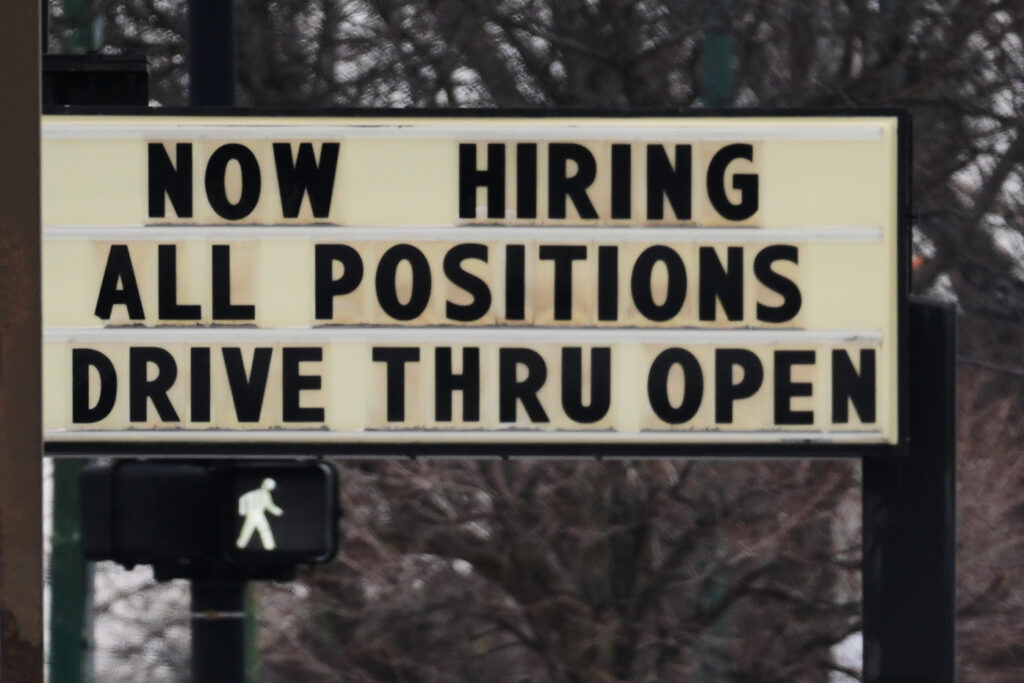
US Jobs Report February 2026 Quick Looks
- U.S. employers cut 92,000 jobs in February, surprising economists.
- The unemployment rate rose slightly to 4.4%.
- Economists had expected 60,000 new jobs, not losses.
- Construction, healthcare, restaurants, and manufacturing reported job cuts.
- Wage growth remained steady with 0.4% monthly increases.
- The war with Iran and rising oil prices are adding economic pressure.
- The Federal Reserve faces a dilemma between fighting inflation and supporting employment.
Deep Look: US Economy Loses 92,000 Jobs as Unemployment Rises to 4.4%
The U.S. labor market delivered an unexpected setback in February, as employers cut jobs and unemployment edged higher, raising new concerns about the strength of the American economy.
According to a report released Friday by the Labor Department, employers eliminated 92,000 jobs last month, marking a surprising decline that economists had not anticipated. Instead of job losses, forecasters had predicted the economy would add roughly 60,000 positions during February.
The disappointing report followed stronger hiring in January, when employers added 126,000 jobs. However, revisions to earlier data showed the labor market was weaker than previously believed. The government revised payroll figures downward by 69,000 jobs across December and January.
Taken together, the latest data suggests the labor market may be losing momentum after showing signs of stabilizing earlier this year.
Economists say several factors are contributing to the slowdown, including geopolitical tensions, higher energy costs, and lingering uncertainty from trade policies.
Heather Long, chief economist at Navy Federal Credit Union, said businesses are facing a challenging environment that is discouraging hiring.
“The job market is struggling in the face of so many headwinds,” Long said. She noted that companies may delay hiring decisions until they have greater clarity about the economy and consumer spending.
One of the most significant sources of uncertainty is the ongoing conflict between the United States and Iran, which has pushed oil prices higher and increased costs for businesses and households.
Higher energy prices can ripple through the economy by raising transportation and production costs, making companies more cautious about expanding payrolls.
The February employment report suggests the impact of these pressures may already be spreading across multiple sectors.
Job losses were widespread across industries.
Construction companies eliminated 11,000 jobs, a decline that economists partly attribute to unusually cold winter weather in parts of the country.
Healthcare employers cut 28,000 jobs, largely due to a strike involving more than 30,000 nurses and frontline workers at Kaiser Permanente facilities in California and Hawaii. Healthcare had previously been one of the strongest sources of job growth in the U.S. economy.
Manufacturing also continued to struggle. Factories cut 12,000 jobs in February, marking job losses in 14 of the past 15 months for the sector.
Other industries experiencing layoffs included hospitality and services.
Restaurants and bars eliminated nearly 30,000 positions, while administrative and support service firms reduced payrolls by about 19,000 jobs. Courier and messenger services cut roughly 17,000 jobs.
The financial sector offered one of the few bright spots in the report, adding 10,000 jobs during the month. However, the industry has still experienced layoffs earlier this year as firms restructure operations.
Despite the decline in employment, wages continued to grow at a moderate pace.
Average hourly earnings increased 0.4% in February compared with January, and wages were 3.8% higher than a year earlier. Rising pay could help support consumer spending, though inflation pressures remain a concern.
The mixed economic signals are creating a difficult challenge for the Federal Reserve.
Central bank officials must decide whether to cut interest rates to stimulate hiring and economic growth or maintain higher rates to prevent inflation from accelerating.
Economists say the current situation presents one of the most difficult policy environments in recent years.
“This is probably the worst scenario for monetary policy,” said Eugenio Aleman, chief economist at Raymond James.
Weak job growth typically calls for lower interest rates, which encourage borrowing and business investment. However, rising oil prices and global tensions could push inflation higher, which would normally prompt the Fed to keep rates elevated.
Economic uncertainty has also been shaped by recent changes in U.S. trade policy.
During 2025, businesses struggled to adapt to the rapid rollout of tariffs imposed by President Donald Trump. The unpredictable nature of those tariffs made it difficult for companies to plan hiring, pricing, and supply chains.
While trade tensions eased somewhat after agreements with China, Japan, and the European Union last year, companies are still adjusting to the long-term impact of tariffs.
Economist Brian Bethune of Boston College said many companies had only recently adapted their business plans to the new trade environment.
Now, he said, the sudden rise in fuel costs tied to the Iran conflict is forcing businesses to rethink their strategies again.
Companies involved in global trade face additional uncertainty from evolving tariff rules.
Jay Foreman, chief executive of toy manufacturer Basic Fun, said his company initially expected financial relief after the Supreme Court struck down some of the Trump administration’s largest tariffs earlier this year.
The decision potentially allows importers to recover some of the tariff payments they previously made. That refund could allow companies to invest in operations, raise wages, and expand hiring.
Foreman said his company was anticipating a strong year ahead and hoped to reinvest the savings.
However, new tariffs proposed by the administration could offset much of that benefit.
Foreman estimates Basic Fun’s tariff costs could exceed $15 million this year, more than double what the company paid previously.
The increase reflects both new tariff policies and the fact that businesses will pay the duties for the entire year rather than just part of it, as happened when tariffs were introduced gradually in 2025.
For now, economists say the February jobs report raises new questions about whether the U.S. economy can maintain steady growth amid geopolitical tensions and economic uncertainty.
With consumer spending and business investment closely tied to employment trends, future job reports will be closely watched for signs of whether February’s losses represent a temporary setback—or the start of a deeper slowdown.