Trump Urges Latin America Militaries To Fight Drug Cartels/ Newslooks/ WASHINGTON/ J. Mansour/ Morning Edition/ President Donald Trump urged Latin American leaders to use military force against drug cartels during a regional summit in Florida. The gathering, called the “Shield of the Americas” summit, focused on strengthening security cooperation across the Western Hemisphere. Trump also emphasized countering China’s growing influence in Latin America while promoting a tougher regional security strategy.
Trump Latin America Cartel Strategy Quick Looks
- President Donald Trump urged Latin American nations to deploy military forces against drug cartels.
- The call came during the Shield of the Americas summit in Doral, Florida.
- Leaders from more than a dozen countries attended the regional security meeting.
- Trump compared the effort to the U.S.-led coalition against ISIS in the Middle East.
- The summit highlighted Trump’s push to reassert U.S. influence in the Western Hemisphere.
- Officials also warned about China’s expanding economic influence in Latin America.
- Brazil, Mexico, and Colombia were notably absent from the meeting.
- Trump recently appointed Kristi Noem as special envoy for the initiative.
- A new regional agreement targeting cartels and drug trafficking networks is expected.
Deep Look
Trump Urges Latin American Leaders to Use Military Against Cartels
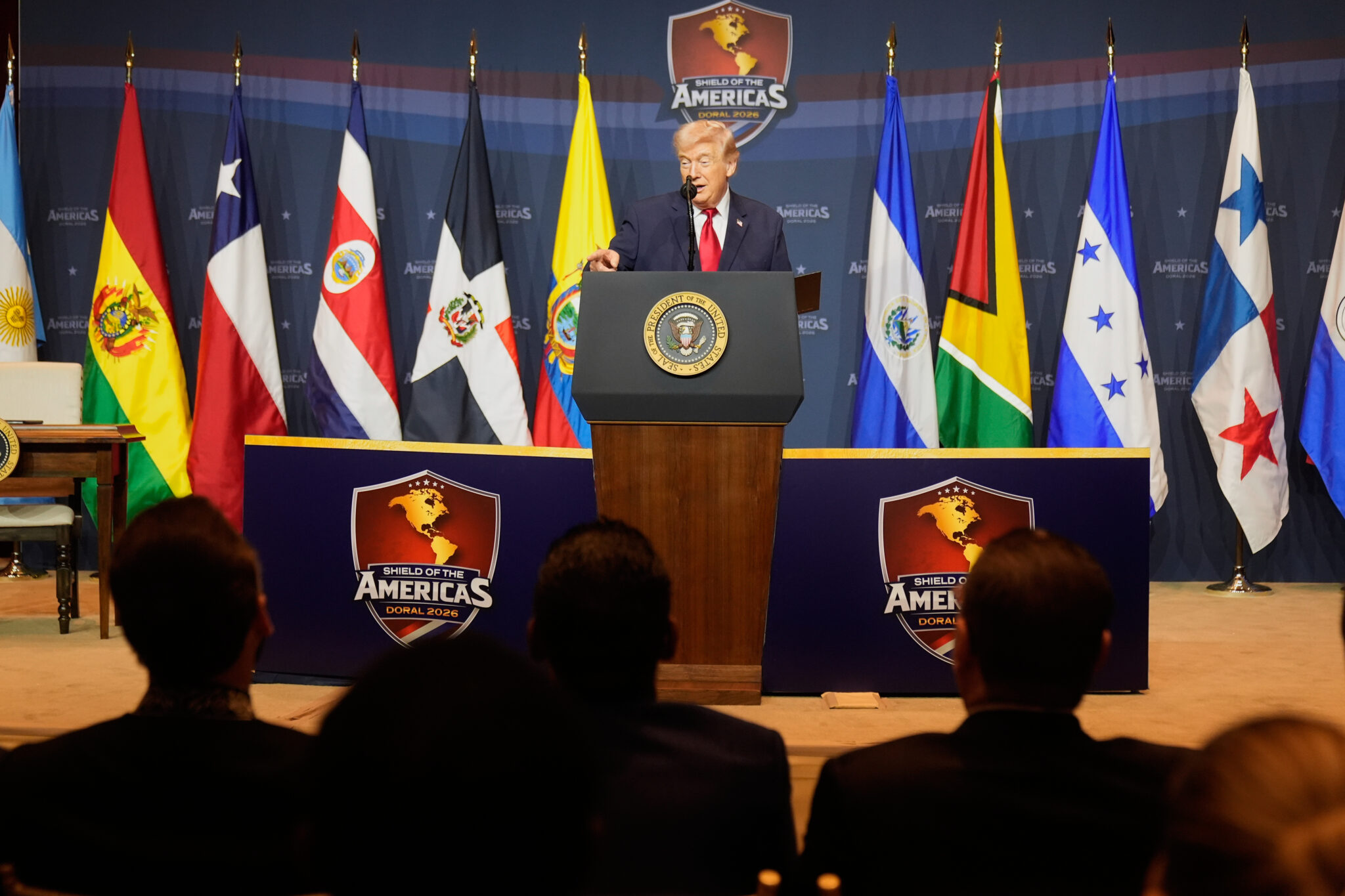
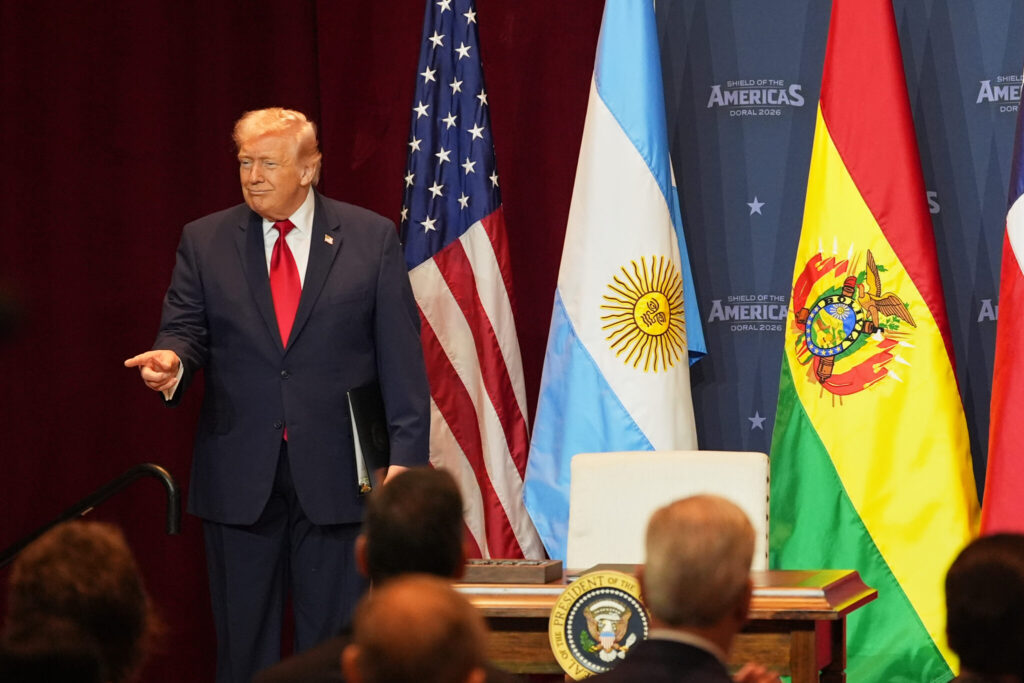
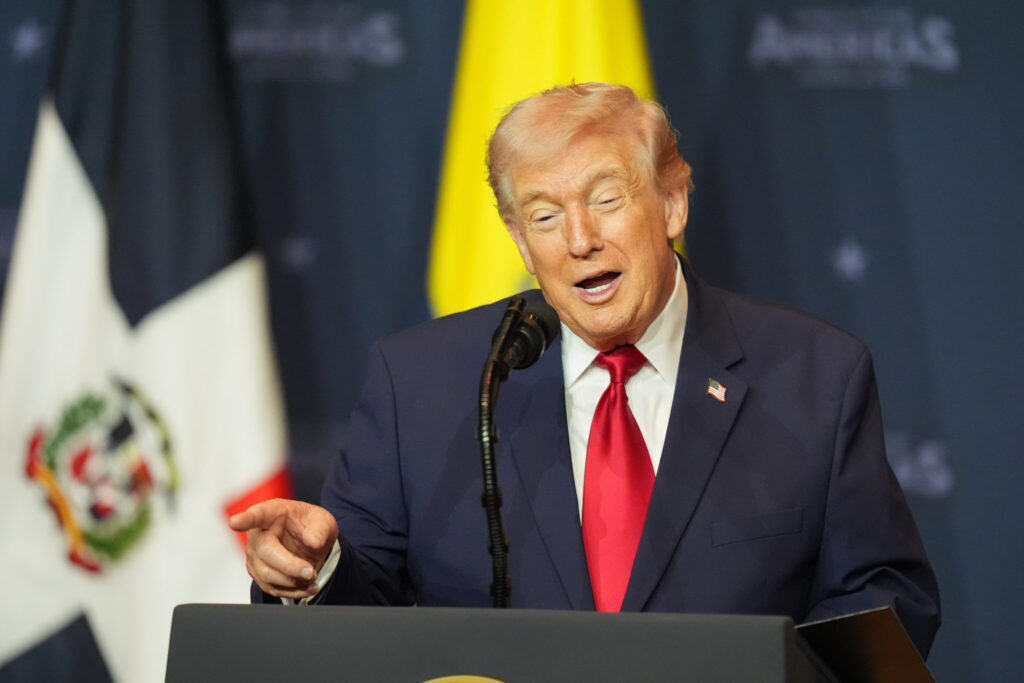
President Donald Trump called on Latin American governments to deploy their military forces to combat powerful drug cartels and transnational criminal networks during a regional summit in Florida on Saturday.
Speaking to leaders gathered at his Trump National Doral Miami resort, Trump argued that organized crime groups have become a serious security threat across the Western Hemisphere and require stronger military responses.
“The only way to defeat these enemies is by unleashing the power of our militaries,” Trump said. “We have to use our military. You have to use your military.”
He compared the strategy to the international coalition that fought the Islamic State group in the Middle East, suggesting that a similar alliance could dismantle cartel operations throughout the Americas.
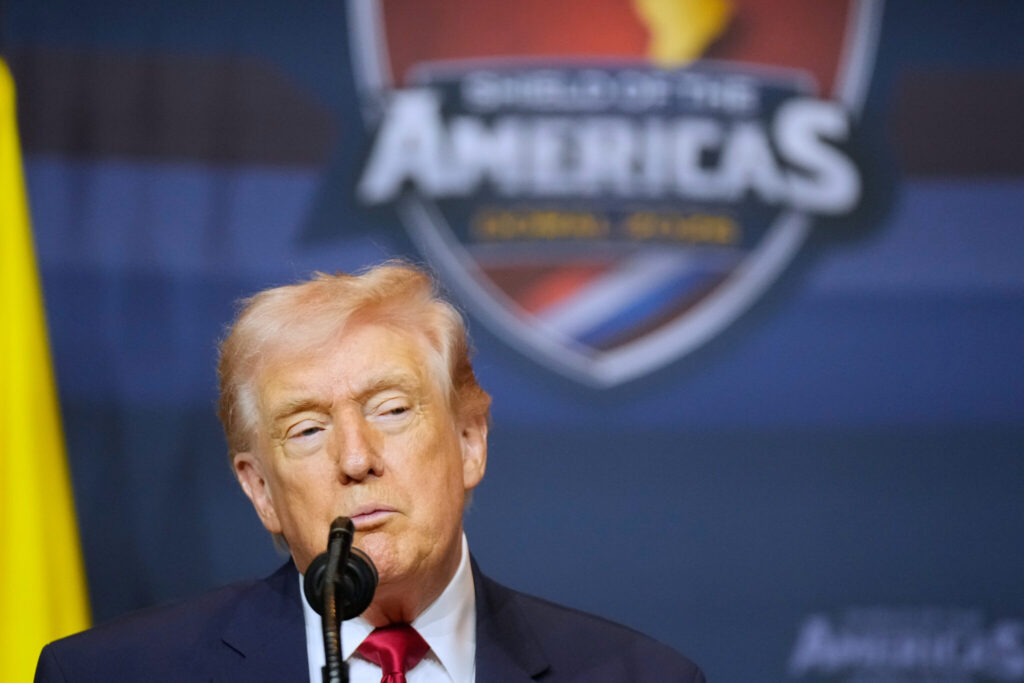
Shield of the Americas Summit
The meeting, organized by the White House and dubbed the “Shield of the Americas” summit, was designed to showcase the administration’s renewed focus on the Western Hemisphere.
The summit brought together leaders from several Latin American and Caribbean nations at the Miami-area resort, which Trump is also scheduled to use later this year as a venue for the Group of 20 summit.
Countries represented at the gathering included:
- Argentina
- Bolivia
- Chile
- Costa Rica
- Dominican Republic
- Ecuador
- El Salvador
- Guyana
- Honduras
- Panama
- Paraguay
- Trinidad and Tobago
The initiative aims to increase regional cooperation on issues such as drug trafficking, gang violence, border security, and intelligence sharing.
Trump’s Focus on Western Hemisphere Security
The summit comes as the Trump administration attempts to reorient U.S. foreign policy toward the Americas.
Trump has repeatedly argued that previous administrations paid too much attention to conflicts in other parts of the world while ignoring challenges closer to home.
Defense Secretary Pete Hegseth echoed that message during meetings with regional defense ministers earlier in the week.
“Under previous leaders, we grew obsessed with every other theater and every other border in the world except our own,” Hegseth said.
He criticized past policies as “benign neglect” that weakened U.S. influence in the region.
Summit Occurs Amid Global Crises
The gathering took place as the United States confronts multiple international crises.
Just one week earlier, the United States joined Israel in launching a military campaign against Iran, sparking a regional conflict that has already resulted in hundreds of deaths and significant economic turmoil.
Trump’s appearance at the summit was brief because he planned to travel afterward to Dover Air Force Base in Delaware to attend a dignified transfer ceremony for six American soldiers killed in a drone strike in Kuwait.
Despite the ongoing Middle East war, administration officials said the summit demonstrates that Washington remains committed to strengthening alliances in the Western Hemisphere.
Absence of Key Regional Powers
Notably absent from the summit were some of the region’s most influential nations.
Brazil, Mexico, and Colombia—three major powers that play key roles in regional politics and anti-drug efforts—did not attend the gathering.
Analysts say the absence of those countries highlights divisions within the hemisphere about how to address security challenges.
Richard Feinberg, a professor at the University of California, San Diego, noted that earlier regional gatherings had emphasized broader economic and diplomatic cooperation.
“The first Summit of the Americas projected inclusion and optimism,” Feinberg said. “This mini-summit suggests a more defensive approach with fewer participating countries.”
Countering China’s Influence
Another major theme of the summit was the growing influence of China in Latin America.
Since returning to office, Trump has prioritized countering Chinese economic and strategic expansion in the region.
His administration has promoted what some officials call the “Trump Corollary” to the historic Monroe Doctrine, seeking to discourage Chinese infrastructure investments, military cooperation, and commercial partnerships in the Americas.
Earlier this year, the U.S. pressured Panama to reconsider its participation in China’s Belt and Road Initiative and review port agreements with a Hong Kong-based company.
Trump also recently authorized a dramatic operation targeting Venezuelan leader Nicolás Maduro, who was captured and transported to the United States to face drug conspiracy charges.
Analysts say the move could disrupt Venezuela’s oil shipments to China, which had been the largest buyer of Venezuelan crude.
Trump is expected to travel to Beijing later this month to meet with Chinese President Xi Jinping.
Regional Leaders Balance U.S. and China Relations
Despite Washington’s pressure, many Latin American governments remain cautious about severing economic ties with China.
Experts say China’s investment and trade partnerships provide crucial economic support for countries struggling with poverty, infrastructure challenges, and development needs.
Kevin Gallagher, director of the Global Development Policy Center at Boston University, noted that China often offers financial investments while U.S. policies have focused more on immigration enforcement and security.
“The U.S. is offering tariffs, deportations and militarization whereas China is offering trade and investment,” Gallagher said.
As a result, many countries are trying to maintain balanced relationships with both global powers.
New Security Initiative Announced
Ahead of the summit, Trump appointed former Homeland Security Secretary Kristi Noem as special envoy for the Shield of the Americas initiative.
Noem said Trump plans to unveil a significant regional agreement focused on combating drug trafficking and cartel activity throughout the Western Hemisphere.
The initiative is expected to include enhanced intelligence sharing, joint military cooperation, and expanded law enforcement coordination.
Administration officials say the effort represents a major shift toward treating cartel violence as a regional security threat rather than solely a criminal justice issue.