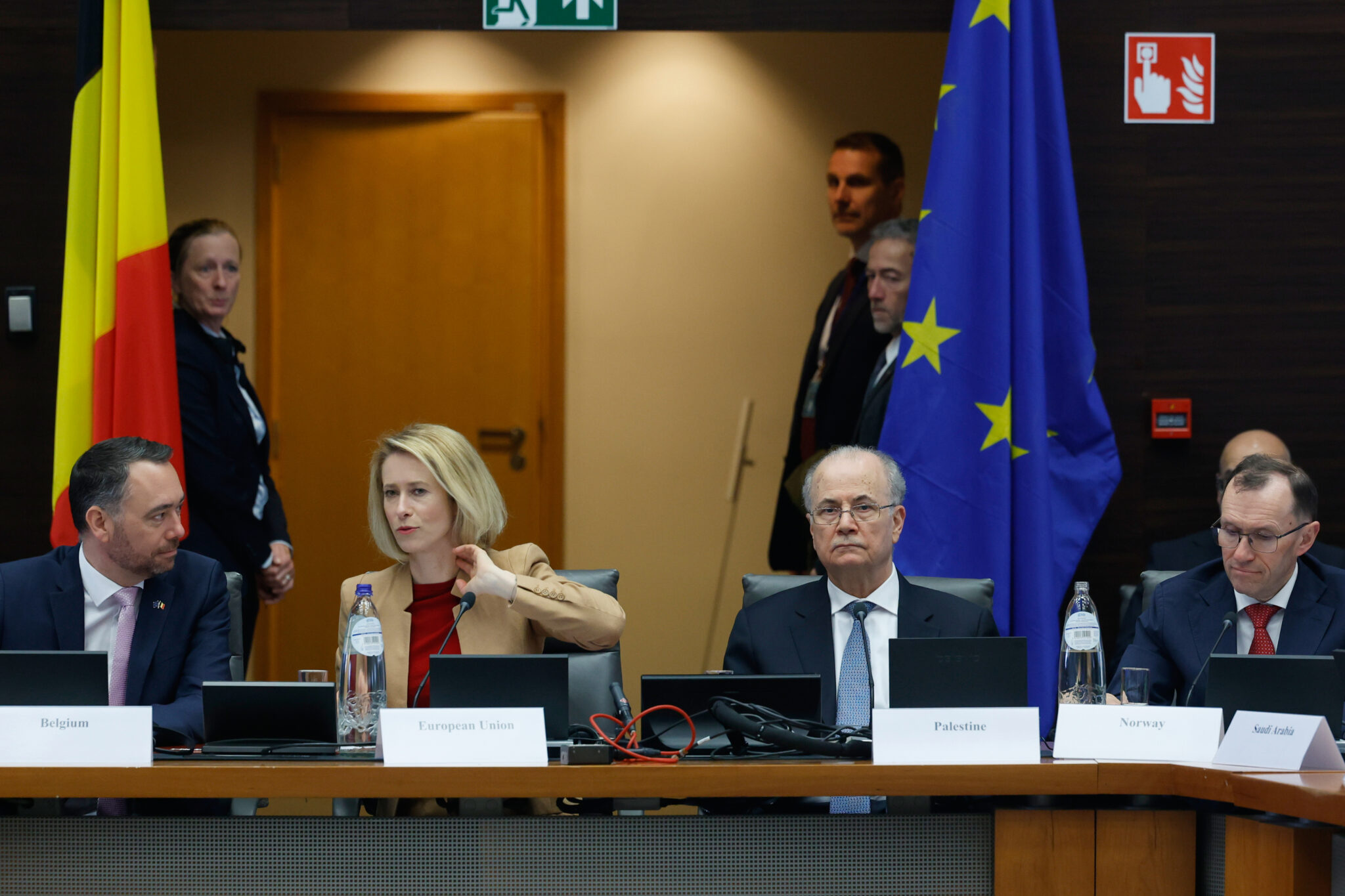
EU Hosts Palestinian Peace Talks to Boost Middle East Role/ Newslooks/ WASHINGTON/ J. Mansour/ Morning Edition/ The European Union hosted a major peace conference in Brussels with Palestinian leaders and over 60 countries to address Gaza and the West Bank. Political changes in Hungary are giving the EU new momentum to act more decisively on Israel-related policies. European leaders aim to play a stronger diplomatic role while supporting a two-state solution and increased regional stability.
EU Hosts Palestinian Peace Talks to Boost Middle East Role Quick Looks
- European Union hosted talks with over 60 nations in Brussels
- Palestinian leaders joined discussions on security, stability, and long-term peace
- Hungary’s political shift may remove barriers to EU action on Israel
- The EU is the largest aid provider to Palestinians and backs a two-state solution
- Some EU leaders are pushing sanctions on Israeli settlers
- Spain proposed suspending the EU-Israel Association Agreement
- Palestinian Prime Minister called for unified governance in Gaza
- The EU aims to expand its diplomatic role in Middle East peace efforts
Deep Look
EU Moves to Reassert Role in Middle East Diplomacy
The European Union is stepping up efforts to play a more influential role in Middle East diplomacy, hosting a major peace conference in Brussels focused on the future of Gaza and the occupied West Bank.
Representatives from more than 60 countries gathered alongside Palestinian officials to discuss long-term stability, governance, and security in the region.
The meeting reflects a renewed push by European leaders to become more directly involved in resolving the Israeli-Palestinian conflict, after years of playing a largely secondary role.
Despite being the largest provider of aid to Palestinians and a strong supporter of a two-state solution, the EU has often been sidelined in major diplomatic negotiations, including the recent Gaza ceasefire agreement.
However, shifting political dynamics within Europe may now give the bloc greater influence.
Hungary Political Shift Opens Door for EU Action
A key factor behind the EU’s renewed momentum is political change in Hungary.
Former leader Viktor Orbán had frequently blocked EU efforts to take stronger action against Israel, including sanctions and formal condemnations.
But Hungary’s incoming leadership under Péter Magyar is signaling a different approach.
Magyar has said he will pursue “pragmatic relations” with Israel while also supporting international legal frameworks, including rejoining the International Criminal Court.
That shift could remove a major obstacle that has prevented EU consensus on key Middle East policies.
EU foreign policy chief Kaja Kallas suggested that new actions could follow quickly without Hungary’s previous veto.
“We have 27 countries and 26 countries want to put violent settlers sanctions in place,” she said.
“The one who doesn’t want the sanctions on violent settlers has gotten their upper hand. Now, this country had elections, and we’ll have a new government.”
Debate Over EU-Israel Relations Intensifies
Some European leaders are now pushing for more aggressive steps toward Israel.
Spanish Prime Minister Pedro Sánchez has called for suspending the long-standing EU-Israel Association Agreement, which governs trade and cooperation between the two sides.
Spain is expected to formally present the proposal at an upcoming meeting of EU foreign ministers.
However, such a move faces significant resistance.
Countries like Germany and Austria are more supportive of Israel and are unlikely to back a full suspension.
The agreement, in place since 2000, forms the foundation of economic and political ties between the EU and Israel.
While a full suspension may be difficult, more targeted actions—such as sanctions on Israeli settlers in the West Bank—could gain approval if enough member states support them.
Two-State Solution Faces Growing Challenges
European leaders continue to emphasize that a two-state solution remains the most viable path to lasting peace.
However, ongoing violence and settlement expansion are making that goal increasingly difficult to achieve.
Belgian Foreign Minister Maxime Prévot warned that conditions on the ground are worsening.
“The two-state solution is being made more difficult by the day,” he said.
“But Belgium and many European and Arab partners continue to believe that this remains the only realistic path to a lasting peace.”
The continued devastation in Gaza and rising tensions in the West Bank have added urgency to diplomatic efforts.
European officials say failure to act now could further destabilize the region.
Palestinian Leadership Calls for Unified Governance
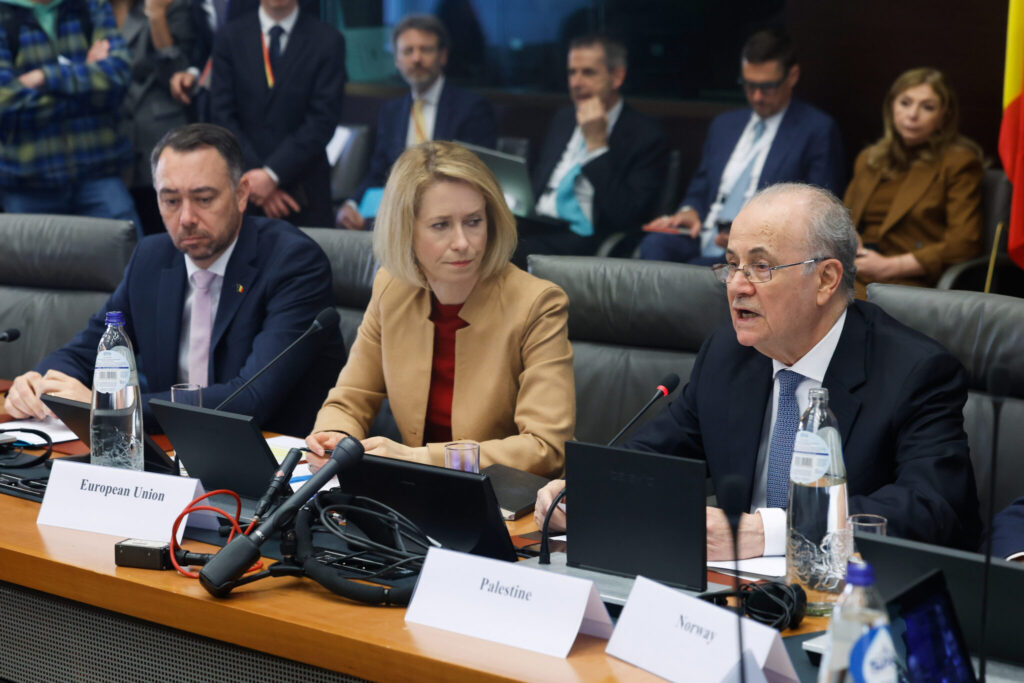
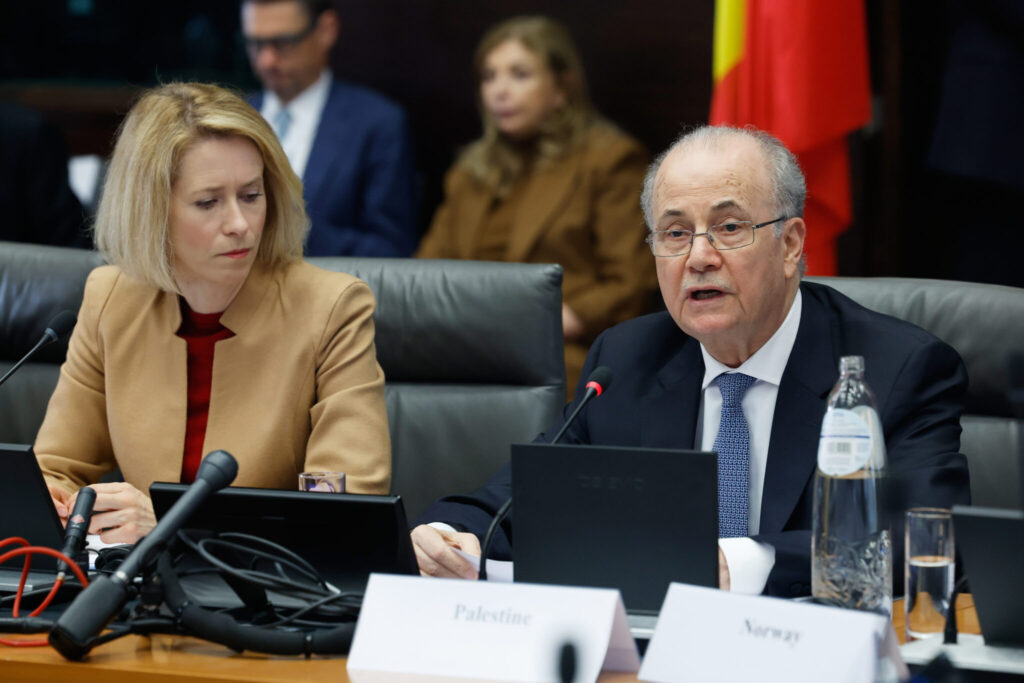
Palestinian Prime Minister Mohamed Mustafa used the Brussels conference to call for unity in governing Gaza.
He emphasized the need for a single authority overseeing security and administration.
“Gaza requires one state, one government, one law and one goal,” Mustafa said.
He also called for coordinated security efforts involving the Palestinian Authority, international forces, and other stakeholders.
“Our common objective of achieving one security structure under the legitimate authority should guide the effective coordination,” he said.
Mustafa stressed that fragmented security systems would undermine stability and prolong conflict.
He also called for “the gradual and responsible collection of arms from all armed groups and also the full Israeli withdrawal from Gaza.”
Disarming militant groups such as Hamas remains one of the most complex challenges in any long-term peace agreement.
EU Seeks Role Alongside Global Peace Efforts
While the EU has avoided formally joining initiatives like the U.S.-backed Board of Peace, it is eager to remain relevant in ongoing diplomatic efforts.
European leaders prefer working through multilateral frameworks such as the United Nations and international law institutions.
At the same time, they are increasingly concerned about being sidelined in key negotiations shaping the region’s future.
During the conference, Mustafa said he met with Nikolay Mladenov, who is serving as director of the Board of Peace.
He described the meeting as constructive and said both sides agreed on several issues, including the need for increased humanitarian aid and improved security in Gaza.
“We see eye to eye on many things, and I think that we will be meeting again in the near future,” Mustafa said.
Europe Aims to Expand Influence in a Critical Region
The Brussels conference highlights Europe’s ambition to play a more active role in shaping Middle East peace efforts.
Geographically close and deeply connected through trade, security, and migration concerns, the region remains strategically important to the EU.
With internal political shifts reducing obstacles and growing frustration over ongoing violence, European leaders appear increasingly willing to act.
Whether that translates into concrete policy changes or renewed diplomatic influence remains to be seen.
For now, the EU is positioning itself as a key player seeking stability, peace, and a long-term solution to one of the world’s most enduring conflicts.