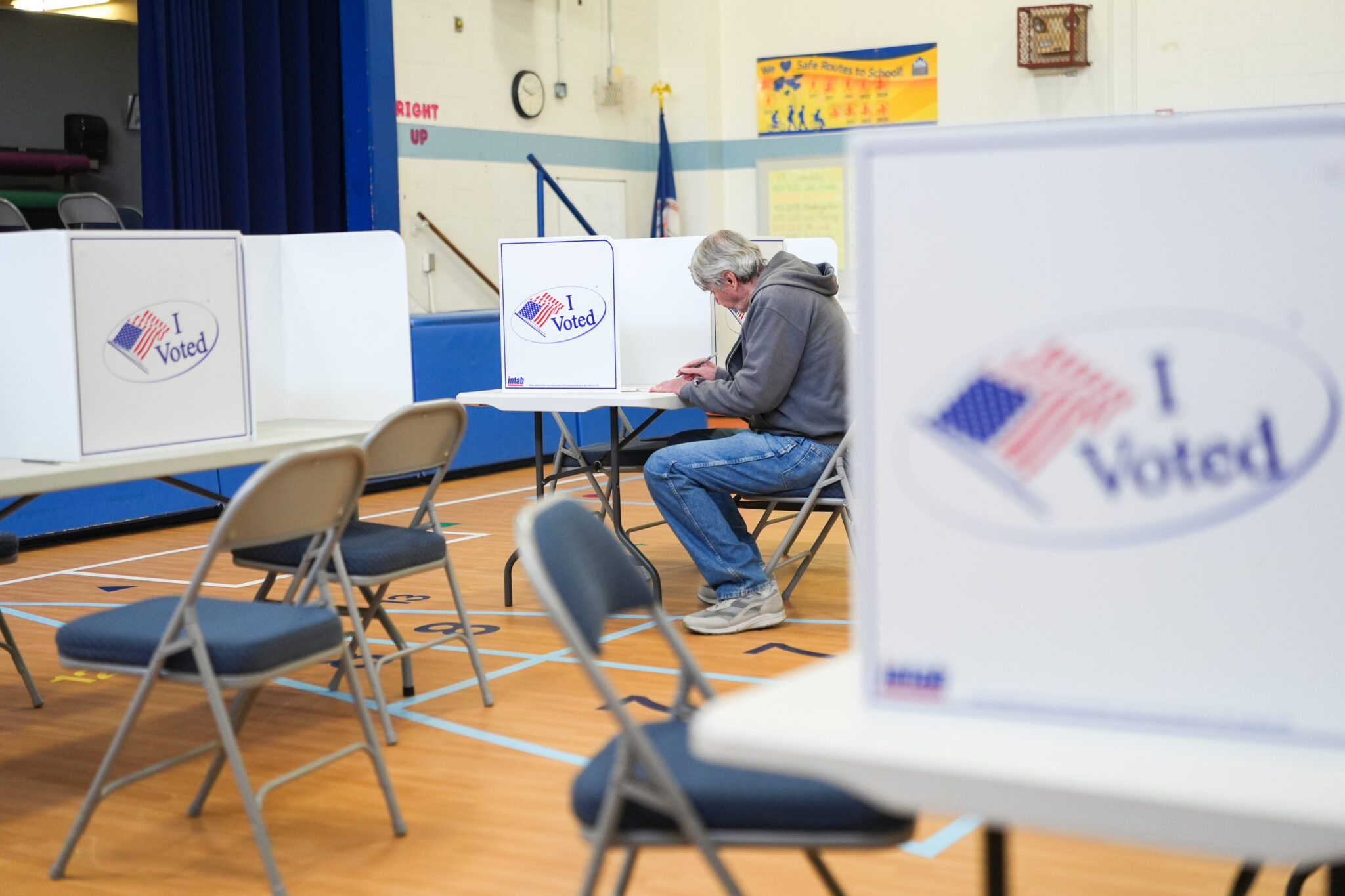
Virginia Voters Approve New House Map Favoring Democrats/ Newslooks/ WASHINGTON/ J. Mansour/ Morning Edition/ Virginia voters approved a mid-decade redistricting plan that could help Democrats gain up to four additional U.S. House seats in the 2026 midterm elections. The new map bypasses the bipartisan commission process and allows districts drawn by the Democratic-led General Assembly, though legal challenges could still overturn the result. The vote is seen as a major setback for President Donald Trump and Republicans trying to protect their narrow House majority.
Virginia Redistricting Vote Could Boost Democrats in Congress Quick Looks
- Virginia voters approved a mid-decade congressional redistricting plan
- Democrats could gain up to four additional U.S. House seats
- The amendment bypasses the bipartisan redistricting commission
- The Democratic-led General Assembly created the new districts
- Republicans are challenging the plan in court
- Gov. Abigail Spanberger supported the new map
- Democrats called it a major shift for the 2026 midterms
- The Virginia Supreme Court could still invalidate the referendum
Deep Look
Virginia Voters Approve New Congressional Map
The constitutional amendment allows the use of newly drawn U.S. House districts created by Virginia’s Democratic-led General Assembly, bypassing the bipartisan redistricting commission system voters approved just a few years ago.
Democrats believe the new map could help them win as many as four additional congressional seats this November.
That could prove critical in deciding control of the closely divided U.S. House of Representatives.
The vote is widely viewed as a major political setback for President Donald Trump, who encouraged Republicans nationwide to aggressively redraw maps to protect their narrow House majority.
Virginia’s decision may now help Democrats offset Republican gains elsewhere.
Democrats Say Virginia Changed the Midterm Landscape
Democratic leaders celebrated the referendum as a turning point in the national fight over congressional maps.
“Virginia just changed the trajectory of the 2026 midterms,” said Virginia House Speaker Don Scott.
“At a moment when Trump and his allies are trying to lock in power before voters have a say, Virginians stepped up and leveled the playing field for the entire country.”
Governor Abigail Spanberger, who campaigned for the new map, quickly shifted her attention to the November elections.
“I understand the urgency of winning congressional seats as a check on this President, and I look forward to campaigning with candidates across the Commonwealth working to earn Virginians’ trust,” she said.
Democrats see Virginia as one of their best opportunities to reclaim ground after Republican-led redistricting efforts in states like Texas, North Carolina, and Ohio.
National Redistricting Battle Intensifies
Virginia is only one part of a much larger national redistricting fight.
Republicans believe newly redrawn maps in Texas, Missouri, North Carolina, and Ohio could help them gain up to nine more House seats.
Democrats hope to counter that with gains in California, Utah, and now Virginia.
California voters approved a similar mid-decade redistricting effort last year by a much larger margin.
Representative Suzan DelBene, chair of the Democratic Congressional Campaign Committee, said Virginia voters were rejecting Republican attempts to manipulate elections.
“As we saw in California, when voters have a say, they are rejecting Republicans’ attempt to rig the system,” she said.
Florida could also become the next battleground, with its Republican-led legislature preparing for a special session that may create more GOP-friendly districts.
Republicans Promise Court Fight Is Not Over
Despite the referendum result, Republicans say the fight is far from finished.
Virginia House Republican Minority Leader Terry Kilgore said major legal questions remain.
“Serious legal questions remain about both the wording of this referendum and the process used to put it before voters,” Kilgore said.
“Those questions have not been resolved, and they now move where they belong: to the courts.”
Representative Richard Hudson, chair of the National Republican Congressional Committee, argued the narrow result proves Virginia is still politically divided.
He said the close margin shows the state “shouldn’t be represented by a severe partisan gerrymander.”
Republicans believe the courts may still stop the map from taking effect.
Fairness Became the Central Argument
The entire referendum campaign centered around one word: fairness.
Republicans argued it was unfair for Democrats to redraw districts in a way that gave themselves an advantage.
Democrats argued the opposite—that the move was necessary to balance Republican gerrymandering happening in other states.
Matt Wallace of Alexandria said he supported the amendment “to help balance the scales a bit until things get back to normal.”
But Ruth Ann McCartney, voting in South Hill near the North Carolina border, opposed it.
“I look at it more as we don’t have the population as northern Virginia,” she said.
“And as a rural area, we just need to be heard.”
The divide reflected the larger national argument over whether fairness means protecting local representation or correcting broader partisan imbalance.
New District Map Could Dramatically Shift Seats
Currently, Democrats hold six of Virginia’s 11 U.S. House seats under maps imposed by the Virginia Supreme Court in 2021 after a bipartisan commission failed to agree.
The new plan could allow Democrats to win as many as 10 seats.
Five districts would be heavily anchored in Democratic northern Virginia.
One district stretches outward like a lobster shape to absorb Republican-leaning rural areas.
Other revisions across Richmond, southern Virginia, Hampton Roads, and western Virginia reduce the strength of conservative voting blocs.
One western district combines three Democratic-leaning college towns to offset Republican rural voters.
Critics call it partisan gerrymandering.
Supporters call it strategic balancing.
Either way, the political impact could be enormous.
Legal Challenges Could Still Void the Entire Vote
Even though voters approved the amendment, the final decision may belong to the courts.
Congressional redistricting usually happens only once every 10 years after the census.
In 2020, Virginia voters approved a constitutional amendment designed to reduce political manipulation by taking redistricting power away from lawmakers and giving it to a bipartisan commission.
But lawmakers later approved a new amendment allowing temporary mid-decade redistricting before returning to the commission system after the 2030 census.
Republicans filed multiple legal challenges against that move.
Tazewell County Circuit Court Judge Jack Hurley Jr. ruled the process was illegal for several reasons.
He said lawmakers failed to follow their own rules, voted too late in the legislative process, and did not publish the amendment early enough as required by law.
If the Virginia Supreme Court agrees, the referendum results could become meaningless.
That would completely reset the fight.
Trump’s Redistricting Push Faces New Resistance
Trump helped launch the current national redistricting battle by urging Texas Republicans last year to redraw districts to protect GOP control of the House.
The strategy was designed to overcome the political disadvantages the president’s party often faces during midterm elections.
Virginia’s result now threatens that plan.
Instead of Republicans locking in gains, Democrats may erase much of that advantage.
That makes Virginia one of the most important states in the battle for Congress this year.
With legal fights still ahead, the final shape of the 2026 House map remains uncertain—but Tuesday’s vote may already have changed the national political landscape.