Fact-Checks Trump’s 2026 State of the Union Address/ Newslooks/ WASHINGTON/ J. Mansour/ Morning Edition/ Annotated, fact-checked transcript shows President Donald Trump using his 2026 State of the Union to sell a “golden age” narrative. The address leaned heavily on immigration, tariffs, culture-war issues, and dramatic guest moments, while drawing heckles from Democrats. CNN’s fact checks challenged several headline claims on inflation history, gas prices, investment pledges, tariffs, and election fraud.
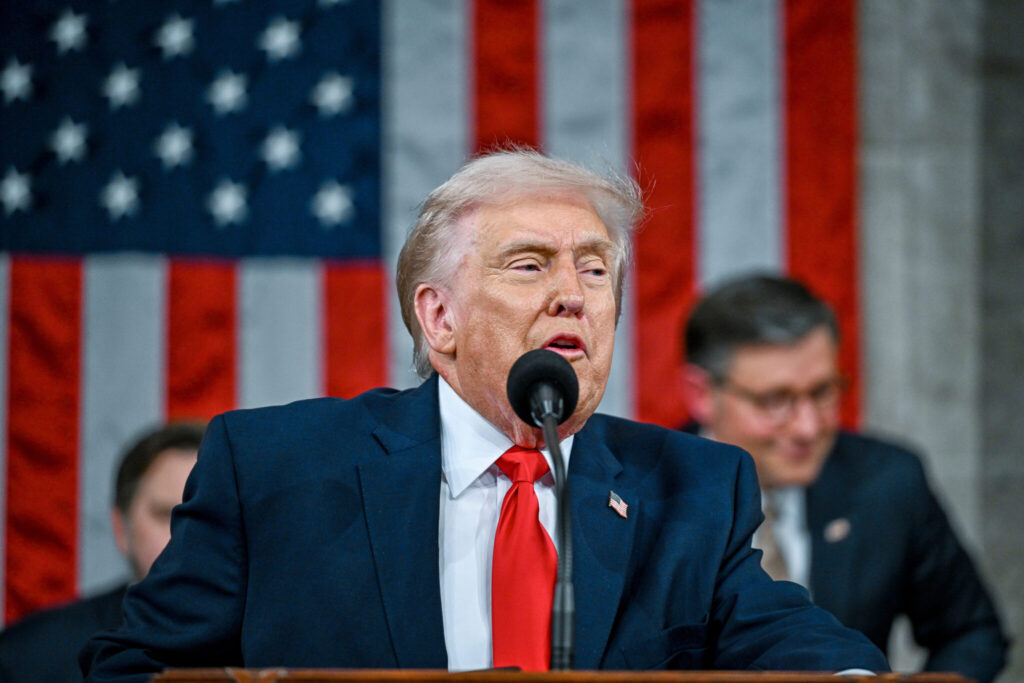
Fact-Checked Trump 2026 SOTU + Quick Looks
- Trump framed the U.S. as “bigger, better, richer and stronger,” calling it a “golden age.”
- CNN flagged disputes over inflation rhetoric and claims of a “massive” economic boom.
- Gas price and “$18 trillion investment” assertions were sharply questioned.
- Tariffs took center stage after a Supreme Court setback; Trump promised workaround authorities.
- Immigration dominated: “secure border” claims, crime anecdotes, and new voting restrictions pitch.
- Big televised moments: Olympic hockey team, multiple medals, Purple Hearts, and guest stories.
- Foreign policy: Iran warnings, Gaza ceasefire boasts, Ukraine peace push, NATO spending claims.
- Culture-war flashpoints and insults toward Democrats fueled a tense chamber.
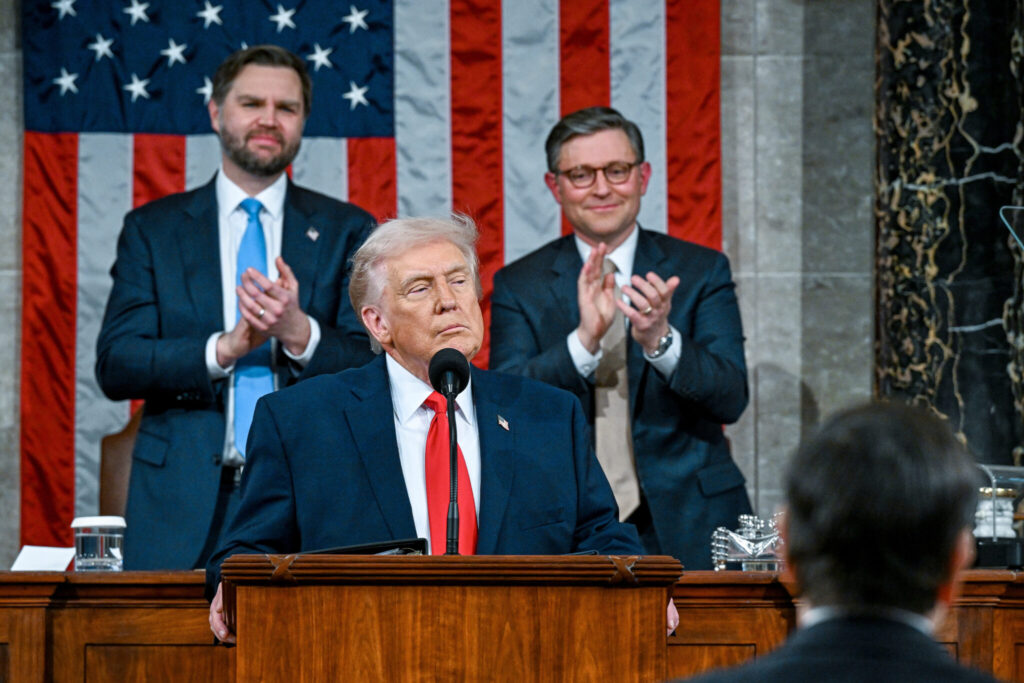
Deep Look: Fact-Checks Trump’s 2026 State of the Union Address
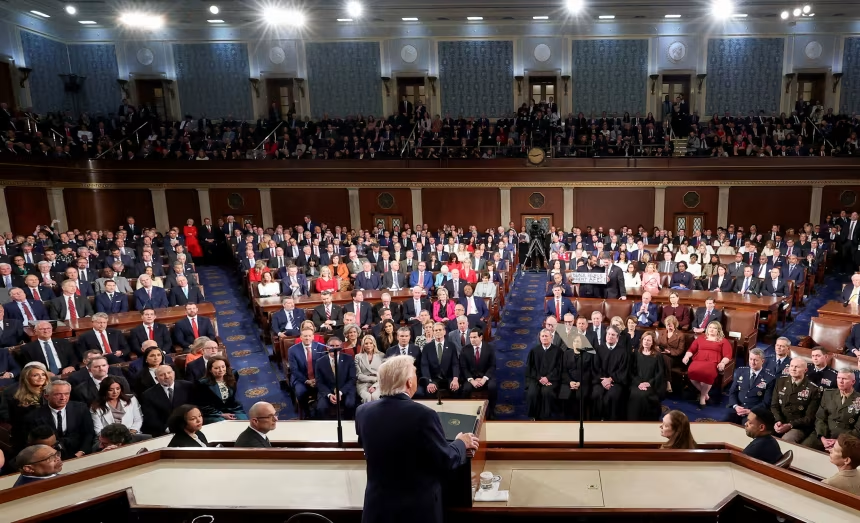
President Donald Trump stepped into prime time at the U.S. Capitol on February 24, 2026, with a clear mission: convince Americans that the country is thriving under his second-term leadership and persuade voters to keep Republicans in power ahead of this year’s midterm elections. CNN’s annotated and fact-checked presentation of the speech paints a picture of a president trying to overwhelm skepticism with sweeping claims, emotional storytelling, and made-for-TV moments — while facing pointed pushback from his political opposition and scrutiny from fact-checkers.
Trump opened with familiar superlatives, describing an America that is “back” and stronger than ever, and tying his message to the approaching 250th anniversary of U.S. independence. He promised bigger achievements ahead and described the present as a national “golden age.” But CNN’s annotations immediately placed that framing in context, noting that polling and economic data do not uniformly match the scale of Trump’s triumphal language, especially among voters worried about everyday costs.
The Economy: Big Promises, Heavy Scrutiny
Trump’s economic sales pitch leaned on claims of plummeting inflation, surging incomes, and a “roaring” boom. CNN’s fact checks disputed some of the core storyline — particularly the idea that Trump “inherited” the worst inflation in American history. CNN noted that inflation did reach a multi-decade high in 2022, but that it was far from the all-time record, and that inflation rates were significantly lower by late 2024 and into 2026.
The speech also leaned into pocketbook-friendly imagery: cheaper gas, falling mortgage costs, and record stock gains. CNN’s fact-checking pointed out that gas prices had declined from early 2025 levels but challenged Trump’s suggestion that prices were below $2.30 “in most states,” citing AAA data and outside analysis referenced in CNN’s annotations. On housing, CNN’s commentary emphasized the tension many Americans feel: even with some easing in mortgage rates, affordability remains strained and many would-be buyers still feel locked out.
Then came one of the biggest numerical claims of the night: Trump contrasted less than $1 trillion in investment under the prior administration with “more than $18 trillion” in commitments in his first year back. CNN’s fact check called the $18 trillion figure unfounded, noting the White House’s own tracking showed a much smaller figure and that some counted “commitments” were vague pledges or not clearly U.S.-directed investment.
Tariffs and the Supreme Court: Defiance as Strategy
Trump treated tariffs as both economic weapon and diplomatic hammer, insisting they fueled growth, strengthened national security, and even helped end conflicts. He criticized the Supreme Court after it ruled against his tariff approach and promised to keep tariffs in place using “alternative” legal authorities — telling lawmakers congressional action wouldn’t be needed.
CNN’s annotations underscored key realities: tariffs function as taxes on imports, paid by importers with costs often passed along to consumers, and Trump’s claim that foreign countries “pay” them is widely contested. The transcript also highlighted the political theater of the moment: Supreme Court justices in attendance, Democrats cheering the criticism, and Republicans appearing less eager to celebrate a trade strategy that can shift pricing pressure onto households.
Immigration and Election Rules: A Confrontational Centerpiece
If the economy was Trump’s sales pitch, immigration was his sharpest edge. He asserted the border was secure, touted reductions in fentanyl flow, and repeatedly framed immigration as a threat to safety and social order. He urged lawmakers to back his preferred enforcement posture and attacked Democrats who would not stand for a line about protecting citizens over “illegal aliens.”
CNN’s annotations noted the complexity behind Trump’s sweeping declarations — including that legal-process immigrants can also be swept up in broad enforcement pushes. The fact-checking also flagged Trump’s use of dramatic anecdotes to link immigrants to violent crime, while noting reporting about errors in public databases and the broader reality that enforcement actions do not only target violent offenders.
Trump also pressed for major voting changes: strict voter ID, proof of citizenship requirements, and broad limits on mail-in ballots. CNN’s fact check pushed back on his claim that election cheating is “rampant,” saying there is no evidence of widespread noncitizen voting and that fraud rates with mail ballots remain low. The transcript captured the combustible political tone: Trump accusing opponents of wanting to “cheat,” and Democrats reacting with shouted objections and walkouts.
Culture-War Flashpoints and Personal Attacks
CNN’s annotated version emphasizes how often Trump pivoted from policy to culture-war issues — including a high-profile anecdote about gender transition and parental rights — and how quickly he turned disagreement into insult. The transcript shows Trump calling Democrats “crazy,” a departure from the more traditional State of the Union cadence. CNN’s in-chamber reporting also described the moment Rep. Al Green was removed after holding a sign protesting racist imagery circulated from Trump’s social media account.
Guests, Medals, and Maximum Television
Trump’s address also followed a signature format: emotional guest stories and surprise ceremonial moments designed for the highlight reel. The CNN story notes Epstein survivors in the chamber, the Olympic men’s hockey team being celebrated, and a long sequence of military-related recognitions — including Medals of Honor, Purple Hearts, and other awards. The annotated transcript draws attention to how these segments functioned as political messaging: patriotism, sacrifice, and safety as themes woven into the broader argument that the country is “winning.”
Foreign Policy: Iran, Gaza, Ukraine, NATO
On the world stage, Trump presented himself as both peacemaker and enforcer. He referenced Gaza ceasefire efforts and hostage returns, claimed credit for multiple conflict resolutions, and reiterated a hard line on Iran’s nuclear ambitions while emphasizing diplomacy as his “preference.” CNN’s annotations questioned exaggerations in the number of conflicts he claimed to have ended and highlighted the tension in claiming Iran’s program was “obliterated” while the U.S. posture still appeared escalatory.
Trump also returned to Ukraine, insisting the war would not have happened under him and pressing for a settlement. CNN’s context noted his earlier promise to end the war quickly and the complexities that remain. He also touted NATO defense spending commitments, reflecting his transactional framing of alliances.
The Takeaway
CNN’s annotated approach suggests the speech was less about introducing a detailed governing agenda and more about a political reset: flood the zone with “winning,” frame critics as dangerous or dishonest, and use emotional storytelling to reinforce policy goals. The fact checks, meanwhile, show how several of the most powerful claims in the speech — on inflation history, gas prices, investment totals, tariffs, and election fraud — face significant challenges when matched against available data and established context.