Oil Prices Ease, Stocks Jump After Trump Says Iran is Talking with US, Despite Iran’s Denials/ Newslooks/ WASHINGTON/ J. Mansour/ Morning Edition/ Global markets rallied after Trump suggested talks with Iran. Oil prices dropped sharply as tensions appeared to ease. Iran denied negotiations, keeping uncertainty in place.

Trump Iran Talks Impact Markets Quick Looks
- Oil prices drop sharply after Trump signals diplomacy
- Stocks surge across U.S. and European markets
- Iran denies any negotiations with Washington
- Strait of Hormuz tensions remain central issue
- Investors react cautiously amid ongoing uncertainty
- Bond yields ease but remain elevated
Deep Look: Oil Prices Ease, Stocks Jump After Trump Says Iran is Talking with US, Despite Iran’s Denials
Global financial markets rebounded Monday after President Donald Trump indicated that the United States has engaged in discussions with Iran about potentially ending the ongoing conflict. The suggestion of diplomacy helped calm investor fears, sending stock prices higher and pushing oil prices lower after weeks of volatility.
The price of Brent crude — the international benchmark — dropped roughly 8%, settling near $103 per barrel after nearing $120 just days earlier. The sharp decline came after Trump posted that the U.S. and Iran had held “productive” talks over the previous two days aimed at reaching a “complete and total resolution” to hostilities in the Middle East.
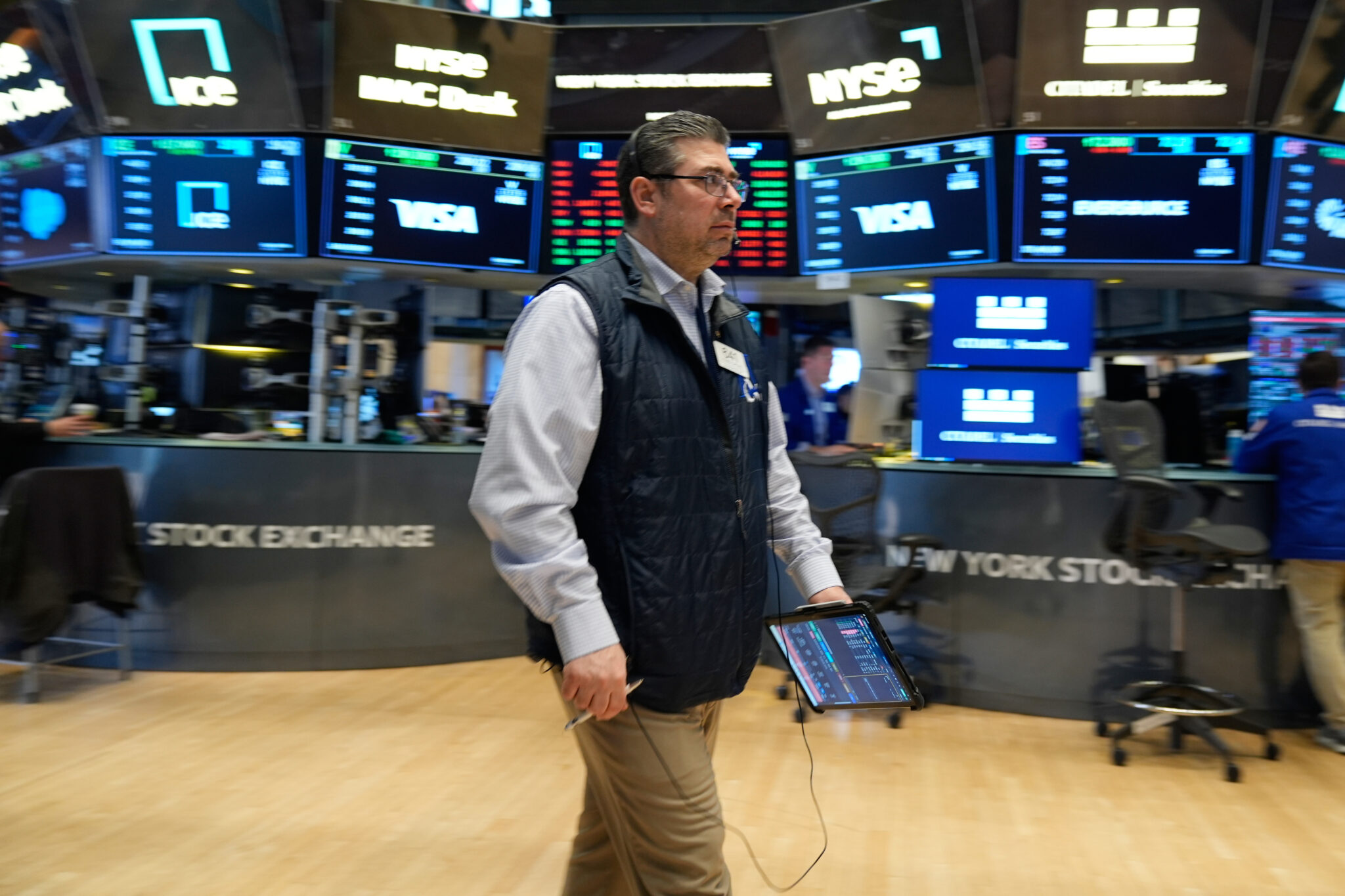
That shift in tone triggered a strong response on Wall Street. The S&P 500 climbed 1.3%, positioning itself for its strongest performance since before the conflict began. The Dow Jones Industrial Average rose by more than 650 points, or about 1.4%, while the Nasdaq composite gained 1.6% in early trading.
Despite the rally, the optimism was tempered by conflicting signals from Tehran. Iranian officials denied that any negotiations had taken place, with state media suggesting Trump’s announcement reflected a retreat rather than a diplomatic breakthrough. A government-affiliated newspaper also dismissed claims of talks, adding to uncertainty about the true state of relations.
Over the weekend, tensions had escalated significantly. Trump warned that the U.S. would strike Iran’s power plants if Tehran failed to reopen the Strait of Hormuz — a critical shipping route responsible for a large share of the world’s oil and gas supply — within 48 hours. The near closure of the strait has been a major driver of rising energy prices and global economic anxiety.
On Monday, however, Trump said he would delay any such strikes for five days, citing ongoing discussions. That decision helped stabilize markets, though investors remained cautious about whether the pause would lead to meaningful progress or simply delay further escalation.
Oil prices reflected that uncertainty. Brent crude briefly plunged to around $96 per barrel immediately following Trump’s announcement before rebounding. U.S. benchmark crude followed a similar pattern, dipping toward $84 before recovering to around $90.85.
Financial markets have experienced sharp swings since the war began, largely due to uncertainty over how long the conflict will last and how severely it could disrupt global energy supplies. A prolonged disruption in the Persian Gulf could push inflation higher worldwide, complicating efforts by central banks — including the Federal Reserve — to lower interest rates and support economic growth.
Still, Monday’s dominant mood was relief. European markets reversed earlier losses and ended the day higher, with France’s CAC 40 rising 1.3% and Germany’s DAX gaining 1.8%.
The reaction contrasted sharply with Asia, where markets had already closed before Trump’s announcement. South Korea’s Kospi plunged 6.5%, Japan’s Nikkei 225 fell 3.5%, and Hong Kong’s Hang Seng also dropped 3.5%, reflecting earlier fears before the apparent easing of tensions.
In the bond market, Treasury yields edged lower as investors dialed back expectations of prolonged inflation pressures. The yield on the 10-year Treasury slipped slightly to 4.38%. However, it remains well above levels seen before the war, highlighting continued concern about energy-driven inflation.
While the prospect of diplomacy offered a temporary boost to global markets, the situation remains fragile. With Iran denying talks and the Strait of Hormuz still effectively constrained, investors are likely to remain sensitive to any new developments.
For now, the market’s rebound reflects hope — but not certainty — that the conflict may be moving toward a less volatile phase.