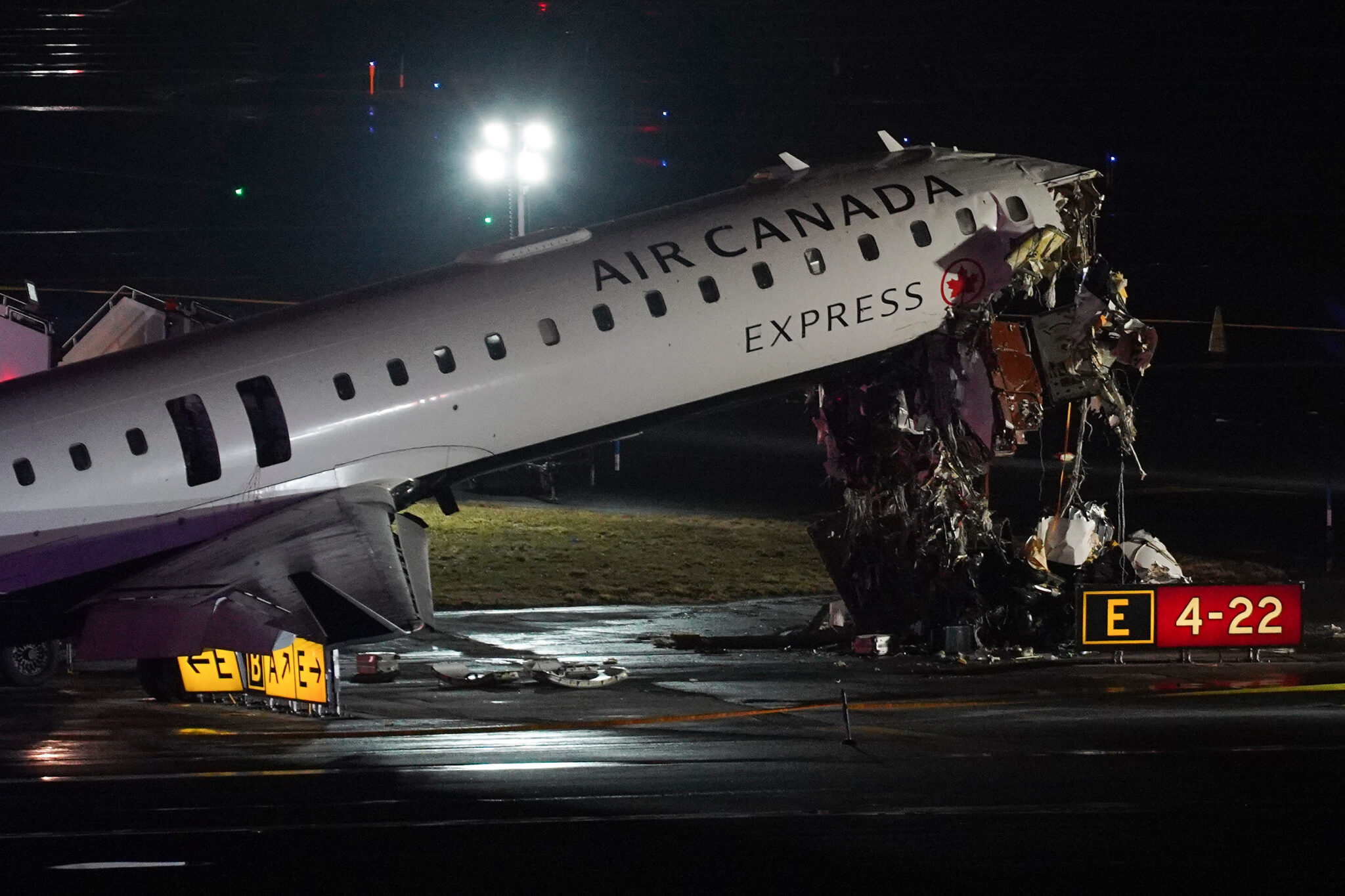
LaGuardia Crash Kills Pilots After Runway Collision/ Newslooks/ WASHINGTON/ J. Mansour/ Morning Edition/ A passenger jet collided with a fire truck at LaGuardia Airport. Two pilots were killed and dozens were injured. The crash shut down one of New York’s busiest airports.
LaGuardia Crash Investigation Quick Looks
- Air Canada regional jet collided with fire truck
- Two pilots killed, dozens of passengers injured
- Air traffic controller reportedly warned vehicle too late
- Airport shut down, flights diverted and canceled
- Crash occurred amid busy travel and shutdown disruptions
- Federal investigators now probing cause of collision
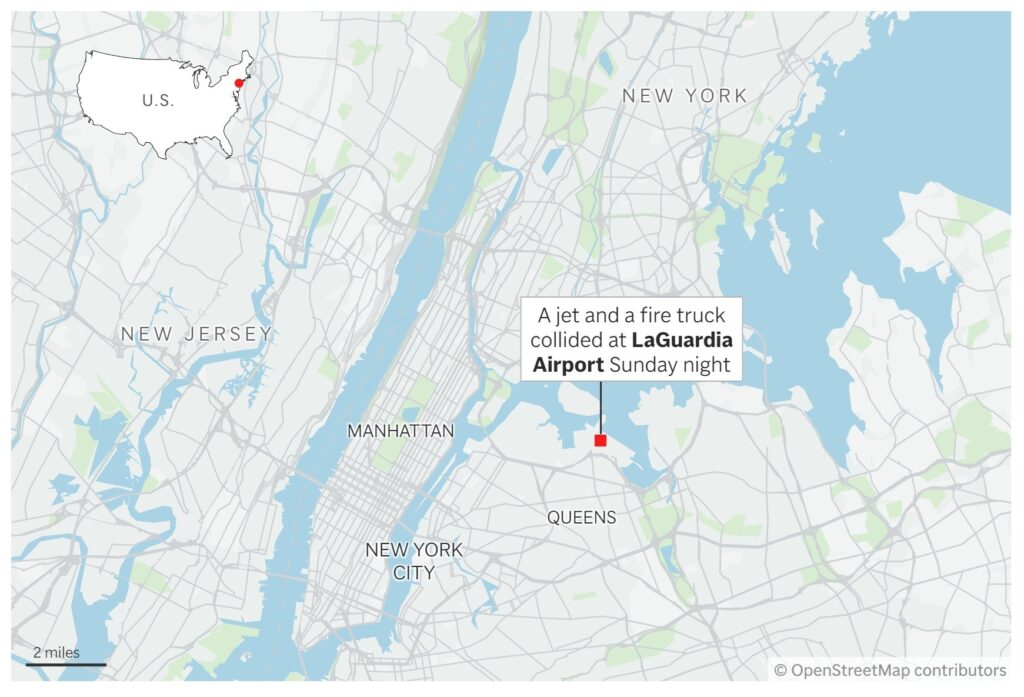
Deep Look: LaGuardia Crash Kills Pilots After Runway Collision
A deadly runway collision at New York’s LaGuardia Airport has left two pilots dead, dozens injured, and one of the nation’s busiest travel hubs temporarily shut down, intensifying travel disruptions already affecting U.S. airports.
The incident occurred late Sunday when an Air Canada regional jet carrying more than 70 passengers struck a fire truck as it was landing. Officials said the truck had been cleared to cross the runway to respond to another aircraft reporting a possible onboard issue.
Moments before the collision, an air traffic controller could be heard urgently warning the fire truck to stop. Audio recordings later revealed the controller expressing regret, reportedly saying, “I messed up,” after the crash.
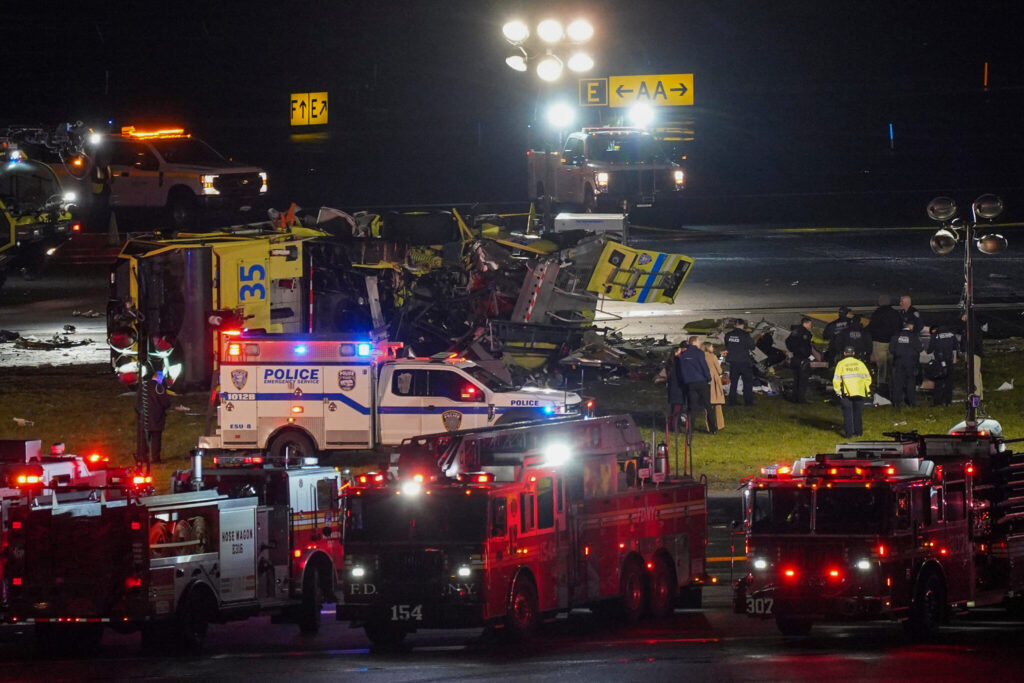
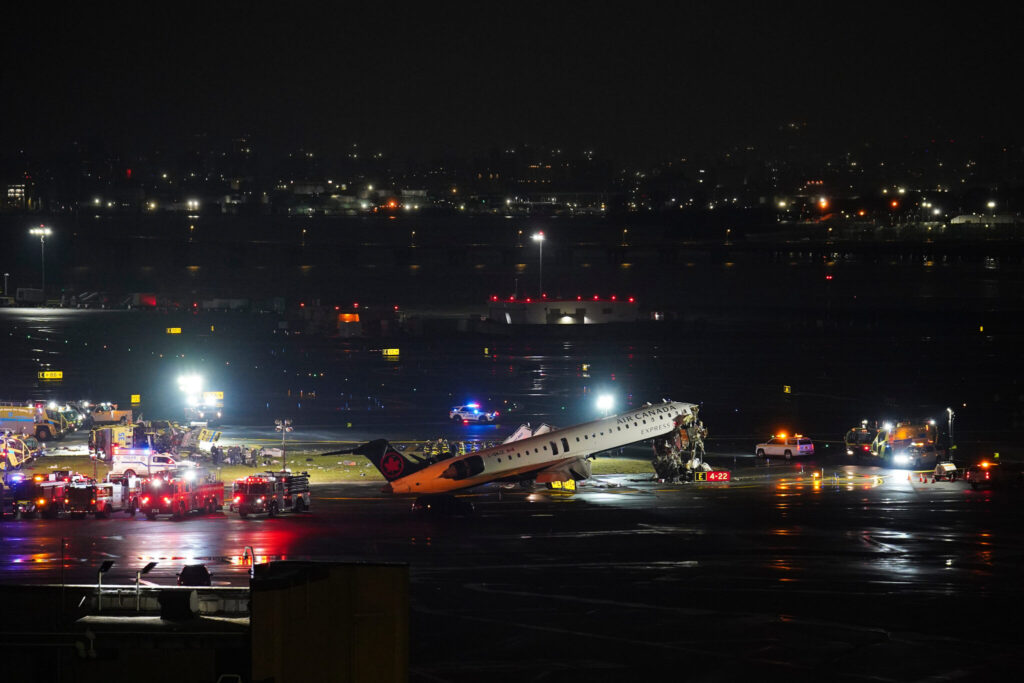
The impact caused catastrophic damage to the aircraft’s cockpit, crushing the nose and leaving debris scattered across the runway. Images from the scene showed the fire truck overturned, underscoring the severity of the collision.
Emergency responders transported roughly 40 passengers and crew members to nearby hospitals. While some suffered serious injuries, most were released by Monday morning. Two airport fire personnel inside the truck were also injured but are expected to recover.
Authorities confirmed that the pilot and copilot, both based in Canada, were killed in the crash. The aircraft, operated by Jazz Aviation on behalf of Air Canada, had departed from Montreal and was nearing the end of its flight when the collision occurred.
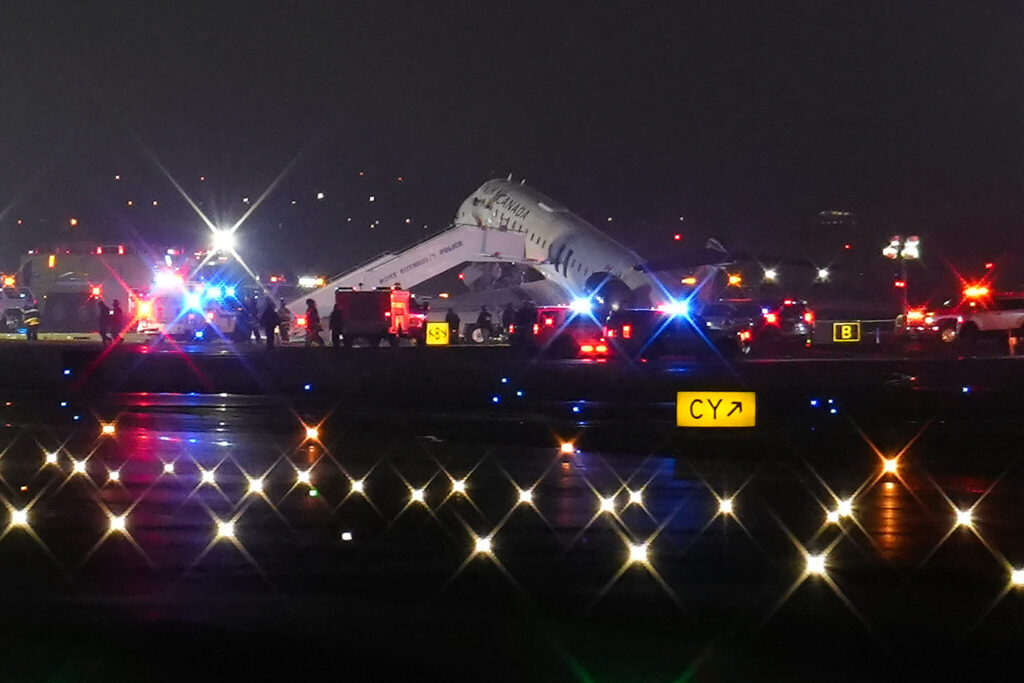
Passengers described chaotic scenes as the plane came to a halt. Emergency evacuation stairways were deployed, allowing travelers to exit the damaged aircraft. Witnesses on the ground and aboard nearby planes reported seeing the crash unfold in real time.
The accident forced an immediate shutdown of LaGuardia Airport, causing widespread delays and cancellations. Flights were diverted to nearby Newark Liberty International Airport, which itself experienced temporary disruptions after air traffic controllers evacuated due to a reported burning smell.
The crash comes at a particularly challenging time for air travel in the United States. Airports nationwide have already been dealing with long security lines and staffing shortages tied to a partial government shutdown, as well as increased passenger volume during the spring break travel season.
LaGuardia, a major domestic travel hub, handles millions of passengers each year and plays a critical role in the region’s transportation network. Its closure added to mounting frustration for travelers facing delays across the country.
Investigators from the National Transportation Safety Board have taken the lead in examining the cause of the collision. Officials are expected to analyze flight data, review air traffic communications, and interview personnel involved in the incident.
The Transportation Safety Board of Canada is also assisting in the investigation, given the aircraft’s origin and the nationality of the crew.
Aviation experts caution that while initial reports point to a possible error in air traffic control coordination, a full investigation will be required to determine all contributing factors. They note that incidents like this often involve multiple layers of failure rather than a single mistake.
“This may look straightforward, but deeper questions need to be answered,” one aviation analyst said, emphasizing the complexity of runway operations and communication systems.
LaGuardia is equipped with advanced surface monitoring technology designed to prevent runway conflicts, including radar systems and aircraft tracking tools. Investigators will likely examine whether those systems functioned properly and whether warnings were issued in time to prevent the collision.
For now, the focus remains on understanding what went wrong and preventing similar tragedies in the future. As the investigation unfolds, the crash stands as a stark reminder of the risks inherent in complex airport operations — even in systems designed with multiple layers of safety.