Vance Set to Join Critical US-Iran Talks in Pakistan/ Newslooks/ WASHINGTON/ J. Mansour/ Morning Edition/ Vice President JD Vance is expected to travel to Pakistan for a second round of U.S.-Iran talks as the ceasefire deadline approaches. The negotiations come amid rising tensions over the Strait of Hormuz and growing regional divisions over how to handle Iran. Diplomatic efforts are also expanding with new Israel-Lebanon talks and pressure from Gulf nations for de-escalation.
JD Vance Expected in Pakistan for Iran Peace Talks Quick Looks
- JD Vance is expected to leave Tuesday for Pakistan
- A second round of U.S.-Iran talks is planned for Wednesday in Islamabad
- The White House says the delegation will depart soon but timing remains unclear
- President Donald Trump said the team was “heading over now”
- Iran blames U.S. “aggression” for Strait of Hormuz instability
- Israel and Lebanon will hold a second round of direct talks Thursday
- Gulf nations remain divided on how Iran should be handled
- Diplomacy intensifies as the ceasefire deadline nears
Deep Look
JD Vance Expected to Lead U.S. Delegation to Pakistan
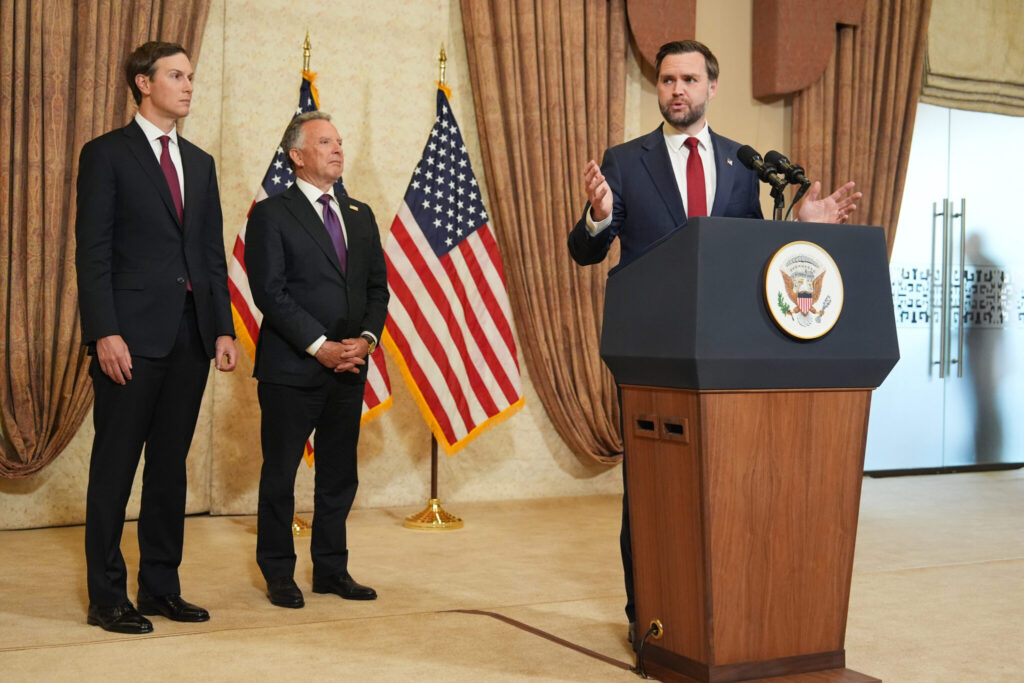
Vice President JD Vance is expected to depart Washington on Tuesday to travel to Pakistan for the latest round of high-stakes negotiations with Iran, according to people familiar with the plans.
A second round of direct talks between U.S. and Iranian officials is currently scheduled for Wednesday in Islamabad, with the goal of finding a diplomatic path forward before the fragile ceasefire expires.
The discussions come at a critical moment as tensions remain high across the Middle East and both Washington and Tehran continue exchanging sharp public statements.
Sources told CNN that while the trip is expected to move forward, the situation remains fluid due to the heated rhetoric and fast-changing developments surrounding the conflict.
The White House told CNN there was no formal confirmation on departure timing but said, “We expect the delegation to be on the road soon but unclear when.”
President Donald Trump told the New York Post during a phone interview Monday morning that the delegation was “heading over now” and would “be there tonight,” though those remarks appeared to come before final travel details were confirmed.
Ceasefire Deadline Raises Pressure on Diplomacy
The upcoming talks are viewed as one of the final opportunities to preserve the ceasefire before the deadline expires.
Trump has already signaled that another extension is unlikely if a deal is not reached, warning that fighting could resume quickly if negotiations collapse.
That makes the Islamabad meeting especially important for both governments.
The U.S. is seeking progress on Iran’s nuclear program, regional military activity, and shipping security through the Strait of Hormuz.
With both sides publicly holding firm positions, diplomats face a narrow path toward compromise.
Still, the presence of the vice president signals the White House sees the talks as a top foreign policy priority.
Iran Blames U.S. for Strait of Hormuz Insecurity
As negotiations continue, Iran is also escalating its criticism of Washington over instability in the Strait of Hormuz.
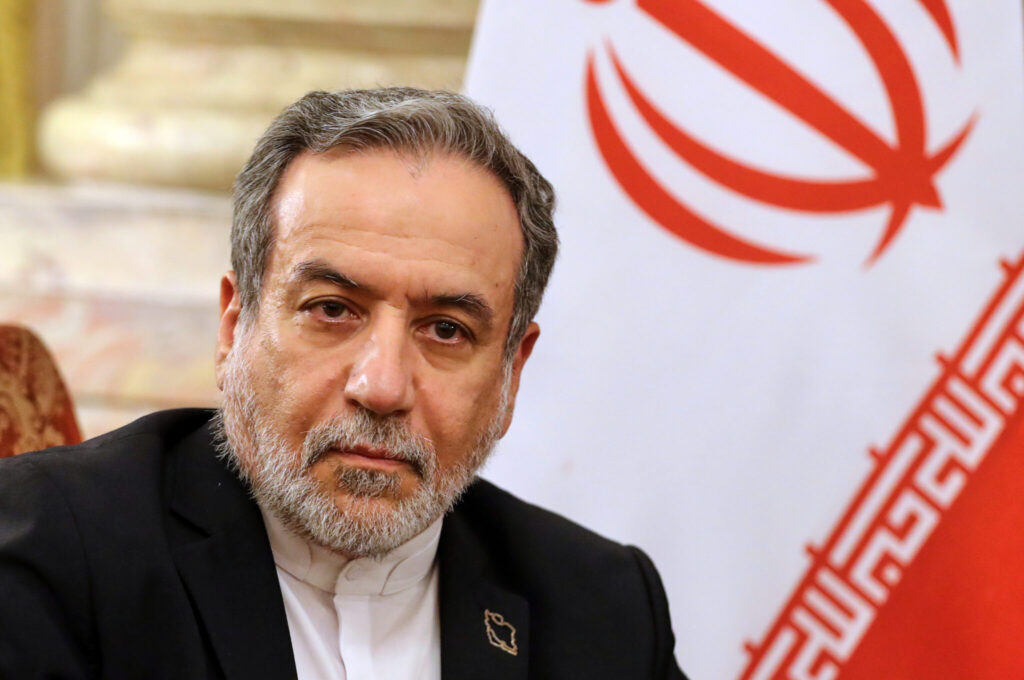
Iranian Foreign Minister Abbas Araghchi told Russian Foreign Minister Sergei Lavrov during a phone call Monday that current insecurity in the waterway is the direct result of U.S. military action.
According to Iranian state media, Araghchi said Tehran “considered the insecurity in the Strait of Hormuz to be the result of the military aggression of the United States and the Zionist regime.”
He also emphasized that ships from other countries continue passing through the strategic route only in coordination with Iranian authorities.
The Strait of Hormuz remains one of the world’s most critical energy chokepoints, handling nearly one-fifth of global oil trade.
Its stability has become central to both military and economic concerns in the region.
Russian state news agency TASS reported that Lavrov stressed the need to preserve the ceasefire and prevent another round of armed conflict.
Israel and Lebanon Prepare for Second Direct Talks
At the same time, separate diplomatic efforts are continuing between Israel and Lebanon.
Officials confirmed that a second round of direct talks between the two countries is scheduled for Thursday in Washington, D.C.
The first meeting took place last Tuesday and marked a rare direct diplomatic exchange after decades without formal talks.
Israeli Ambassador Yechiel Leiter and Lebanese Ambassador Nada Hamadeh attended the initial discussions, and the next round is also expected to remain at the ambassador level.
Lebanon’s delegation will be led by Simon Karam, a former ambassador to the United States.
President Joseph Aoun said the goal is to stop hostile actions, end Israeli occupation in southern areas, and fully deploy the Lebanese army along internationally recognized borders.
He also said Trump had helped intervene to secure a ceasefire and begin a negotiation track.
The U.S. State Department said it welcomed the early progress and would continue supporting “direct, good-faith discussions.”
Gulf Nations Divided on Iran Strategy
As diplomacy intensifies, countries across the Persian Gulf remain divided over how the war with Iran should end.
Middle East analyst Hasan Alhasan of the International Institute for Strategic Studies told CNN that Gulf states are far from united.
“The Gulf states are in fact deeply divided about what they want to see happen next,” he said.
According to Alhasan, the United Arab Emirates and Bahrain want to see Iran emerge from the conflict significantly weakened.
He said the UAE, having faced repeated Iranian attacks, wants to see Tehran “thoroughly defanged.”
Bahrain shares a similar position and recently helped draft a United Nations Security Council resolution aimed at reopening the Strait of Hormuz by force if necessary.
Qatar, Oman and Others Push for Diplomacy
In contrast, countries like Qatar and Oman are pushing strongly for immediate de-escalation and diplomatic solutions.
Saudi Arabia and Kuwait, according to Alhasan, have shown more caution and remain less publicly committed to either path.
“Oman and Qatar have been more vocal about the need to ensure an immediate de-escalation and to bring about a ceasefire and an end to this conflict,” he said.
“There’s been quite a bit of ambivalence from the Saudis and Kuwaitis, and we’re not exactly sure where they stand.”
The divisions reflect both security concerns and economic pressure, as the prolonged conflict continues disrupting shipping, energy prices, and regional trade.
Iranian adviser warns US “miscalculation” will bring “final chastisement”
Mohammad Mokhber, a member of a body advising Iran’s supreme leader, warned Monday that “any miscalculation” by the United States would trigger “final chastisement.”
“We are vigilant that negotiations do not become a cover for a war of attrition strategy and the prolongation of war,” he wrote in a post on X, adding: “Diplomacy is only in the field and authority is desirable for the nation.”
Mokhber, a former acting president, also warned of a “response that may extend beyond the region, transforming the future equations of the world.”
US Vice President JD Vance and other senior US officials are expected to travel to Islamabad, Pakistan, on Tuesday ahead of a potential second round of talks between US and Iranian delegations. Iran has not confirmed it will participate.
President Donald Trump said Monday a ceasefire with Iran is set to expire Wednesday evening, and he called an extension “highly unlikely.”
Diplomacy Faces Final Test This Week
With the ceasefire deadline approaching and multiple negotiation tracks unfolding at once, this week may determine whether the region moves toward de-escalation or renewed conflict.
Vance’s expected trip to Pakistan places the United States at the center of that effort.
At the same time, Israel-Lebanon talks, Gulf state divisions, and the growing importance of the Strait of Hormuz show how interconnected the regional crisis has become.
Success in Islamabad could stabilize far more than just U.S.-Iran relations.
Failure could quickly reignite one of the world’s most dangerous geopolitical confrontations.