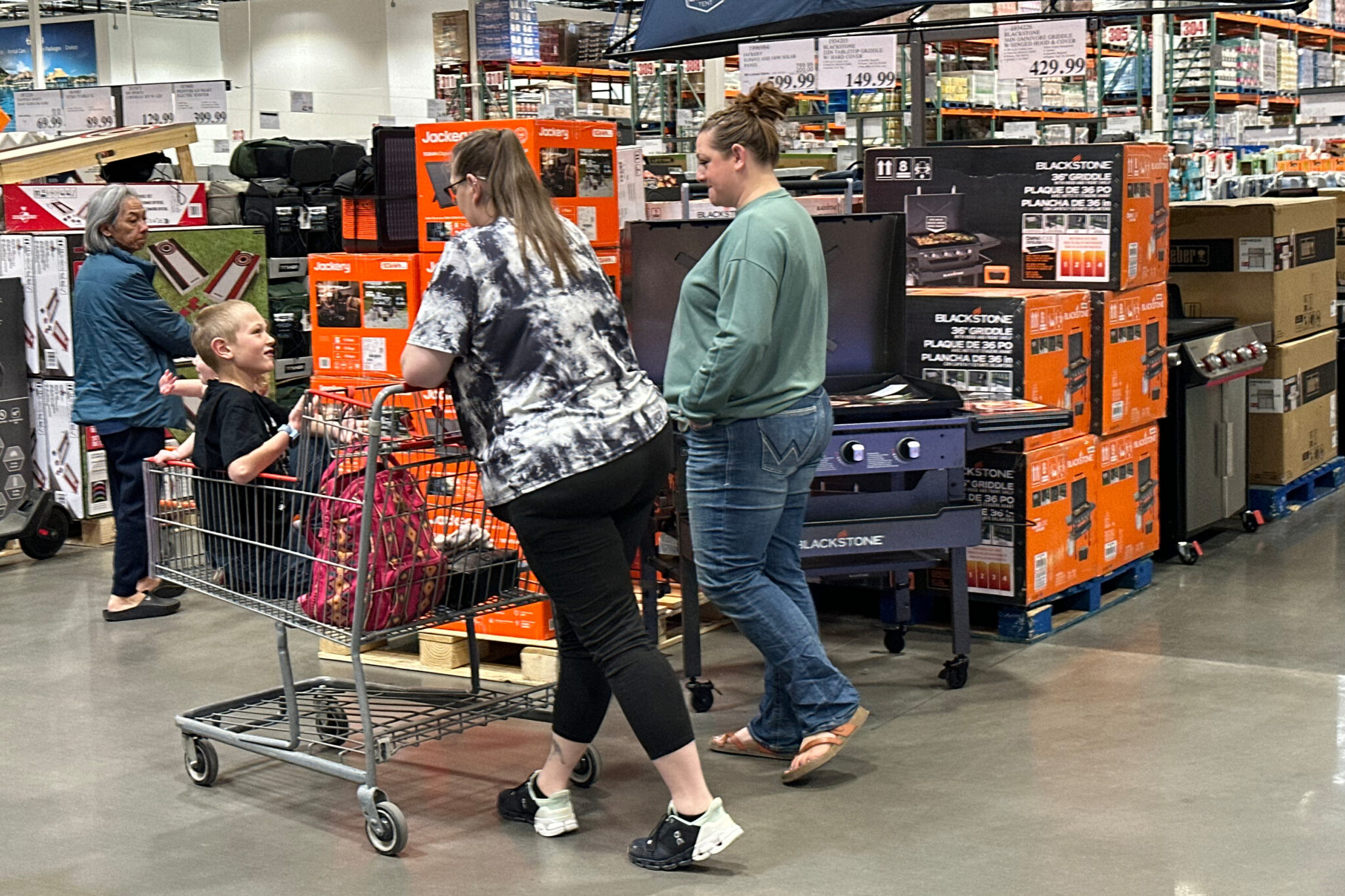
Retail Sales Jump 1.7% in March as Gas Prices Surge During Iran War/ Newslooks/ WASHINGTON/ J. Mansour/ Morning Edition/ U.S. retail sales rose 1.7% in March, marking the fastest monthly increase in more than three years, largely driven by surging gas prices tied to the Iran war. Consumers spent heavily at gas stations as fuel prices climbed above $4 per gallon, while tax refunds and warm weather also supported broader shopping activity. Despite strong spending, economists warn that higher fuel costs and inflation may soon weaken consumer confidence.
Retail Sales Jump as Gas Prices Surge During Iran War Quick Looks
- U.S. retail sales rose 1.7% in March from February
- Gas station sales surged 15.5% due to higher fuel prices
- The Iran war and Strait of Hormuz disruption pushed gas above $4 per gallon
- Excluding gas prices, retail sales still rose 0.6%
- Department stores gained 4.2%, while furniture sales rose 2.2%
- Inflation climbed 3.3% year-over-year in March
- Consumer sentiment dropped sharply in April
- Economists warn shoppers may cut back as higher costs continue
Deep Look
March Retail Sales Surge as Americans Spend More at the Pump
American shoppers increased spending sharply in March, but much of that money went directly into their gas tanks.
U.S. retail sales climbed 1.7% from February to March, the strongest monthly increase in more than three years, according to new data from the United States Department of Commerce.
The major driver behind the jump was a steep rise in gasoline prices caused by the ongoing Iran war, which has now entered its eighth week.
This was the first major retail spending report to fully capture how the conflict is affecting everyday consumer behavior.
Business at gas stations rose a massive 15.5% in March as Americans faced higher fuel costs nationwide.
Late last month, the national average price for regular gasoline moved above $4 per gallon for the first time since 2022.
That surge followed major disruptions in the Strait of Hormuz, one of the world’s most important oil shipping routes.
The conflict has cut off roughly one-fifth of global oil supply, putting immediate pressure on energy markets and household budgets.
Spending Stayed Strong Beyond Gasoline
Even after removing gas prices from the equation, retail sales still increased by 0.6%, showing that consumers continued spending in other parts of the economy.
Government tax refunds and warmer spring weather helped support shopping activity.
Department stores posted one of the strongest gains, rising 4.2%.
Furniture and home furnishing stores increased 2.2%, while online retailers saw a 1% rise.
Consumer electronics and appliance stores also gained 0.9%, reflecting continued purchases despite inflation concerns.
The only category that declined was miscellaneous retailers.
Restaurants, the only major service category included in the report, posted only a modest 0.1% gain.
That slower pace may signal early signs of caution as families shift spending priorities.
Economists Call It a “Blowout” Retail Report
Economists described the March report as surprisingly strong.
“It’s a blowout retail sales figure for March,” said Heather Long.
She noted that higher prices tied to tariffs also contributed to strong spending in electronics and appliances.
However, she warned that restaurant traffic and other discretionary spending may be showing early signs of weakness.
“Overall, the American consumer is still healthy,” she added.
“Extra income from tax refunds is helping many households weather this oil shock, but that extra money won’t last forever.”
The so-called control group—used to calculate GDP and excluding food services, autos, building materials, and gas station sales—rose 0.7%.
That suggests spending strength was not limited to gasoline alone and offers a positive signal for broader economic growth.
Inflation and Gas Prices Create New Pressure
The same forces driving retail sales higher are also creating fresh inflation concerns.
Consumer prices rose 3.3% in March compared to a year earlier.
On a monthly basis, prices increased 0.9% from February, the largest monthly jump in nearly four years.
Much of that spike was tied directly to rising fuel costs.
Higher transportation expenses are beginning to ripple across the economy, affecting everything from airline baggage fees to product shipping costs and grocery prices.
Retailers are expected to pass many of those added costs on to consumers in the coming months.
That creates a difficult challenge for the Federal Reserve System, which is still trying to control inflation while avoiding broader economic slowdown.
It also creates political pressure for the White House as voters continue feeling the impact of higher living costs.
Consumer Confidence Falls Despite Strong Spending
Even though Americans spent more in March, confidence about the economy continues to weaken.
Consumer sentiment plunged to a record low in April, according to the University of Michigan consumer survey.
Much of that decline was linked to the Iran war and rising fuel prices.
People are not only noticing the higher cost of gasoline but also seeing unexpected price increases in travel, food, and everyday household expenses.
Bryan Eshelman of AlixPartners said many shoppers are becoming more cautious, especially lower-income households.
“Particularly in the low-end economy, people are shifting from wants to needs,” he said.
That shift means consumers are prioritizing groceries, gas, and essentials while cutting back on optional purchases.
Retail Foot Traffic Shows Mixed Signals
Retail traffic data shows a mixed picture for consumer behavior.
R.J. Hottovy said nondiscretionary retailers like grocery stores had outperformed discretionary retailers for seven straight weeks.
That changed briefly during the week of April 6, helped by tax refund spending, spring break travel, and Easter shopping.
But once those temporary boosts fade, future spending may depend heavily on how consumers feel about gas prices and the broader economy.
Placer.ai, which tracks retail traffic using cellphone movement data, suggests that consumer confidence will be one of the biggest indicators to watch heading into late spring.
If oil prices remain high and the Iran conflict continues, spending momentum could weaken quickly.
Iran War May Shape Consumer Spending for Months
The war that began on February 28 is no longer just a foreign policy issue—it is now shaping daily economic decisions for millions of Americans.
Higher oil prices are influencing inflation, shopping habits, travel costs, and even the political landscape heading into the 2026 midterm elections.
March retail sales may look strong on paper, but much of that strength came from consumers paying more for necessities rather than feeling financially secure.
As gas prices stay elevated and uncertainty grows around the Strait of Hormuz, the biggest question is whether shoppers can continue spending at the same pace.
For now, Americans are still buying—but increasingly, they are spending out of necessity, not confidence.