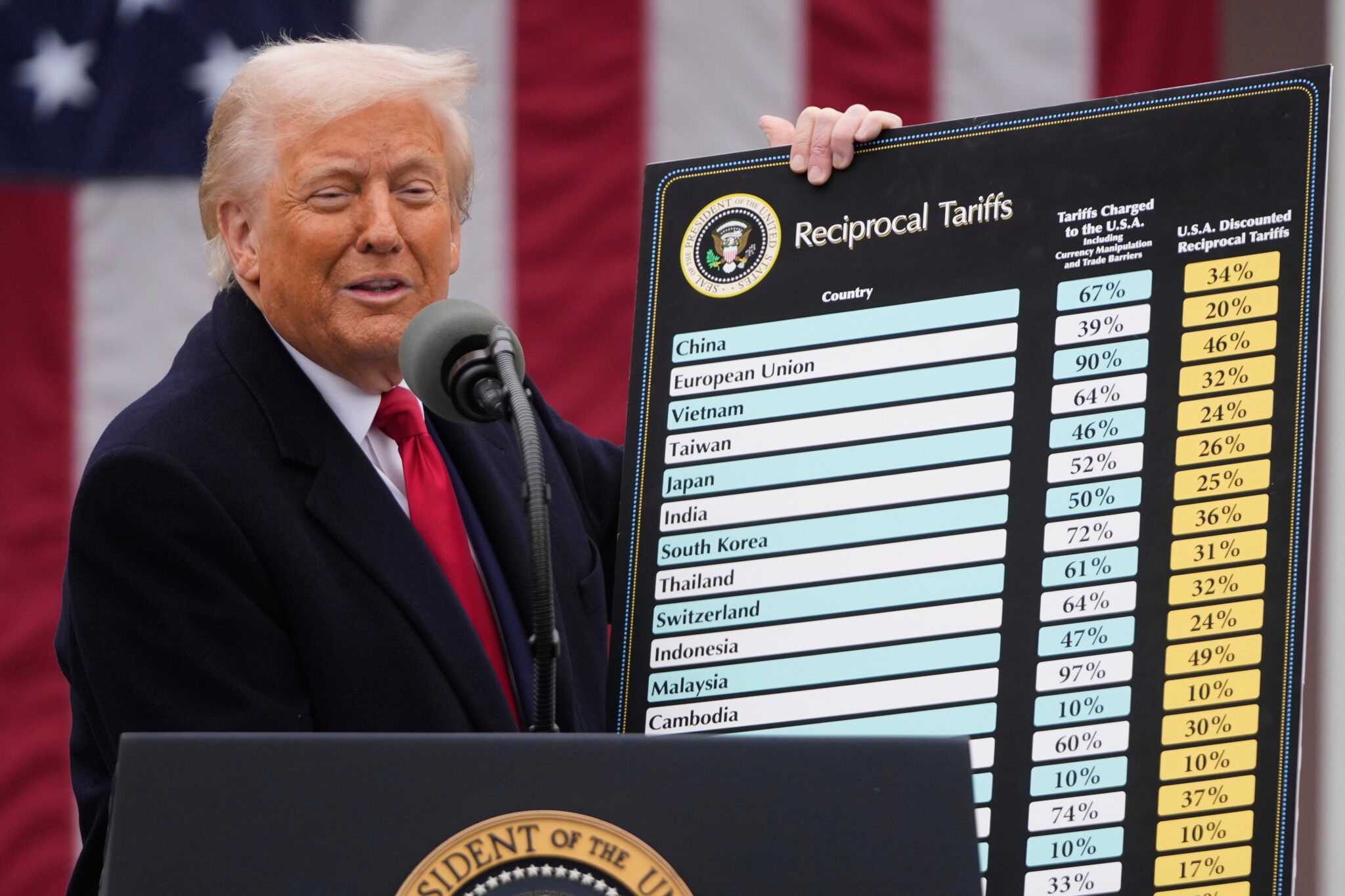
Federal Court Blocks Trump’s New 10% Global Tariff After Supreme Court Loss/ Newslooks/ WASHINGTON/ J. Mansour/ Morning Edition/ A federal trade court ruled that President Donald Trump illegally imposed new 10% global tariffs after the Supreme Court already struck down broader tariffs earlier this year. The decision blocks tariff collection from several plaintiffs and threatens another setback to Trump’s trade agenda. The administration is expected to appeal the ruling as it pursues alternative tariff strategies.
Trump Tariff Ruling Quick Looks
- Federal trade court ruled tariffs unauthorized
- Judges said Trump exceeded delegated authority
- Decision blocks tariffs for three plaintiffs
- Supreme Court previously struck down broader tariffs
- Administration expected to appeal immediately
- Businesses seek refunds for tariff payments
Deep Look
Federal Court Rejects Trump’s New Tariff Plan
A federal trade court ruled Thursday that President Donald Trump illegally imposed new worldwide tariffs after suffering a major defeat earlier this year at the Supreme Court.
The U.S. Court of International Trade in New York ruled 2-1 that the administration exceeded the authority granted by Congress under Section 122 of the Trade Act of 1974.
The majority concluded the tariffs were:
“invalid” and “unauthorized by law.”
The ruling represents another major legal obstacle for Trump’s aggressive trade strategy centered on broad import taxes.
Court Blocks Tariffs For Three Plaintiffs
The case was brought by:
- The state of Washington
- Burlap & Barrel
- Basic Fun!
The decision directly prevents the federal government from collecting the tariffs from those plaintiffs.
Jay Foreman, CEO of Basic Fun!, celebrated the ruling:
“We fought back today and we won, and we’re extremely excited.”
Legal experts said the ruling could encourage many more companies to challenge the tariffs and seek refunds for payments already made.
Supreme Court Already Struck Down Earlier Tariffs
The latest tariffs were imposed after the U.S. Supreme Court struck down Trump’s broader global tariff program earlier this year.
Previously, Trump had relied on the:
- International Emergency Economic Powers Act (IEEPA)
to justify sweeping tariffs on imports from nearly every country.
The Supreme Court ruled in February that IEEPA did not authorize such broad tariff powers because the Constitution grants Congress authority over taxation and tariffs.
In response, the administration shifted to Section 122 of the Trade Act of 1974 to impose temporary 10% tariffs worldwide.
Those tariffs were scheduled to expire July 24 before Thursday’s ruling.
Judges Split On Presidential Authority
The three-judge panel split 2-1.
The majority concluded Congress did not grant the president such sweeping authority under the law used by the administration.
However, the dissenting judge argued presidents should receive broader flexibility in trade policy during economic disputes.
The legal fight is expected to continue quickly through appeals courts and potentially return to the Supreme Court.
Appeal Likely Headed Toward Supreme Court
The Trump administration is expected to appeal immediately to:
- The U.S. Court of Appeals for the Federal Circuit
- Potentially the U.S. Supreme Court afterward
Trade attorney Dave Townsend said the ruling could trigger a broader wave of litigation.
“Other importers likely will now ask for a broader remedy,” Townsend said.
Trump Pursuing Alternative Tariff Strategies
Even as courts repeatedly block major portions of Trump’s tariff agenda, the administration continues pursuing new investigations that could justify future import taxes.
Current investigations involve:
- Alleged overproduction by major trading partners
- Forced labor concerns in global supply chains
The Office of the U.S. Trade Representative is examining trade practices involving:
- China
- European Union
- Japan
and dozens of additional economies.
Officials argue foreign competition harms American manufacturing and national economic security.
Trade Policy Remains Central To Trump Agenda
Tariffs remain one of Trump’s signature economic policies.
Supporters argue import taxes protect American industries and reduce dependence on foreign manufacturing.
Critics, however, say the tariffs:
- Raise consumer prices
- Increase costs for businesses
- Trigger retaliatory trade measures
- Hurt global supply chains
The legal battles now unfolding could significantly shape U.S. trade policy heading into the 2026 elections.