Pope Doubles Down on Peace, Unity as Trump’s Criticism Escalates/ Newslooks/ WASHINGTON/ J. Mansour/ Morning Edition/ Pope Leo XIV emphasizes peace and unity despite Trump’s criticism. The Vatican pushes back on arguments supporting “just war.” Tensions rise between religious leadership and U.S. political figures.
Pope Leo Trump Conflict Peace Message Quick Looks
- Pope Leo XIV promotes peace during Africa trip
- Responds indirectly to criticism from Donald Trump
- Emphasizes unity across religions and cultures
- Vatican challenges “just war” arguments raised by JD Vance
- Highlights influence of St. Augustine’s teachings
- Calls for dialogue over conflict in Iran war
- Trump continues public criticism on social media
Deep Look: Pope Doubles Down on Peace, Unity as Trump’s Criticism Escalates
Pope Leo XIV is doubling down on his message of peace and global unity, even as criticism from Donald Trump continues to intensify.
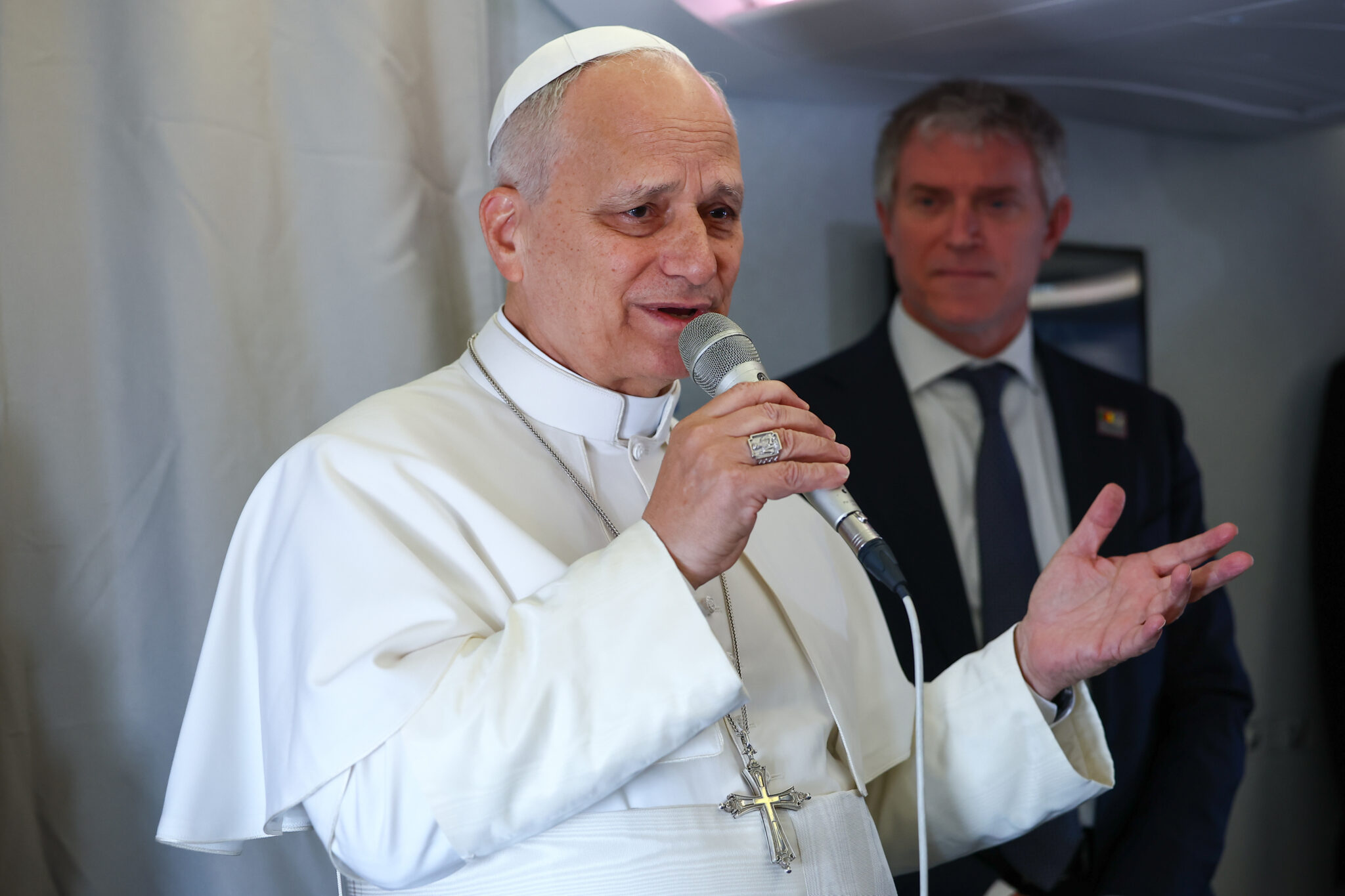
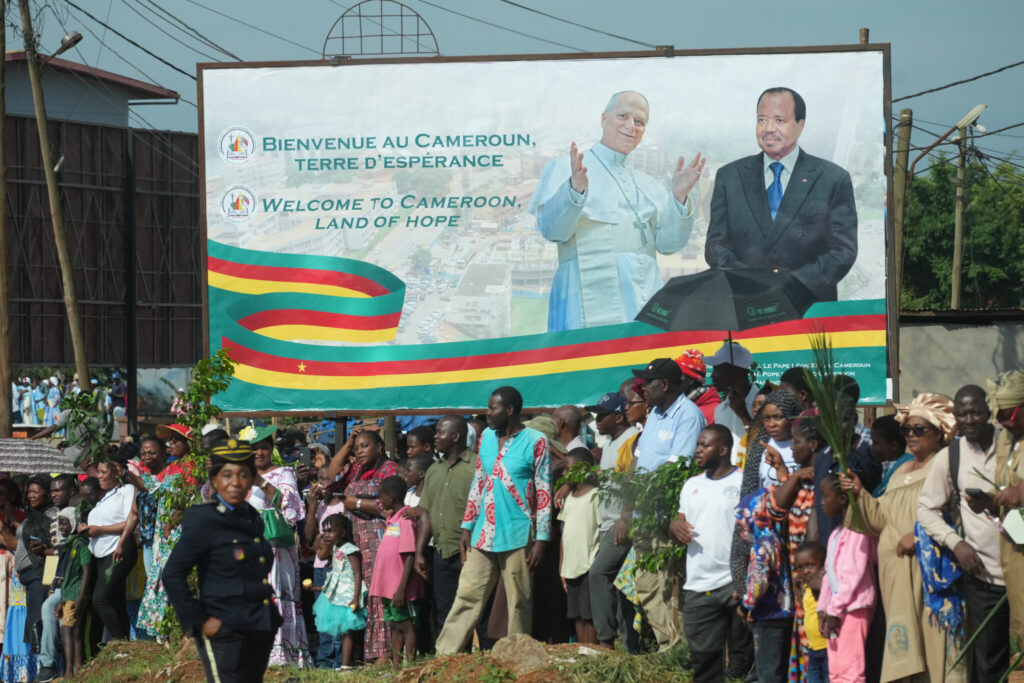
Speaking to journalists aboard the papal plane en route to Cameroon, Leo avoided directly addressing Trump’s latest remarks but made clear that his focus remains on promoting dialogue and reconciliation in a world increasingly defined by conflict.
“The world needs to hear” a message of peace, Leo emphasized, signaling that his stance on war — particularly the ongoing conflict involving Iran — has not changed despite mounting political pressure.
The pope’s comments come amid a growing public dispute with Trump, who has repeatedly criticized Leo in recent days. The president has accused the pontiff of weakness and suggested that his leadership is politically influenced. Trump has also used social media to challenge Leo’s views on war, arguing that strong military action is necessary in the face of global threats.
Overnight, Trump posted “Not good!!!” in response to a post citing social media posts by Leo before he was pope that were critical of Trump. And he wrote: “Will someone please tell Pope Leo that Iran has killed at least 42,000 innocent, completely unarmed, protesters in the last two months, and that for Iran to have a Nuclear Bomb is absolutely unacceptable.”
Leo drew attention to his visit Tuesday to Annaba, the ancient city of Hippo where St. Augustine, the theological and philosophical giant of the early church, lived as a bishop for more than 30 years.
“His writings, his teaching, his spirituality, his invitation to search for God and to search for truth is something that is very much needed today, a message that is very real for all of us today as believers in Jesus Christ, but for all people,” Leo said.
The tensions escalated after Leo condemned violence and warned that God does not support those who wage war by attacking others. He also criticized rhetoric suggesting the destruction of entire nations, calling such statements unacceptable.
Rather than engaging directly in the political exchange, Leo framed his message through spiritual and historical reflections. He highlighted the legacy of Augustine of Hippo, whose teachings continue to shape Christian thought.
Referencing his visit to Annaba — the ancient city of Hippo — Leo spoke about Augustine’s emphasis on truth, faith, and unity. He described these principles as especially relevant in today’s fractured world, where divisions often overshadow common humanity.
The pope also pointed to his visit to the Great Mosque of Algiers as a symbol of interfaith respect and cooperation. By praying silently in a Muslim place of worship, he aimed to demonstrate that people of different beliefs can coexist peacefully.
“Although we have different beliefs … we can live together in peace,” Leo said, reinforcing his call for dialogue across religious and cultural lines.
The Vatican has taken a more direct stance in responding to criticism from U.S. officials. Andrea Tornielli challenged comments by Vice President JD Vance, who had suggested that the Catholic Church historically supported the concept of a “just war.”
Tornielli argued that the traditional doctrine has evolved significantly over time, particularly in light of modern warfare technologies. He noted that contemporary conflicts — involving advanced weaponry and large-scale destruction — raise profound moral questions that make it increasingly difficult to justify war under traditional frameworks.
“There has been a growing awareness that war is not a path to be followed,” Tornielli wrote, emphasizing the church’s shift toward prioritizing peace and nonviolence.
Other Catholic leaders have echoed similar concerns. Robert McElroy has argued that recent military actions involving the United States and its allies fail to meet the moral criteria historically associated with a “just war,” such as responding to an immediate threat or ensuring that the benefits outweigh the harm.
Despite the escalating rhetoric from Washington, Leo pointed to examples of cooperation and respect during his travels. He noted the warm reception he received in Algeria, including a formal military escort, as evidence that dialogue and goodwill remain possible even amid global tensions.
The broader dispute highlights a deepening divide between political and religious perspectives on war and peace. While Trump and his allies emphasize security and deterrence, the Vatican continues to advocate for diplomacy, restraint, and moral reflection.
As the debate unfolds, Leo’s message remains consistent: unity, understanding, and peace are essential in addressing the challenges facing the modern world.
Whether that message resonates in the current geopolitical climate — or continues to clash with more hardline approaches — may shape not only the relationship between global leaders but also the broader conversation about war, morality, and humanity’s shared future.