Trump Fed Pick Kevin Warsh Faces Pressure Over Rates, Inflation/ Newslooks/ WASHINGTON/ J. Mansour/ Morning Edition/ Federal Reserve chair nominee Kevin Warsh pledged to fight inflation during his Senate confirmation hearing, even as President Donald Trump renewed demands for immediate interest rate cuts. Warsh said price stability is the Fed’s core responsibility and stressed that monetary policy must remain independent from political pressure. His nomination comes as rising gas prices linked to the Iran war increase inflation risks and complicate the central bank’s next move.
Fed Nominee Kevin Warsh Promises Tough Inflation Fight Quick Looks
- Kevin Warsh pledged to prioritize fighting inflation
- President Donald Trump wants immediate interest rate cuts
- Inflation remains elevated at 3.3% annually
- Rising gas prices from the Iran war are adding inflation pressure
- Warsh said Fed independence is “essential”
- Trump said he would be disappointed if Warsh did not cut rates quickly
- Jerome Powell may remain on the Fed board even after his chair term ends
- Democrats raised concerns about Warsh’s financial disclosures and political independence
Deep Look
Kevin Warsh Faces High-Stakes Fed Confirmation Hearing
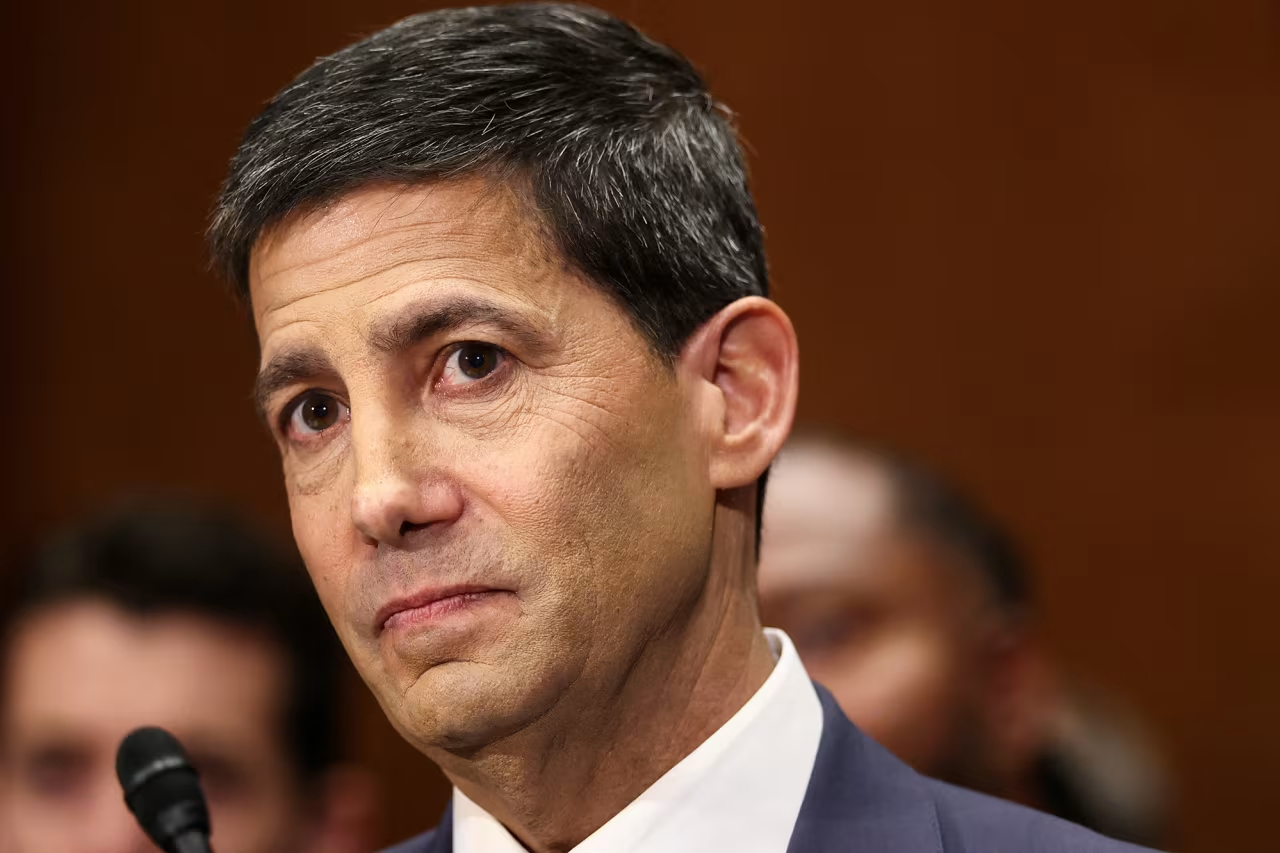
Kevin Warsh pledged Tuesday to aggressively fight inflation if confirmed to lead the Federal Reserve System, even as President Donald Trump continues pushing for immediate interest rate cuts.
Warsh appeared before the Senate Banking Committee for a closely watched confirmation hearing that could shape the future of U.S. monetary policy during one of the most economically sensitive moments of Trump’s second term.
The former Fed governor would replace current Chair Jerome Powell, whose term as chair ends May 15.
Markets are watching closely because inflation remains stubbornly high while the war with Iran continues driving gasoline prices upward, making the Fed’s next decision far more difficult.
Warsh made clear that controlling inflation would be his top priority.
“Congress tasked the Fed with the mission to ensure price stability, without excuse or equivocation, argument or anguish,” Warsh said.
“Inflation is a choice, and the Fed must take responsibility for it.”
Trump Demands Rate Cuts Despite Inflation Pressure
Warsh’s message stands in contrast to Trump’s repeated demands for lower interest rates.
The president has openly criticized Powell for refusing to cut borrowing costs and has made clear he expects faster action from a new Fed chair.
When asked Tuesday during a CNBC interview whether he would be disappointed if Warsh did not cut rates “right away,” Trump gave a direct answer.
“I would,” Trump said.
That creates a difficult balancing act for Warsh.
Higher inflation usually forces the Fed to either keep rates elevated or raise them further—not lower them.
With annual inflation still running at 3.3% and gasoline prices rising sharply because of the Iran conflict, cutting rates too soon could worsen price pressures across the economy.
At the same time, the conflict may also slow hiring and broader economic growth, increasing pressure for monetary relief.
This is the central policy challenge Warsh may face from day one.
Iran War Adds New Inflation Risks
One of the biggest drivers of current inflation is the rising cost of energy.
The war involving Iran has pushed oil prices and gasoline costs sharply higher, especially because of uncertainty around the Strait of Hormuz, one of the world’s most critical oil shipping routes.
Higher fuel prices quickly spread through the economy, increasing transportation costs, food prices, airline fees, and shipping expenses.
That makes inflation harder to control.
It also complicates the political message from the White House, where Trump wants both lower gas prices and lower interest rates.
Economists warn that the Fed cannot easily deliver both at the same time if inflation remains elevated.
Warsh’s confirmation hearing reflected that reality, with senators pressing him on how he would handle both market expectations and political pressure.
Warsh Defends Federal Reserve Independence
During his opening remarks, Warsh strongly defended the idea that the Federal Reserve must remain independent from political interference.
He called that independence “essential,” but also said that public comments from elected officials do not automatically threaten it.
“I do not believe the operational independence of monetary policy is particularly threatened when elected officials — presidents, senators, or members of the House — state their views on interest rates,” he said.
He argued that central bankers must be strong enough to hear opinions from all sides while still making decisions based on economic evidence.
Democrats challenged that view.
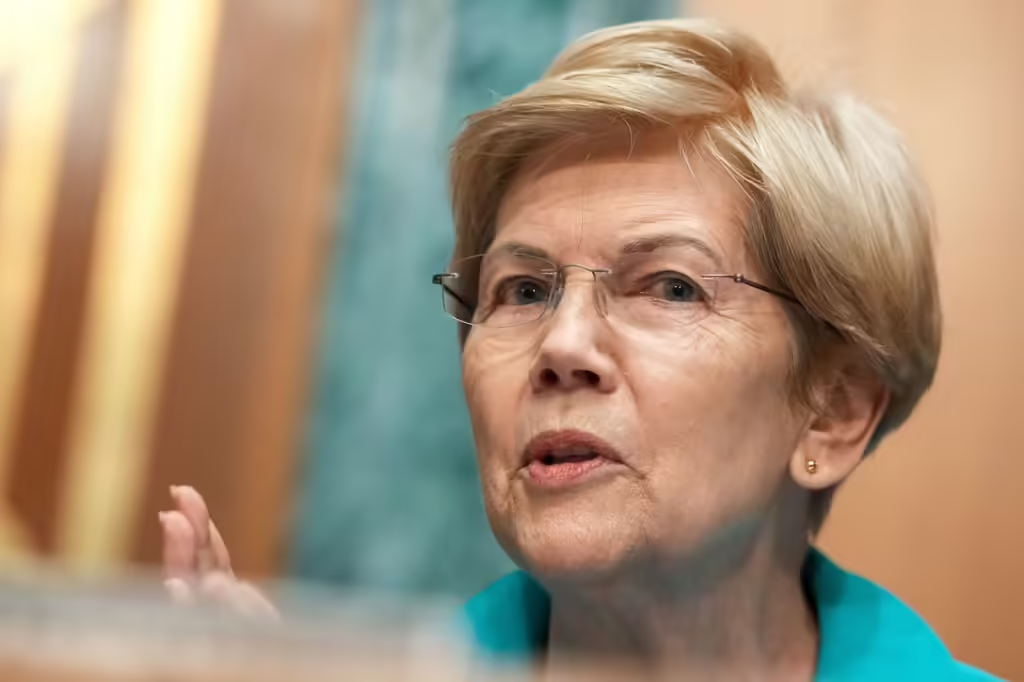
Sen. Elizabeth Warren argued that Trump has gone far beyond simply sharing opinions.
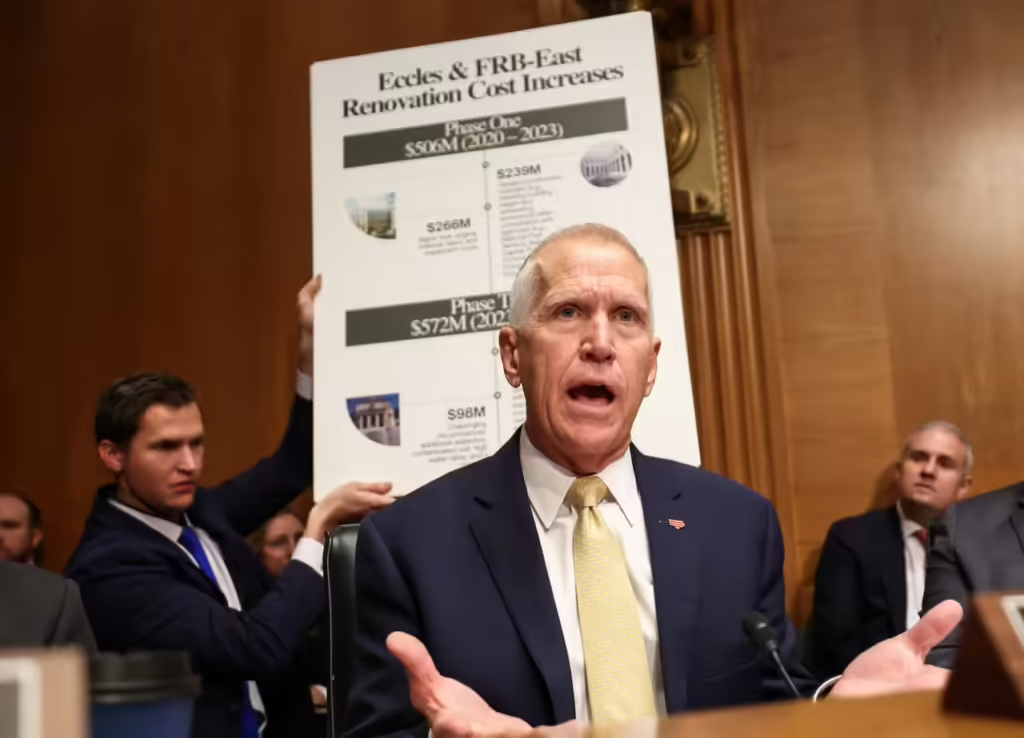
She pointed to Trump’s attempts to remove Fed officials and the Justice Department’s investigation into Powell and the Fed over a building renovation project.
She accused Warsh of becoming too politically aligned with Trump.
“The Senate should not be aiding and abetting Donald Trump’s illegal takeover of the Fed by installing his chosen sock puppet as chair,” she said.
Democrats Raise Questions About Wealth and Transparency
Warsh also faced scrutiny over his personal financial holdings.
Democrats raised concerns about what they described as limited transparency involving more than $100 million in disclosed assets.
As a former Fed official turned wealthy investor, Warsh enters the nomination process with significant private-sector financial interests that could face conflicts under Federal Reserve leadership.
Senators questioned whether those holdings had been fully explained and whether they could create future concerns about decision-making or independence.
The issue added another layer of complexity to an already politically sensitive confirmation process.
Powell Could Remain at the Fed During Transition
Another unusual complication involves Powell himself.
While Powell’s term as Fed chair ends May 15, he also serves a separate term as a member of the Fed’s governing board that runs until January 2028.
Fed chairs usually leave the board once their chairmanship ends, but Powell said he would remain unless the Justice Department investigation against him is dropped.
That could create the rare situation of a former chair staying on the board while his replacement leads the institution.
Such an arrangement has not happened since the late 1940s.
Trump responded strongly when asked about Powell staying.
He said he would fire Powell if he attempted to remain at the Fed.
However, Trump’s earlier attempt to remove Fed Governor Lisa Cook is still tied up in court, making any such move legally uncertain.
Confirmation Process Faces Political Obstacles
Even after the hearing, Warsh’s nomination faces significant uncertainty.
Democratic Sen. Tina Smith said there may not be enough committee support to move the nomination forward under current conditions.
“Clearly there’s a majority of the committee that’s not going to move this nomination forward,” she said.
That means the hearing may be only the beginning of a much larger political and legal battle over control of America’s most important central bank.
Fed Leadership Change Could Shape Global Markets
The transition from Powell to Warsh is unusually sensitive because the Federal Reserve sits at the center of the global financial system.
A smooth leadership handoff helps reassure investors and stabilize borrowing costs.
A chaotic transition could push longer-term interest rates even higher and create market instability worldwide.
With inflation still elevated, oil prices volatile, and Trump demanding aggressive rate cuts, the next Fed chair may face one of the most difficult economic environments in years.
Whether Warsh becomes that person now depends as much on politics as economics.