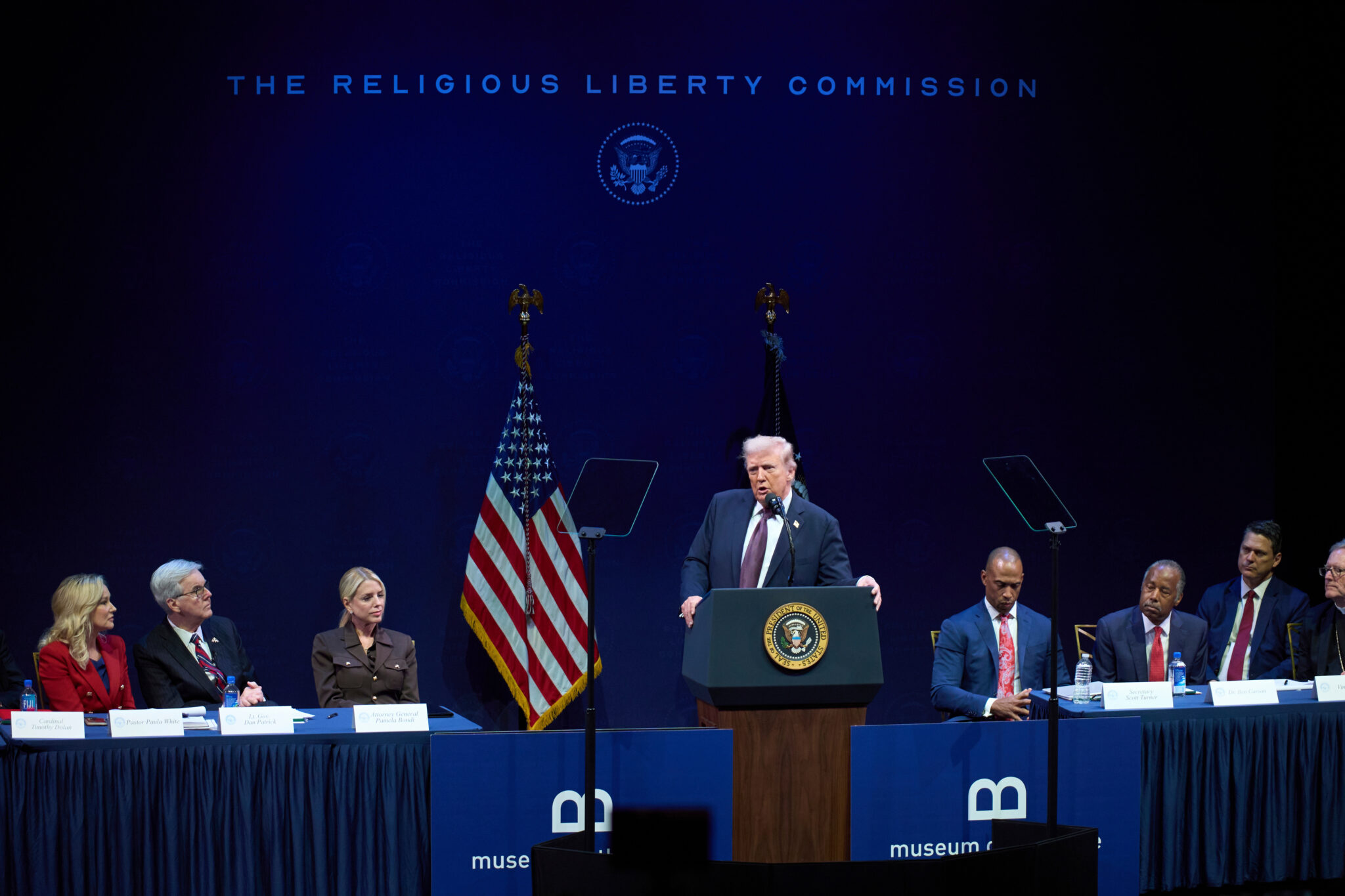
Trump Religious Liberty Commission Challenges Church State Separation/ Newslooks/ WASHINGTON/ J. Mansour/ Morning Edition/ Members of President Donald Trump’s Religious Liberty Commission are urging sweeping changes expanding religious expression and exemptions nationwide. Several commissioners openly rejected the traditional concept of separation between church and state. Critics argue the commission reflects a narrow conservative Christian agenda that threatens constitutional protections.
Religious Liberty Commission Quick Looks
- Commissioners reject church-state separation concept
- Conservative Christians dominate advisory panel
- Lawsuit challenges commission’s ideological balance
- Members push expanded religious exemptions
- Public schools and vaccine mandates targeted
- Critics warn constitutional protections are threatened
Deep Look
Trump Religious Liberty Commission Pushes Conservative Agenda
Members of President Donald Trump’s Religious Liberty Commission are advancing proposals that would significantly expand religious exemptions and reshape the relationship between religion and government in America.
The commission, formed by Trump last year, has become a platform for many conservative Christian activists and religious leaders who argue faith-based rights have been undermined in modern American society.
At recent meetings, commissioners proposed a wide range of recommendations, including expanding religious expression in public schools, increasing government funding opportunities for faith-based organizations and broadening legal exemptions tied to religious beliefs on healthcare, education and workplace policies.
One commissioner even suggested awarding a Presidential Medal of Freedom to a baker who refused to create a wedding cake for a same-sex couple.
Commission Chair Rejects Separation Of Church And State
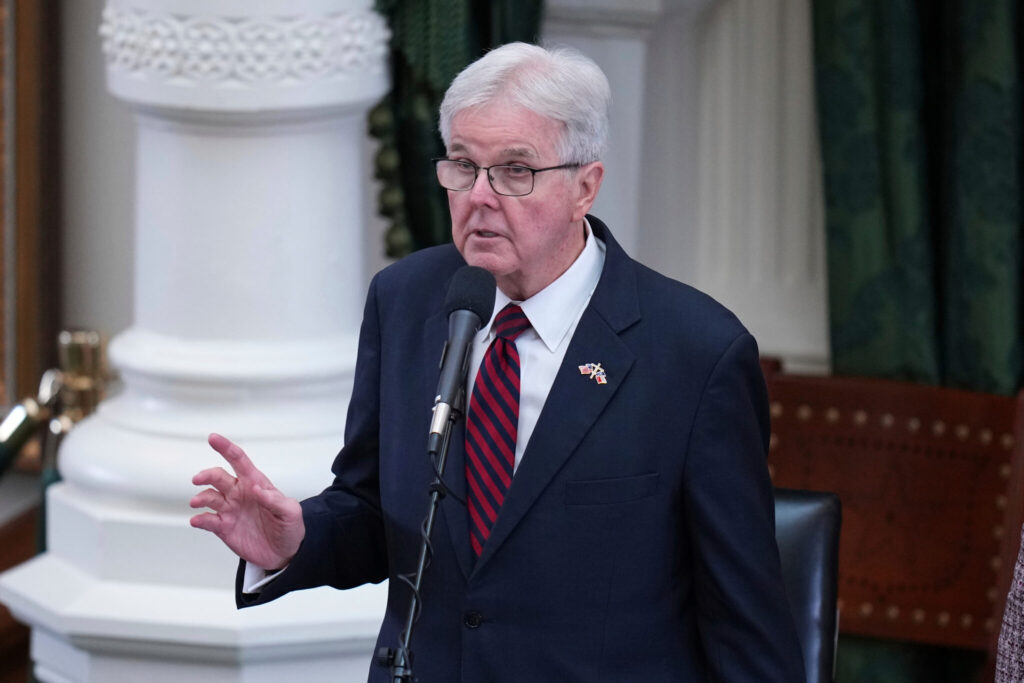
The commission’s most controversial comments came from chair Dan Patrick, who openly rejected the long-standing concept of separation between church and state.
During an April meeting, Patrick proposed creating a federal hotline featuring an automated message declaring: “There is no separation of church and state.”
Patrick argued the idea has been falsely promoted for decades and suggested mass-producing bumper stickers carrying the same slogan. No commissioners publicly disagreed during the session.
Trump himself previously echoed similar sentiments during a 2025 White House prayer event when he dismissed concerns about church-state separation and encouraged greater religious involvement in public life.
“They say separation between church and state,” Trump said. “I said, all right, let’s forget about that for one time.”
Although the phrase does not appear directly in the U.S. Constitution, the principle has been embedded in Supreme Court precedent for decades through interpretations of the First Amendment and Thomas Jefferson’s writings describing a “wall of separation between church and state.”
Critics Warn Commission Threatens Constitutional Protections
Progressive religious organizations and civil liberties groups have sharply criticized the commission, arguing it overwhelmingly reflects conservative Christian political priorities while ignoring broader religious diversity.
A coalition led by the Interfaith Alliance has filed a lawsuit claiming the advisory panel violates federal law requiring commissions to maintain balanced viewpoints and diverse representation.
Critics note that nearly all commissioners are conservative Christian figures, with only one Orthodox Jewish rabbi serving on the panel. Many meetings have also been held at the Museum of the Bible, an institution known for its Christian leadership.
The Trump administration is seeking dismissal of the lawsuit, arguing federal law does not clearly define what constitutes ideological balance for advisory commissions.
Debates Extend To Schools, Vaccines And Workplace Policies
The commission’s discussions have focused heavily on expanding protections for religious objections involving public schools, COVID-19 vaccines, gender identity policies and workplace regulations.
Several commissioners argued schools and employers should be required to post notices outlining religious expression rights and exemptions. Others called for restoring pay and pension benefits to military personnel discharged after refusing COVID-19 vaccines.
Patrick also strongly advocated for school prayer and Ten Commandments displays in public classrooms, arguing America should resist efforts to remove religion from public institutions.
Commissioners additionally encouraged the Department of Justice to intervene in legal disputes involving Amish parents challenging vaccine mandates and Catholic nuns objecting to gender identity accommodation rules in hospice care.
Immigration And Religious Funding Also Discussed
Robert Barron, bishop of the Catholic Diocese of Winona-Rochester, argued that faith-based organizations such as Catholic Charities should receive federal funding without compromising church teachings on family and sexuality.
Barron also urged humane treatment for detained immigrants and said immigration enforcement operations should avoid disrupting religious worship services.
The Trump administration last year ended a long-standing policy limiting immigration enforcement actions in churches and other religious sanctuaries, a move criticized by many faith leaders.
Meanwhile, Kelly Shackelford proposed requiring governments to pay all legal fees whenever they lose religious liberty lawsuits, arguing many Americans cannot afford to challenge government policies in court.
“That would be a huge shifting of power in favor of citizens,” he said.
Internal Tensions Emerge Within Commission
Although the commission has largely operated in agreement, one major internal dispute emerged earlier this year involving former commissioner Carrie Prejean Boller.
Boller was removed from the commission after a heated hearing on antisemitism in which she defended commentator Candace Owens against accusations of antisemitic rhetoric.
Patrick accused Boller of attempting to “hijack” the hearing, while Boller claimed she was unfairly removed because of her religious views.
“I don’t have any malice towards anyone that doesn’t believe in any type of faith,” Patrick told fellow commissioners. “That’s fine. That’s what America is about. But these organizations that are pushed by some ideology and pushed by someone’s bank account who wants to remove God from our country? We need to push back.”
The dispute exposed some divisions inside the commission even as most members continued supporting a broad expansion of conservative religious rights.
Broader National Debate Intensifies
The commission’s recommendations reflect a broader national debate over how religious liberty should be interpreted in modern America. Supporters argue conservative Christians and other believers face increasing discrimination and need stronger legal protections.
Opponents counter that many proposals blur constitutional boundaries between religion and government while risking discrimination against LGBTQ individuals, religious minorities and secular Americans.
With the commission expected to finalize its report later this year, its recommendations could shape future Republican policy proposals, court battles and national debates over religious freedom for years to come.