
Hegseth Insists Iran Conflict is ‘Not Endless,’ Declares ‘We Fight to Win’/ Newslooks/ WASHINGTON/ J. Mansour/ Morning Edition/ Defense Secretary Pete Hegseth insisted the U.S.-Israeli campaign against Iran is not an “endless war.” He outlined objectives to destroy Iran’s missile threat, naval capabilities, and nuclear ambitions. As casualties mount, Pentagon leaders acknowledged the possibility of further U.S. losses.
Hegseth Says Iran Conflict Is Not Endless Quick Looks
- Defense Secretary rejects “Iraq-style” war comparison
- Operation Epic Fury aims to destroy missile threat
- “We fight to win,” Hegseth declares
- Four U.S. troops confirmed killed
- Pentagon expects additional casualties
- Kuwait mistakenly downs U.S. fighter jets
- B-2 bombers deployed in 37-hour missions
- Cyber operations disrupted Iranian communications
- No formal exit timeline provided
Deep Look Hegseth Says Iran Conflict Is ‘Not Endless’ as Pentagon Defends Expanding War
WASHINGTON — Defense Secretary Pete Hegseth sought Monday to reassure Americans that the escalating conflict with Iran will not devolve into a prolonged, open-ended war, declaring firmly: “This is not Iraq. This is not endless.”
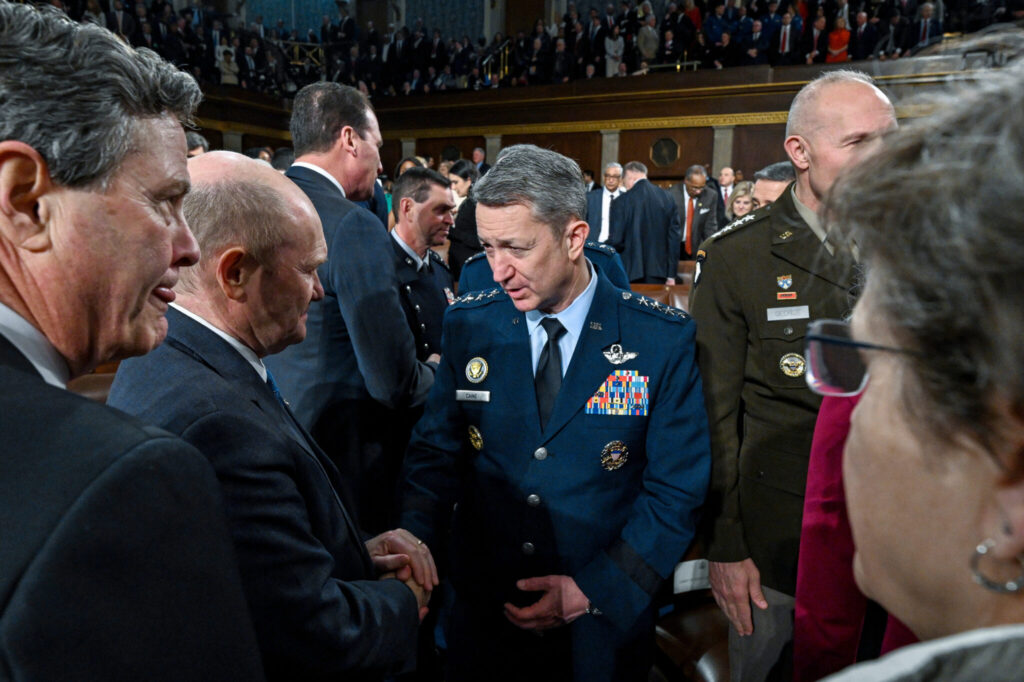
Appearing alongside Air Force Gen. Dan Caine, chairman of the Joint Chiefs of Staff, Hegseth delivered the Trump administration’s first formal Pentagon briefing since the launch of Operation Epic Fury — the coordinated U.S.-Israeli military campaign targeting Iranian leadership and military infrastructure.
President Donald Trump has largely avoided on-camera questioning since the operation began, offering only limited public remarks and interviews.
Hegseth framed the campaign as focused, decisive, and strategically limited.
“We fight to win, and we don’t waste time or lives,” he said. “No nation-building quagmire. No democracy-building exercise. No politically correct wars.”
Defined Objectives: Missiles, Navy, and “No Nukes”
Hegseth said the mission has three core objectives:
- Destroy Iran’s ballistic missile capabilities
- Cripple Iran’s naval forces
- Prevent any nuclear weapons development
He emphasized that the operation is not designed as a regime-change war, despite the killing of Iranian Supreme Leader Ayatollah Ali Khamenei.
“This is not a so-called regime change war,” Hegseth said, adding pointedly, “but the regime sure did change and the world is better off for it.”
He did not cite evidence of an imminent nuclear strike by Iran but argued that Tehran’s expanding missile and drone programs posed sufficient threat to justify military action.
“Iran was building powerful missiles and drones to create a conventional shield for their nuclear blackmail ambitions,” he said.
Hegseth also accused Iranian officials of stalling diplomatic negotiations prior to the strikes.
“The former regime had every chance to make a peaceful deal. Tehran was not negotiating,” he said.
Casualties and Expanding Conflict
The Pentagon confirmed that four American service members have been killed since hostilities began. Trump has publicly warned that more casualties are likely, and Caine echoed that expectation.
“We grieve with you, and we will never forget you,” Caine said, addressing the families of the fallen.
The conflict has widened across the Middle East, with Iran and allied militias launching missile and drone attacks against Israel, U.S. bases, and Gulf states.
In a dramatic illustration of the chaos, Kuwait mistakenly shot down three American F-15E Strike Eagle fighter jets amid heavy missile and drone activity. All six pilots ejected safely and were reported in stable condition.
Advanced Military Technology in Use
Caine detailed the operational scope of the campaign, noting the use of B-2 stealth bombers conducting 37-hour round-trip missions. The aircraft have deployed heavy bunker-buster munitions similar to those used in previous strikes on Iranian nuclear facilities.
He also highlighted the role of cyber warfare.
“We effectively disrupted communications and sensor networks,” Caine said, describing synchronized operations designed to “disrupt, degrade, deny and destroy” Iran’s ability to coordinate sustained combat.
While specifics were limited, officials suggested cyber capabilities played a key role in blinding and isolating Iranian command structures during strikes.
No Clear Timeline for Conclusion
Despite assurances that the war will not be indefinite, Pentagon leaders did not offer a defined exit strategy.
Trump told The New York Times the campaign could last “four to five weeks.” Hegseth deferred to the president’s authority, saying Trump has “all the latitude in the world” regarding the timeline.
“Four weeks, two weeks, six weeks — it could move up. It could move back,” Hegseth said.
Officials confirmed that hundreds of Iranian targets have already been struck, including missile facilities and naval headquarters. Trump has claimed that multiple Iranian warships have been destroyed.
Human Cost Mounts
The Iranian Red Crescent Society reported at least 555 deaths in Iran from the joint U.S.-Israeli campaign. Authorities in Israel reported 11 fatalities, while Lebanon has reported 31 deaths following retaliatory exchanges involving Hezbollah.
The expanding casualty toll underscores the regional stakes as the conflict spreads across multiple fronts.
Strategic Message: Not Another Forever War
Hegseth repeatedly emphasized that Operation Epic Fury differs fundamentally from the 2003 Iraq invasion and subsequent years of counterinsurgency operations.
“This is decisive. This is focused,” he said. “We fight to win.”
Whether the campaign remains limited or evolves into a broader regional war may depend on Iran’s next moves, the stability of its leadership following Khamenei’s death, and the capacity of allied forces to deter further escalation.
For now, Pentagon officials are projecting resolve — while acknowledging that the coming weeks could bring additional losses and uncertainty.