Bessent Predicts Gas Prices Could Drop to $3 Soon/ Newslooks/ WASHINGTON/ J. Mansour/ Morning Edition/ Treasury Secretary Scott Bessent predicts gas could hit $3 per gallon. Timeline depends on progress in U.S.-Iran negotiations. Global tensions and alliances complicate the economic outlook.
Gas Prices Iran Talks NATO Divide Quick Looks
- Scott Bessent predicts $3 gas by late summer
- Timeline tied to negotiations with Iran
- Strait of Hormuz remains partially restricted
- Donald Trump signals war nearing end
- Russia backs Iran’s right to uranium enrichment
- NATO allies resist U.S. pressure for military involvement
- Pakistan serves as key mediator in peace talks
Deep Look: Bessent Predicts Gas Prices Could Drop to $3 Soon
Treasury Secretary Scott Bessent is projecting a significant drop in U.S. gas prices, saying Americans could see prices fall to around $3 per gallon by late summer — if geopolitical conditions continue to improve.
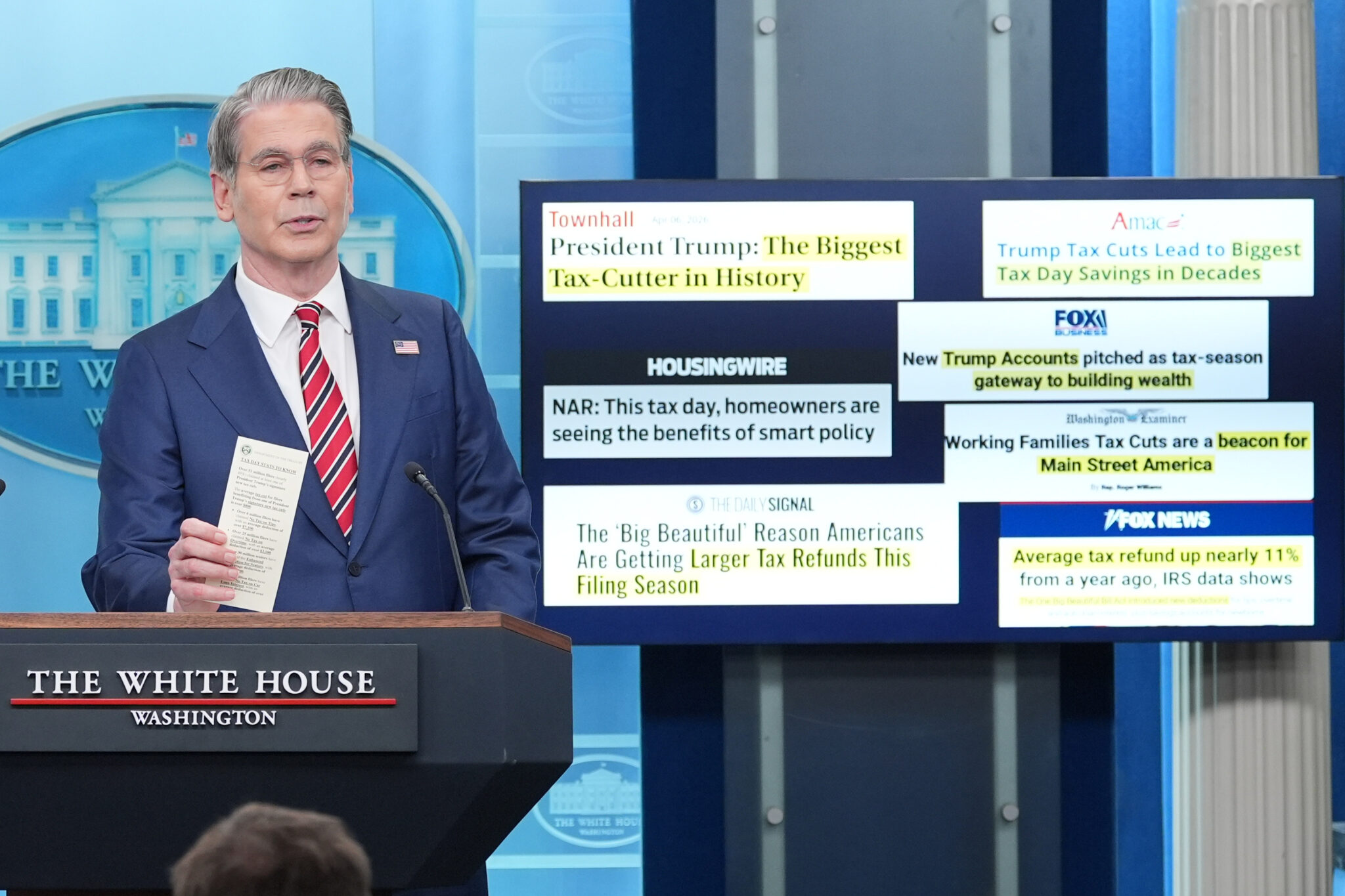
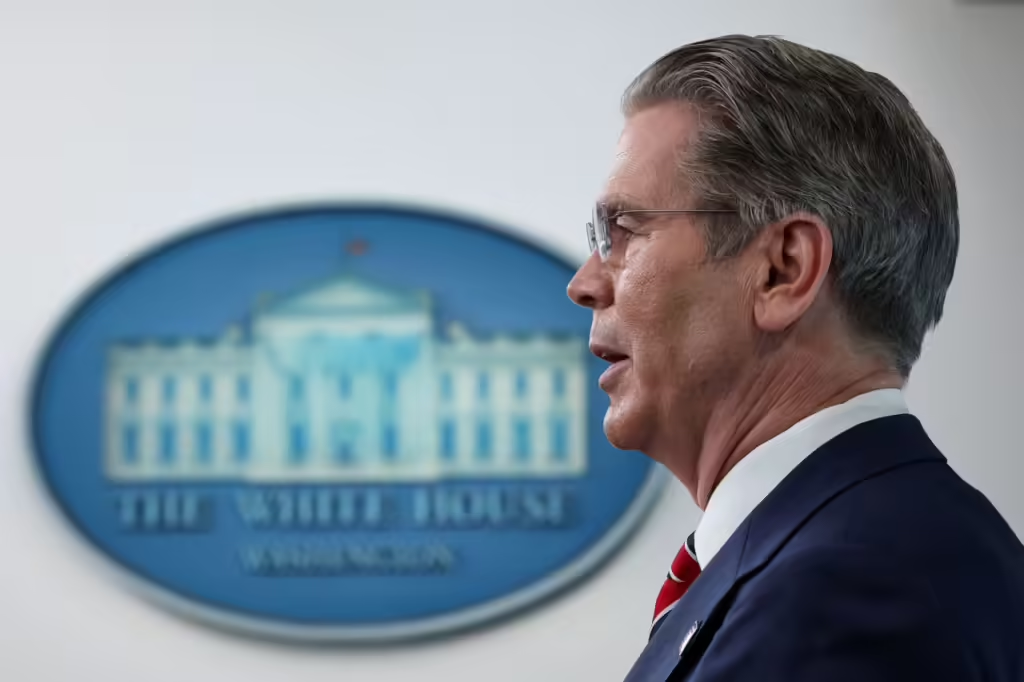
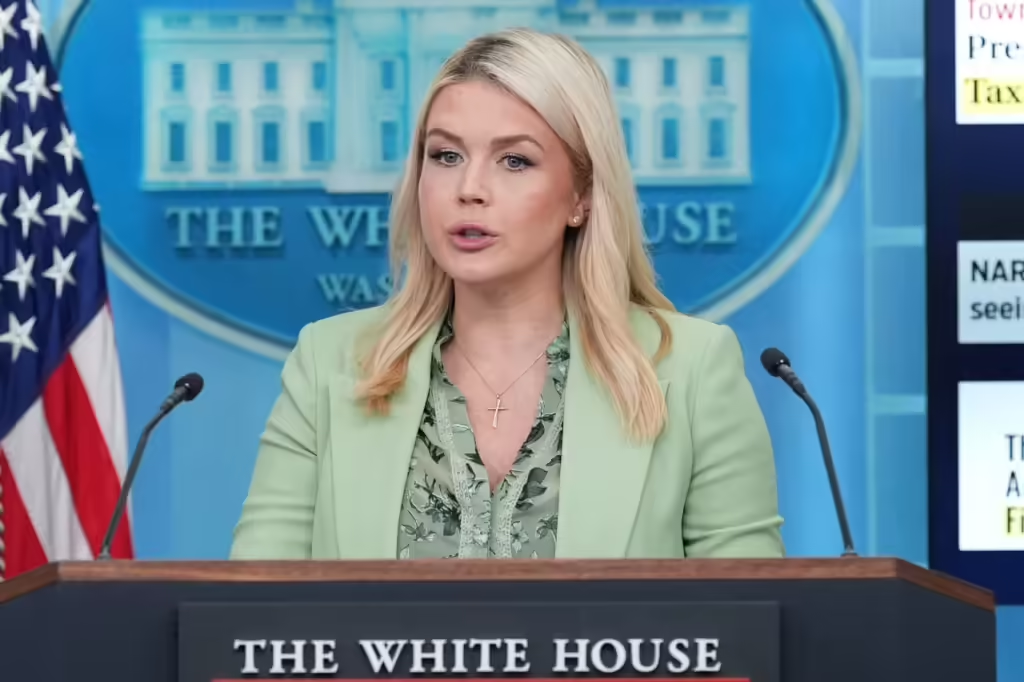
Speaking at a White House press conference, Bessent said the timing largely depends on how negotiations unfold between the United States and Iran. He expressed optimism that easing tensions could quickly translate into lower energy costs.
“I’m optimistic that sometime between June 20th and September 20th that we can have $3 gas again,” Bessent said, adding that the decline could come even sooner depending on diplomatic progress.
The outlook is closely tied to developments in the Middle East, particularly the status of the Strait of Hormuz — a critical global oil transit route that has not yet fully reopened. Any disruption in this corridor can significantly impact global oil supply and, in turn, gasoline prices.
President Donald Trump has also expressed confidence that the conflict with Iran is nearing its end, reinforcing expectations that energy markets could stabilize in the coming months.
However, the geopolitical landscape remains complex. Russia has taken a firm stance supporting Iran’s right to enrich uranium for civilian purposes, putting it at odds with U.S. demands. Sergey Lavrov emphasized that such enrichment is an “inalienable right,” signaling potential challenges in reaching a comprehensive agreement.
The United States has drawn a hard line on the issue. Trump has insisted that Iran should not retain any uranium enrichment capability, while Vice President JD Vance has suggested that existing enriched material should be removed from Iran entirely.
Meanwhile, diplomatic efforts continue behind the scenes. Pakistan has emerged as the primary mediator in negotiations between Washington and Tehran. White House press secretary Karoline Leavitt praised Pakistani officials for their role in facilitating talks and confirmed that the U.S. intends to keep mediation efforts streamlined through Islamabad.
At the same time, divisions are growing among Western allies over how to handle the conflict. Former NATO Secretary General Jens Stoltenberg emphasized that NATO remains a defensive alliance and should not be drawn into offensive military operations against Iran.
European leaders have largely resisted U.S. pressure to provide military support, instead favoring diplomatic and economic measures such as sanctions. Officials argue that the conflict does not fall within NATO’s core mission, highlighting a widening gap between Washington and its allies.
Trump has openly criticized NATO members for their reluctance to participate, at times questioning the alliance’s value while also asserting that the United States can act independently if necessary.
These geopolitical tensions underscore the uncertainty surrounding energy markets. While progress in negotiations could lead to increased oil supply and lower prices, setbacks or prolonged conflict could keep costs elevated.
For American consumers, the stakes are significant. Gas prices have remained above $4 per gallon in many areas, contributing to broader concerns about inflation and the cost of living. A drop to $3 would represent meaningful relief, particularly heading into the fall.
Still, analysts caution that energy markets are highly sensitive to global events, and predictions can shift quickly. The interplay between diplomacy, military developments, and international alliances will ultimately determine whether Bessent’s optimistic forecast becomes reality.
As negotiations continue, the coming months will be critical in shaping not only the trajectory of gas prices but also the broader economic outlook tied to global stability.