Vance’s Pakistan Trip On Hold as Iran Hesitates on Peace Talks/ Newslooks/ WASHINGTON/ J. Mansour/ Morning Edition/ Vice President JD Vance’s planned trip to Pakistan was delayed Tuesday as Iran remained undecided about joining a new round of ceasefire talks. Internal divisions in Tehran over the U.S. naval blockade and the looming ceasefire deadline raised fears that fighting could quickly resume. President Donald Trump signaled he does not want another extension and warned military action could restart if no deal is reached.
Vance Pakistan Trip Delayed as Iran Hesitates on Peace Talks Quick Looks
- JD Vance remained in Washington Tuesday instead of flying to Islamabad
- Iran had not confirmed whether it would attend new peace talks
- Internal disputes in Tehran focused on the U.S. naval blockade
- President Donald Trump said he does not want to extend the ceasefire
- Trump warned he expects bombing if no agreement is reached
- Ishaq Dar urged both sides to give diplomacy a chance
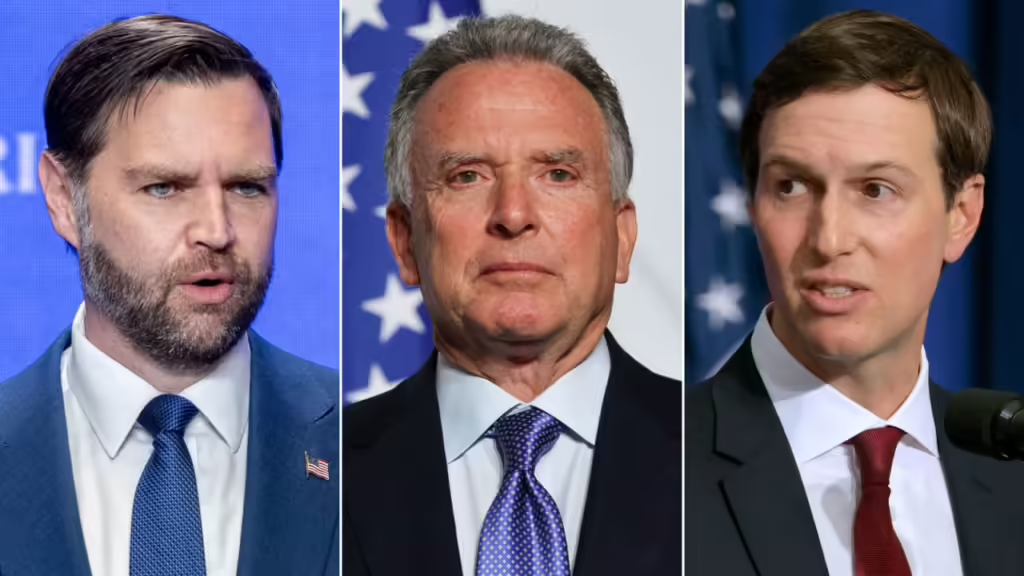
- White House envoys Steve Witkoff and Jared Kushner also delayed travel
- Pakistan, Egypt, and Turkey continued behind-the-scenes mediation
Deep Look
JD Vance’s Pakistan Departure Delayed as Iran Hesitates
Vice President JD Vance’s planned trip to Islamabad was delayed Tuesday as Iran’s leadership remained divided over whether to participate in another round of ceasefire talks with the United States.
The delay added fresh uncertainty to already fragile diplomacy as the two-week ceasefire between Washington and Tehran neared expiration.
U.S. officials said every hour Vance remained in Washington brought both countries closer to the possibility of renewed military conflict.
One major obstacle remains Tehran’s internal disagreement over whether negotiations should proceed while the U.S. naval blockade of Iranian ports stays in place.
Iran has made clear that the blockade is a central issue and some powerful factions inside the country want it lifted before talks begin.
That disagreement has slowed final approval for any Iranian delegation to travel.
Without that commitment, the next round of diplomacy remains stuck in limbo.
Trump Signals Little Interest in Extending the Ceasefire
President Donald Trump has made clear he does not favor extending the current ceasefire.
While Trump told Bloomberg on Monday that the truce runs until Wednesday evening Washington time, Pakistan’s information minister placed the deadline closer to Tuesday night around 8 p.m. Eastern Time.
Either way, Trump emphasized that time is running out.
“We don’t have that much time … Iran can make themselves into a strong nation again if they make a deal,” Trump told CNBC.
When asked what would happen if no agreement is reached, Trump gave a blunt answer.
“I expect to be bombing because I think that’s a better attitude to go in with,” he said.
“But we’re ready to go. I mean, the military is raring to go.”
Those comments significantly raised pressure on negotiators and increased concerns in global markets already sensitive to the Strait of Hormuz crisis.
White House Team Stayed in Washington Instead of Traveling
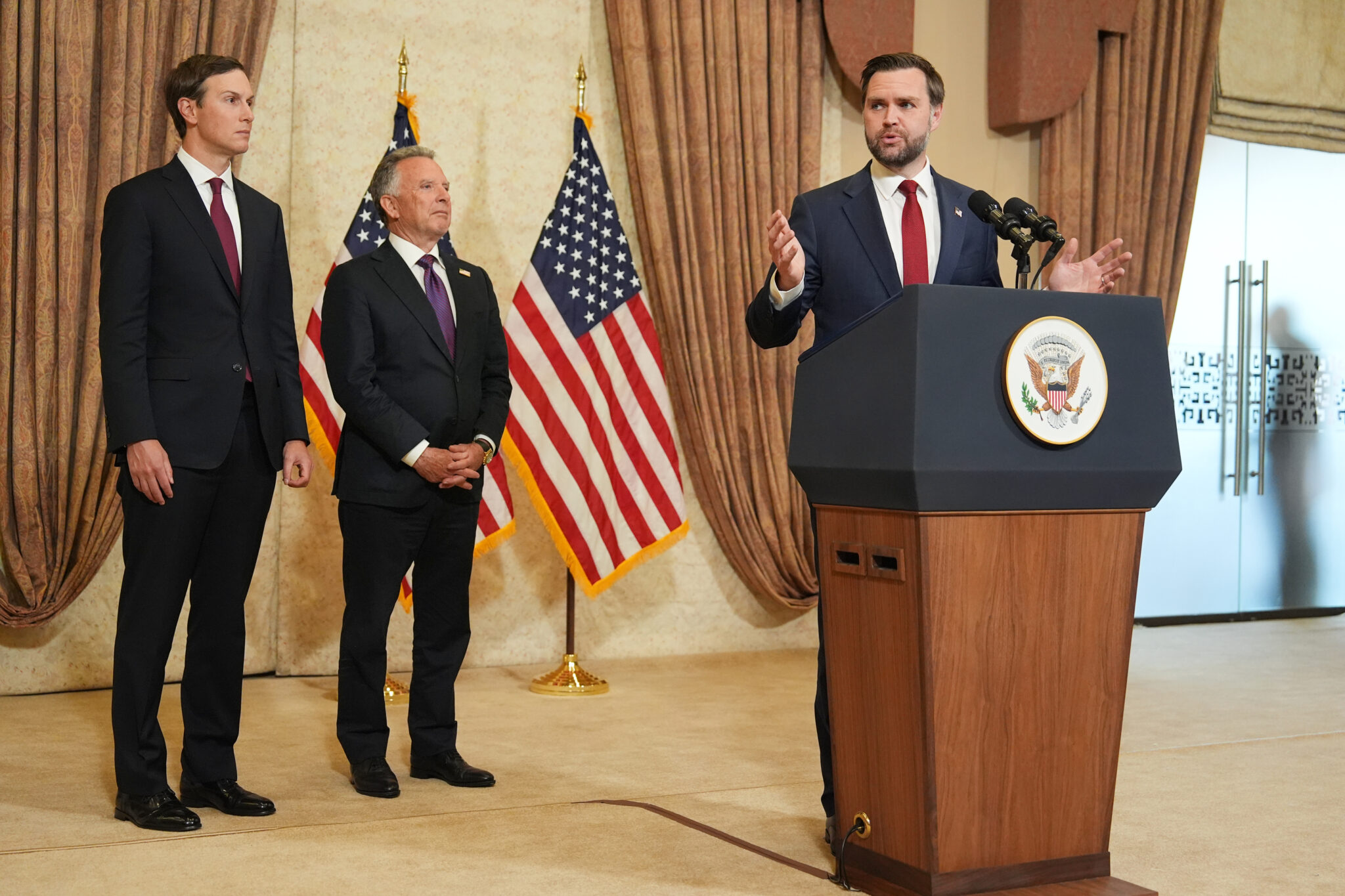
As of midday Tuesday, Vance and senior White House envoys Steve Witkoff and Jared Kushner were still in Washington.
A White House official said additional policy meetings were taking place at the White House and that the vice president would participate.
Another sign of the delay came from the government aircraft expected to carry Witkoff and Kushner from Miami to Islamabad.
The plane, originally scheduled to depart Tuesday morning through Europe, did not leave on time and instead took off around noon heading back toward Washington.
That shift reflected how quickly the situation changed overnight as uncertainty from Tehran continued.
The administration appears unwilling to fully commit travel plans until Iran formally confirms participation.
Pakistan Pushes Hard to Keep Diplomacy Alive
Pakistan has been working aggressively behind the scenes to prevent the ceasefire from collapsing.
Foreign Minister Ishaq Dar urged both sides Tuesday to extend the truce and return to negotiations.
He told the acting U.S. chargé d’affaires in Islamabad that Washington should “give dialogue and diplomacy a chance.”
Pakistan’s Information Minister Attaullah Tarar also publicly pushed Tehran to make a final decision.
“A decision from Iran to attend the talks before the end of the two-week ceasefire is critical,” he wrote on X.
“Pakistan has made sincere efforts to convince the Iranian leadership to participate in the second round of talks and these efforts continue.”
Islamabad has become the central diplomatic stage for the highest-level U.S.-Iran talks since the 1979 Islamic Revolution.
Security across the capital has also been tightened as officials prepare for a possible high-level arrival.
Iran Questions US Intentions Amid Naval Blockade
Iran’s Foreign Ministry spokesman said Tuesday afternoon that no final decision had been made about sending a delegation to Islamabad.
He argued that the continued U.S. naval blockade raised serious doubts about Washington’s commitment to real negotiations.
The blockade, aimed at pressuring Tehran over control of the Strait of Hormuz, has become one of the most important sticking points in the peace process.
Iran views it as both an economic attack and a sign that the U.S. is negotiating under military coercion.
That position is supported by hardline factions inside the Iranian government, especially the Islamic Revolutionary Guard Corps.
A source familiar with the discussions said pressure from the Guards was helping drive the delay.
Their position is simple: no talks should happen unless the blockade ends first.
That demand has made diplomacy far more difficult.
Behind the Scenes: Tehran’s Internal Power Struggle
The White House spent all of Monday waiting for a clear signal from Tehran.
Pakistani, Egyptian, and Turkish mediators worked throughout the day trying to convince Iranian officials to attend.
Sources said the Iranian negotiating team was effectively waiting for final approval from Supreme Leader Ali Khamenei.
Late Monday, there were signs that Tehran had decided to participate.
That led Vance, Witkoff, and Kushner to prepare for an early Tuesday departure.
But by around 7 a.m. Tuesday, the situation appeared to change again.
Iran was still stalling, and the trip was postponed.
The reversal suggests deep internal disagreement between diplomatic officials seeking negotiations and security leaders demanding stronger leverage before talks begin.
That internal struggle may now determine whether war resumes.
Strait of Hormuz Remains the Center of the Crisis
At the heart of the negotiations is the Strait of Hormuz, one of the world’s most critical energy chokepoints.
Nearly 20% of global oil and natural gas normally passes through the narrow waterway.
Disruptions there have already pushed Brent crude sharply higher and created major concerns for global shipping, airlines, and fuel supplies across Europe and Asia.
The U.S. blockade was designed to pressure Iran into restoring full shipping access.
Tehran sees control of the strait as one of its strongest strategic tools.
Until both sides agree on how shipping will move through Hormuz, any broader peace agreement remains difficult.
That is why oil markets are watching these talks almost as closely as diplomats are.
Final Hours Could Decide Peace or Escalation
The next 24 hours may determine whether diplomacy survives.
If Iran agrees to participate and negotiators can reach even a temporary framework, the ceasefire may be extended and oil prices could stabilize.
If talks collapse, Trump has made clear military action is ready to resume immediately.
For Washington, Tehran, Pakistan, and the wider global economy, the outcome of these final hours may shape the rest of 2026.
The clock is running—and so far, Iran has not yet answered.