Comey Appears in Court in Trump Threat Case That Pose a Challenge for DOJ/ Newslooks/ WASHINGTON/ J. Mansour/ Morning Edition/ Former FBI Director James Comey made his first court appearance Wednesday in a criminal case against him that legal experts say presents significant hurdles for the prosecution and will likely be a challenge for the Justice Department to win over charges that a social media post threatened President Donald Trump. Prosecutors argue Comey’s “86 47” seashell photo was a threat, while legal experts say the case faces major First Amendment hurdles. The Justice Department must prove Comey intended the message as a true threat, not protected political speech.


James Comey Trump Threat Case Quick Looks
- James Comey was indicted over a social media post showing “86 47”
- Prosecutors say the numbers threatened President Donald Trump
- Comey says he believed it was political speech, not violence
- He deleted the post after learning some viewed it as threatening
- Legal experts say the Justice Department faces a difficult case
- First Amendment protections may be central to the defense
- Comey’s first court appearance is scheduled in Virginia
- This is the second federal case against Comey in the past year


Deep Look
Comey Appears in Court Over Trump Threat Charges
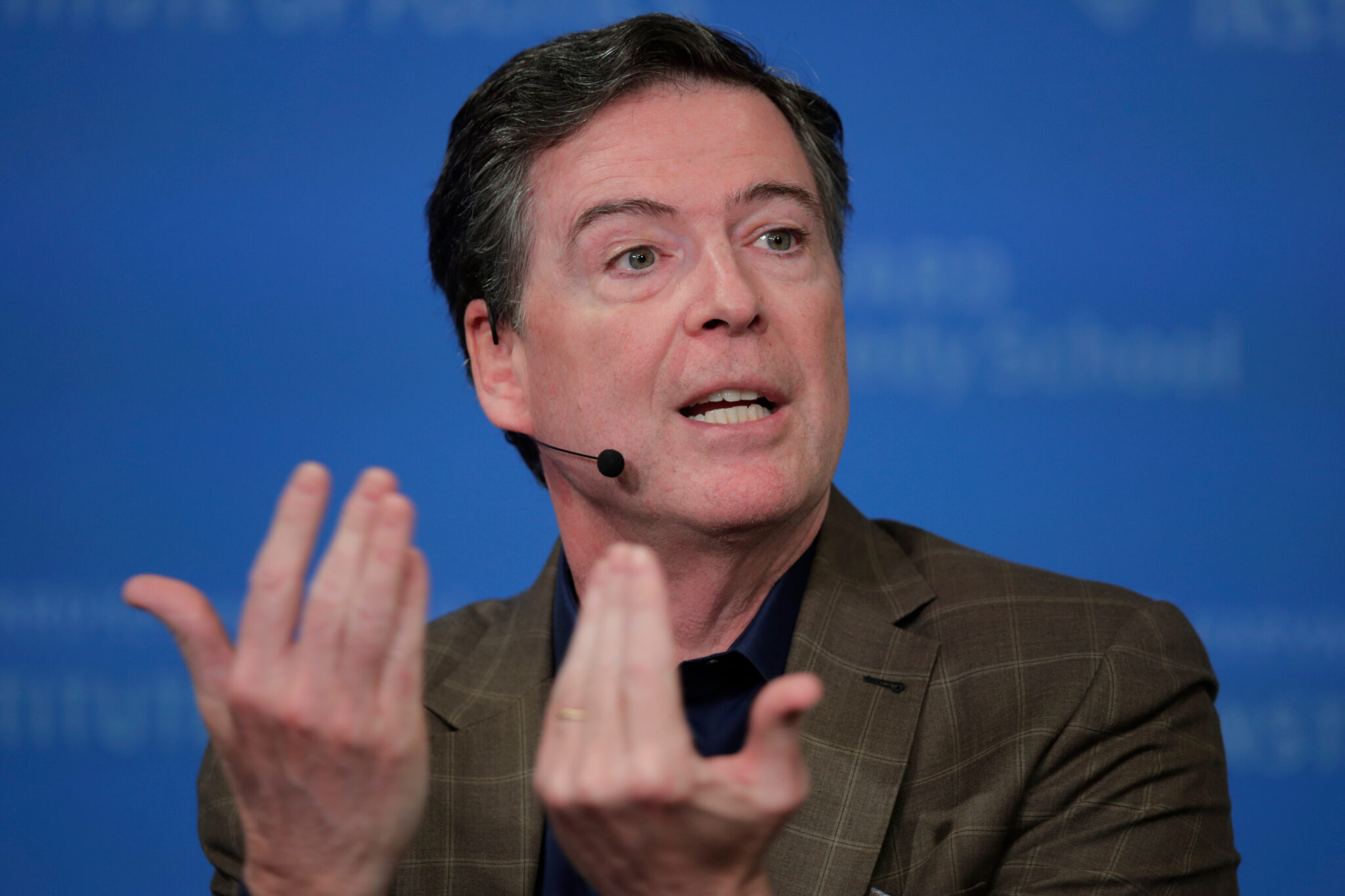
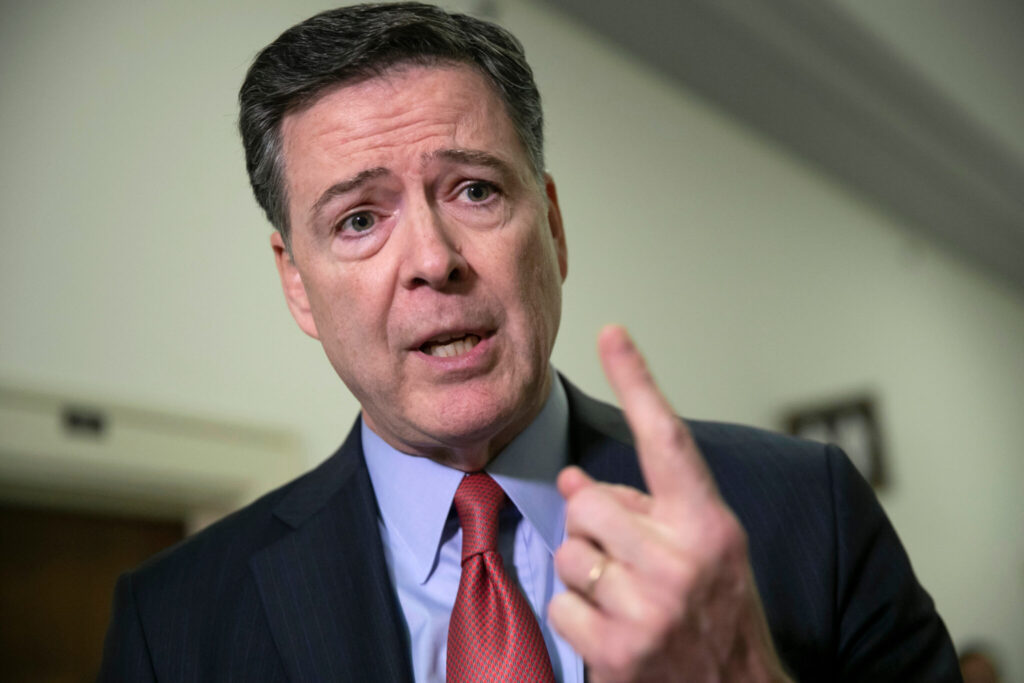
ALEXANDRIA, Va. — Former FBI Director James Comey made his first court appearance Wednesday in a criminal case against him that legal experts say presents significant hurdles for the prosecution and will likely be a challenge for the Justice Department to win. federal court Wednesday as he faces criminal charges tied to a social media post prosecutors say threatened President Donald Trump.
The Justice Department accuses Comey of making threats against the president after he posted a photograph last year showing seashells arranged to display the numbers “86 47.”
Federal prosecutors argue the message amounted to a threat against Trump, the 47th president of the United States.
Comey has strongly denied that interpretation, saying he believed the numbers represented political expression and not a call for violence.
What “86 47” Means in the Case
The prosecution centers entirely around the meaning of the numbers in Comey’s now-deleted post.
The government argues that “86” can be interpreted as slang for eliminating or killing someone, while “47” refers to Trump as the 47th president.
Together, prosecutors claim the phrase represented a threat against Trump.
Comey said he found the shells on a beach in North Carolina and posted the image without realizing some people interpreted the phrase as violent.
He later removed the post and publicly explained his actions.
“I didn’t realize some folks associate those numbers with violence” and “I oppose violence of any kind so I took the post down.”
Merriam-Webster defines “86” primarily as meaning to throw out, get rid of, or refuse service to, while noting that a newer but less common meaning can refer to killing.
That ambiguity could become one of the most important parts of the legal battle.
Prosecutors Must Prove a True Threat
Legal experts say the government faces a difficult challenge because of strong First Amendment protections for political speech.
Under Supreme Court rulings, prosecutors must show that Comey’s post qualifies as a “true threat” rather than protected speech.
That means they must prove that Comey either intended to communicate a threat or at least recklessly ignored the risk that others would interpret it that way.
The indictment says Comey acted “knowingly and willfully,” but legal analysts note that the charging document offers little detail explaining how prosecutors plan to prove intent.
Acting Attorney General Todd Blanche also declined to publicly explain what specific evidence the government has regarding Comey’s intent.
Legal Experts See Constitutional Hurdles
Former Justice Department officials and constitutional law experts say the case may be difficult to win.
John Keller, a former senior Justice Department official who led prosecutions involving violent threats against election workers, said the public nature of the post may work against the prosecution.
“Here, ‘86’ is ambiguous — it doesn’t necessarily threaten violence and the fact that it was the FBI Director posting this openly and notoriously on a public social media site suggests that he didn’t intend to convey a threat of violence,” Keller said.
Jonathan Turley, a George Washington University law professor and longtime critic of Comey, also questioned the strength of the indictment.
He wrote that the case raises serious concerns about free speech protections.
“Despite being one of Comey’s longest critics, the indictment raises troubling free speech issues.”
He added that if prosecutors succeed, it could expand the government’s ability to criminalize broad areas of political speech.
Government May Focus on Comey’s FBI Experience
Prosecutors are expected to argue that Comey’s former role as FBI director makes it harder for him to claim ignorance.
John Fishwick, a former U.S. attorney in Virginia, said the government will likely argue that Comey should have understood how such language could be interpreted.
“I think they’re going to try to circumstantially say that you were head of the FBI, you knew what these terms meant and you said them out to the whole world as a threat to the president,” Fishwick said.
Still, he also acknowledged that this strategy may struggle against Comey’s First Amendment defense.
Comey was voluntarily interviewed by the Secret Service after the post, and he was not charged with making false statements, suggesting investigators may not have evidence that he lied during questioning.
Second Federal Case Against Comey
This is the second criminal case brought against Comey in the past year.
A previous federal indictment involving unrelated false statement and obstruction charges was dismissed by a judge last year.
That history adds more political attention to the current case, especially given Comey’s long and highly public conflict with Trump dating back to his time leading the FBI.
Their relationship became a major national story after Trump fired Comey during his first presidency, leading to years of political and legal tensions.
First Appearance Begins a Major Legal Fight
The case was filed in the Eastern District of North Carolina because that is where Comey says he found the seashell arrangement.
However, his first court appearance is taking place in Alexandria, Virginia, where he lives.
Wednesday’s hearing marks the beginning of what could become one of the most closely watched free speech cases involving a former top federal official and a sitting president.
At the center of the fight is a basic constitutional question: when does political expression become a criminal threat?