GOP Bill Would Return Democratic Virginia Areas to Washington DC/ Newslooks/ WASHINGTON/ J. Mansour/ Morning Edition/ A new Republican proposal would return Democratic-heavy parts of Northern Virginia, including Arlington and Alexandria, back to Washington, D.C., after Virginia’s redistricting referendum boosted Democratic House prospects. Georgia Rep. Rich McCormick introduced the “Make DC Square Again Act,” aiming to reverse the 19th-century retrocession that gave those areas back to Virginia. Critics call the move political voter suppression, while supporters say it restores the original boundaries of the nation’s capital.

DC Retrocession Quick Looks
- Rep. Rich McCormick introduced the Make DC Square Again Act
- The bill would return Arlington and Alexandria to Washington, D.C.
- Virginia’s redistricting vote could help Democrats gain four House seats
- Republicans say the plan restores the original 10-mile-square district
- Critics call it a voter suppression effort targeting Democratic voters
- Around 400,000 residents could lose full congressional representation
- Debate over DC statehood and retrocession is growing again

Deep Look
GOP Proposal Targets Democratic Strongholds in Northern Virginia
WASHINGTON — A new Republican-backed proposal could dramatically reshape the political map of Virginia and Washington, D.C., by returning heavily Democratic parts of Northern Virginia back to the federal district.
Georgia Republican Rep. Rich McCormick introduced the “Make DC Square Again Act”, a bill that would reverse the 19th-century retrocession that gave Arlington and Alexandria back to Virginia.
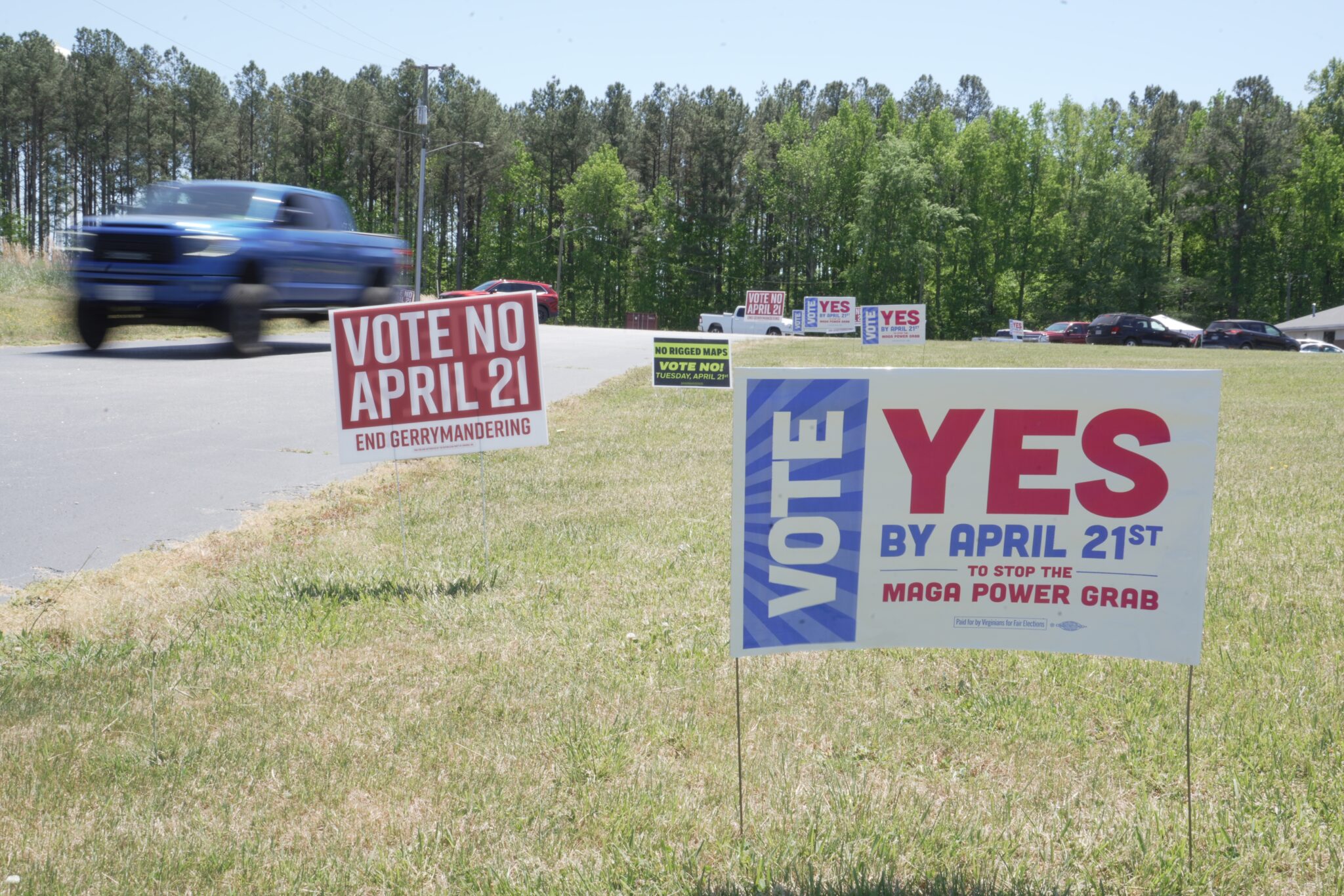
The move comes just after Virginia voters approved a redistricting referendum that could give Democrats a 10-1 advantage in the state’s U.S. House delegation.
Republicans see the Democratic-heavy region as a major reason for that potential shift.
McCormick said his bill would restore the original boundaries of the capital and remove what he described as an unfair political advantage.
“The Make DC Square Again Act restores the original ten-mile-square District and ends the artificial advantage Virginia Democrats have recently gained from all the federal bureaucrats moving into Virginia,” McCormick said in a statement.
What Is Retrocession?
The idea centers on a little-known part of American history called retrocession.
But beginning in 1846, Congress approved the return of 31 square miles of land from the District of Columbia back to Virginia.
The return officially took effect in 1847.
At the time, local economic concerns and fears that Congress would ban slavery in the district played a major role in pushing residents toward rejoining Virginia.
Now, some conservatives want to reverse that decision and make Washington “square” again by restoring its original borders.
Why It Matters Now
The issue has become politically explosive because Arlington and Alexandria are among the bluest voting areas in Virginia.
In the 2024 presidential election, Democratic candidate Kamala Harris won 77% of the vote in both places, while Donald Trump received only about 20%.
Those voters played a major role in helping pass Virginia’s new redistricting referendum earlier this week.
That referendum could improve Democrats’ chances of gaining four additional U.S. House seats and create a strong 10-1 Democratic advantage in the delegation.
Virginia would have to redraw congressional districts based on a smaller population and a different political balance.
That is why critics see the proposal as a direct political response to the referendum.
Critics Call It Voter Suppression
Opponents argue the bill is less about historical boundaries and more about partisan voter suppression.
George Derek Musgrove, a history professor at the University of Maryland Baltimore County, dismissed the proposal as politically motivated.
“It’s not even a retrocession bill. It’s really a Virginia voter suppression bill,” he said.
Supporters of D.C. statehood also say the proposal proves how easily the district can be treated as a political tool.
Alicia Yass, advocacy director at the American Civil Liberties Union of D.C., said the proposal highlights the district’s lack of full democratic rights.
“The residents of the district are not fully participating in the democracy of this country because we are not allowed to,” she said.
“Bills like this that mess around with the district just show how important it is for D.C. to have the full benefits and rights of a democracy.”
Could Trump Act Without Congress?
Some critics of Virginia’s referendum are also urging President Donald Trump to act directly.
They want Trump to issue an executive order declaring the original retrocession unconstitutional.
Former Trump Justice Department chief of staff Chad Mizelle argued in a Fox News opinion piece that such an order would be legally stronger than many executive actions taken by former President Joe Biden.
“This order would be on better legal footing than many of President Joe Biden’s most egregious orders,” Mizelle wrote.
That route could eventually force the issue before the U.S. Supreme Court.
A little-known group called the American Capital Project also supports that strategy.
The group argues that Congress never had the constitutional authority to return the land to Virginia in the first place.
Its plan would rely on a presidential declaration that the original law was invalid.
However, little is publicly known about the group, including who funds or runs it.
What Happens to Residents?
One of the biggest questions is what would happen to the roughly 400,000 people living in Arlington and Alexandria.
If those areas were moved into Washington, D.C., residents would likely lose full voting representation in both the U.S. House and Senate.
That is because D.C. itself does not have voting senators and only has limited House representation.
This raises serious questions about whether retrocession would improve democracy or weaken it for the people most affected.
Many residents would likely oppose losing the federal representation they currently have as Virginians.
DC Statehood Debate Returns
The proposal also revives the long-running national debate over D.C. statehood.
Democrats have pushed for years to make Washington, D.C., the 51st state, arguing that its residents deserve full representation in Congress.
In 2021, the Democrat-led House passed a D.C. statehood bill, but it failed to advance in the Senate.
Some Republicans instead suggested returning most of modern D.C. to Maryland as an alternative.
Now, McCormick’s bill offers a very different path — expanding D.C. by taking land from Virginia instead.
That approach is likely to face strong legal and political resistance.
Unlikely but Politically Powerful
Most analysts say McCormick’s bill has little chance of becoming law in a divided Congress that is already struggling to pass basic legislation.
Still, the proposal is important politically.
It reflects how fiercely both parties are fighting for control of the House ahead of the midterm elections.
With Congress closely divided, even a few seats can shift national power.
That makes Virginia’s redistricting fight and the future of Arlington and Alexandria much more than a local issue.
It has become part of a much larger national battle over power, representation, and who controls Washington itself.