Trump to Be Briefed by Commanders on New Iran Military Options Thursday/ Newslooks/ WASHINGTON/ J. Mansour/ Morning Edition/ President Donald Trump is set to review new military options for Iran as part of a broader strategy to pressure Tehran into a deal. The U.S. continues its naval blockade while keeping potential strike plans under consideration. Meanwhile, rising oil prices tied to the conflict are pushing U.S. gas prices to multi-year highs.
Trump Iran Military Options Quick Looks
- Trump to receive Pentagon briefing on Iran military options
- Strategy aims to pressure Iran into nuclear negotiations
- U.S. continues naval blockade of Iranian ports
- Gas prices rise to about $4.30 per gallon nationwide
- Strait of Hormuz disruption is driving global oil price spikes
- Iran leaders issue defiant warnings against foreign intervention
- Pentagon has plans for possible targeted strikes and operations
- Defense officials return to Congress to discuss military funding
Deep Look
Trump to Review New Military Options
WASHINGTON — President Donald Trump is expected to review updated military options for Iran during a Pentagon briefing Thursday, signaling that the United States is keeping open the possibility of renewed military action even as diplomatic efforts continue.
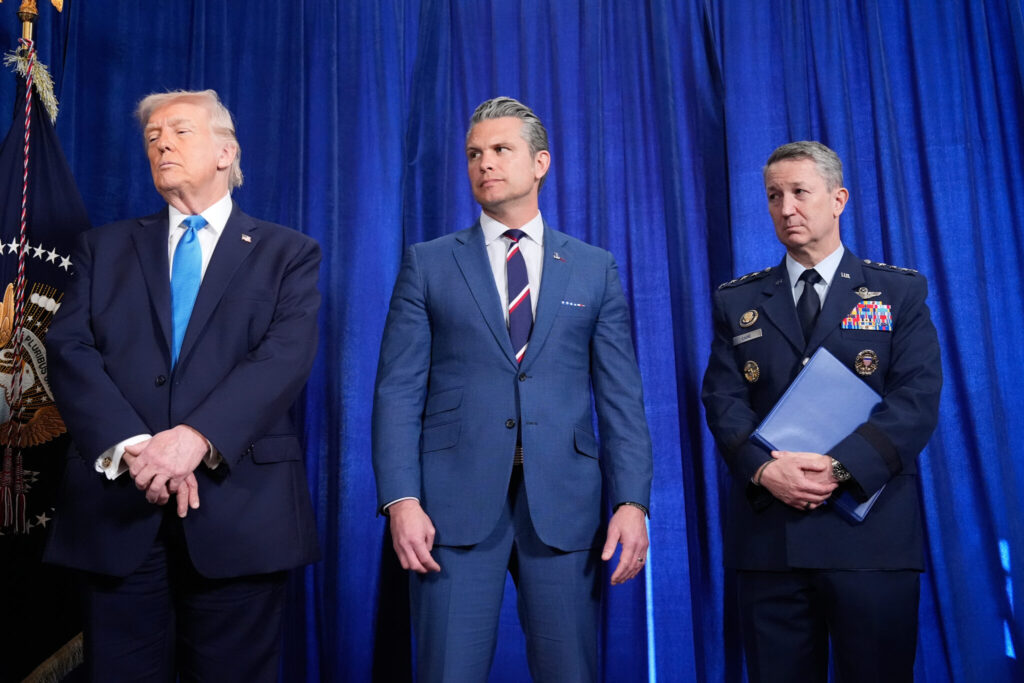
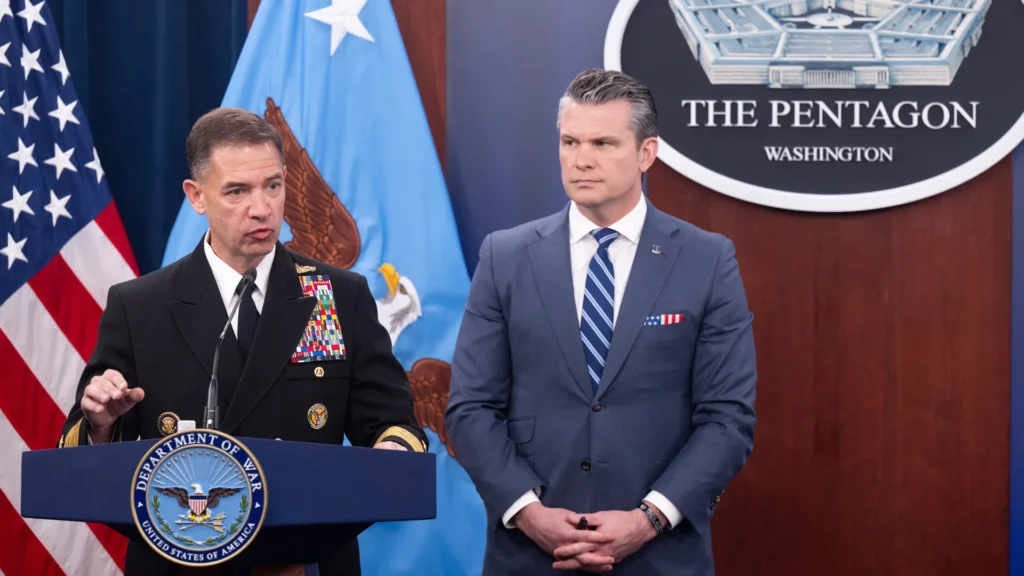
The briefing will include senior military leaders such as Adm. Brad Cooper, head of U.S. Central Command, and Gen. Dan Caine, chairman of the Joint Chiefs of Staff, along with other top defense officials.
The discussions come as the administration continues to push Iran toward a deal aimed at limiting its nuclear program.
Strategy Focused on Economic Pressure
Trump’s current approach centers on applying economic pressure rather than immediately escalating military operations.
The U.S. has imposed a naval blockade targeting Iranian oil exports, a move designed to cut off a key source of revenue for Tehran.
“The blockade is genius,” Trump said. “Now, they have to cry uncle, that’s all they have to do. Just say, ‘We give up.’”
Officials say the administration is preparing for the possibility that the blockade could remain in place for months, including maintaining restrictions around the Strait of Hormuz.
Trump has indicated he prefers reaching a negotiated agreement and avoiding a return to large-scale bombing operations.
Pentagon Plans Include Strike Options
Despite the focus on economic pressure, military planning continues behind the scenes.
Officials are expected to present several potential scenarios during the briefing.
One option includes a “short and powerful” wave of strikes targeting Iranian infrastructure to pressure Tehran back to the negotiating table.
Other proposals reportedly include securing parts of the Strait of Hormuz to reopen shipping lanes and even potential operations aimed at controlling Iran’s enriched uranium stockpile.
These options reflect ongoing concerns that the current stalemate could persist without additional leverage.
Iran Responds With Defiant Rhetoric
Iranian leaders have responded with strong warnings against U.S. actions.
President Masoud Pezeshkian said attempts to block Iranian ports are “doomed,” signaling resistance to economic pressure.
At the same time, Supreme Leader Mojtaba Khamenei issued a message suggesting that foreign aggressors belong in the “the depths” of the Persian Gulf.
The remarks came during national celebrations marking Iran’s historic victory over Portuguese forces in 1622, reinforcing a message of resistance and sovereignty.
Energy Prices Surge Amid Strait Disruption
The standoff continues to disrupt global energy markets.
With the Strait of Hormuz effectively restricted, oil shipments have been significantly reduced, pushing prices higher.
Brent crude briefly reached its highest level in four years, reflecting market uncertainty over supply.
In the United States, gasoline prices have climbed to around $4.30 per gallon, marking the largest one-day increase in several weeks and the highest level since 2022.
The surge in energy costs is adding economic pressure at home and raising political stakes for the administration.
Ceasefire Holds but Tensions Remain
A ceasefire between the U.S. and Iran remains in place, but it is open-ended and fragile.
Negotiations have moved slowly, with both sides maintaining firm positions on key issues, particularly Iran’s nuclear program.
Trump has said he does not feel rushed to reach a deal, suggesting the current strategy could continue for an extended period.
At the same time, U.S. military planners are preparing for the possibility of retaliation from Iran against American forces in the region.
Congress Weighs In on Defense Strategy
As tensions continue, Defense Secretary Pete Hegseth and Gen. Dan Caine are scheduled to appear before the Senate to discuss the administration’s defense strategy.
The White House is seeking a $1.5 trillion defense budget, reflecting the growing demands of global military operations and strategic competition.
Lawmakers are expected to question both the cost and long-term goals of the Iran strategy.
High-Stakes Balancing Act
The administration now faces a complex balancing act between maintaining pressure on Iran, avoiding a broader war, and managing the economic impact at home.
With military options on the table and energy markets under strain, the coming weeks could prove critical in determining whether the conflict escalates or moves toward a negotiated resolution.
For now, Trump’s strategy remains focused on leverage — using economic pressure backed by military readiness to force Iran back to the negotiating table.