
Snowfall Intensifies Across Northeast Under Blizzard Warnings/ Newslooks/ WASHINGTON/ J. Mansour/ Morning Edition/ A powerful winter storm intensified across the Northeast, triggering blizzard warnings and travel bans from Maryland to Maine. Heavy snowfall and wind gusts up to 50 mph grounded thousands of flights and left over 500,000 without power. Officials declared emergencies as residents dug out amid whiteout conditions and widespread closures.
Northeast Blizzard Travel Bans Quick Looks
- Blizzard warnings from Maryland to Maine
- Snowfall rates of 2–3 inches per hour
- Over 5,000 U.S. flights canceled Monday
- More than 500,000 customers without power
- Travel bans across New York, New Jersey, Rhode Island
- Public schools closed in New York City and Boston
- Rhode Island’s T.F. Green Airport temporarily shut down
- National Weather Service labels storm a “bomb cyclone”
Deep Look: Snowfall Intensifies Across Northeast Under Blizzard Warnings
A powerful winter storm intensified Monday across the Northeastern United States, trapping millions indoors under blizzard warnings and sweeping travel bans as snow and fierce winds pummeled one of the nation’s most densely populated corridors.
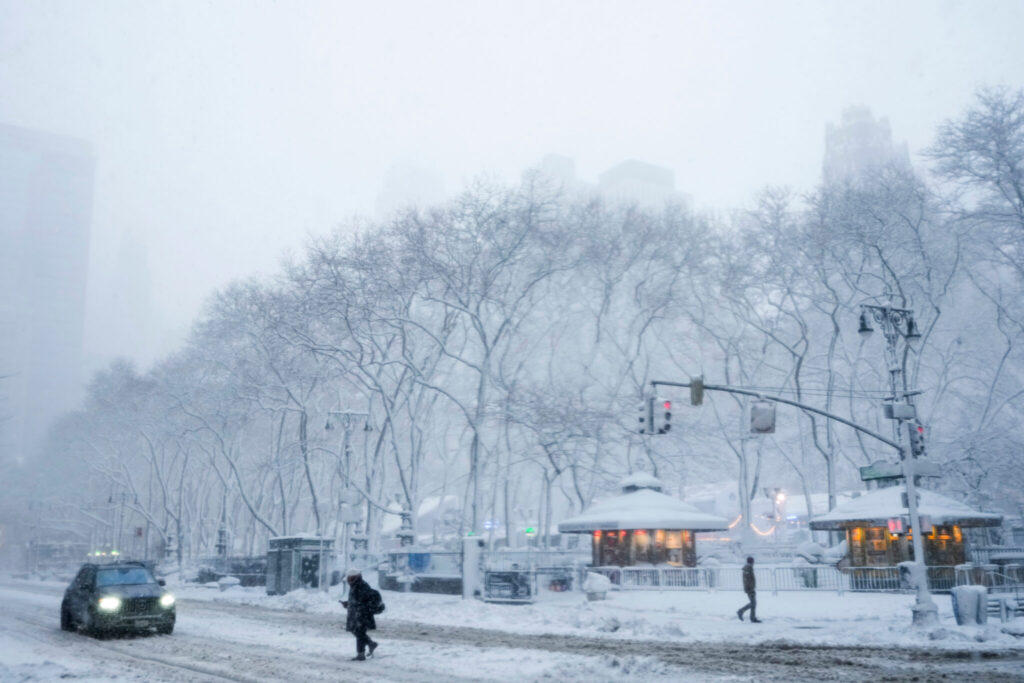
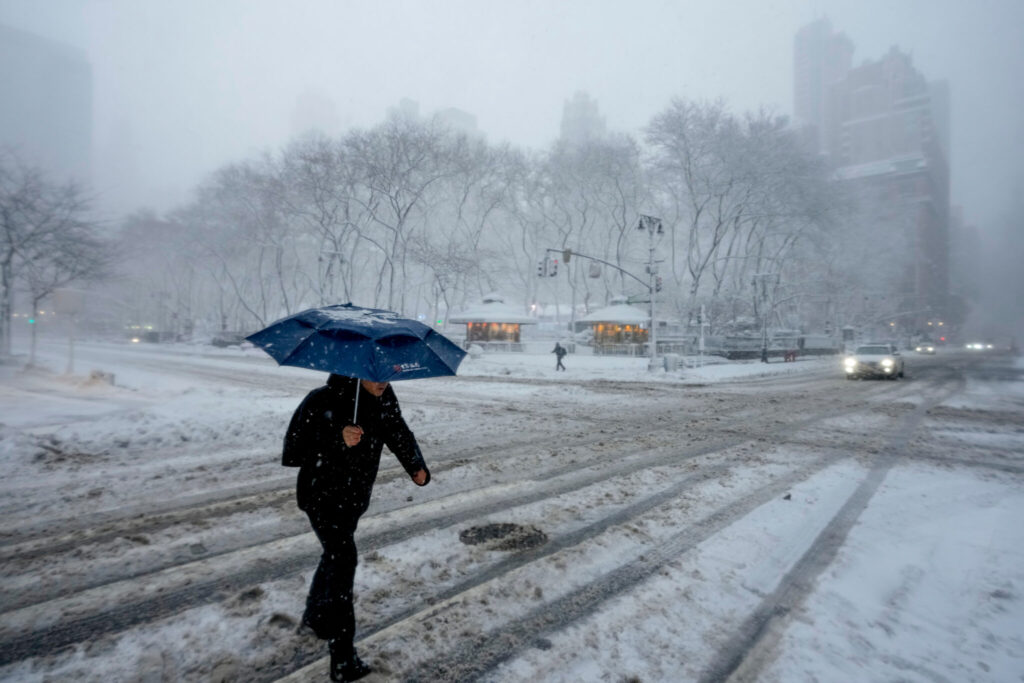
From New York City to Boston, snowfall rates reached 2 to 3 inches per hour in the early morning hours, creating dangerous whiteout conditions. By mid-morning, some communities had already accumulated well over a foot of snow, with forecasters warning that visibility would remain sharply reduced until conditions eased later in the day.
According to the National Weather Service, travel conditions were “nearly impossible” across large stretches of the region. Blizzard warnings stretched from Maryland through Maine, signaling the severity of the system’s impact.
Major Snow Totals Across the Region
The heaviest accumulations were reported across parts of New York and southern New England:
- Long Island MacArthur Airport: 22.5 inches
- Newark, New Jersey: 18 inches
- Central Park, New York City: 15 inches
- New London, Connecticut: 17 inches
- North Kingstown, Rhode Island: 17 inches
Wind gusts exceeding 30 mph — and in some areas approaching 50 mph — combined with the heavy, wet snow to create hazardous conditions for commuters and emergency crews alike.
The storm was described by meteorologists as a “classic bomb cyclone” — a rapidly intensifying system that drops at least 24 millibars in atmospheric pressure within 24 hours. Such systems are notorious for producing extreme snowfall, coastal winds, and prolonged power outages.
Travel Bans and Flight Disruptions
Authorities across multiple states enacted sweeping travel bans to limit movement and protect public safety. Residents in New York City received emergency push alerts on their phones announcing a prohibition on non-emergency travel through midday Monday due to “dangerous blizzard conditions.” Similar restrictions were imposed in Rhode Island and New Jersey.
Air travel was severely impacted. More than 5,000 flights were canceled nationwide on Monday, with the bulk of disruptions centered around New York, New Jersey, and Boston airports, according to FlightAware. Rhode Island’s T.F. Green International Airport temporarily suspended all operations as snow and wind intensified.
Public transit systems in several cities were suspended or significantly curtailed. Even food delivery services paused operations overnight in parts of New York City due to unsafe conditions.
Widespread Power Outages
The storm’s powerful winds and heavy snow led to extensive outages across the East Coast. More than 500,000 customers were without electricity early Monday, including over 212,000 in Massachusetts and 128,000 in New Jersey.
Approximately 10,000 customers on suburban Long Island also lost power. Officials warned that restoration efforts could be delayed due to dangerous wind conditions, particularly when gusts reach or exceed 50 mph.
New York Governor Kathy Hochul emphasized that utility crews would prioritize safety before repairing downed lines. High winds make bucket truck operations risky, particularly when linemen must work at elevated heights amid icy conditions.
Meteorologists cautioned that the combination of saturated, heavy snow and strong gusts increases the likelihood of tree damage, which can prolong outages for days in hard-hit communities.
Cities Declare Emergencies
States and major cities, including New York and Philadelphia, declared emergencies to mobilize resources. Municipal agencies deployed snowplows around the clock, while additional workers were recruited to help clear sidewalks and critical infrastructure.
New York City officials hired extra shovelers, with some crews beginning work Sunday night in anticipation of the storm’s first wave. Snow removal companies across Long Island prepared for extended operations lasting days.
Business owners and contractors anticipated at least a week of near-continuous snow clearing, particularly across large commercial properties such as shopping centers and industrial parks.
Schools and Public Institutions Close
Public schools in New York City and Boston canceled classes Monday, marking what New York City Mayor Zohran Mamdani described as the city’s “first old-school snow day since 2019.” Philadelphia schools transitioned to online learning.
Cultural institutions and landmarks across the region also shuttered their doors. Broadway shows were canceled Sunday evening, and closures extended to major museums and historic sites. Outreach teams worked throughout the storm to bring homeless residents into shelters and warming centers as temperatures plunged.
Residents Dig Out
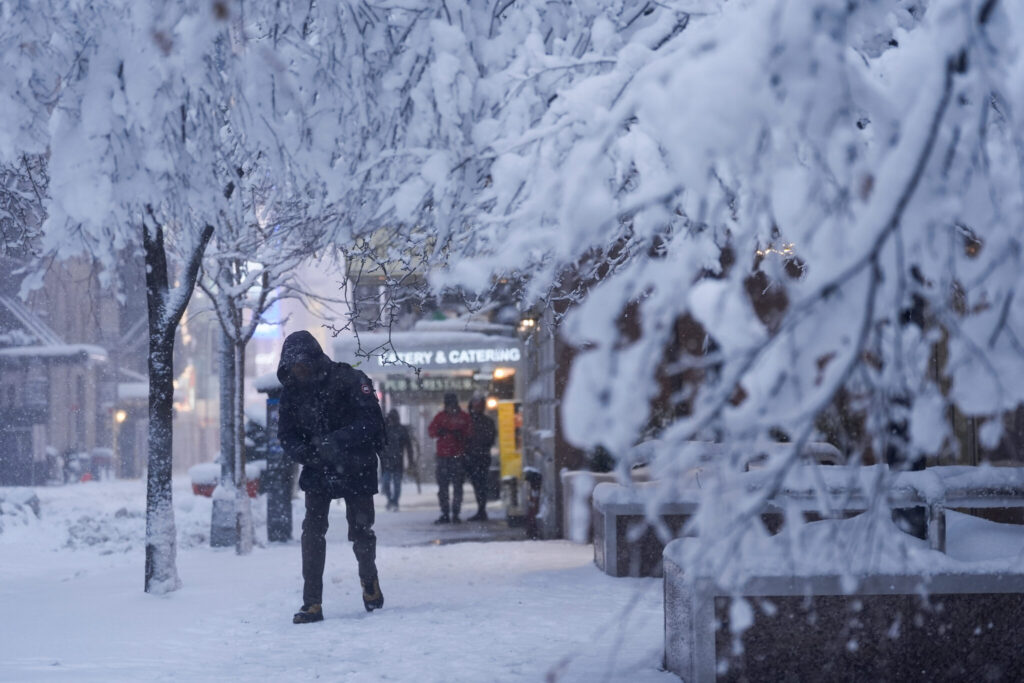
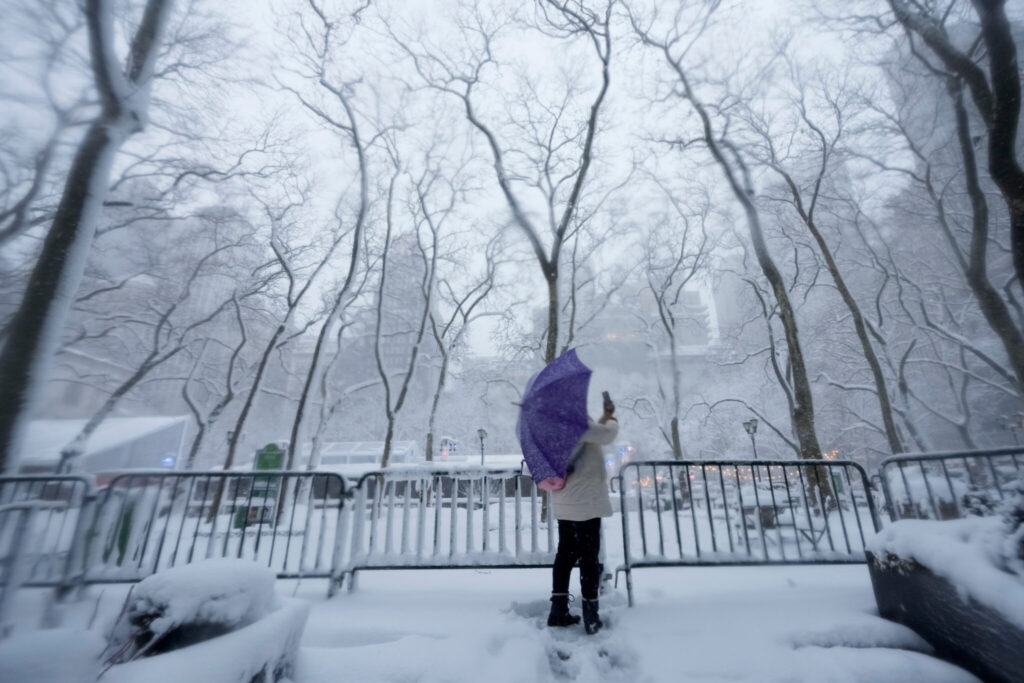
As snow continued to fall, residents bundled up to clear driveways and sidewalks. Some welcomed the storm as a reminder of winters past, while others braced for the physical toll of shoveling heavy snow.
For many in the Northeast accustomed to winter weather, the storm represented both disruption and resilience — a test of infrastructure, preparedness, and community response.
When Will the Storm End?
Forecasters expect snowfall to taper off by Monday afternoon, though gusty winds may persist into the evening. Officials continue urging residents to avoid unnecessary travel until roads are cleared and conditions stabilize.
The storm serves as a stark reminder of how rapidly winter weather can escalate in the Northeast — particularly when fueled by bomb cyclone dynamics that amplify snowfall and wind intensity simultaneously.