US Stocks Dip as Trump Expands Temporary Tariffs/ Newslooks/ WASHINGTON/ J. Mansour/ Morning Edition/ U.S. stocks declined after President Donald Trump increased temporary tariffs to 15% following a Supreme Court ruling. Markets reacted cautiously, with the Dow falling more than 600 points, though volatility remained far below last year’s tariff panic. Investors are weighing continued trade uncertainty, Federal Reserve signals, and global market responses.
US Stocks Trump Tariffs Quick Looks
- S&P 500 down 0.7%
- Dow drops 618 points (1.2%)
- Nasdaq declines 0.7%
- Trump raises temporary tariffs to 15%
- Tariffs could last up to 150 days
- Gold rises; dollar slips
- Airline stocks fall amid Northeast storm disruptions
- Fed signals possible pause on March rate cut
Deep Look: US Stocks Dip as Trump Expands Temporary Tariffs
U.S. stock markets retreated Monday after President Donald Trump moved swiftly to increase temporary tariffs to 15%, injecting fresh uncertainty into global trade just days after the Supreme Court of the United States ruled against his earlier sweeping “reciprocal” import taxes.
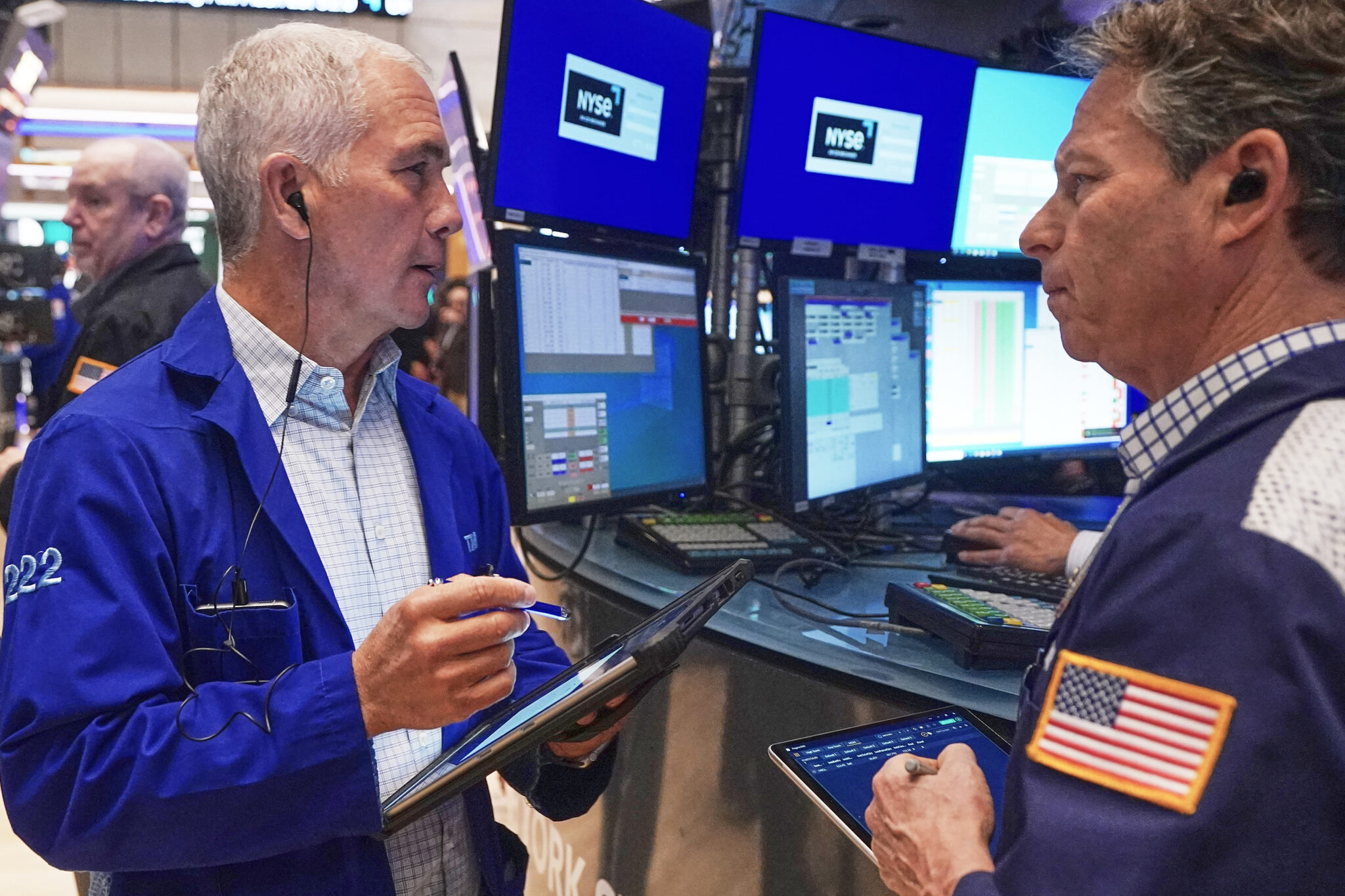
The S&P 500 fell 0.7% in morning trading. The Dow Jones Industrial Average dropped 618 points, or 1.2%, while the Nasdaq Composite slid 0.7%.
Tariff Escalation After Court Ruling
On Friday, the Supreme Court struck down Trump’s broad-based reciprocal tariffs, ruling that the president exceeded his authority. Within 24 hours, Trump announced a temporary 10% tariff in response — then quickly raised it to 15% on Saturday.
The new duties could remain in place for up to 150 days unless Congress votes to extend them. Meanwhile, administration officials are exploring alternative legal mechanisms to impose longer-lasting tariffs on specific countries and industries.
The rapid policy shift underscores persistent uncertainty surrounding U.S. trade policy. While markets reacted negatively, the declines were far less dramatic than the sharp selloffs seen in April following Trump’s earlier “Liberation Day” tariff announcement.
Global Unease and Diplomatic Tension
International reaction has been cautious. South Korea’s trade minister warned that additional tariff actions under alternative legal authorities could worsen uncertainty in global markets.
U.S. Trade Representative Jamieson Greer said in a Sunday interview that Washington intends to honor existing trade agreements and expects partners to do the same.
For some countries, however, a 15% tariff may still be lower than previously negotiated rates, creating a complicated diplomatic landscape.
Investors Stay Relatively Calm
Despite renewed trade tensions, Wall Street’s response has been notably measured. Analysts suggest investors recognize that further legal battles and congressional debates could delay lasting changes to tariff structures.
Chris Larkin of E-Trade from Morgan Stanley noted that while the Supreme Court’s decision initially boosted stocks Friday, it became clear that the ruling merely opened “a new chapter” in the ongoing trade saga.
In currency markets, the U.S. dollar edged slightly lower against major peers. Gold prices climbed as investors sought safe-haven assets amid uncertainty. Bitcoin briefly dipped below $65,000 overnight before rebounding above $66,000.
Sector Moves: Airlines, Pharma, and Pizza
Airline stocks led declines after severe snowstorms disrupted travel across the Northeast. Shares of United Airlines fell 4.7%, American Airlines dropped 4.3%, and Delta Air Lines lost 4.1% as thousands of flights were canceled.
In pharmaceuticals, Novo Nordisk’s U.S.-traded shares plunged 15.1% after trial data showed its experimental weight-loss drug CagriSema delivered less dramatic results than a competing treatment from Eli Lilly. Eli Lilly shares gained 3.4% in response.
Domino’s Pizza bucked the downward trend, rising 3.2% after reporting strong fourth-quarter same-store sales and projecting further market share expansion in 2026.
Overseas Markets Mixed
European markets posted mixed results. Germany’s DAX index slipped 0.6%, while France’s CAC 40 edged up 0.1%. European stocks had rallied Friday following the Supreme Court ruling.
In Asia, Hong Kong’s Hang Seng jumped 2.5% and South Korea’s Kospi rose 0.6% as regional investors reacted to the U.S. court decision and evolving tariff policy. Markets in Japan and mainland China were closed for holidays.
Bond Yields and Federal Reserve Signals
In the bond market, the yield on the 10-year U.S. Treasury note fell to 4.05% from 4.08% late Friday, reflecting modest demand for safer assets.
Meanwhile, Federal Reserve Governor Christopher Waller suggested the central bank may skip a potential interest rate cut at its March meeting, citing solid job growth in January. His comments mark a shift from earlier signals when he dissented in favor of easing policy.
Trump has publicly urged the Federal Reserve to lower rates, arguing that reduced borrowing costs would strengthen economic momentum. However, policymakers remain cautious amid inflation concerns and global trade instability.
What Comes Next for Markets?
The immediate market reaction suggests investors are balancing multiple forces: legal uncertainty over tariffs, corporate earnings performance, geopolitical tension, and Federal Reserve policy.
While Monday’s losses highlight investor unease, the absence of panic selling indicates confidence that any long-term tariff framework will likely unfold gradually through courts and Congress rather than sudden executive action.
For now, Wall Street appears to be bracing for a prolonged period of trade negotiations, litigation, and political maneuvering — all against the backdrop of a closely watched midterm election cycle.