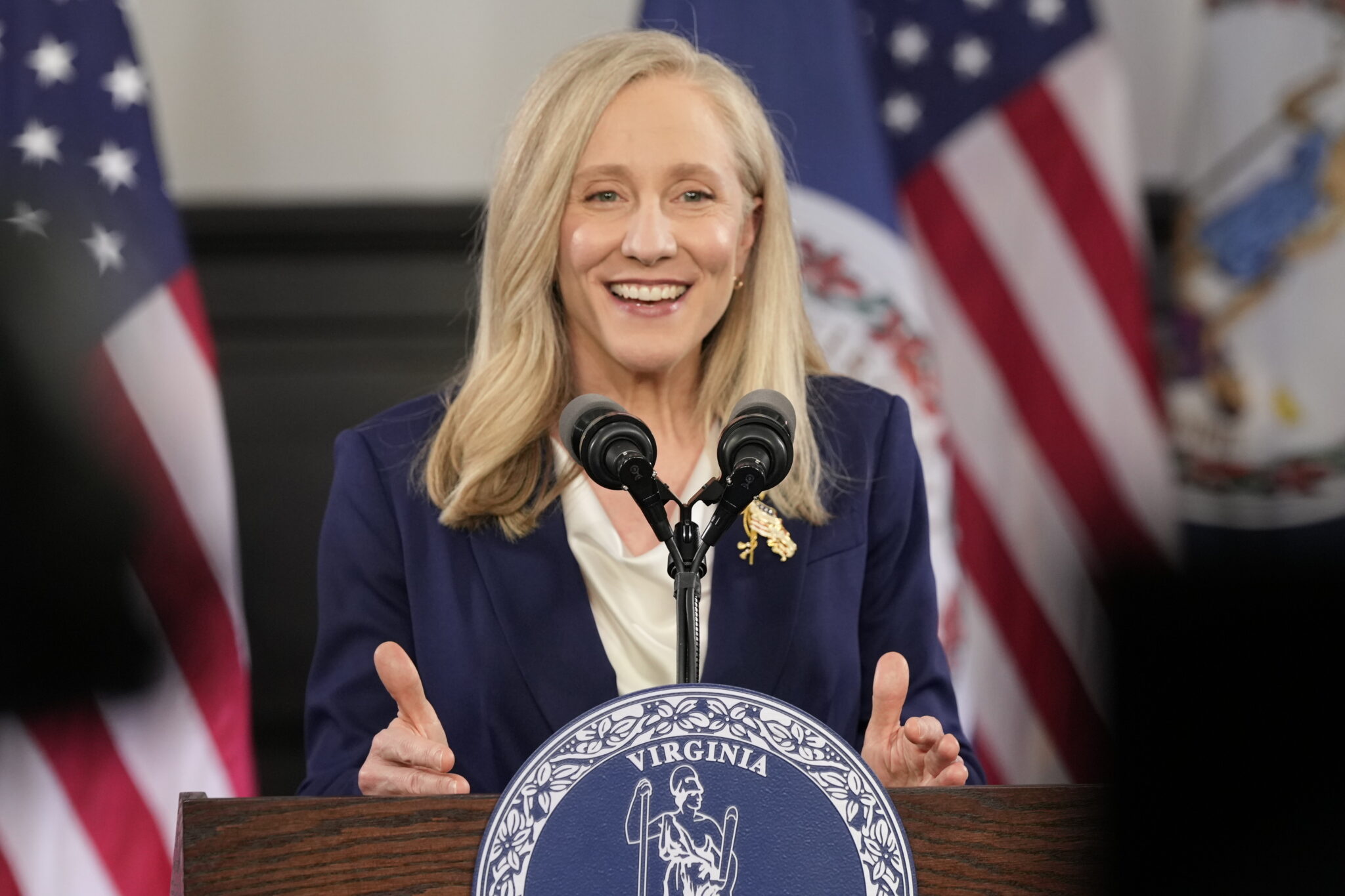
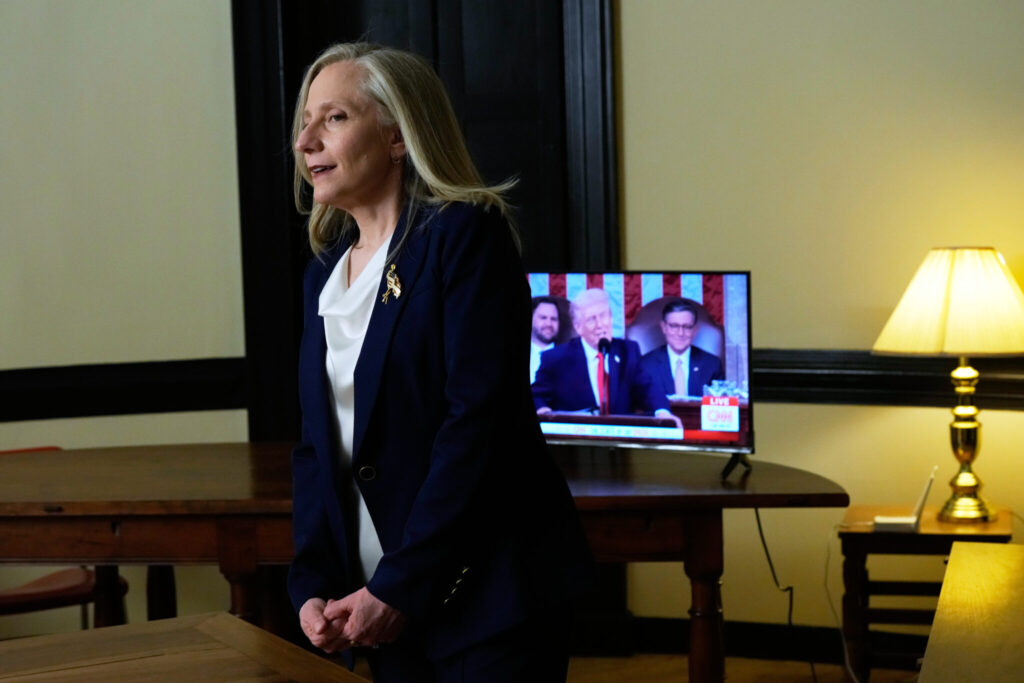
Spanberger Rebuts Trump’s Claims of Thriving Nation, Says Costs Remain High/ Newslooks/ WASHINGTON/ J. Mansour/ Morning Edition/ Virginia Gov. Abigail Spanberger pushed back against President Donald Trump’s “golden age” claims in her Democratic State of the Union rebuttal. She argued that high costs continue to burden families more than a year into Trump’s second term. Democrats aim to center affordability in their midterm strategy, pointing to recent electoral wins as momentum.
Abigail Spanberger State of the Union Rebuttal + Quick Looks
- Spanberger disputes Trump’s “golden age” narrative.
- Focuses on affordability and high living costs.
- Delivered rebuttal from Colonial Williamsburg.
- Democrats plan nationwide cost-focused midterm strategy.
- Points to recent Democratic wins as evidence of shifting momentum.
- Spanish-language response delivered by Sen. Alex Padilla.
- Some Democrats skipped Trump’s address, staging counter-events.

Deep Look: Spanberger Rebuts Trump’s Claims of Thriving Nation, Says Costs Remain High
Virginia Gov. Abigail Spanberger delivered a pointed Democratic rebuttal to President Donald Trump’s State of the Union address, rejecting his portrayal of the nation as entering a “golden age” and arguing that many American families continue to struggle with high costs.
Speaking from Colonial Williamsburg, the historic living museum that symbolizes early American resistance to British rule, Spanberger sought to frame the current political moment as another turning point for the country. Against the backdrop of restored 18th-century buildings, she drew parallels between the nation’s founding ideals and what she described as today’s urgent need for leadership focused squarely on affordability and everyday concerns.
While Trump used his address to Congress to highlight economic gains and declare that costs have declined since he returned to office, Spanberger offered a sharply different assessment. She contended that more than a year into Trump’s second term, families remain burdened by elevated prices for groceries, housing, healthcare and other essentials.
“Democrats across the country are laser-focused on affordability,” Spanberger said, emphasizing that leaders must address the issues “that keep them up at night.” Her remarks underscored a coordinated Democratic strategy ahead of November’s midterm elections: concentrate relentlessly on kitchen-table economics and argue that Republican policies have failed to deliver meaningful relief.
A Shorter Platform, Sharper Message
Spanberger faced a structural challenge common to opposition rebuttals. Trump’s speech lasted nearly one hour and 48 minutes, giving him a prolonged opportunity to shape the narrative. By contrast, Democratic responses typically draw fewer viewers, as audiences often decline once the president concludes.
The rebuttal has historically been a politically risky platform. Past performances — including one by current Secretary of State Marco Rubio in 2013 that was overshadowed by an awkward water break — illustrate how quickly such moments can become distractions rather than opportunities.
Nevertheless, Democrats believe the political environment is shifting. Spanberger’s own double-digit gubernatorial victory in Virginia last November is being touted by party leaders as evidence that a disciplined, affordability-focused campaign can resonate even in competitive terrain.
Political Tensions Inside the Chamber
Inside the House chamber earlier in the evening, tensions ran high. Trump repeatedly characterized the nation as thriving and mocked Democrats for remaining seated during portions of his speech, at one point calling them “crazy.”
Democrats largely responded with silence. However, Texas Rep. Al Green was removed from the chamber just minutes into the address after displaying a protest sign that read “Black People Aren’t Apes!” — referencing a previously posted video involving former President Barack Obama and former First Lady Michelle Obama.
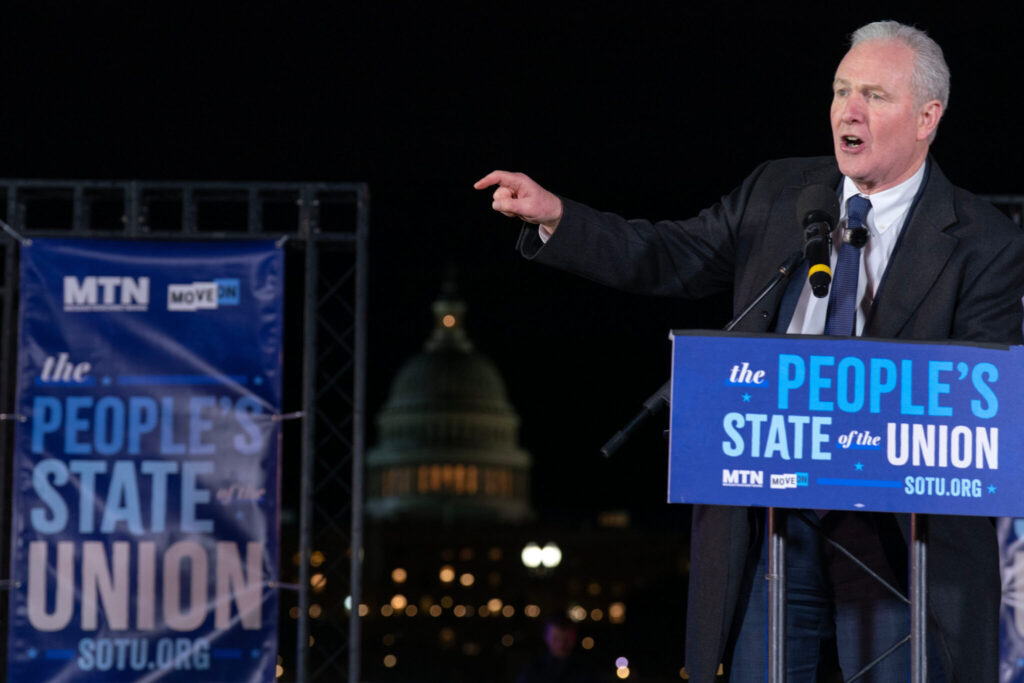
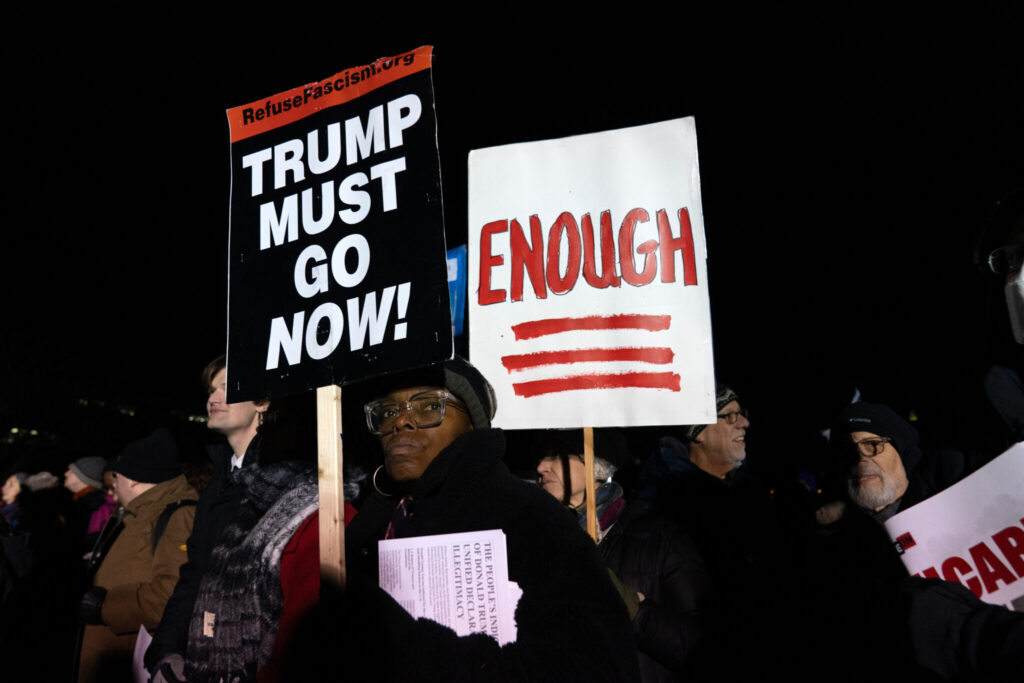
Some Democratic lawmakers opted to skip the address altogether, participating instead in counterprogramming events, including a “State of the Swamp” gathering designed to spotlight what they describe as corruption and misplaced priorities within the administration.
Expanding the Democratic Message
Beyond Spanberger’s English-language rebuttal, Democratic Sen. Alex Padilla delivered the party’s Spanish-language response. Padilla, who was forcibly removed from a Homeland Security news conference in Los Angeles last year while attempting to speak about immigration enforcement actions, used his remarks to call for resilience and civic engagement.
“They may have knocked me down for a moment, but I got right back up,” Padilla said, urging voters to prepare for November’s elections.
Democrats argue that a combination of recent electoral victories — including a special election in Texas that flipped a heavily Republican state Senate seat — signals growing frustration with Trump’s agenda. They believe sustained attention to rising living costs, healthcare expenses and wage stagnation could energize voters who feel left behind by broader economic indicators.
Midterm Stakes and Competing Narratives
At the heart of the debate is a clash over economic reality. Trump asserts that inflation has eased and that the nation is experiencing renewed prosperity. Spanberger and her party counter that headline statistics fail to capture the everyday strain facing millions of Americans.
The midterm elections will test which narrative resonates more strongly. For Republicans, the argument centers on economic growth and national strength. For Democrats, it is about affordability, stability and accountability.
By choosing Colonial Williamsburg as her setting, Spanberger aimed to invoke both history and hope — suggesting that American democracy thrives when leaders listen to citizens’ concerns. Whether that message gains traction nationwide may determine the balance of power in Congress and shape the next chapter of national politics.