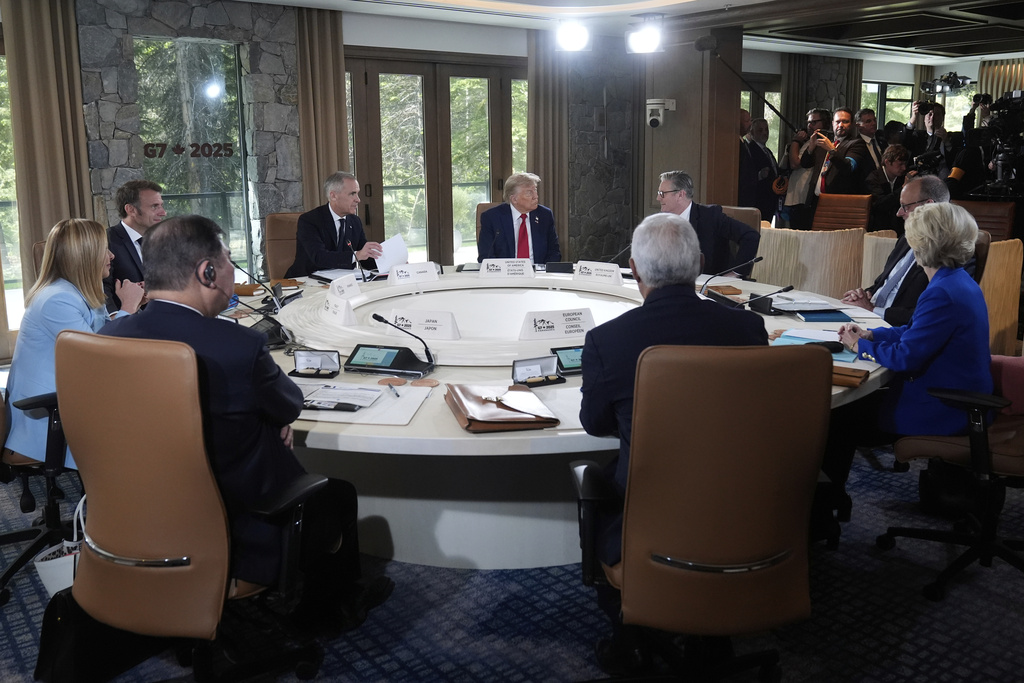
G7 Considers Emergency Oil Reserves As Iran War Threatens Global Economy/ Newslooks/ WASHINGTON/ J. Mansour/ Morning Edition/ Leaders of the Group of Seven are considering releasing emergency oil reserves as the expanding war involving Iran, the United States, and Israel drives global energy prices sharply higher. Oil briefly surged close to $120 per barrel, raising fears of a severe economic shock. Officials warn the world could face its worst energy crisis in decades if disruptions continue.
G7 Oil Reserve Discussions Quick Looks
- The Group of Seven discussed releasing strategic oil reserves.
- Oil prices briefly reached about $119 per barrel, the highest since 2022.
- The surge is tied to the growing conflict involving Iran.
- Tanker traffic through the Strait of Hormuz has nearly stopped.
- Around 20% of global oil supply normally passes through the strait.
- Analysts warn the shock could trigger stagflation in global economies.
- Strategic reserves across G7 countries total 300–400 million barrels.
- Iran’s leadership named Mojtaba Khamenei as the new supreme leader.
- Global financial markets have reacted with falling stocks and rising energy costs.
- Some analysts warn oil could reach $150 per barrel or higher.
Deep Look
G7 Considers Strategic Oil Reserves as Energy Crisis Deepens
Finance ministers from the Group of Seven nations are considering releasing emergency oil reserves as a growing conflict in the Middle East pushes energy prices to levels that threaten the global economy.
The talks come as oil markets react sharply to the war involving Iran, the United States, and Israel, which has disrupted production and transportation of crude across the region.
During a virtual meeting Monday, finance ministers from Canada, France, Germany, Italy, Japan, the United Kingdom, and the United States discussed potential coordinated action to stabilize global energy markets.
One option under consideration is releasing oil from strategic reserves to offset supply disruptions and prevent a sharp rise in inflation worldwide.
Oil Prices Spike Near $120 Per Barrel
Oil prices surged dramatically as the conflict intensified.
Benchmark Brent crude climbed to approximately $119.50 per barrel, marking the highest price since the months following Russia’s invasion of Ukraine in 2022.
Prices later eased somewhat, falling back to roughly $104 per barrel, but they remain far above the roughly $70 per barrel level seen before the war began.
Even at the reduced price level, analysts warn the surge could still trigger slower economic growth and higher inflation worldwide.
Threat to Global Oil Supply
The biggest concern for energy markets is the disruption of tanker traffic through the Strait of Hormuz, a narrow waterway linking the Persian Gulf to international shipping lanes.
Roughly 15 million barrels of oil per day — about 20% of global supply — normally pass through the strait.
However, fears of missile and drone attacks have largely halted tanker movement through the corridor.
As a result, several major oil exporters, including Saudi Arabia, Iraq, Kuwait, and the United Arab Emirates, have begun reducing production because storage facilities are filling up with unsold crude.
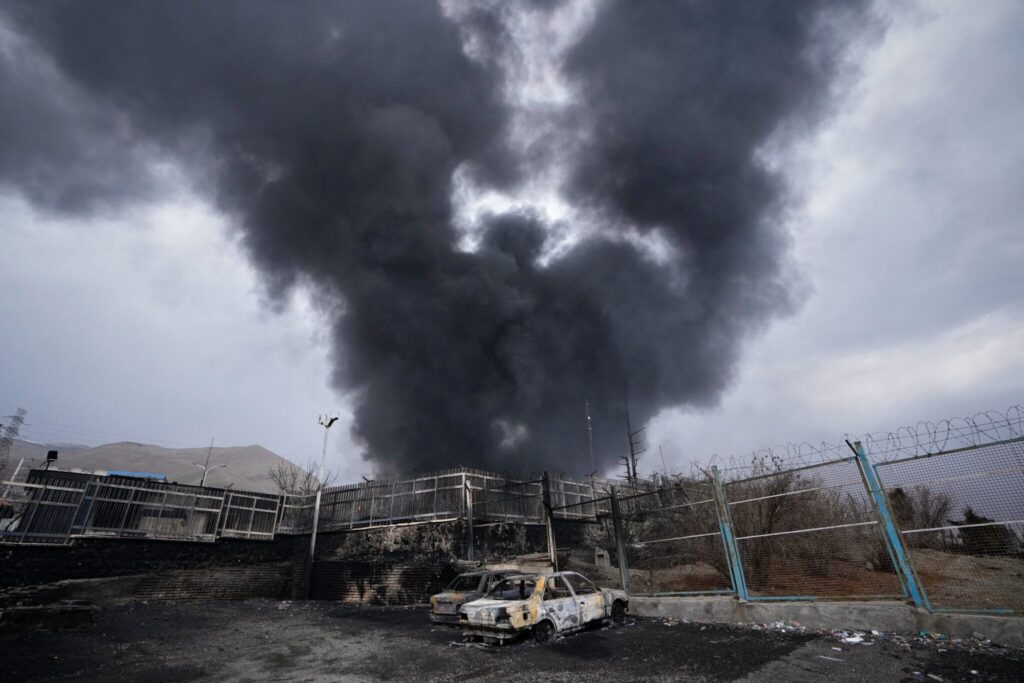
At the same time, energy facilities across the region have been targeted by airstrikes and drone attacks.
Strategic Oil Reserves as Emergency Tool
Strategic oil reserves are emergency stockpiles maintained by major economies to stabilize markets during supply disruptions.
G7 countries together control an estimated 300 to 400 million barrels of oil reserves.
However, releasing those reserves is considered an extreme step and has been used only a few times.
One recent example occurred in 2011, when the International Energy Agency coordinated a release during the Libyan civil war.
Another coordinated release occurred in 2022, when global energy markets were shaken by Russia’s invasion of Ukraine. That move helped bring oil prices down from roughly $139 per barrel to about $105–$115 within two months.
Fear of Stagflation
Stagflation occurs when economic growth slows while inflation remains high — forcing central banks to raise interest rates even as economies weaken.
Analysts say this risk may be particularly acute because global economic growth is already showing signs of slowing.
Job growth in the United States has weakened in recent months, while unemployment has begun rising in the United Kingdom.
Meanwhile, the European Central Bank has warned that the labor market in the Eurozone may be weaker than headline unemployment figures suggest.
Central Banks Brace for Possible Rate Hikes
Financial markets are already adjusting expectations for interest rates.
Traders now estimate roughly a 70% chance that the European Central Bank will raise interest rates by half a percentage point later this year, reversing earlier expectations that rates would remain unchanged.
Similarly, investors are now pricing in about a 50% chance that the Bank of England will raise interest rates before the end of the year.
Just days earlier, markets had expected rate cuts.
Escalating Conflict Raises Uncertainty
The geopolitical situation remains highly uncertain.
Over the weekend, strikes targeted energy infrastructure across the region, including oil depots in Tehran and refinery facilities elsewhere in the Persian Gulf.
Meanwhile, Mojtaba Khamenei was named as Iran’s new supreme leader following the death of his father, signaling that the country’s leadership intends to continue resisting military pressure.
Iran’s Islamic Revolutionary Guard Corps has also threatened to expand attacks on energy facilities across the Middle East if the war continues.
Officials warned that oil prices could climb as high as $200 per barrel if the conflict escalates further.
Impact on Global Economies
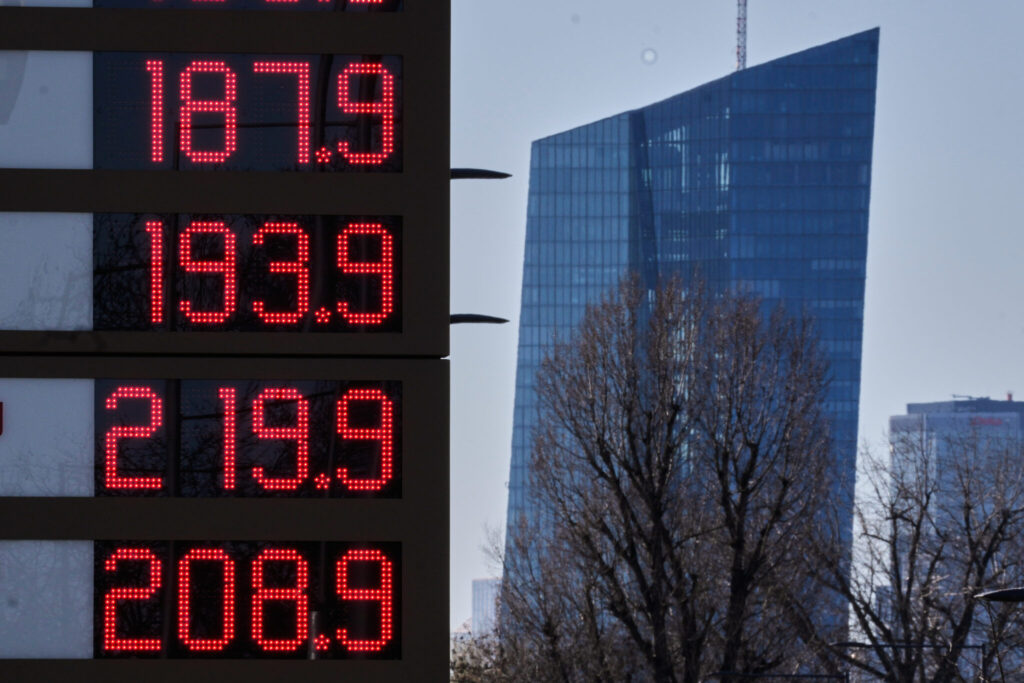
Higher energy costs are already spreading through the global economy.
Rising fuel prices increase costs for transportation, manufacturing, and household energy consumption.
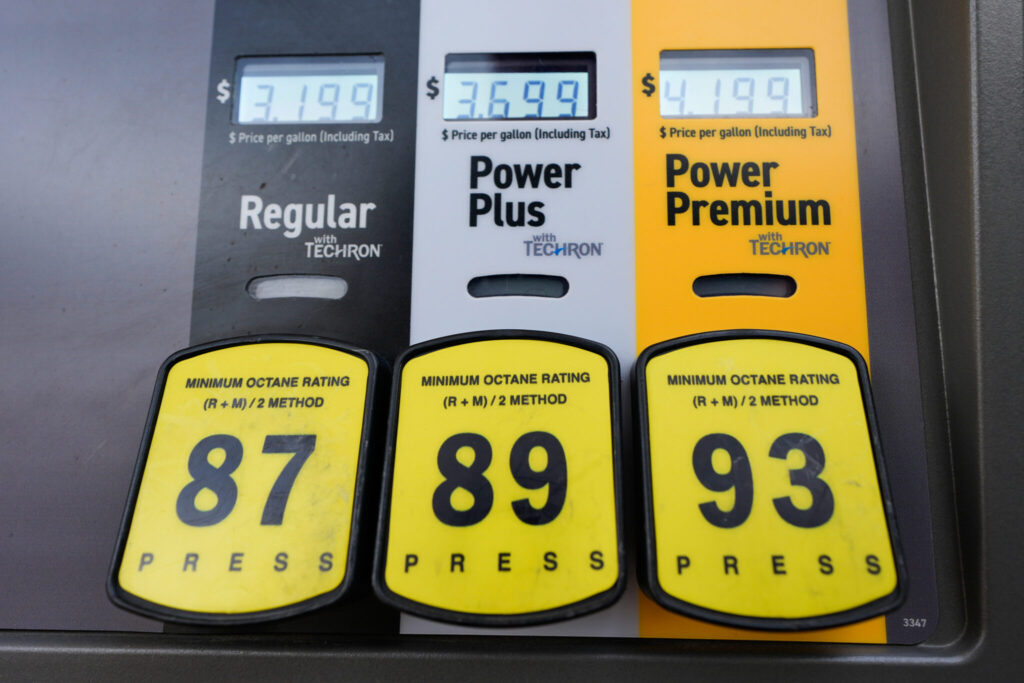
For consumers, the impact is visible at gas stations. In the United States, the average price of gasoline has climbed to nearly $3.50 per gallon, roughly 20% higher than a month ago.
The surge also carries political risks for President Donald Trump, who campaigned on lowering energy prices.
Trump has argued that the higher prices are a temporary consequence of military efforts to eliminate Iran’s nuclear threat.
Analysts Warn Crisis May Continue
Some analysts believe the energy shock could worsen before markets stabilize.
If the Strait of Hormuz remains closed for several weeks, some forecasts suggest oil prices could rise above $150 per barrel, surpassing previous peaks seen before the 2008 financial crisis.
Others believe the spike may be temporary if tanker traffic resumes quickly.
Still, economists warn that the scale of current supply disruptions could rival or even exceed past oil crises.
For now, policymakers and investors alike are watching closely as the conflict unfolds — and weighing whether emergency oil reserves will be needed to prevent a global economic shock.