
Americans Feel Iran War Impact At Gas Pumps/ Newslooks/ WASHINGTON/ J. Mansour/ Morning Edition/ Rising gasoline prices tied to the Iran war are hitting American drivers nationwide. The national average price has jumped sharply as oil markets react to Middle East tensions. Drivers across the political spectrum say higher fuel costs are straining household budgets.
Gas Prices and Iran War Impact Quick Looks
- U.S. gas prices have surged following the outbreak of war with Iran.
- The national average climbed to about $3.48 per gallon.
- Prices were around $2.90 just one month earlier.
- Americans across political lines are frustrated by rising costs.
- Some voters blame the war while others blame energy companies.
- Polls show many Americans fear the conflict will raise oil prices.
- Electric vehicle owners say they feel relief from gasoline spikes.
- Some drivers say they may cut travel if prices reach $5 per gallon.
- Rising fuel costs are already affecting heating oil and other energy expenses.
- The issue could influence voter attitudes ahead of the midterm elections.
Deep Look
Rising Gas Prices Become a Shared Frustration Across America
As the United States continues its military conflict involving Iran, Americans from across the political spectrum are feeling a common pain — rising gasoline prices.
At gas stations nationwide, drivers are confronting higher fuel costs driven by volatile oil markets and concerns about global supply disruptions. For many families, the financial impact of the conflict is most visible at the pump.
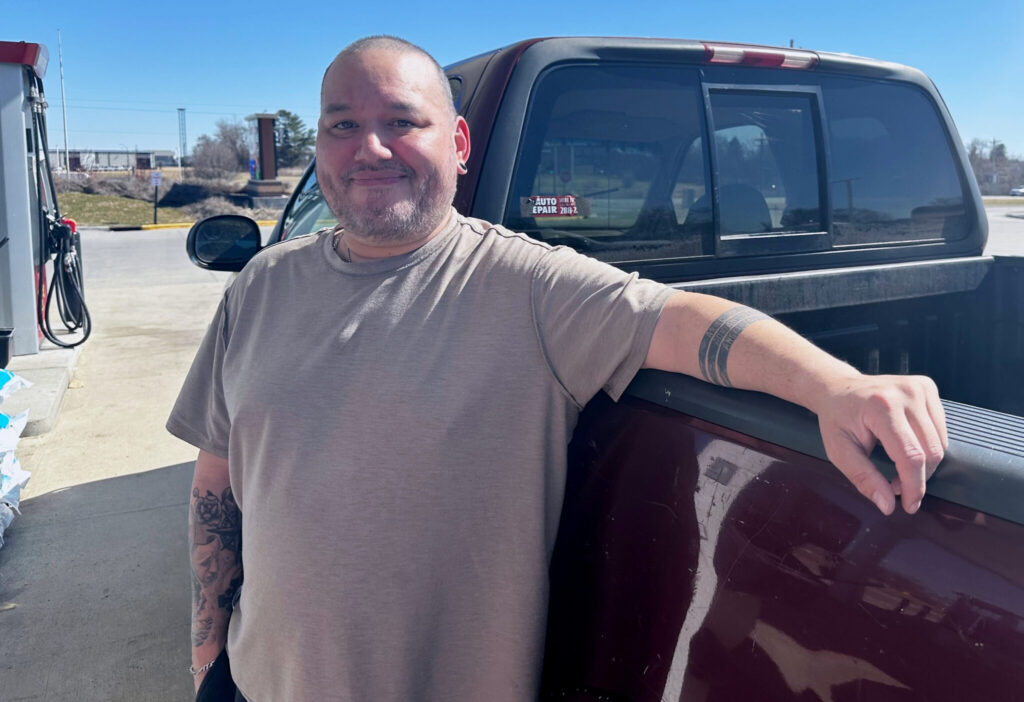
In De Soto, Iowa, factory worker Francisco Castillo stood beside his son’s Ford pickup truck while filling the tank at a station along Interstate 80. Castillo said he supported President Donald Trump in the last election, believing the president would help strengthen the economy.
But the recent surge in gasoline prices has left him frustrated.
“I thought he was going to bring some of those things back,” Castillo said, referring to lower costs he associated with Trump’s first term. “He said he was going to bring gas down, but the war in Iran is now making everything worse.”
Across the country, similar reactions are emerging as drivers watch fuel prices climb rapidly.
Gas Prices Rise Nationwide
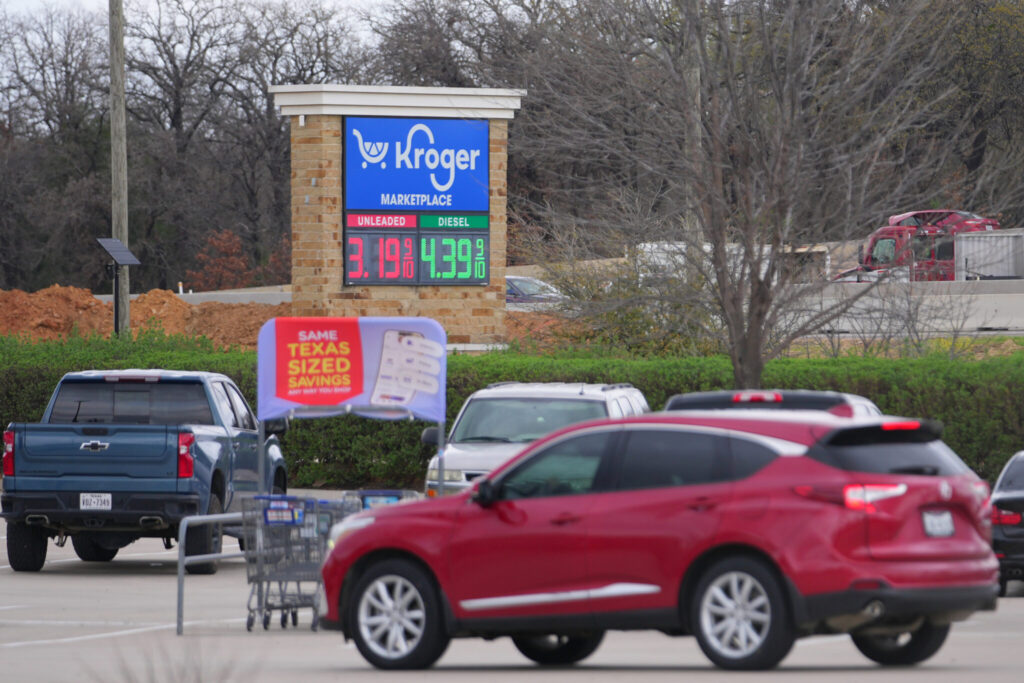
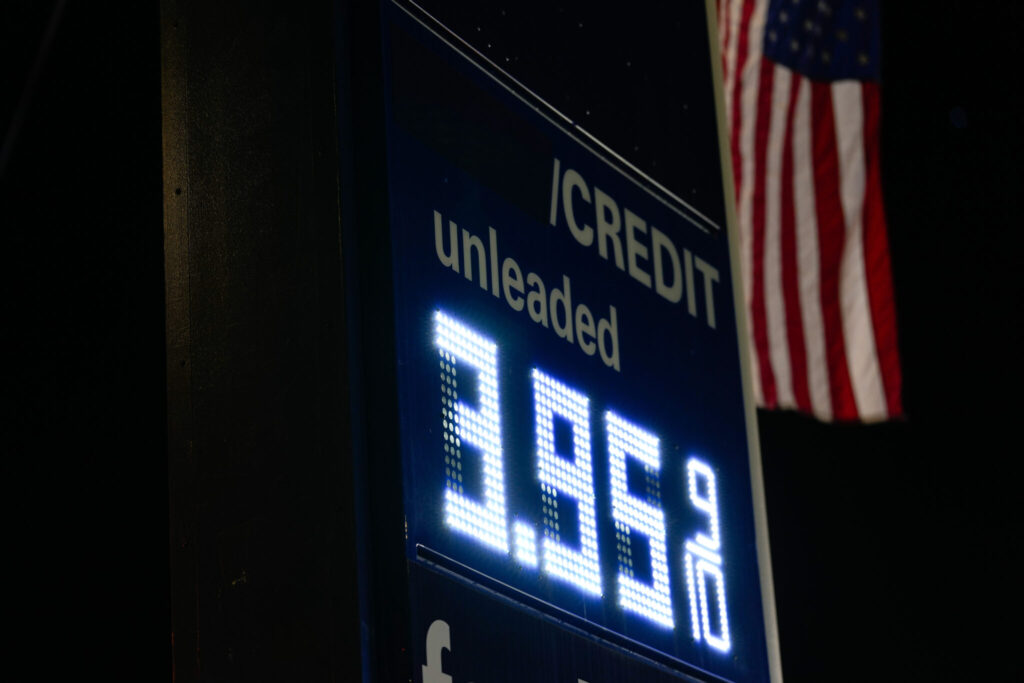
According to tracking by AAA, the national average price of gasoline reached about $3.48 per gallon on Monday. Just a month earlier, before the outbreak of the conflict, the average price was roughly $2.90.
The increase highlights how geopolitical conflicts can quickly ripple through global energy markets and affect everyday expenses for consumers.
Oil prices surged after concerns that disruptions in the Middle East could threaten global energy supplies. The Strait of Hormuz — a vital shipping route through which roughly one-fifth of the world’s oil passes — has become a focal point for market anxiety.
Even Americans who support military action in Iran acknowledge that the economic consequences are real.
Robert Coon of Omaha, Nebraska, filled up his vehicle while traveling through Iowa. Although he did not vote for Trump, he believes the strikes against Iran may have been necessary.
Still, he worries the conflict could drag on longer than expected.
“I hope it’s in, out, over,” he said.
Public Opinion Reflects Divided Views
Recent polling suggests Americans remain divided about the conflict itself but broadly concerned about its economic impact.
A Quinnipiac University survey conducted over the weekend found roughly half of registered voters oppose the U.S. military action against Iran, while about four in ten support it.
The political divide is sharp:
- 89% of Democrats oppose the military action
- 85% of Republicans support it
- 60% of independents oppose it
Despite those differences, most voters agree on one issue: rising energy costs.
About three-quarters of respondents said they are concerned that the war will lead to higher gas and oil prices.
Many also believe the conflict could last months or longer.
Drivers Adjust Spending and Travel Plans
For some Americans, rising gas prices are already affecting travel plans and daily budgets.
Ray Albrecht, a 67-year-old independent voter from Wisconsin, was hauling his 32-foot camper with his pickup truck during a stop in Winter Park, Florida. The vehicle gets only about eight miles per gallon, making fuel costs especially important.
He said he will continue traveling for now but would reconsider if prices climb significantly.
“If it gets to five dollars a gallon, I’ll stop,” he said.
At the same gas station, Tyler Nepple, a 23-year-old entrepreneur from the Orlando area, said fuel prices may influence how he votes in the upcoming midterm elections.
Still, he acknowledged that drivers often have little choice.
“You’ve just got to fill it up and bite the bullet,” he said.
Fixed Incomes Feel the Pressure
Higher energy prices can be especially difficult for people on fixed incomes.
Kathryn Price Engelhard, a 70-year-old retired nonprofit director in Morrisville, Pennsylvania, recently filled up her Subaru Forester at a Wawa gas station in suburban Philadelphia.
She said she now tries to refill her tank earlier and buy smaller amounts of heating oil for her home.
“I look at the prices of oil and the war and think — how did anyone think this wouldn’t impact oil?” she said.
Similarly, Vivian Knight, a 53-year-old Pennsylvania resident currently on disability, said she hopes her last tank of gas will last for an entire month.
“If I had to commute every day, gas prices would be ridiculous,” she said.
Electric Vehicle Owners Feel Relief
For Americans who have switched to electric vehicles, the spike in fuel prices has reinforced their decision.
In Livonia, Michigan, Anthony Gooden watched gasoline-powered vehicles line up at pumps while charging his electric Chevrolet Equinox.
“Whoa, they’re going through it right now,” he said, referring to drivers facing rising fuel costs.
Gooden said his EV purchase has helped shield him from volatile gasoline prices.
“You’re happier now,” he added. “No comparison.”
Similarly, Elvana Hammoud of Ann Arbor drives both an electric Ford Mustang Mach-E and a gas-powered Ford Raptor truck. With gas prices climbing, she increasingly chooses the electric vehicle for her daily commute.
Concerns About Price Gouging
Some Americans believe rising prices may also reflect corporate decisions rather than just geopolitical pressures.
Kevin Kertesz, a 65-year-old retiree in Graham, North Carolina, filled up his truck at a Shell station where gasoline prices had jumped sharply in just one week.
He believes energy companies may be taking advantage of the situation.
“Everyone who is selling fuel for these elevated prices is price gouging,” he said.
Ken Shuttlesworth, a 70-year-old IT manager from the same area, said he personally can manage the higher costs but worries about younger families and people with lower incomes.
He also believes major military decisions should involve more public debate.
“We have somebody who doesn’t follow the policy,” he said. “He follows his instincts.”
Economic Impact Could Shape Politics
With fuel prices rising and uncertainty surrounding the conflict continuing, economists say the economic consequences of the war could become a major political issue.
Energy costs affect transportation, food prices and household budgets, making them a key factor in voter attitudes.
As the midterm elections approach, the price Americans pay at the pump may become one of the most visible reminders of the global conflict’s domestic impact.