US Inflation Held Steady Last Month Before Iran War Sent Energy Costs Soaring/ Newslooks/ WASHINGTON/ J. Mansour/ Morning Edition/ U.S. inflation remained steady in February, according to new government data, but the figures were recorded before the Iran war pushed energy prices sharply higher. Gasoline costs and global oil prices surged after the conflict disrupted shipping routes in the Persian Gulf. Economists warn the spike could push inflation higher and complicate Federal Reserve policy decisions.
US Inflation and Iran War Energy Impact Quick Looks
- U.S. consumer prices rose 2.4% in February compared with a year earlier.
- Core inflation, excluding food and energy, increased 2.5% annually.
- The Federal Reserve’s inflation target remains 2%.
- Energy prices surged after U.S.-Israeli strikes on Iran on Feb. 28.
- Oil prices briefly climbed close to $120 per barrel before easing.
- Gas prices in the U.S. rose to about $3.58 per gallon, up roughly 20% in a month.
- Rising fuel costs could push inflation higher in coming months.
- The conflict has disrupted shipping in the Strait of Hormuz, a key oil route.
- Businesses fear higher transportation and supply costs.
- The inflation spike could delay potential Federal Reserve interest-rate cuts.
Deep Look
Inflation Stable Before Energy Shock
Inflation in the United States remained relatively stable in February, but the latest data reflects economic conditions before a dramatic spike in energy prices triggered by the escalating conflict with Iran.
According to the Labor Department, consumer prices increased 2.4% in February compared with the same month last year, unchanged from January’s annual rate.
When excluding volatile categories such as food and energy, core inflation rose 2.5%, also matching the previous month and marking the lowest core inflation rate in roughly five years.
Despite that improvement, both figures remain above the Federal Reserve’s target inflation rate of 2%.
War Disrupts Energy Markets
The inflation data was collected before the start of a major geopolitical shock that has already begun to reshape energy markets.
On February 28, the United States and Israel launched strikes against Iran, triggering a wider regional conflict.
The war has disrupted commercial shipping through the Persian Gulf and threatened the Strait of Hormuz, a critical global energy corridor through which about 20% of the world’s oil supply normally passes.
As tensions escalated, oil prices surged toward $120 per barrel, sending gasoline prices sharply higher across the United States.
By midweek, crude prices had fallen back to about $87 per barrel, partly after President Donald Trump suggested the conflict could be short-lived.
However, uncertainty remains high as military operations continue.
Fuel Prices Could Push Inflation Higher
Economists warn that rising fuel costs could quickly push inflation higher again in the coming months.
Laura Rosner-Warburton, senior economist at MacroPolicy Perspectives, said the consumer price trends before the energy spike appeared relatively stable.
“Ahead of the energy shock, trends in the consumer price index were relatively tame,” she said.
However, she estimates that fuel prices could climb about 20% this month, potentially pushing monthly inflation close to 0.9%, the highest level in four years.
Higher gasoline costs typically ripple through the broader economy by raising transportation, shipping and production expenses.
Mixed Signals in February Price Data
The February report contained both positive and negative signals for the economy.
One encouraging development was the continued slowdown in housing costs.
Rental prices increased just 0.1% in February, the smallest monthly rise in five years.
Vehicle prices also showed signs of cooling.
- New car prices were unchanged, and
- Used car prices fell 0.4% during the month.
However, other categories saw noticeable price increases.
Grocery prices rose 0.4% in February and are now 2.4% higher than a year ago, adding further pressure to household budgets.
Clothing costs also jumped 1.3% during the month, a rise economists say may be linked to tariffs affecting imported apparel.
Businesses Brace for Higher Costs
Many companies are already preparing for higher energy costs that could squeeze profit margins.
Isaac Lee Collins, CEO of Fifth & Emery Frozen Yogurt & Chocolate in Kansas City, said rising fuel prices are expected to increase business expenses.
His company imports chocolate from France, and tariffs already pushed prices up 15% to 20% last year.
“It’s just another surcharge that we’re going to get hit with,” Collins said.
Stew Leonard Jr., head of the Stew Leonard’s grocery chain, said transportation costs are likely to rise as suppliers face higher fuel expenses.
Truck drivers delivering fresh produce and meat could soon demand higher payments to offset gasoline costs.
“If it’s costing him more money to put fuel in this truck, he’s going to knock on my door and say, ‘Hey, Stew, I need a little more for that,’” Leonard said.
Risk of Further Oil Price Spikes
Energy analysts warn that oil prices could rise dramatically if disruptions in the Strait of Hormuz continue.
Wood Mackenzie, an energy research firm, estimates that crude oil prices could reach $150 per barrel if shipping traffic through the strait remains blocked.
Maritime security concerns have already intensified after a projectile struck a Thai cargo ship near the entrance to the shipping channel, setting the vessel on fire.
Such incidents highlight the growing risk to global energy supply chains.
Gas Prices Climb for American Drivers
The impact of higher oil prices is already visible at the pump.
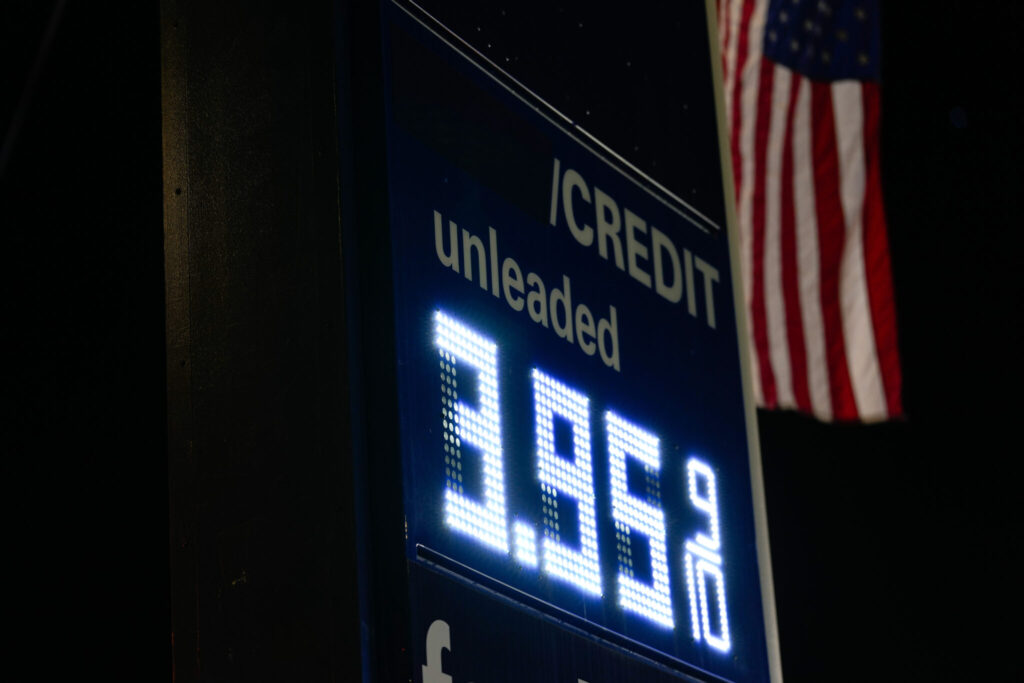
According to AAA, the national average price for regular gasoline reached $3.58 per gallon, roughly 20% higher than just a month earlier.
While consumer spending has not yet slowed significantly, retailers and analysts are watching fuel prices closely.
Darren Rebelez, CEO of Casey’s General Stores, said demand could weaken if gasoline approaches $5 per gallon.
For now, he believes consumer spending will remain relatively stable.
Federal Reserve Faces Difficult Choices
The new inflation pressures arrive at a complicated moment for the Federal Reserve.
The central bank reduced its key interest rate three times last year before pausing further cuts in January.
Officials have been debating whether to maintain the current rate — around 3.6% — to continue fighting inflation or begin lowering borrowing costs to support economic growth.
Recent economic data has complicated that decision.
Last week, the government reported 92,000 job losses in February, pushing the unemployment rate up to 4.4%.
Normally, weaker job growth would encourage the Fed to reduce interest rates.
However, rising inflation pressures could force policymakers to keep rates higher for longer.
“That’s always the worst-case scenario for the central bank,” said Austan Goolsbee, president of the Federal Reserve Bank of Chicago.
He warned that growing economic uncertainty may delay any policy changes.
“As we get more uncertainties, the time at which it makes sense to act keeps getting pushed back,” he said.