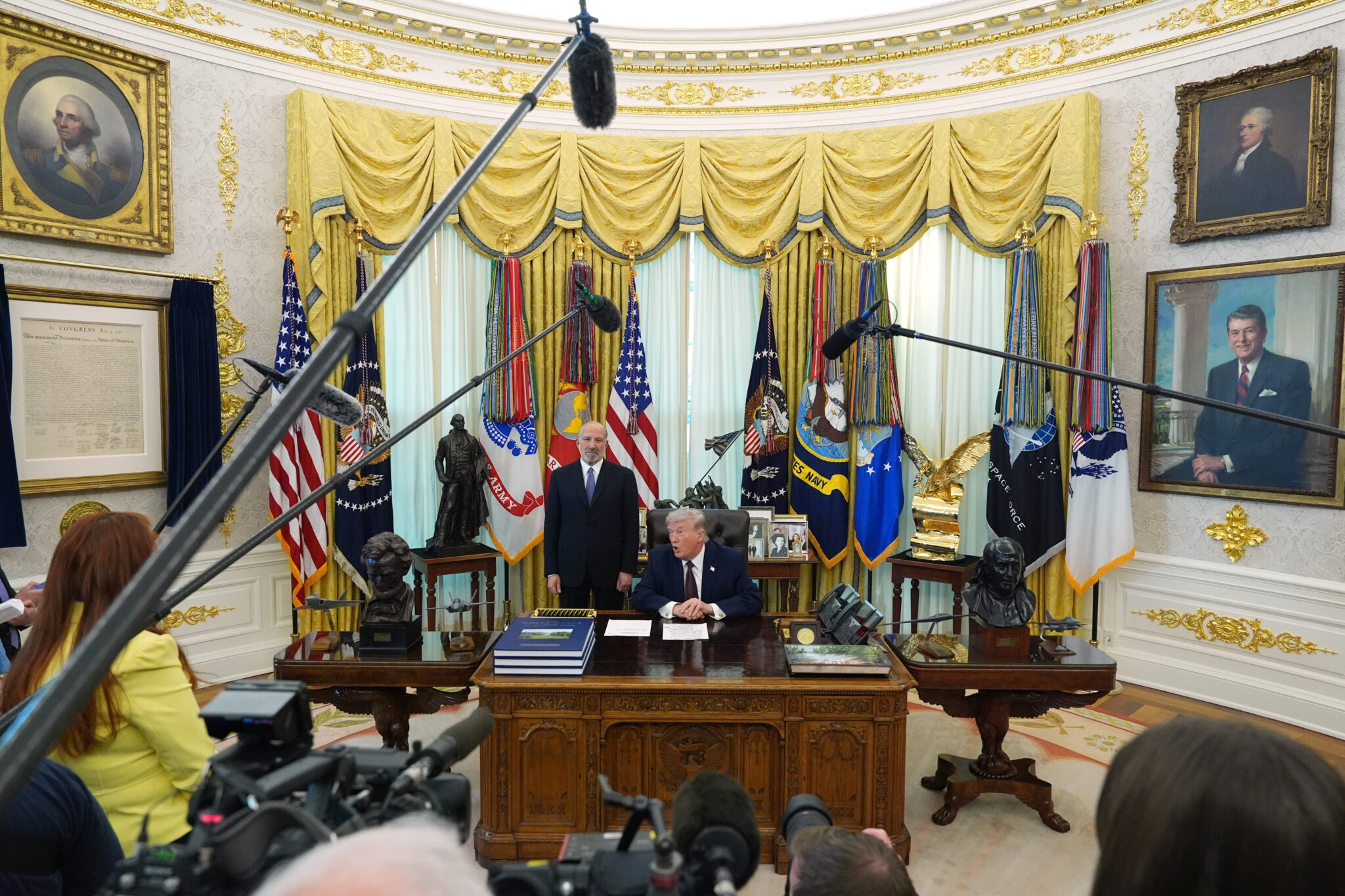
Trump Says Iran Requested Ceasefire, Links To Hormuz Reopening/ Newslooks/ WASHINGTON/ J. Mansour/ Morning Edition/ President Donald Trump claimed Iran requested a ceasefire amid ongoing military strikes. Trump said the U.S. will consider negotiations only after the Strait of Hormuz reopens. Iran denied the claim, saying the strategic waterway remains fully under its control.
Trump Iran Ceasefire Strait of Hormuz — Quick Looks
- Trump claims Iran requested ceasefire
- No confirmation from Iranian officials
- Trump demands Strait of Hormuz reopening
- Iran says waterway fully under IRGC control
- Trump vows continued strikes until conditions met
- Iranian official calls Trump “unstable and eccentric”
- Conflict escalates amid ongoing military operations
- White House schedules national address at 9 p.m. EST
- Strait of Hormuz remains key global energy route
- War developments raise regional and global concerns
Deep Look: Trump Says Iran Requested Ceasefire, Links To Hormuz Reopening
President Donald Trump said Wednesday that Iran has asked the United States for a ceasefire, but he made clear that Washington would only consider negotiations once Iran reopens the Strait of Hormuz — a critical global shipping route that has become central to the ongoing conflict.
In a post on Truth Social, Trump claimed that Iran’s new leadership reached out to request a halt in fighting.
He described Iran’s president as “much less radicalized and far more intelligent than his predecessors,” suggesting a potential shift in Tehran’s approach to the conflict.
“Iran’s New Regime President… has just asked the United States of America for a CEASEFIRE! We will consider when Hormuz Strait is open, free, and clear,” Trump wrote.
However, there has been no confirmation from Iranian officials that such a ceasefire request has been made. It also remains unclear whether Iran’s president has the authority to negotiate a ceasefire independently, given the complex power structure within Iran’s government.
Trump also signaled that U.S. military operations will continue until his conditions are met. In his post, he said the United States is “blasting Iran into oblivion” and pushing the country “back to the Stone Ages,” language that underscored the intensity of ongoing hostilities.
The president is scheduled to deliver televised remarks at 9 p.m. EST, where he is expected to provide further updates on the war and potentially outline next steps in U.S. strategy.
Shortly after Trump’s comments, Iran’s Islamic Revolutionary Guard Corps responded, stating that the Strait of Hormuz remains firmly under Iranian control. In a statement shared on Telegram, the IRGC said the waterway would not be reopened due to pressure from the United States.
“The situation of the Strait of Hormuz is decisively and fully under the control of the IRGC Navy, and it will not be reopened to the enemies of this nation through the theatrics of the U.S. president,” the statement read.
The Strait of Hormuz is one of the world’s most important maritime chokepoints, with a significant portion of global oil shipments passing through the narrow waterway. Any disruption to traffic through the strait can have immediate effects on global energy markets and economic stability.
Trump’s demand for reopening the strait marks a shift from earlier comments. In previous statements, the president suggested that closure of the waterway would not significantly impact the United States and indicated that countries dependent on Gulf energy supplies should manage the consequences.
Meanwhile, Iranian officials also questioned the significance of Trump’s upcoming announcement. A senior Iranian official told CNN that Trump’s statements should not be viewed as reliable indicators of policy direction.
“This trait reflects an unstable and eccentric personality,” the official said, downplaying expectations ahead of Trump’s planned national address.
The remarks highlight the growing tensions between Washington and Tehran as the conflict continues to escalate. Military exchanges between U.S., Israeli, and Iranian forces have intensified in recent days, increasing concerns about a broader regional confrontation.
The closure of the Strait of Hormuz has become one of the central issues in the conflict. The waterway connects the Persian Gulf to global shipping lanes, making it vital for international energy supplies. Analysts warn that prolonged closure could disrupt oil markets and raise global fuel prices.
Trump’s claim of a ceasefire request introduces new uncertainty into the conflict. If confirmed, it could signal a potential shift toward negotiations. However, Iran’s swift denial and continued military posture suggest that any diplomatic breakthrough remains uncertain.
The White House has described Trump’s upcoming speech as an “update” on the Iran conflict, though officials have not provided further details. The address is expected to clarify the administration’s position on ceasefire negotiations, military operations, and broader regional strategy.
As tensions remain high, both sides appear to be maintaining firm positions. Trump has tied negotiations to reopening the Strait of Hormuz, while Iran insists the waterway remains under its control and has rejected U.S. pressure.
The coming hours — and Trump’s televised remarks — could provide clearer direction on whether the conflict is moving toward escalation or potential diplomacy.