Trump Signs Executive Order Creating National Voter List, Facing Lawsuit Threats/ Newslooka/ WASHINGTON/ J. Mansour/ Morning Edition/ President Donald Trump signed an executive order creating a nationwide voter eligibility list and restricting mail-in voting. Democratic-led states quickly threatened lawsuits, calling the order unconstitutional. The move intensifies Trump’s push to reshape election rules ahead of midterm elections.
Trump National Voter List Executive Order — Quick Looks
- Trump signs executive order on national voter list
- Department of Homeland Security tasked with verification
- Social Security data to help identify eligible voters
- USPS could be barred from sending absentee ballots
- Federal funding threatened for noncompliant states
- Democratic states immediately threaten lawsuits
- Officials call order unconstitutional power grab
- Mail-in voting restrictions included in order
- Privacy and data accuracy concerns raised
- Order comes ahead of midterm elections
Deep Look: Trump Signs Executive Order Creating National Voter List, Facing Lawsuit Threats
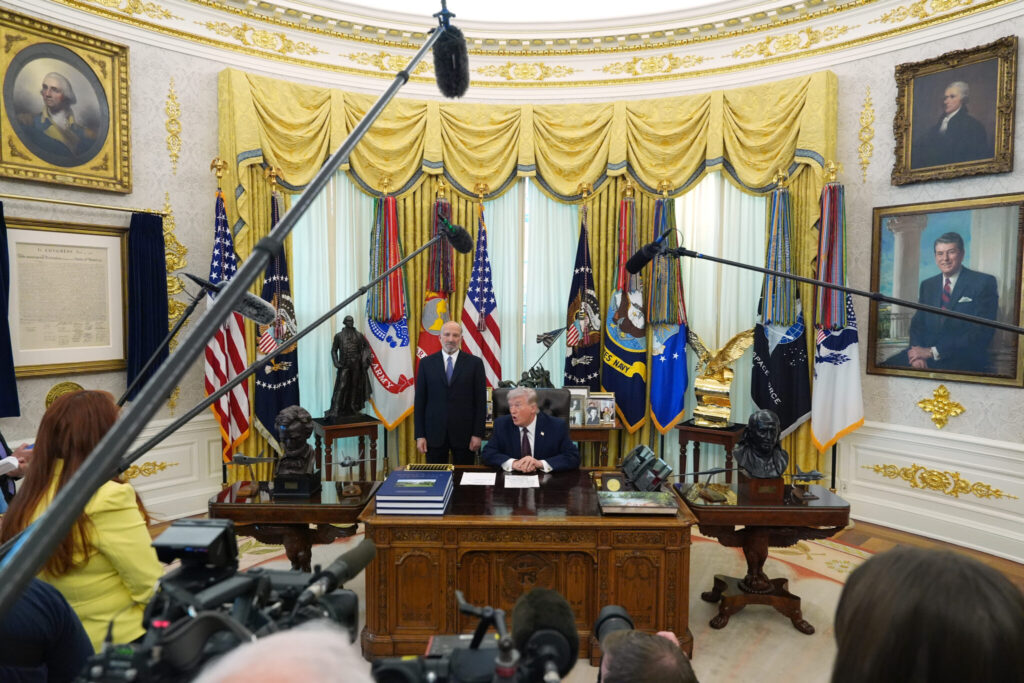
President Donald Trump signed an executive order Tuesday directing federal agencies to create a nationwide list of verified eligible voters and impose new restrictions on mail-in voting, a move that immediately sparked legal threats and intensified debate over federal authority in U.S. elections.
The order instructs the Department of Homeland Security, working with the Social Security Administration, to compile voter eligibility lists for each state. The directive also seeks to limit the distribution of absentee ballots by instructing the U.S. Postal Service not to send mail-in ballots to individuals who are not included on state-approved voter rolls.
Voting law experts and election officials quickly raised concerns, arguing the executive order attempts to shift election authority away from states and toward the federal government. The U.S. Constitution traditionally gives states primary responsibility for running elections, and critics argue the president lacks authority to impose sweeping nationwide election changes.
Trump defended the order during the signing, repeating claims of widespread fraud in mail-in voting — allegations that multiple audits, court rulings, and investigations have previously debunked.
“The cheating on mail-in voting is legendary. It’s horrible what’s going on,” Trump said while signing the order. “I think this will help a lot with elections.”
The executive order also calls for additional ballot security measures, including the use of secure envelopes with unique barcodes to track ballots. Additionally, federal funding could be withheld from states or local jurisdictions that fail to comply with the new requirements.
Within minutes of the announcement, election officials from several Democratic-led states pledged to challenge the order in court. Officials in Oregon and Arizona, both of which rely heavily on vote-by-mail systems, said they would not comply.
Arizona Secretary of State Adrian Fontes criticized the order, noting that the state’s vote-by-mail system was originally developed by Republicans and is widely used by voters.
“It is just wrongheaded for a president of the United States to pretend like he can pick his own voters,” Fontes said.
Maine Secretary of State Shenna Bellows also rejected the order, calling it “laughably unconstitutional” and stating that Maine would not follow the directive. More than a quarter of Maine voters cast ballots by mail during the 2024 election.
Nevada Secretary of State Francisco Aguilar warned that the order could disrupt local election systems and make voting more difficult for eligible voters.
“It doesn’t benefit anybody in this country except himself,” Aguilar said.
Legal experts also raised concerns about Trump’s attempt to restrict the U.S. Postal Service. The USPS operates under an independent board of governors, and experts note that the president does not directly control what mail the agency delivers.
A spokesperson for the Postal Service said the agency would review the executive order. Trump has previously proposed placing the USPS under the Commerce Department, which would increase presidential influence over the agency.
The order follows earlier election-related actions by the Trump administration. In March 2025, Trump signed another executive order proposing sweeping changes, including proof-of-citizenship requirements for voter registration and stricter deadlines for mail ballots. Much of that order has been blocked in court following legal challenges.
Trump has also stated publicly that he wants greater federal involvement in elections, particularly in areas run by Democratic officials. The United States currently operates a decentralized election system, with thousands of jurisdictions overseeing voting procedures.
Critics argue the new order expands federal authority in ways that could undermine state control. Maya Wiley, president of the Leadership Conference on Civil and Human Rights, said the order represents an attempt to centralize election control within federal agencies.
“This is Donald Trump turning the Department of Homeland Security into the department of controlling the homeland,” Wiley said.
The administration has defended its actions as part of a broader campaign to ensure election integrity. The Justice Department has requested voter registration data from states and pursued legal action when officials declined to provide it.
In January, the FBI seized ballots from a Georgia county that had been central to conspiracy theories surrounding the 2020 election. Attorney General Pam Bondi also recently appointed a special attorney tasked with investigating election-related cases nationwide.
Voting rights groups also expressed concerns about the federal verification systems that could be used to build the national voter list. The Department of Homeland Security’s SAVE system has faced criticism over potential inaccuracies and privacy concerns.
Some Republican officials, however, defended voter verification efforts. A spokesperson for Georgia Secretary of State Brad Raffensperger said Georgia already verifies citizenship and limits voting access for individuals flagged as potential non-citizens until documentation is provided.
Trump has long criticized mail-in voting, arguing it increases the risk of fraud. However, studies have consistently shown that fraud in mail-in voting is extremely rare. A 2025 report by the Brookings Institution found mail voting fraud occurred in only 0.000043% of ballots — roughly four cases per 10 million votes.
Despite his criticism, Trump has personally used mail-in ballots, including in recent Florida local elections. The White House has said Trump opposes universal mail-in voting rather than individual use of absentee ballots when necessary.
The executive order is expected to face immediate legal challenges, setting up a significant court battle over election authority and federal power ahead of upcoming midterm elections.