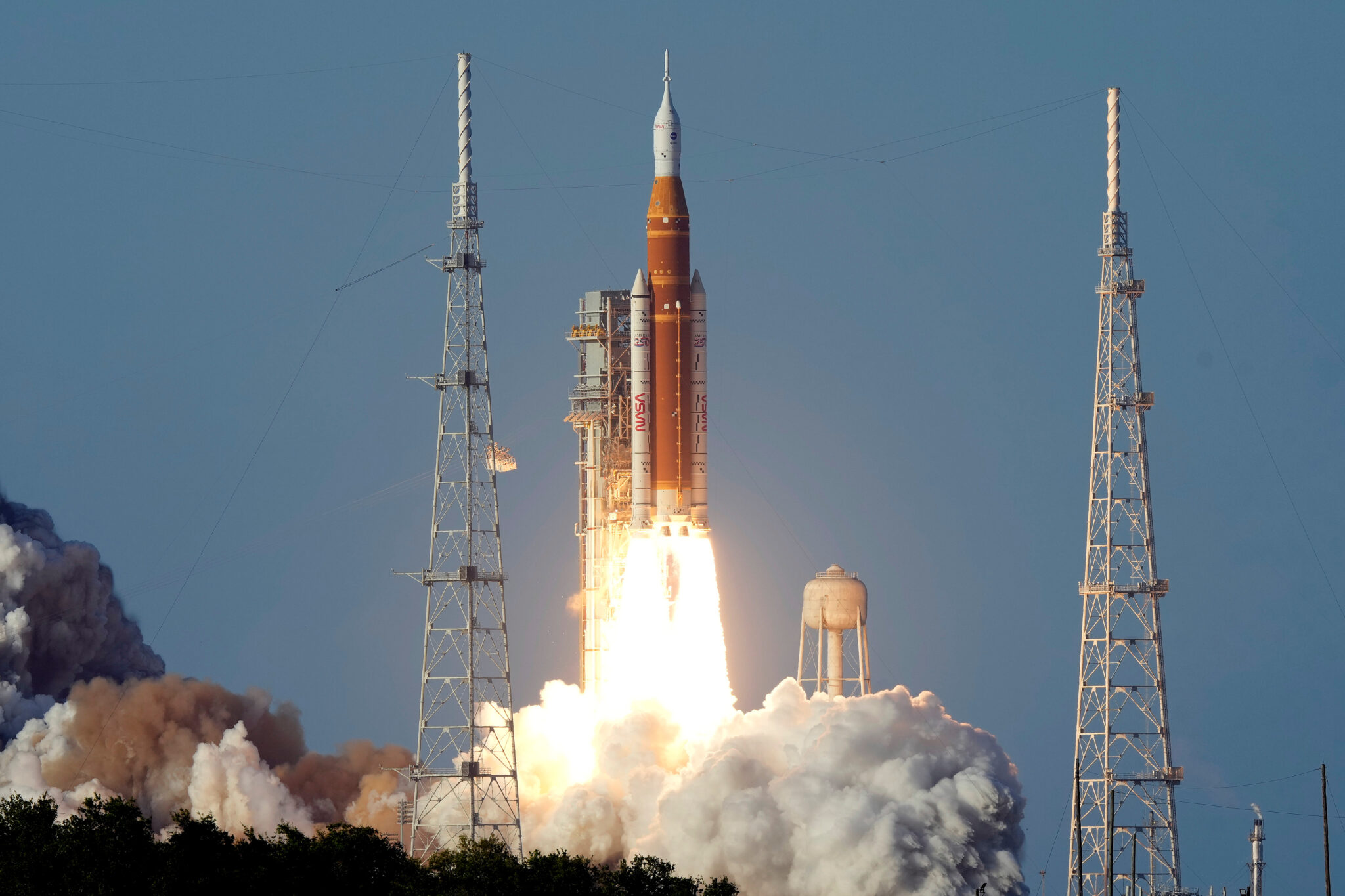
Artemis II Launch Sends Astronauts Toward Moon After Decades/ Newslooks/ WASHINTON/ J. Mansour/ Morning Edition/ NASA launched four astronauts on the Artemis II mission, humanity’s first lunar voyage in over 50 years. The 10-day test flight is a key step toward establishing a permanent moon presence. The mission features the most diverse lunar crew and tests critical systems for future moon landings.
Artemis II Moon Mission Quick Looks
- First crewed lunar mission in over 50 years
- Four astronauts aboard Orion capsule
- Launch from Kennedy Space Center, Florida
- 10-day test flight around the moon
- Most diverse lunar crew in NASA history
- First woman and person of color on lunar mission
- Capsule to travel 4,000 miles beyond moon
- Mission tests life-support and crew systems
- Hydrogen leak concerns resolved before launch
- NASA aims for moon landing within two years
- Artemis program targets sustainable moon base
- Mission sets stage for future Mars exploration

Deep Look: Artemis II Astronauts Begin Historic Lunar Journey
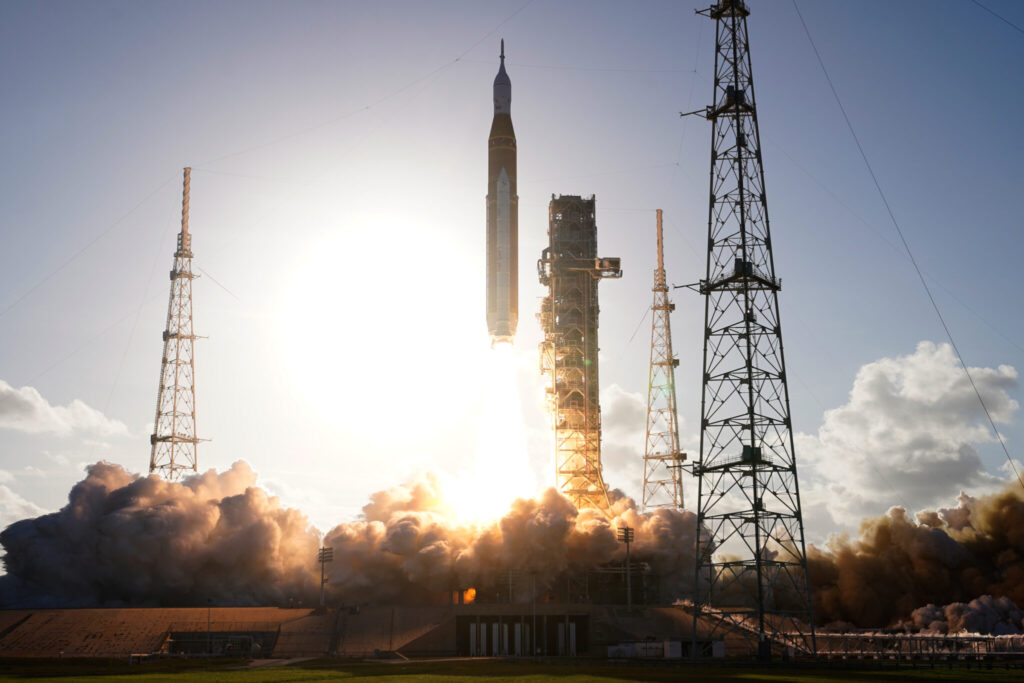
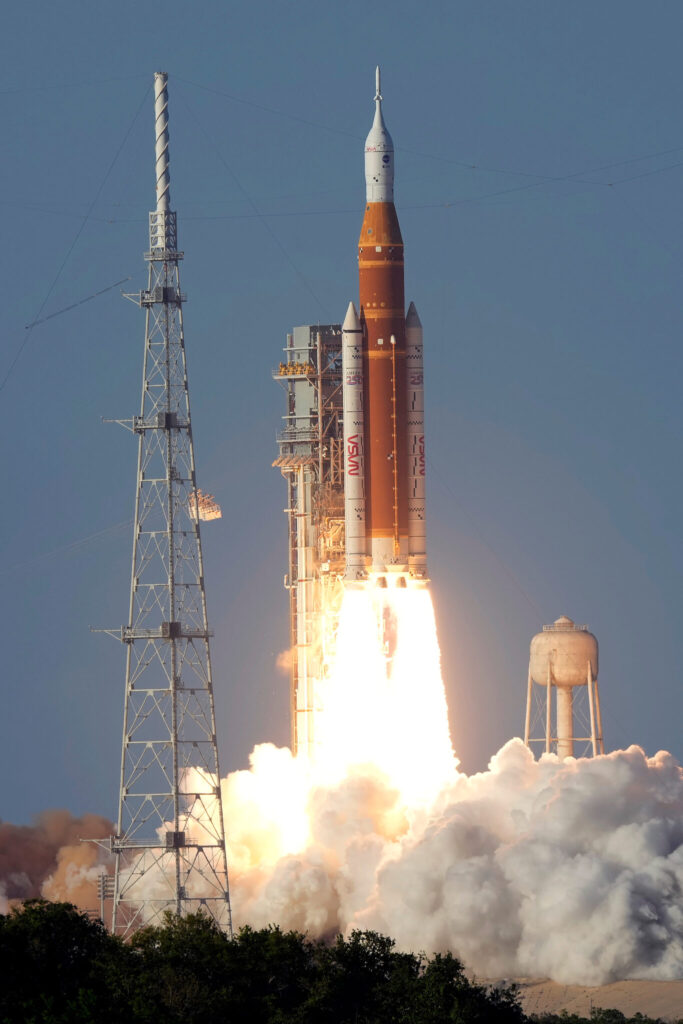
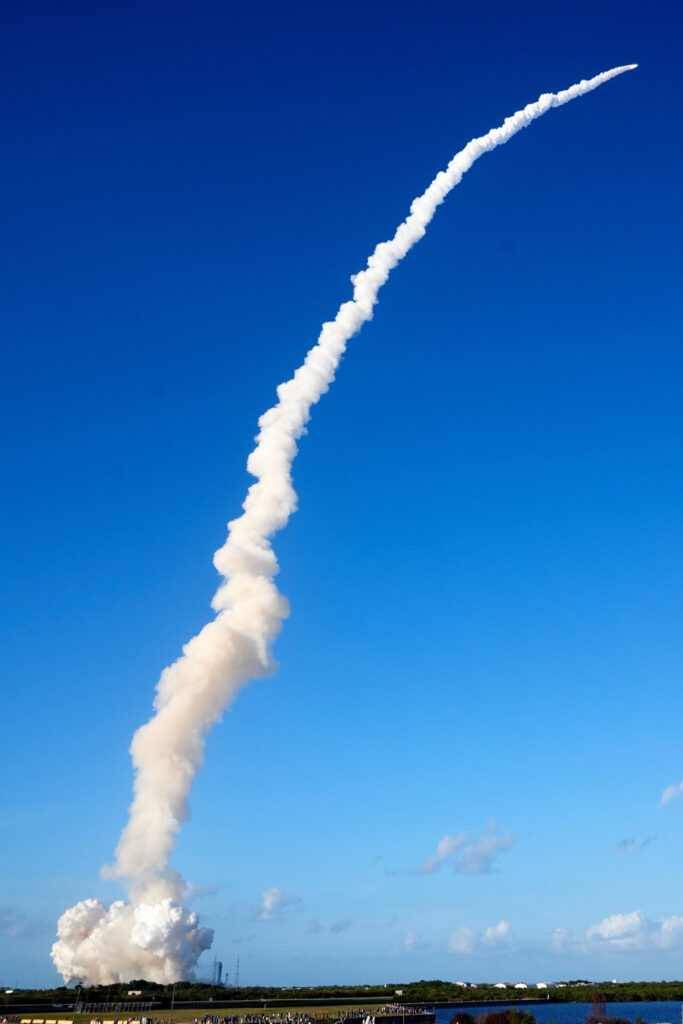
CAPE CANAVERAL, Fla. — Four astronauts blasted off Wednesday aboard NASA’s Artemis II mission, embarking on humanity’s first crewed journey around the moon in more than half a century and marking a pivotal step toward returning astronauts to the lunar surface.
The towering 32-story Space Launch System rocket roared into the sky from NASA’s Kennedy Space Center, drawing tens of thousands of spectators to Florida’s Space Coast. Crowds filled beaches and highways, echoing the excitement that surrounded the Apollo missions of the 1960s and 1970s.
The Artemis II crew includes three Americans — Commander Reid Wiseman, pilot Victor Glover, and mission specialist Christina Koch — along with Canadian astronaut Jeremy Hansen. The mission represents the most diverse lunar crew ever assembled, including the first woman, the first person of color, and the first non-American astronaut to participate in a lunar voyage.
Launch director Charlie Blackwell-Thompson offered encouragement moments before liftoff, telling the crew they carried the hopes and dreams of a new generation. Minutes later, the rocket thundered skyward toward a nearly full moon some 248,000 miles away.
Five minutes after launch, Wiseman reported seeing a “beautiful moonrise,” confirming the spacecraft’s trajectory toward lunar space. NASA officials hailed the mission as a milestone after more than five decades without human lunar travel.
“NASA is back in the business of sending astronauts to the moon,” NASA Administrator Jared Isaacman said after liftoff.
Tense Countdown Before Launch
The hours leading up to launch were filled with tension. Engineers closely monitored hydrogen fuel loading after earlier test delays caused by leaks. More than 700,000 gallons of fuel were successfully loaded into the rocket without major issues.
NASA also addressed last-minute technical challenges, including faulty battery sensors and communication issues with the rocket’s flight termination system. Both were resolved quickly, clearing the path for launch.
These technical challenges highlighted the risks involved in returning humans to deep space after decades of limited lunar activity.
10-Day Lunar Test Flight
The Artemis II mission is designed as a 10-day test flight to evaluate spacecraft systems and astronaut operations. For the first 25 hours, the crew will orbit Earth while testing onboard systems before firing the main engine to head toward the moon.
Unlike Apollo 8, the astronauts will not orbit the moon. Instead, they will fly past it and travel an additional 4,000 miles into deep space before looping back to Earth.
During the mission, astronauts practiced manual steering of the Orion capsule. They maneuvered within 33 feet of the detached rocket stage — a key test in case automatic navigation systems fail.
Unique Views and Scientific Opportunities
The crew is expected to witness extraordinary views during the lunar flyby. From their vantage point, the moon will appear roughly the size of a basketball held at arm’s length.
Astronauts will photograph the lunar surface and may observe features never before seen by human eyes. They will also witness a partial solar eclipse from space as the moon briefly blocks the sun.
These observations are part of NASA’s broader effort to prepare for future lunar exploration and scientific research.
Testing Critical Systems
Artemis II marks the first time NASA is testing life-support systems designed for deep space missions. Unlike Artemis I, which flew without a crew, Artemis II includes a toilet, water systems, and other human-support technologies.
However, challenges emerged early in the flight. Astronaut Christina Koch reported that the capsule’s toilet malfunctioned shortly after activation. NASA advised using a backup system while engineers investigate.
Despite the issue, NASA officials expressed confidence in the spacecraft’s performance.
Building Toward Lunar Base
NASA’s Artemis program aims to establish a long-term presence on the moon. Future missions plan to deploy robotic rovers, drones, and eventually astronauts near the lunar south pole.
NASA hopes Artemis II will pave the way for Artemis III and Artemis IV missions, which aim to land astronauts and begin building a sustainable lunar base.
The program also reflects growing competition with China, which plans to send astronauts to the moon later this decade.
NASA Administrator Isaacman recently accelerated the Artemis timeline, moving planned missions forward to ensure American astronauts return to the lunar surface before competing programs.
Risks Remain High
Despite the excitement, the mission carries significant risks. NASA has not released a full risk assessment but acknowledged that new rocket systems historically carry elevated danger.
Previous hydrogen leaks, helium blockages, and heat shield concerns added to the mission’s complexity. However, NASA officials expressed confidence after a smooth launch.
Veteran Apollo astronaut Charlie Duke, one of the few surviving moonwalkers, offered encouragement to the crew, highlighting the importance of the mission.
A New Era of Exploration
NASA officials say Artemis represents a new era of space exploration. Unlike the Apollo missions, which focused on short visits, Artemis aims to build sustainable lunar infrastructure.
Astronauts emphasized that the mission belongs to all humanity.
“It’s the story of humanity,” pilot Victor Glover said. “Not Black history, not women’s history — human history.”
The Artemis II mission marks a major step toward future lunar landings and eventual missions to Mars, signaling the beginning of a new chapter in space exploration.