U.S. Economy Grew 2% from January-March, Iran War Clouds Outlook/ Newslooks/ WASHINGTON/ J. Mansour/ Morning Edition/ The U.S. economy grew at a 2% annual rate in early 2026, rebounding from the previous quarter’s slowdown tied to a federal shutdown. Stronger government spending and business investment helped drive growth, while consumer spending slowed. The Iran war and rising energy prices are creating uncertainty and could weigh on future economic performance.
US Economy GDP Growth Quick Looks
- U.S. GDP grew 2% from January through March 2026
- Growth rebounded from a weak 0.5% pace in late 2025
- Government spending surged 9.3%, boosting overall output
- Consumer spending slowed to 1.6%, signaling caution
- Business investment jumped 8.7%, driven by AI spending
- Housing remained weak with a fifth straight quarterly decline
- Imports surged, cutting into overall GDP growth
- Iran war and rising oil prices are clouding the outlook
Deep Look
U.S. Economy Rebounds in Early 2026
WASHINGTON — The U.S. economy picked up momentum at the start of 2026, expanding at a 2% annual pace from January through March as it recovered from the effects of a prolonged federal government shutdown late last year.
New data from the Commerce Department showed a clear improvement from the final quarter of 2025, when economic growth slowed sharply to just 0.5%.
The rebound was largely driven by a surge in government spending and stronger business investment, helping offset slower consumer activity.
Government Spending Fuels Growth
A major contributor to the stronger economic performance was federal government spending and investment, which rose at a 9.3% annual rate during the first quarter.
That increase added more than half a percentage point to overall GDP growth, reversing the drag caused by the shutdown in late 2025, which had significantly reduced economic output.
Without that rebound in government activity, overall growth would have been much weaker.
Consumer Spending Shows Signs of Strain
Despite the overall improvement, consumer spending — the backbone of the U.S. economy — showed signs of slowing.
Spending rose at a 1.6% annual rate in the first quarter, down from 1.9% in the previous quarter.
Households cut back slightly on goods such as food and clothing, while spending on services also lost momentum.
Since consumer spending accounts for roughly 70% of economic activity, this slowdown raises concerns about the sustainability of future growth.
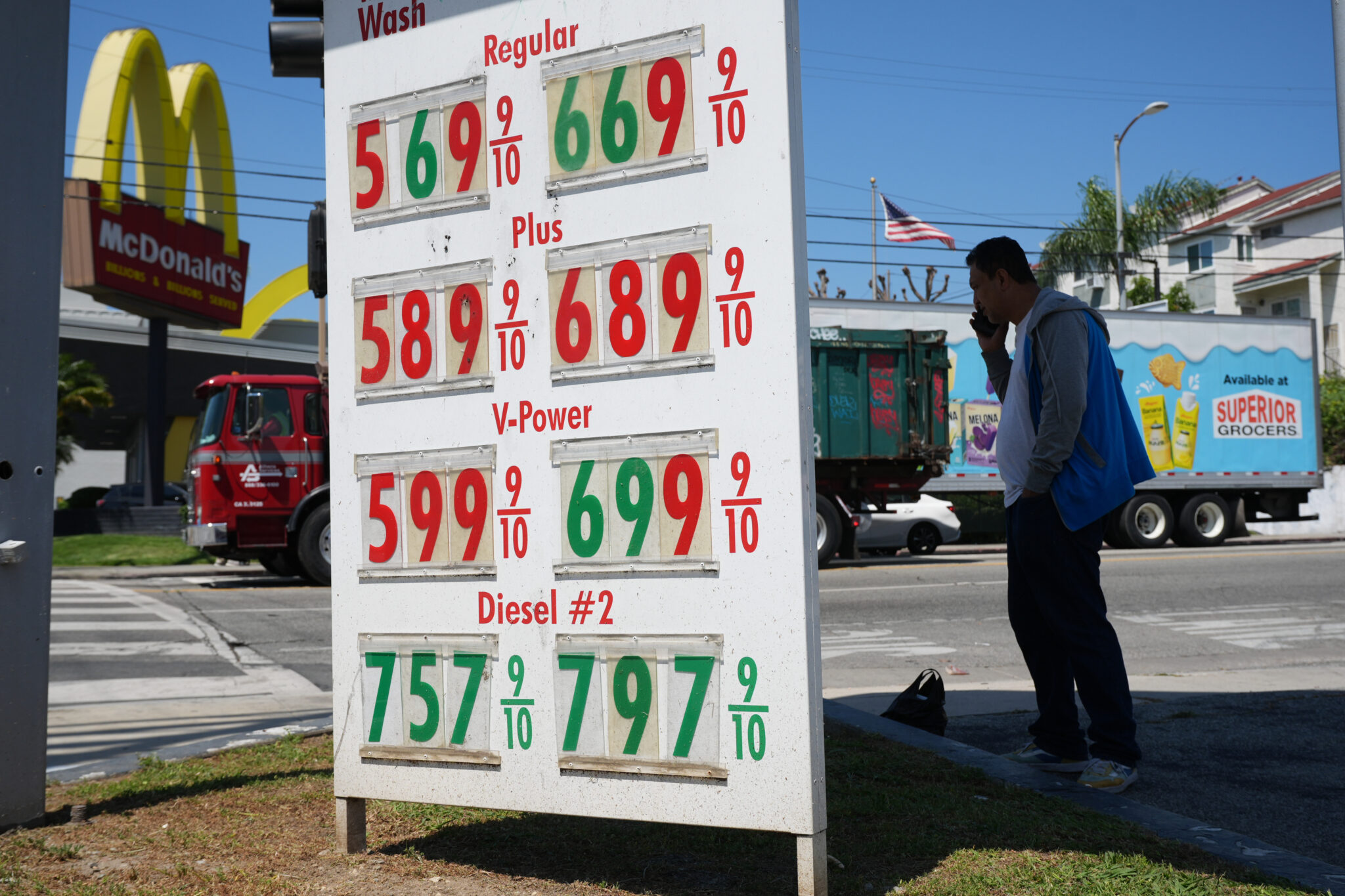
Economists say rising fuel prices and broader cost pressures are making it harder for households to keep up with expenses.
Business Investment Surges, Led by AI
One of the strongest areas of growth came from business investment, which jumped 8.7% during the quarter.
Much of that increase appears to be tied to heavy spending on artificial intelligence technologies, as companies race to expand capabilities in data centers, chips, and software.
Excluding housing, nonresidential investment surged 10.4%, marking the biggest increase in nearly three years.
This highlights a growing divide within the economy between fast-growing tech sectors and more traditional areas facing pressure.
Housing Market Remains a Weak Spot
The housing sector continued to weigh on the economy, with residential investment falling at an 8% annual rate.
That marks the fifth straight quarterly decline and the steepest drop since late 2022.
The ongoing weakness in housing is one of the key factors preventing stronger overall economic growth.
Imports Cut Into Growth
Another drag on GDP came from a sharp rise in imports, which increased at a 21.4% annual rate.
Because imports are subtracted from GDP calculations, the surge reduced overall growth by more than 2.6 percentage points.
The increase in imports may reflect strong domestic demand for foreign goods, but it also highlights imbalances in trade that can weigh on economic performance.
Economists See a “Split-Screen” Economy
Economists say the latest data reflects a divided economic landscape.
Heather Long, chief economist at Navy Federal Credit Union, described the situation as a “split-screen economy.”
“This is a split-screen economy,” she wrote. “Companies and investors involved in AI are on fire. Meanwhile, middle and moderate income households are struggling with high gas prices … Consumption is slowing as people are struggling to manage all their bills and growing more concerned about the future.’’
While a key measure of underlying economic strength — excluding volatile factors like trade and government spending — rose at a solid 2.5% pace, concerns remain about how evenly that growth is being felt.
Iran War Adds Major Uncertainty
The biggest uncertainty facing the economy is the ongoing conflict involving Iran.
The first quarter included about a month of the war, during which Iran blocked the Strait of Hormuz, a critical global shipping route for oil and natural gas.
The disruption has driven energy prices higher, contributing to rising inflation and putting additional pressure on consumers.
The Federal Reserve has already pointed to the conflict as a major source of economic uncertainty.
“Developments in the Middle East are contributing to a high level of uncertainty about the economic outlook,” the Fed said in its latest statement.
Forecasting Becomes More Difficult
Some economists say the Iran war has made it extremely difficult to predict where the economy is headed next.
Carl Weinberg of High Frequency Economics said the situation is unprecedented and hard to model.
“The truth is that we do not have any defensible basis for trying to project how these indicators will print,” Weinberg said.
President Donald “Trump’s war with Iran has led to a total blockade of the Strait of Hormuz. We do not know how to model the impact of that event, as we have never seen anything quite like it.”
That uncertainty means future economic reports could vary widely depending on how the conflict evolves and how energy markets respond.
Outlook Remains Uncertain
While the U.S. economy showed resilience in early 2026, the combination of slowing consumer spending, a weak housing market, and rising global tensions suggests a more uncertain path ahead.
The coming months will likely depend heavily on whether energy prices stabilize and whether geopolitical risks ease.
For now, the economy is growing — but facing increasing pressure from forces beyond its control.