US Inflation Jumps to 3.5%, Hits 3-Year High as Iran War Spikes Gas Prices/ Newslooks/ WASHINGTON/ J. Mansour/ Morning Edition/ A key U.S. inflation gauge jumped sharply in March, reaching its highest level in nearly three years as gas prices surged due to the Iran war. The spike is pushing inflation further from the Federal Reserve’s target and delaying expected interest rate cuts. Higher fuel costs are also squeezing consumers, slowing real income growth and raising concerns about the broader economy.
US Inflation Gas Prices Quick Looks
- Inflation rose 0.7% in March, the biggest monthly increase recently
- Annual inflation reached 3.5%, a nearly three-year high
- Core inflation rose 3.2% year-over-year
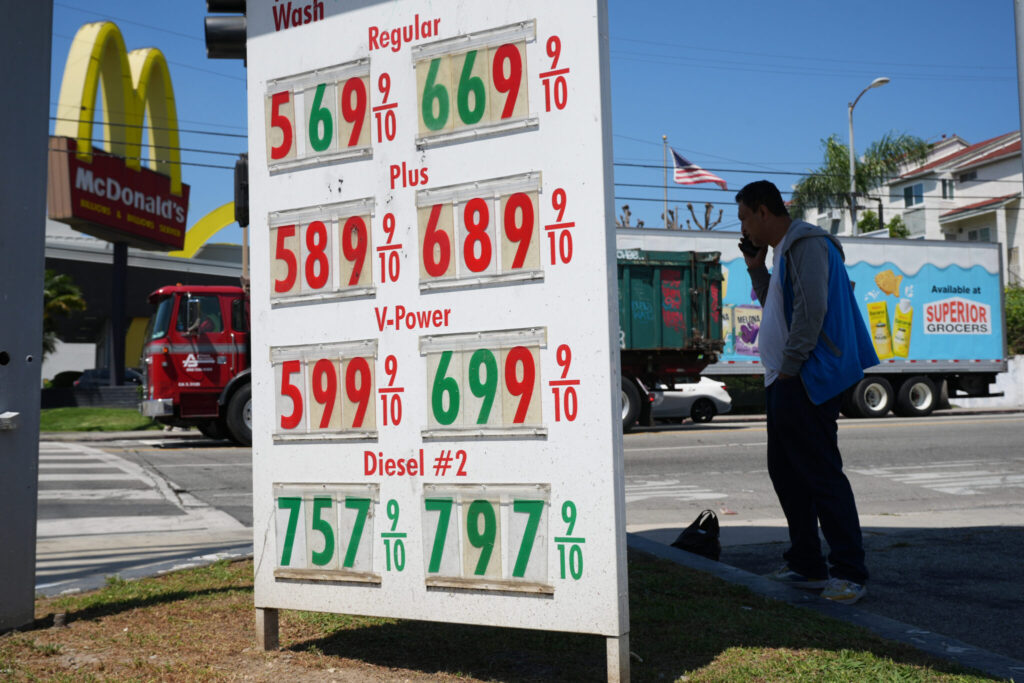
- Gas prices surged nearly 21% in one month
- Average U.S. gas prices climbed to about $4.22 per gallon
- Income growth lagged behind inflation for the second straight month
- The Federal Reserve is expected to delay interest rate cuts
- Consumer spending increased but was driven largely by higher prices
Deep Look
Inflation Jumps as Energy Costs Surge
WASHINGTON — A key measure of U.S. inflation accelerated sharply in March, highlighting the growing economic impact of the Iran war as rising fuel prices push up the cost of living nationwide.
The Commerce Department reported that prices rose 0.7% from February to March, a significant increase from the previous month.
Compared with a year earlier, inflation reached 3.5%, the highest level in nearly three years and well above the Federal Reserve’s 2% target.
The surge was largely driven by a sharp increase in gasoline prices, reflecting disruptions in global oil supply tied to the ongoing conflict.
Core Inflation Remains Elevated
Even when excluding volatile categories like food and energy, inflation remained elevated.
Core prices rose 0.3% in March and were 3.2% higher than a year earlier, slightly above the previous month’s annual pace.
The persistence of core inflation suggests that price pressures are spreading beyond energy and becoming more deeply embedded in the economy.
This trend is closely watched by the Federal Reserve when determining interest rate policy.
Gas Prices Lead the Surge
Gasoline prices were the biggest contributor to the inflation spike.
The report showed gas prices jumped nearly 21% in March alone, reflecting the global energy shock caused by the Iran conflict.
Nationwide, the average price for a gallon of gas climbed to about $4.22, a sharp increase from roughly $2.98 before the war began.
Oil prices also remain elevated, with U.S. crude still above $105 per barrel despite slight recent declines.
The rise in fuel costs is affecting nearly every sector of the economy, from transportation to food distribution.
Fed Likely to Hold Rates Steady
The inflation data reinforces expectations that the Federal Reserve will delay any cuts to interest rates.
Outgoing Fed Chair Jerome Powell indicated the central bank is likely to remain cautious as it assesses the economic impact of the Iran war.
“We’re very well aware that people are experiencing higher gas prices all over the country now,” Powell said. “And that hurts.”
The Fed has already paused after cutting rates three times last year and typically keeps borrowing costs elevated when inflation rises.
Higher rates are meant to cool demand and bring prices back under control.
Income Growth Falls Behind Inflation
At the same time, the report showed that Americans’ incomes increased 0.6% in March.
While that is a solid gain, it was not enough to keep up with rising prices.
This marks the second straight month where inflation outpaced income growth, effectively reducing consumers’ purchasing power.
Higher gas prices are forcing households to spend more on fuel, leaving less money for other goods and services.
Consumer Spending Shows Mixed Signals
Consumer spending rose 0.9% in March, but much of that increase was driven by higher prices rather than stronger demand.
After adjusting for inflation, spending still showed some resilience, suggesting consumers continue to support economic growth.
However, economists warn that continued price increases could eventually dampen spending if incomes fail to keep pace.
Tax refunds boosted household finances earlier in the year, but rising costs are eroding that benefit.
Economists Warn of Slower Growth
Experts say the energy shock caused by the Iran war is reshaping the economic outlook.
Joe Brusuelas, chief economist at RSM, said the conflict has disrupted what had been a stronger growth trajectory.
“A year that was set to benefit from tail winds associated with a large tax cut and boom in artificial intelligence-led investment has been partially derailed by the impact of what as of today is an adverse and growing supply shock caused by the war in Iran,” he said.
Brusuelas now expects the economy to grow just 1.7% this year, down from an earlier forecast of 2.4%.
Economy Faces Growing Pressure
The latest inflation data adds to signs that the U.S. economy is under increasing strain.
While overall economic growth remains positive, rising energy costs, slowing consumer spending, and persistent inflation are creating a more uncertain outlook.
The Federal Reserve now faces a difficult balancing act between controlling inflation and supporting economic growth.
For consumers, the most immediate impact is clear: higher prices at the pump and less room in household budgets.
As the Iran conflict continues, inflation is likely to remain a central concern for policymakers and households alike.