JD Vance Says Iran’s Negotiating Position Remains Unclear/ Newslooks/ WASHINGTON/ J. Mansour/ Morning Edition/ Vice President JD Vance said the Trump administration still struggles to understand Iran’s negotiating position. Vance described Iran’s leadership structure as fractured and difficult to navigate during ongoing diplomatic talks. He also rejected reports that Russia would take control of Iran’s enriched uranium under a possible deal.
JD Vance Iran Talks Quick Looks
- JD Vance said Iran’s negotiating goals remain unclear
- The vice president described divisions inside Iran’s leadership
- Vance said negotiations have become “muddled”
- The Trump administration continues pursuing a diplomatic agreement
- Vance questioned whether Iranian confusion reflects bad faith or poor communication
- The White House denied reports involving Russia taking Iran’s uranium
- Vance said neither Washington nor Tehran supports that proposal
- Trump recently delayed planned strikes against Iran
- Gulf allies are pushing for additional diplomacy
- Nuclear concerns remain central to the negotiations
Deep Look
Vance Says Iran’s Negotiating Position Remains Unclear
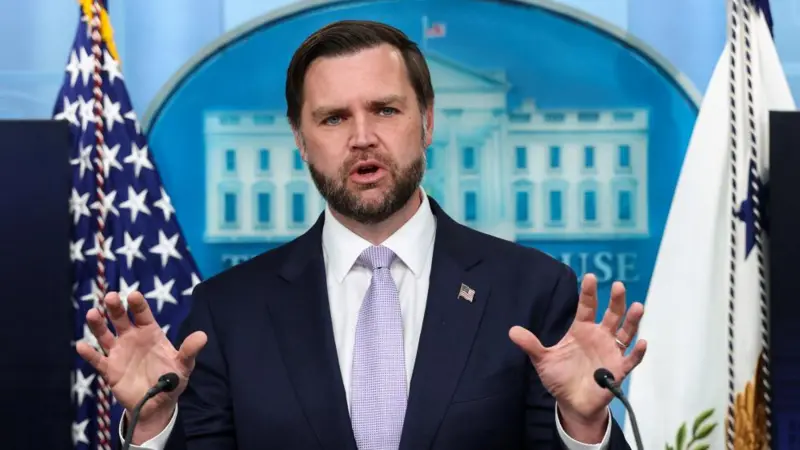
Vice President JD Vance said Tuesday that the Trump administration continues struggling to determine exactly what Iran wants from ongoing negotiations aimed at ending the growing conflict in the Middle East.
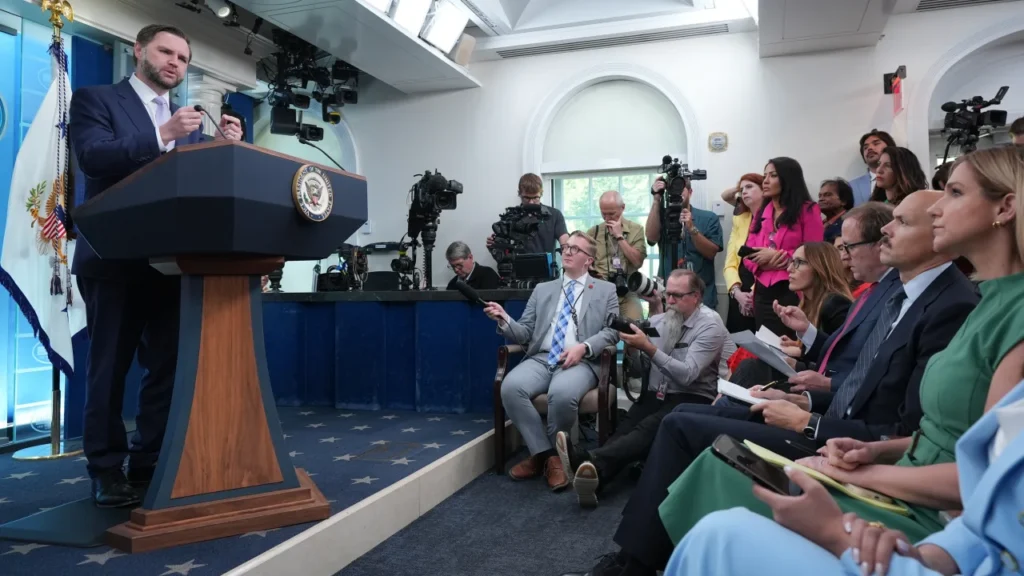
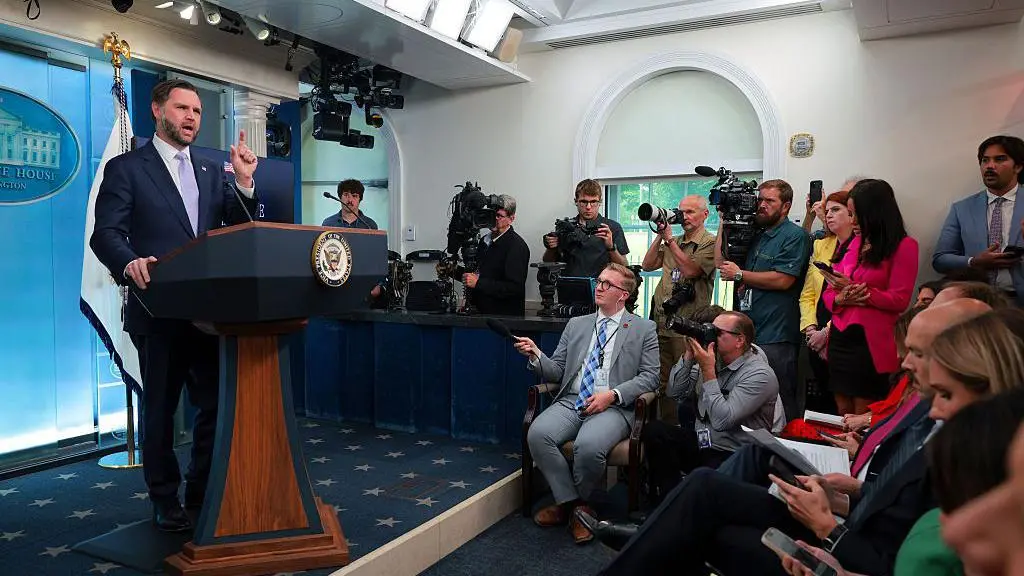
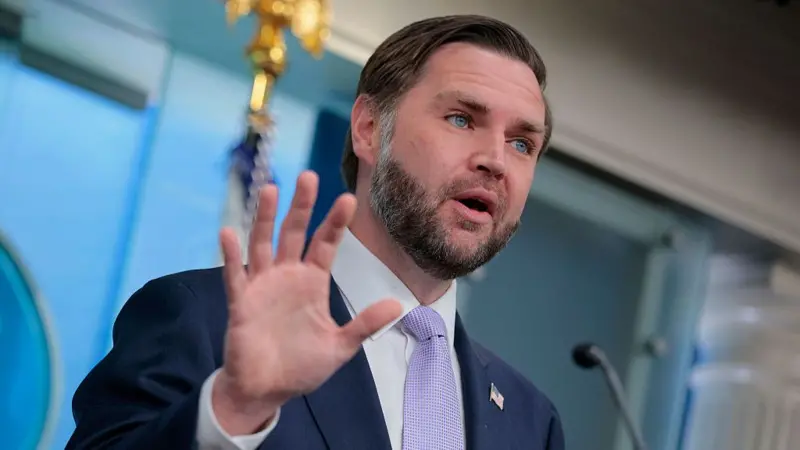
Speaking during a White House briefing, Vance described Iran’s leadership structure as deeply fragmented and difficult for American negotiators to interpret.
“The Iranians aren’t themselves quite clear in what direction they want to go to, they also are just a fractured country,” Vance told reporters.
His comments came as the Trump administration continues balancing military pressure against diplomatic efforts following President Donald Trump’s decision to temporarily delay planned strikes on Iran.
Vance Describes Divisions Inside Iran
According to Vance, internal divisions within Iran’s political and religious leadership are complicating negotiations.
“You have the leadership of the country, there’s the supreme leader, and there are a lot of officials below the supreme leader that [have] some influence in negotiation,” Vance said.
“It’s not sometimes totally clear what the negotiating position of the team is,” he added.
The vice president suggested the United States remains uncertain whether the confusion stems from internal disorganization or intentional negotiating tactics by Tehran.
“It wasn’t clear whether the divisions were the product of bad communication or bad faith,” Vance said.
However, he emphasized that the result has been a complicated and often inconsistent diplomatic process.
“I will say with confidence it’s sometimes hard to figure out exactly what it is that the Iranians want to accomplish out of the negotiation,” Vance said.
Trump Administration Continues Pursuing Diplomacy
President Trump announced Monday that he delayed planned military strikes against Iran after leaders from Saudi Arabia, Qatar, and the United Arab Emirates requested additional time for negotiations.
Trump later said the United States had been “an hour away” from launching military action before deciding to pause.
The White House continues insisting the delay is temporary and that military options remain available if negotiations fail.
Trump has repeatedly warned that Iran cannot be allowed to develop nuclear weapons capability.
The administration argues that both military pressure and diplomacy are necessary to force Tehran into a broader agreement.
White House Rejects Russia Uranium Reports
During Tuesday’s briefing, Vance also denied reports suggesting Russia could take possession of Iran’s enriched uranium as part of a future agreement.
“That is not currently our plan. That has never been our plan,” Vance said.
“I’ve seen some reporting on that. I don’t know where it comes from,” he added.
The vice president indicated that both Washington and Tehran would likely oppose such an arrangement.
“My sense is that it’s not something the Iranians would be particularly excited about, and I know the president isn’t particularly excited about it either,” Vance said.
Still, Vance avoided fully ruling out future changes during ongoing negotiations.
“I would not make pre-commitments in a negotiation on any particular topic,” he said.
Nuclear Concerns Continue Driving Conflict
The negotiations remain centered largely around Iran’s nuclear program and the future of its enriched uranium stockpiles.
The Trump administration maintains that preventing Iran from obtaining nuclear weapons remains its top strategic objective.
Trump recently defended the administration’s military posture by arguing that nuclear weapons in Iranian hands could threaten major American cities.
“Whether it’s popular or not popular, I have to do it,” Trump said earlier Tuesday regarding the conflict.
“I’m not going to let the world be blown up on my watch.”
The administration’s aggressive stance has generated both domestic political debate and international concern about the possibility of a broader regional war.
Iran Talks Face Growing Uncertainty
Despite diplomatic progress claimed by Gulf intermediaries, uncertainty continues surrounding whether the two sides can ultimately reach a deal.
Iran has repeatedly insisted its nuclear program is peaceful and rejected demands it considers excessive.
At the same time, Tehran continues signaling interest in negotiations while warning against additional military strikes.
The White House has not publicly detailed the precise framework currently under discussion.
Vance’s comments Tuesday underscored how difficult the negotiations remain even as diplomacy continues.
The vice president’s description of Iran as a “fractured country” reflects broader administration concerns that multiple power centers inside Tehran may be complicating efforts to secure a final agreement.
Gulf Allies Push for Stability
Regional governments remain heavily involved in mediation efforts due to fears of wider instability across the Middle East.
Saudi Arabia, Qatar, and the UAE have all reportedly urged the White House to continue diplomacy rather than immediately resume military operations.
The Gulf states remain concerned that prolonged conflict could threaten energy infrastructure, shipping routes, and regional economies.
Oil markets have already experienced major volatility due to fears involving the Strait of Hormuz, one of the world’s most important energy transit corridors.
For now, negotiations continue — but Vance’s remarks suggest the Trump administration still sees major uncertainty surrounding Iran’s intentions and internal political dynamics.
Vance says US ‘locked and loaded’ to restart Iran campaign if needed
Vance goes on to say the US has effectively downgraded Iran’s military capabilities and President Donald Trump has advised his team to “aggressively negotiate” with the country.
He says that negotiations are in a good spot, but adds that it “takes two to tango” and the US is “locked and loaded” to restart its military campaign if necessary.
Iranian nuclear weapon could set off ‘arms race,’ says Vance
The vice president moves on to an update on the Iran negotiations, saying it is a “simple proposition” having spoken to President Trump.
He reiterates the US’s stance that Iran cannot have a nuclear weapon. He says it would lead to other nations “scrambling” to get their own nuclear weapons and that this would “make us all much less safe”.
“Iran would really be the first domino in what would set off a nuclear arms race all over the world,” he adds.
He says the US has made “a lot of progress” in negotiating with the Iranians.
President ‘wants us to focus on fraud,’ says Vance
Vance begins by saying he will be speaking at the Air Force Academy commencement ceremony next week.
He then goes on to talk about the work of the White House task force to eliminate fraud, which he says has begun to find and prosecute fraudulent activity in hospices and other sectors.
“The president of the United States has been very clear he wants us to focus on fraud,” he says.
Trump wants lawmakers to serve people who sent to them to DC
Vance jokes that he is replacing White House Press Secretary Karoline Leavitt, while she is on maternity leave.
He says that she that she can replace him as vice president when his wife Usha has their baby later this year.
Moving on to questions, Vance is asked about Trump endorsing Ken Paxton over John Cornyn in the Republican Texas primary.
Vance notes that he has known Cornyn for years, starting back when he was an Ohio senator, but that he has not always been there for Trump.
He adds that Trump wants people who will go to Washington and fight for those they represent, and that his endorsement of Cornyn’s rival sends a signal to lawmakers that you have to serve the people who sent you to DC.
Iranians want to make a deal, says Vance
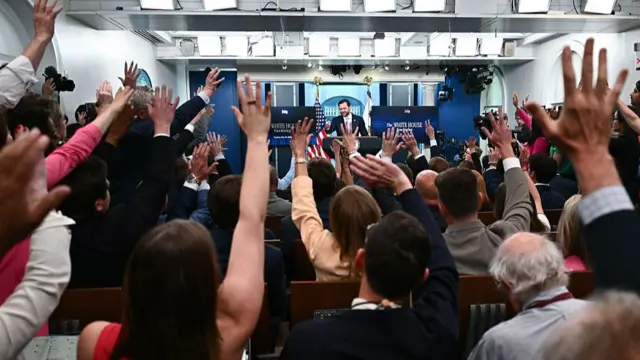
JD Vance returns to the topic of Iran, as he’s asked to explain his reasoning for why he believes that Iran is negotiating for a peace deal in good faith.
The vice president praises Iran as a “proud civilisation” with “amazing people”, but also calls it a “fractured country”.
He says this means it is sometimes “not totally clear” what the position of the negotiating team is, as there are lots of officials below the supreme leader who have an influence on negotiations.
It’s not clear whether this confusion is down to bad faith or bad communication, he says, but stresses that the Iranians want to make a deal.
Vance says he believes Iran knows the “red line” is around nuclear weapons, but says he won’t be certain until pen signs paper on a deal.
Vance says anti-weaponisation fund has been mis-characterised
Vance is now asked about the “anti-weaponisation fund”, the $1.8bn (£1.3bn) fund announced by the justice department to compensate people who have been “unfairly” investigated by prior administrations.
A reporter asks if it’s fair that taxpayers fund the programme if it’s used to give money to rioters who stormed the US Capitol on January 6.
Vance claims there has been a mis-characterisation of the fund, saying it is for compensation for those who feel they were targeted.
“We’re trying to compensate people where the book was thrown at them, they were mistreated by the legal system,” he says.
He adds that it’s open to anyone, and that no member of the Trump family will be receiving money.
Vance addresses controversial ‘weaponisation’ fund
Predictably, Vice President JD Vance has also been asked about the extremely controversial $1.8bn fund that the justice department said would be used to compensate people “unfairly” being investigated by prior administrations.
Democrats have widely criticised the move, describing the fund as a “slush fund” for Trump’s political allies, including some charged or convicted in relation to the 6 January 2021 riot at the US Capitol.
His answer echoes those we heard from acting Attorney General Todd Blanche on Capitol Hill earlier today.
The argument from the Trump administration so far is that, in theory, the fund is non-partisan and can theoretically benefit anyone – Democrats, Republicans or Independents – who has been wronged by a previous administration.
Vance said that even Hunter Biden, the son of the former president, could apply to the fund.
For critics, however, that answer will likely not be satisfactory, or reassuring.
Of the five members of the commission that will distribute the compensation fund, four will be appointed by the attorney general, who, at least for the moment, is Trump’s handpicked former personal attorney.
Vance says system is to compensate people who were ‘mistreated’ by legal system
Answering a follow-up question about January 6 rioters, Vance says things will be evaluated on a case-by-case basis
He’s not “trying to give money to anybody who attacked a police officer”, Vance says, but he is trying to compensate people who were “mistreated by the legal system”.
If they think someone was “unfairly prosecuted” and “deserves just compensation” then that is what this fund will provide.
Vance asked about Iranian uranium and fentanyl supplies into the US
Returning to the topic of Iran, Vance says he is aware of reporting about Russia taking possession of Iran’s enriched uranium.
He says this is not currently part of the plan from the United States government but that he is not going to make commitments on negotiations during his briefing to journalists.
The vice-president is then asked about the supply fentanyl in the US from China, and says that the topic was brought up between President Donald Trump and China’s President Xi Jinping during last week’s talks.
He says that the administration’s sense is that Xi is willing to work with the US on the topic, while also saying that Trump has made “incredible strides” in reducing the number of fentanyl deaths in the US.
Vance asked about troop deployment in Poland
A journalist says that last week the Pentagon halted the deployment of 4000 troops to Poland and suggests the US is “rewarding Putin” and “punishing” Poland.
Vance says he wants to pursue a policy “that focuses on the interests of the United States” and that Trump is trying to promote “European independence and sovereignty” and wants Europe to “take more ownership over its own territorial integrity”.
“Poland is capable of defending itself with a lot of support from the United States,” Vance says.
The delays to the troop deployment was “just a standard delay in rotation,” he adds.
Vance accepts Iran war has seen prices increase at petrol pump
The vice president has been asked for his message to voters who might feel that promises for no new wars and cuts to fuel prices and inflation have been broken.
JD Vance replies that Trump’s team has delivered “great wins for the American people”.
He lists tax cuts and more construction jobs as examples, but accepts that the war in the Middle East has seen prices at the pump go up for Americans.
“I feel quite confident after we’ve taken care of business in the Middle East those prices are going to come down,” he says.
He’s then asked about the length of the conflict, which is now approaching three months.
Vance says the “active period of conflict” lasted around five weeks, and reiterates that a chunk of the 11 weeks so far has been under a ceasefire.
“This is not a forever war, we’re going to take care of business and come home,” he adds.
‘All we can do is negotiate in good faith,’ says Vance
There is another question for the vice president on Iran.
A reporter asks whether other countries will be able to play a bigger role in moving the two countries towards a deal.
Vance says that negotiations will continue, but in private. He’s also asked whether the US is being “strung along” by Iran.
“You never know until you know,” he says. “All we can do is negotiate in good faith and try to find a pathway that accomplished the president’s objectives.”
Trump caring about Americans’ finances and focused on Iran, Vance says
A little earlier in the session, Vance was asked whether he believed money should be given to individuals who assaulted police officers during the 6 January riots.
The vice-president repeated that situations would be looked at on a “case-by-case” basis when assessing suitability.
He was then asked about comments from President Donald Trump last week, and whether the president is not taking into account the financial situation of Americans as a result of the Iran war.
Trump told reporters last week: “I don’t think about Americans’ financial situation. I don’t think about anybody. I think about one thing, we cannot let Iran have a nuclear weapon. That’s all.”
Vance says the remark was “totally taken out of context” and that the president worries about his fellow Americans “every single day”.
He adds that Trump is capable of caring about the financial security of Americans while also being focused on the situation in Iran.