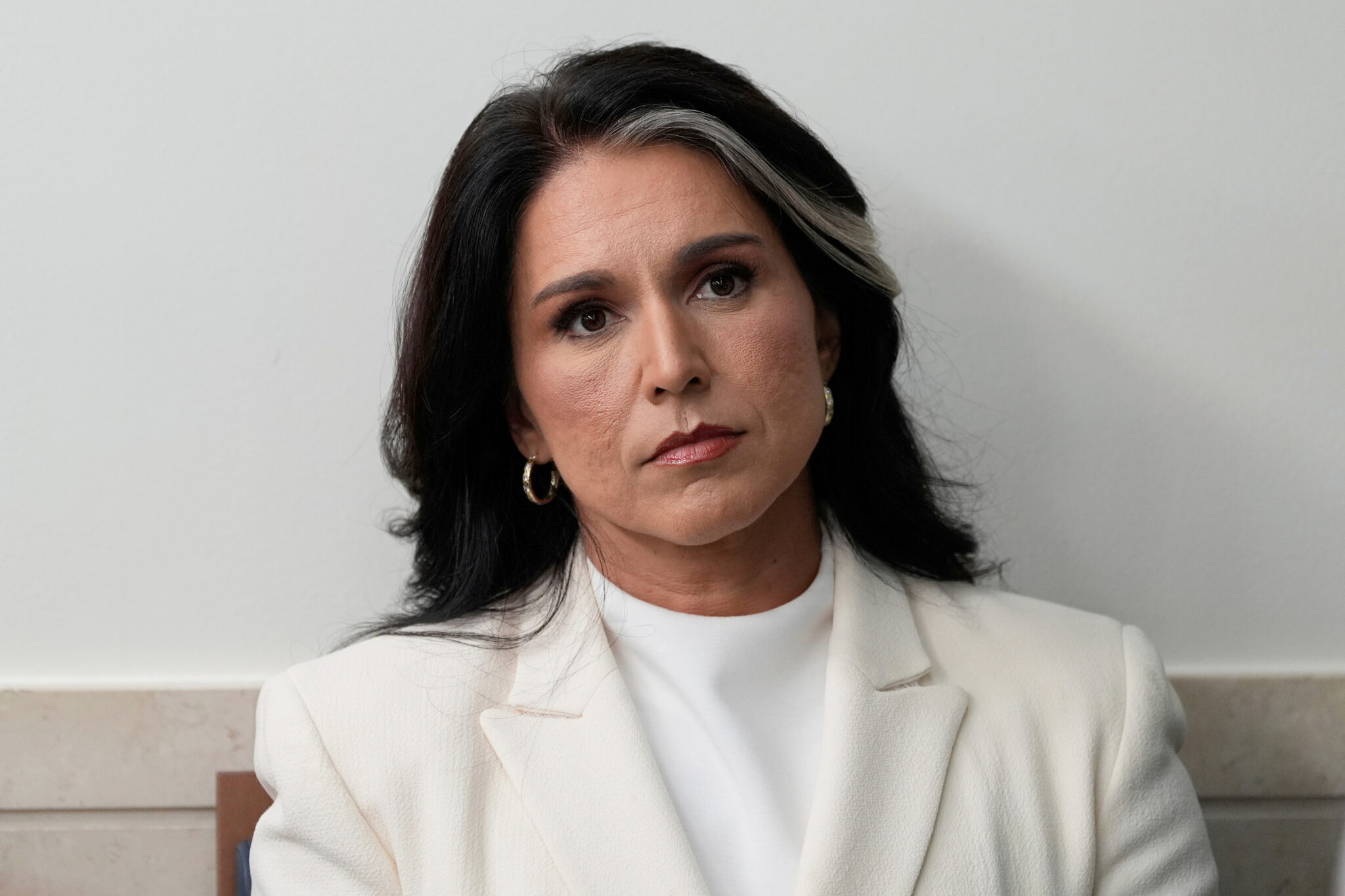
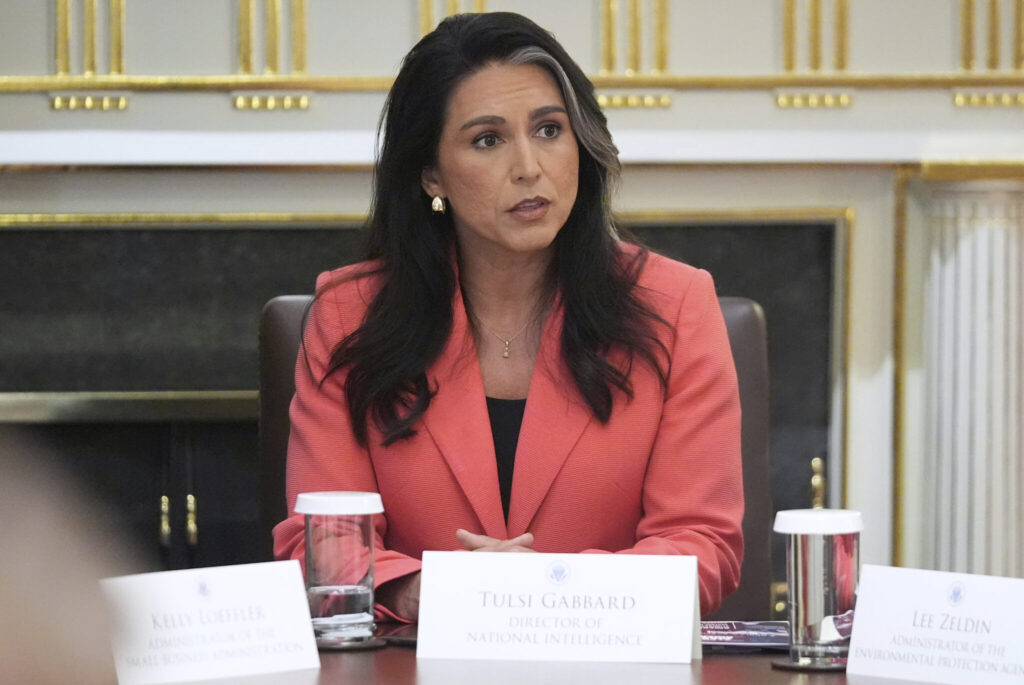
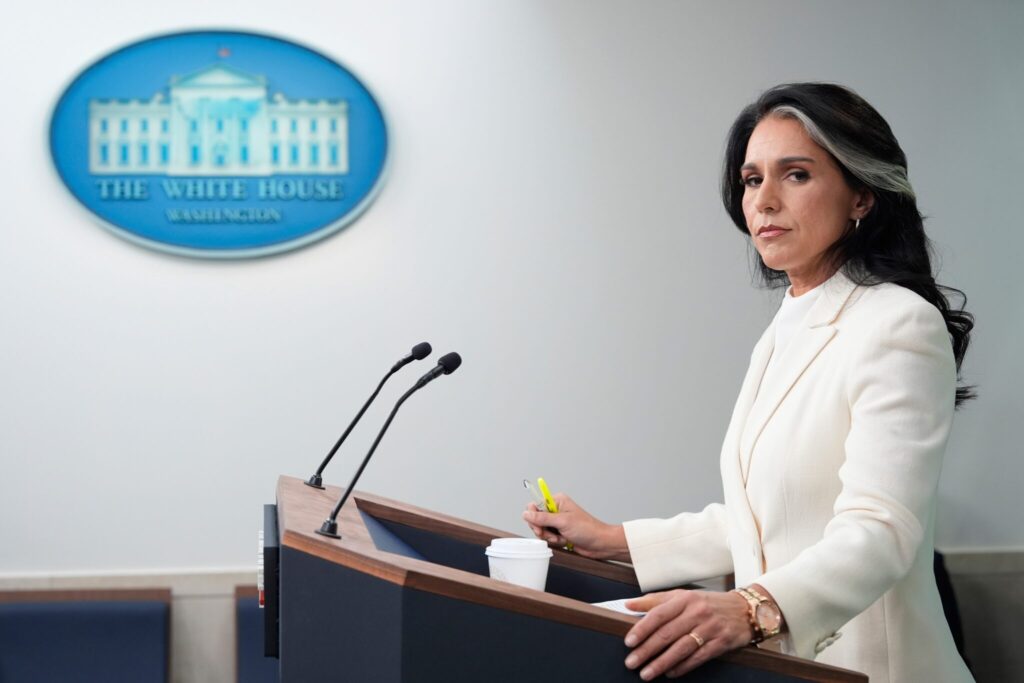
Tulsi Gabbard Resigns as Director of National Intelligence/ Newslooks/ WASHINGTON/ J. Mansour/ Morning Edition/ Director of National Intelligence Tulsi Gabbard is resigning from the Trump administration after her husband was diagnosed with a rare form of bone cancer. Gabbard informed President Donald Trump of her decision Friday and said her final day will be June 30. Her departure creates a major vacancy inside the administration’s intelligence leadership during a period of heightened global tensions.
Tulsi Gabbard Resignation Quick Looks
- Tulsi Gabbard is resigning as Director of National Intelligence.
- Her husband Abraham was diagnosed with rare bone cancer.
- Gabbard informed President Trump in the Oval Office Friday.
- Her resignation takes effect June 30.
- Gabbard cited family responsibilities in her resignation letter.
- She served as DNI for roughly 18 months.
- Gabbard led major intelligence community reforms.
- She declassified hundreds of thousands of government records.
- The administration has not announced a replacement.
- Her exit leaves a key national security role vacant.
Deep Look
Tulsi Gabbard Announces Resignation From Intelligence Post
Director of National Intelligence Tulsi Gabbard is resigning from President Donald Trump’s Cabinet, citing her husband’s serious health condition as the reason for stepping away from public office.
Multiple sources familiar with the matter confirmed Friday that Gabbard informed President Trump of her decision during a meeting in the Oval Office.
The White House did not immediately issue a formal public response following the reports.
Husband’s Rare Cancer Diagnosis Prompted Decision
In her resignation letter, Gabbard explained that her husband, Abraham, was recently diagnosed with “an extremely rare form of bone cancer.”
“Unfortunately, I must submit my resignation, effective June 30, 2026,” Gabbard wrote.
“My husband, Abraham, has recently been diagnosed with an extremely rare form of bone cancer.”
Gabbard said the diagnosis would require her full attention and support during the coming months.
“At this time, I must step away from public service to be by his side and fully support him through this battle,” she wrote.
She described her husband as her “rock” throughout their 11 years of marriage.
“His strength and love have sustained me through every challenge,” Gabbard added.
“I cannot in good conscience ask him to face this fight alone while I continue in this demanding and time-consuming position.”
Gabbard Thanks Trump in Emotional Letter
Gabbard thanked President Trump for appointing her to lead the nation’s intelligence agencies.
“I am deeply grateful for the trust you placed in me and for the opportunity to lead the Office of the Director of National Intelligence for the last year and a half,” she wrote.
Gabbard also pledged to assist with a smooth transition process over the next several weeks.
“I am fully committed to ensuring a smooth and thorough transition so that you and your team experience no disruption in leadership or momentum,” she stated.
Gabbard Led Major Intelligence Community Changes
Since taking office as DNI, Gabbard became one of the most controversial and transformative intelligence leaders in recent years.
Her tenure focused heavily on restructuring the intelligence community, reducing federal spending, and targeting what she described as political “weaponization” inside government agencies.
Gabbard’s office claimed to have:
- Reduced intelligence community spending by more than $700 million annually
- Eliminated diversity, equity, and inclusion programs across intelligence agencies
- Declassified over 500,000 pages of government records
- Created a “Weaponization Working Group”
- Expanded counterterrorism watchlists
The administration credited her office with placing more than 85,000 individuals with alleged narco-terrorism ties onto federal terror watchlists.
Massive Declassification Efforts Drew Attention
Gabbard also became widely known for overseeing major declassification initiatives.
Documents released during her tenure included files related to:
- The Trump-Russia investigation
- The JFK assassination
- The RFK assassination
- Intelligence tied to the “Crossfire Hurricane” probe
Gabbard argued many of the released documents showed intelligence agencies had become politicized during previous administrations.
Supporters praised the transparency push, while critics accused her of selectively releasing information aligned with Trump administration political narratives.
Intelligence Leadership Transition Comes During Global Tensions
Gabbard’s resignation comes during a particularly tense geopolitical period for the United States.
The administration is currently navigating:
- The ongoing Iran conflict
- NATO tensions
- AI-related cybersecurity threats
- Rising concerns over China
- Global energy market instability
As Director of National Intelligence, Gabbard played a central role coordinating intelligence analysis across multiple federal agencies.
Her departure leaves one of the government’s top national security posts vacant during a period of significant international uncertainty.
Political Journey Remained Highly Unusual
Gabbard’s path to becoming Trump’s intelligence chief was one of the most unusual political transformations in modern American politics.
Originally elected to Congress as a Democrat from Hawaii, Gabbard later broke with the Democratic Party over foreign policy, civil liberties, and what she described as establishment corruption.
She eventually endorsed Trump and became one of his most prominent allies during his second presidential campaign.
Her appointment as DNI drew intense scrutiny during Senate confirmation hearings because of her past foreign policy views and criticism of US intelligence agencies.
White House Yet to Announce Successor
The administration has not yet publicly identified a potential replacement.
The Director of National Intelligence oversees coordination among:
- CIA
- NSA
- FBI intelligence operations
- DIA
- Homeland Security intelligence
- Other federal intelligence agencies
Any replacement will likely face close Senate scrutiny given the increasing political importance of intelligence oversight and national security policy.
Gabbard Exit Marks Another Major Cabinet Shakeup
Her departure also removes one of the administration’s most visible advocates for intelligence reform and government transparency initiatives.
For supporters, Gabbard represented a disruptive outsider challenging entrenched institutions inside Washington.
For critics, her tenure raised concerns about politicization inside the intelligence community.
Either way, her resignation closes a significant chapter in the administration’s national security leadership.
Tulsi Gabbard’s Unconventional Rise to Intelligence Chief
Despite her military background and years in Congress, Gabbard entered the role without prior intelligence agency experience, immediately raising questions among lawmakers and national security officials.
The Office of the Director of National Intelligence oversees 18 intelligence agencies and was established after the September 11 attacks to improve coordination across the U.S. intelligence community.
Gabbard, however, built her political career largely around criticism of American foreign policy and opposition to prolonged military interventions overseas.
From Progressive Democrat to Trump Ally
Gabbard first gained national prominence as a Democratic congresswoman from Hawaii and later launched a 2020 presidential campaign on a progressive anti-war platform.
Drawing heavily on her military service, she argued that U.S. wars in the Middle East had destabilized the region, weakened national security, and cost thousands of American lives.
After ending her presidential campaign, she endorsed eventual Democratic nominee Joe Biden.
But her political transformation accelerated rapidly in the years that followed.
In 2022, Gabbard officially left the Democratic Party, accusing it of being controlled by:
“An elitist cabal of warmongers” and “woke ideologues.”
She later aligned herself increasingly with conservative media and Republican politics, becoming a Fox News contributor and campaigning alongside high-profile GOP candidates.
Eventually, she endorsed Trump, whose criticism of past Middle East wars closely mirrored many of her own arguments.
Iran Quickly Became a Source of Tension
Although Trump selected Gabbard to lead the intelligence community, tensions reportedly emerged early in her tenure over Iran policy.
Soon after taking office, Gabbard testified before lawmakers that intelligence agencies had not concluded Iran was actively developing nuclear weapons.
Her testimony later collided publicly with Trump’s position after he authorized strikes on Iranian nuclear facilities.
Trump openly dismissed her earlier assessment.
“Gabbard was wrong,” Trump said at the time, adding that he did not care what she had said about Iran’s nuclear capabilities.
The disagreement fueled speculation about divisions inside the administration’s national security team.
Gabbard Returned to Trump’s Inner Circle
Despite those tensions, Gabbard later appeared to regain Trump’s confidence by taking a prominent role in efforts surrounding claims about the 2020 election.
She participated in activities tied to Trump’s continuing challenges to the election results, including appearing during an FBI search of election offices in Fulton County, Georgia.
Critics questioned her involvement because the Office of the Director of National Intelligence was originally designed to focus primarily on foreign intelligence and espionage rather than domestic election investigations.
Still, her willingness to support Trump publicly strengthened her standing among many of the president’s allies.
Congressional Hearings Renewed Scrutiny
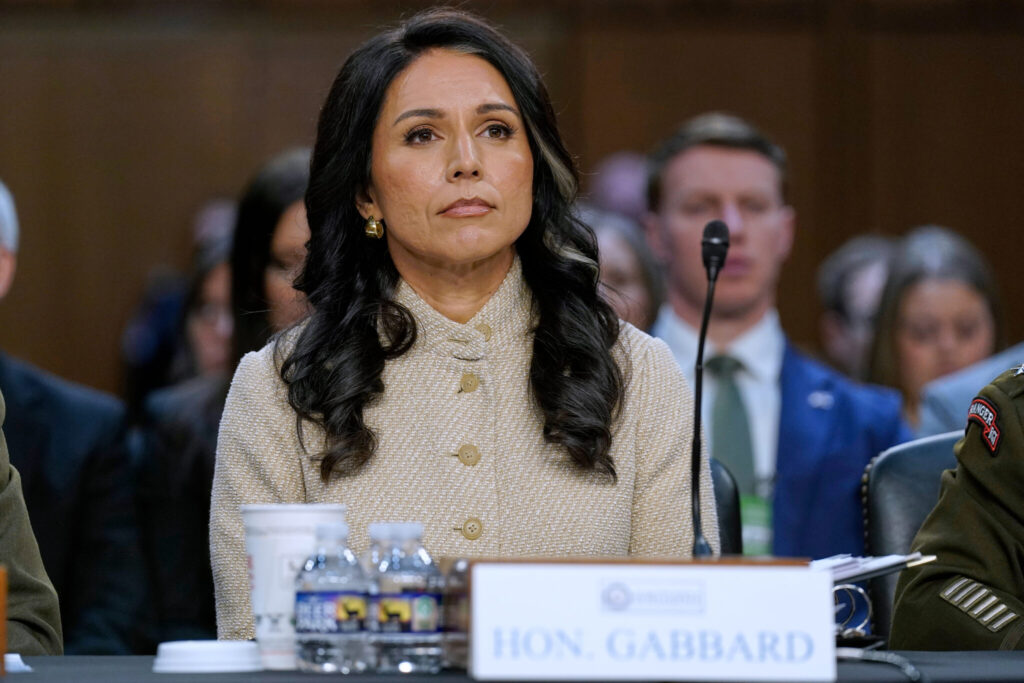
Earlier this week, Gabbard again found herself under intense scrutiny during congressional testimony regarding Iran.
At an annual threats hearing, she told lawmakers that earlier strikes had “obliterated” Iran’s nuclear program and that intelligence agencies had not detected efforts to rebuild it.
The remarks complicated Trump’s broader argument that Iran continued posing an imminent threat requiring aggressive military pressure.
Lawmakers repeatedly pressed Gabbard for her own assessment of the danger posed by Iran.
She responded carefully, emphasizing that military decisions belonged to the president.
“It is not the intelligence community’s responsibility to determine what is and is not an imminent threat,” Gabbard said during testimony.
Intelligence Community Reshaped Under Gabbard
During her relatively short tenure as DNI, Gabbard implemented sweeping changes inside the intelligence apparatus.
She promised to eliminate what she described as political bias and “weaponization” within intelligence agencies.
Among her most significant initiatives were:
- Major reductions in intelligence staffing
- Creation of a “Weaponization Working Group”
- Expanded declassification efforts
- Restructuring of intelligence oversight programs
Gabbard also oversaw the release of hundreds of thousands of government documents, including records connected to:
- The Trump-Russia investigation
- The JFK assassination
- The RFK assassination
- The Crossfire Hurricane probe
Supporters praised her transparency efforts, while critics accused her of politicizing intelligence operations to benefit Trump politically.
Whistleblower Complaint Intensified Controversy
Earlier this year, an intelligence community whistleblower accused Gabbard of withholding intelligence for political reasons.
The complaint sparked calls from Democrats for her resignation and renewed concerns about politicization inside the intelligence community.
Republican allies defended her aggressively, arguing she was exposing institutional bias inside federal agencies.
The controversy further deepened partisan divisions surrounding her leadership.
Historic Political Milestones
Gabbard’s political career included several historic firsts.
Born in American Samoa and raised primarily in Hawaii, she became the first American Samoan elected to Congress.
She was also the first Hindu member of the U.S. House of Representatives, taking her congressional oath with her hand placed on the Bhagavad Gita.
At just 21 years old, she won election to Hawaii’s state House before leaving office when her National Guard unit deployed to Iraq.
During four terms in Congress, Gabbard became known for repeatedly challenging Democratic Party leadership and breaking with party orthodoxy on national security issues.
Her support for Bernie Sanders during the 2016 Democratic presidential primary helped elevate her national profile among progressives before her later political shift toward conservative circles.
Gabbard’s Exit Closes Unusual Political Chapter
Her journey from anti-war Democratic presidential candidate to Trump’s intelligence chief reshaped perceptions across both political parties.
Supporters viewed her as an independent thinker willing to challenge entrenched institutions.
Critics argued her tenure blurred the line between intelligence operations and partisan politics.
Regardless of perspective, Gabbard leaves behind a deeply transformed intelligence office and a legacy likely to remain controversial long after her departure