Pope Leo Demands Respect for Migrant Rights In Spanish Parliament Speech/ Newslooks/ WASHINGTON/ J. Mansour/ Morning Edition/ Pope Leo XIV delivered the first-ever papal address to Spain’s parliament, urging lawmakers to protect migrants, uphold international law, and reject political polarization. The pontiff also called for peace amid escalating tensions between Israel and Iran and warned against growing military spending across Europe. His speech highlighted human dignity, social justice, ethical oversight of artificial intelligence, and the need for humane migration policies.
Pope Leo Spain Parliament Speech Quick Looks
- First pope to address Spain’s parliament.
- Calls for stronger migrant protections.
- Urges respect for international law.
- Warns against political polarization.
- Demands peaceful resolution of global conflicts.
- Criticizes growing military rearmament.
- Calls for ethical oversight of AI weapons.
- References Spain’s colonial history and slavery.
- Receives standing ovation from lawmakers.
- Highlights dignity of migrants and vulnerable people.
Deep Look
Pope Leo XIV Delivers Historic Speech To Spanish Parliament
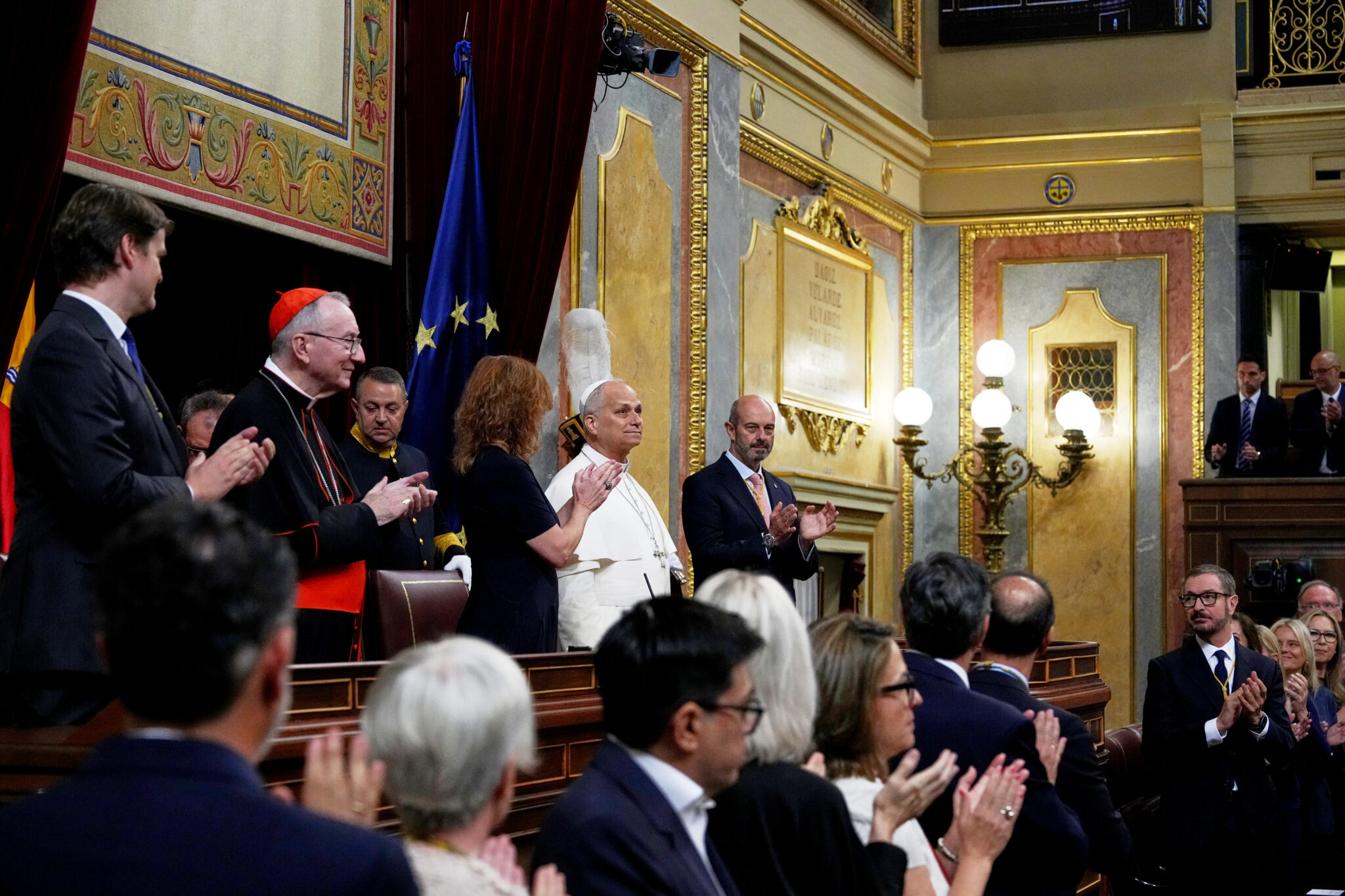
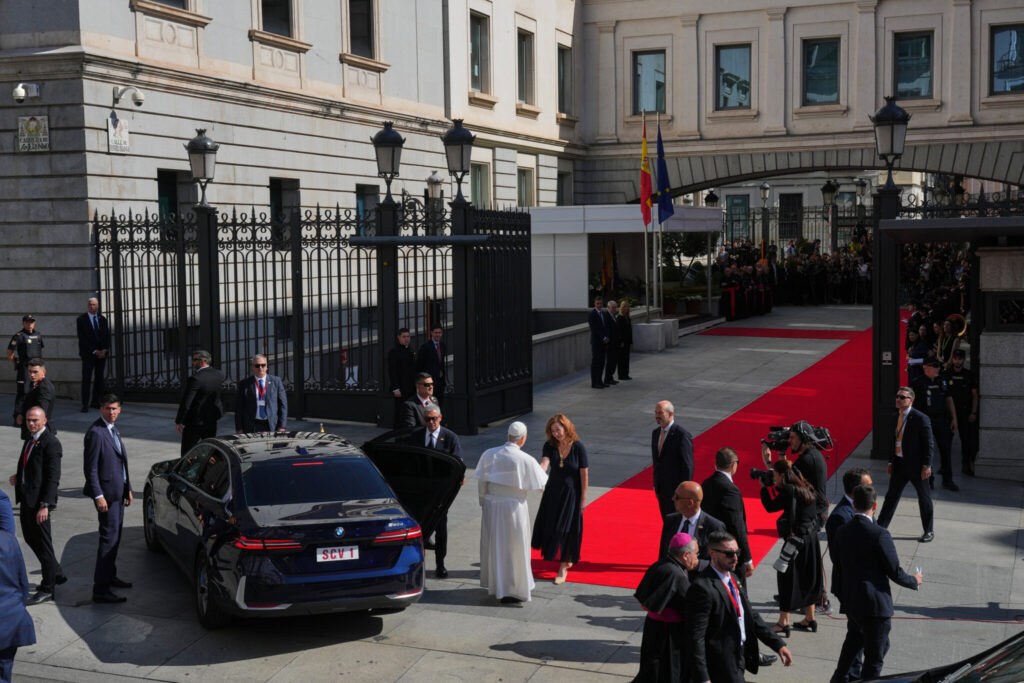
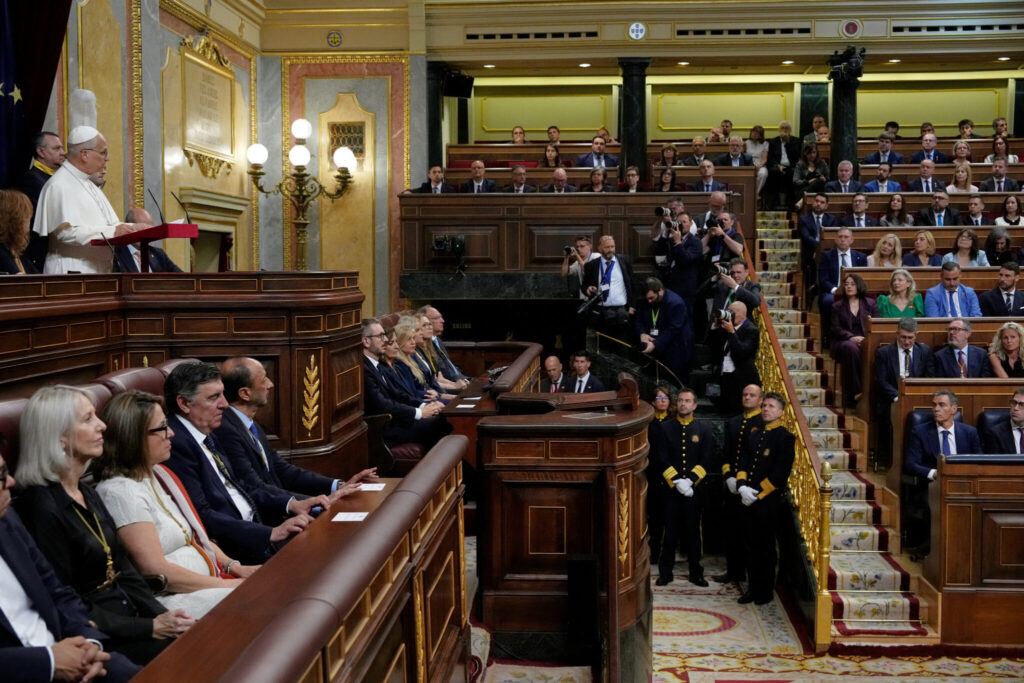
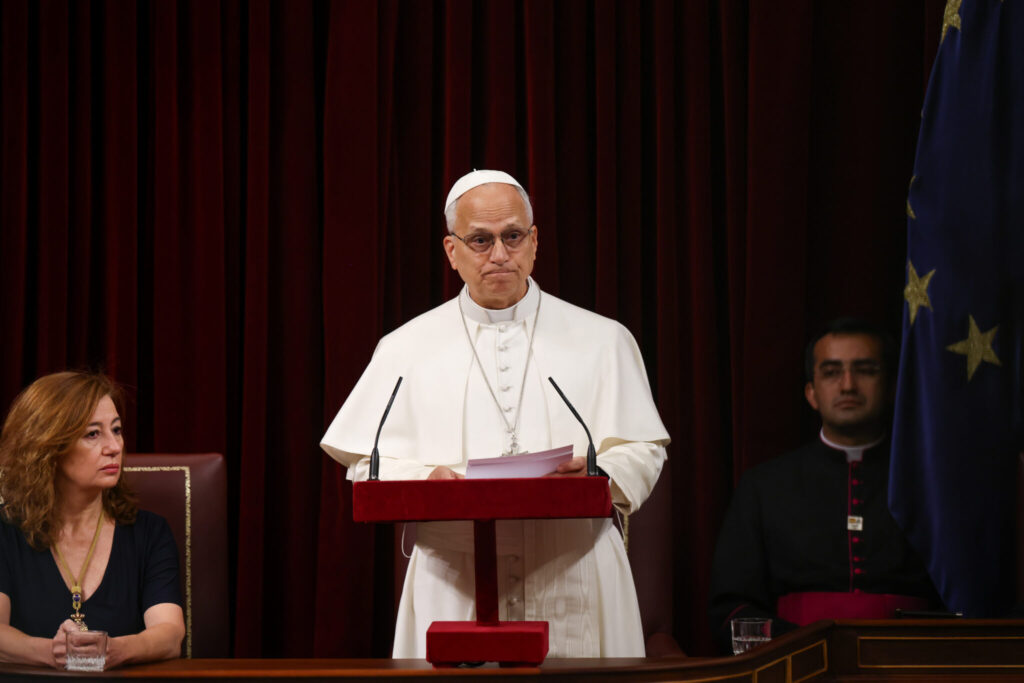
Pope Leo XIV made history Monday by becoming the first pontiff to address Spain’s national parliament, using the occasion to call for greater respect for migrants, stronger adherence to international law, and a renewed commitment to human dignity.
Speaking before members of Spain’s legislature, known as the Cortes Generales, the American-born pope urged political leaders to embrace what he described as a necessary “moral renewal” in public life.
His speech focused on protecting society’s most vulnerable populations, including migrants, the poor, unborn children, and those living on the margins of society.
“The moral greatness of a nation is manifested, above all, in its capacity to accompany, protect and love those lives that are most fragile,” Leo told lawmakers.
Landmark Moment For Spain And The Catholic Church
The address represented a remarkable moment in modern Spanish history.
For decades, the relationship between Spanish politics and the Catholic Church has been complicated by the church’s close ties to the dictatorship of General Francisco Franco. Following Spain’s transition to democracy in the 1970s, church influence declined sharply as society became increasingly secular.
Today, while millions of Spaniards still identify as Catholic, religious participation has fallen significantly.
Yet Leo’s appearance before parliament demonstrated a renewed willingness among political leaders to engage with the church on questions of ethics, social justice, and public policy.
Lawmakers responded warmly, giving the pope a prolonged standing ovation and chanting “Viva el Papa” after his remarks.
Pope Appeals For Peace Amid Middle East Crisis
The pope’s speech came as tensions between Israel and Iran escalated once again, raising fears of a broader regional conflict.
Addressing lawmakers, Leo reiterated his long-standing call for diplomacy and peaceful dialogue.
“Peace demands diplomatic courage, ethical responsibility and a vision for the future grounded in respect for the identity of every people and in the obligation of states to resolve their disputes through the peaceful means offered by international law,” he said.
The pope emphasized that military force should never replace diplomacy and urged governments to pursue negotiations before conflicts spiral into violence.
Concerns Over European Rearmament
Leo also addressed rising defense spending across Europe.
Many European nations have significantly increased military budgets following Russia’s invasion of Ukraine and concerns about long-term security commitments from the United States.
The pope warned that rearmament should not become the default response to geopolitical instability.
“It is therefore a cause for concern that, in various parts of the world — and in Europe as well — rearmament is once again being presented as an almost inevitable response,” Leo said.
His comments echoed concerns previously raised by Pope Francis regarding military escalation and the growing global arms race.
Ethical Limits On Artificial Intelligence
Another major focus of Leo’s address was the rapid development of artificial intelligence.
The pope warned against allowing machines to make life-and-death decisions without human oversight.
He specifically called for rigorous ethical safeguards governing AI-powered military systems and autonomous weapons.
Leo argued that moral responsibility must remain with human beings and never be delegated entirely to technology.
He urged lawmakers to ensure that innovation serves humanity rather than undermining fundamental ethical principles.
Reflecting On Spain’s Colonial Past
In one of the most historically significant portions of the speech, Leo referenced Spain’s role in shaping international law during the 16th century through the intellectual movement known as the School of Salamanca.
The theologians and scholars of that era developed early concepts of human rights and limits on state power during Spain’s colonial expansion.
While praising those contributions, Leo acknowledged that both society and the Catholic Church often failed to live up to those ideals.
The comments reflected his broader effort to confront difficult aspects of church history, including its involvement in colonialism and the trans-Atlantic slave trade.
The pope recently apologized for the Holy See’s historical role in legitimizing slavery and suggested that genuine moral leadership requires confronting historical failures honestly.
Strong Defense Of Migrants And Refugees
Migration emerged as one of the central themes of Leo’s speech.
The pope called for expanded international cooperation to combat human trafficking and migrant smuggling while addressing the underlying causes that force people to leave their homes.
He urged governments to create conditions that allow people to remain safely in their own countries while also ensuring humane treatment for those who migrate.
“This gives rise to a twofold demand for social justice,” Leo said.
He advocated:
- Safe and legal migration pathways.
- Respectful treatment of newcomers.
- Meaningful opportunities for integration.
- Economic development in migrants’ home countries.
- Solutions to climate-driven displacement.
- Greater international cooperation on refugee issues.
His remarks align closely with positions taken by Pope Francis and reflect ongoing Vatican concerns regarding migration policies worldwide.
Visit Comes During Political Turmoil In Spain
The papal visit arrives at a sensitive political moment for Spain.
Prime Minister Pedro Sánchez and his Socialist-led government have been grappling with corruption investigations involving several political allies, although Sánchez himself has not been directly implicated.
Political divisions have deepened across the country, contributing to legislative gridlock and growing polarization.
Without naming specific political parties or leaders, Leo warned lawmakers against allowing political competition to become destructive.
“Political pluralism should not degenerate into the constant disparagement of one’s adversary,” he said.
The message echoed themes from his opening address in Madrid, where he urged Spaniards to move beyond divisive narratives and seek common ground.
A Growing Moral Voice On Global Issues
Leo’s first visit to Spain signals a continuation of the Vatican’s focus on social justice, migration, peace, and human dignity.
Although Spain remains one of Europe’s most secular nations, the enthusiastic reception he received suggests that many Spaniards continue to view the papacy as an influential moral voice on major global issues.
Throughout his address, Leo emphasized that nations are ultimately judged not by their wealth or military power but by how they treat their most vulnerable citizens.
His speech blended calls for peace, justice, compassion, and ethical responsibility, while challenging lawmakers to pursue policies grounded in human dignity rather than political expediency.