Israel And Iran Exchange Fire Amid Rising Tensions/ Newslooks/ WASHINGTON/ J. Mansour/ Morning Edition/ Israel and Iran exchanged strikes for the first time since the U.S.-brokered ceasefire, raising fears of a broader regional war. The renewed violence comes amid stalled peace efforts, continued tensions in Lebanon, and Houthi threats against Red Sea shipping. Diplomatic efforts are underway as regional powers push both sides to prevent a complete collapse of the fragile truce.
Israel Iran Conflict Quick Looks
- Israel and Iran traded strikes early Monday.
- First direct exchange since April ceasefire.
- Iran later announced a halt to offensive operations.
- Israeli strikes targeted missile-related facilities.
- Iran fired missiles toward Israeli military sites.
- Trump called for both sides to stop “shooting.”
- Regional mediators are working to save the ceasefire.
- Houthis renewed threats against Red Sea shipping.
- Energy markets remain vulnerable due to Strait of Hormuz tensions.
- Conflict continues to affect global inflation and fuel prices.

Deep Look
Ceasefire Faces Major Test After New Israel-Iran Exchange
The fragile ceasefire that halted months of fighting between Israel and Iran is facing its most serious challenge yet after both sides exchanged military strikes early Monday.
The attacks marked the first direct confrontation between the two countries since a U.S.-brokered ceasefire was reached in April. The renewed hostilities immediately raised fears that the Middle East could once again slide into a broader regional conflict involving multiple fronts and armed groups.
The war, which began on February 28 following coordinated U.S. and Israeli strikes on Iran, has already reshaped regional politics, disrupted global energy markets, and contributed to rising costs for consumers worldwide.
While diplomats have spent weeks attempting to transform the temporary truce into a lasting peace agreement, negotiations have largely stalled.
Iran Announces Suspension Of Offensive Operations
Hours after the exchange of fire, Iran’s military announced it would halt offensive operations.
In a statement issued by the Iranian military’s joint command, officials warned that any further attacks by Israel or its allies could trigger a stronger response.
The statement declared that if Israel or its supporters engage in additional “aggression and hostile acts,” including military operations in southern Lebanon, “much more severe and crushing measures than before will follow.”
The announcement provided a temporary opening for diplomacy, though regional tensions remain elevated.
Diplomatic Efforts Intensify To Preserve Truce
Regional governments moved quickly to prevent a wider escalation.
According to regional officials, Egypt, Saudi Arabia, Turkey, Pakistan and Qatar have all been actively involved in efforts to preserve the ceasefire.
Officials have reportedly urged the Trump administration to pressure Israel to limit its military operations while simultaneously encouraging Iranian leaders to suspend retaliatory attacks.
President Donald Trump also indicated that diplomatic discussions remain active.
“Israel and Iran must immediately stop ‘shooting,’” Trump wrote on social media following the latest exchange.
The president later suggested negotiations regarding a renewed ceasefire are continuing, although he offered few specific details.
Israel Targets Missile Infrastructure In Iran
The latest round of violence began after Iran warned it would retaliate for Israeli strikes conducted in Beirut’s southern suburbs.
Israel responded with military operations targeting sites inside Iran.
Iranian state television reported explosions in several cities, including Tehran, Isfahan, Karaj and Tabriz. Authorities subsequently closed airspace around Tehran’s Imam Khomeini International Airport.
Iranian media reported that Israeli strikes hit a petrochemical facility in Mahshahr.
The Israeli military later confirmed attacking the site, stating that it was involved in producing materials used in ballistic missile manufacturing.
Israeli forces also reported targeting mobile missile launch systems.
Iran Responds With Missile Attacks
Iran launched multiple waves of attacks toward Israel following the Israeli strikes.
The Revolutionary Guard stated that military bases inside Israel were targeted during the operation.
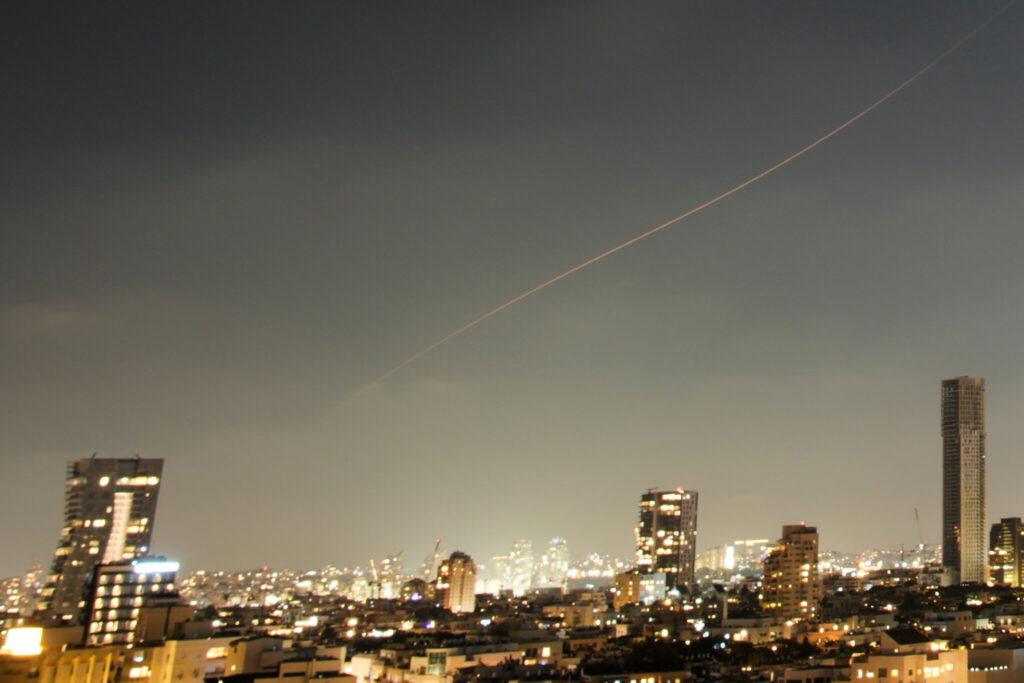
Air raid sirens sounded across central Israel while defensive systems attempted to intercept incoming missiles.
Explosions were reported in several areas, and neighboring Jordan also activated warning systems as projectiles crossed regional airspace.
Iran blamed Washington for the escalation.
“No one believes that the Israeli regime would take any action without coordination with the United States,” Iranian Foreign Ministry spokesman Esmail Baghaei said during a briefing with journalists in Tehran.
The White House did not immediately comment on whether it had prior knowledge of Israel’s military actions.
Growing Friction Between Trump And Netanyahu
The renewed conflict also highlights apparent tensions between President Trump and Israeli Prime Minister Benjamin Netanyahu.
The two leaders launched the initial military campaign against Iran in close coordination earlier this year, with Israeli officials repeatedly emphasizing unprecedented cooperation between Washington and Jerusalem.
However, differences have increasingly surfaced as the conflict has continued.
Netanyahu appears focused on maintaining pressure against Hezbollah and Iran ahead of Israeli elections later this year. Trump, meanwhile, faces congressional midterm elections and has expressed a desire to conclude a war that continues to fuel economic uncertainty.
Reports suggest disagreements have emerged regarding the pace and scope of military operations, particularly concerning Lebanon and Iran.
Houthis Rejoin The Conflict
Adding to concerns about regional stability, Yemen’s Iran-backed Houthi movement announced that it had resumed attacks connected to the conflict.
Houthi military spokesman Brig. Gen. Yahya Saree declared that vessels affiliated with Israel would once again become targets in the Red Sea.
The group issued similar warnings during the Gaza conflict and previously carried out more than 100 attacks on commercial shipping.
Those operations disrupted one of the world’s most important trade corridors and contributed to higher transportation and insurance costs globally.
The latest threats raise concerns about renewed disruptions to shipping through the Red Sea, Gulf of Aden and Bab el-Mandeb Strait.
Strait Of Hormuz Remains A Critical Flashpoint
One of the most significant unresolved issues remains Iran’s control over access through the Strait of Hormuz.
The strategic waterway serves as a critical route for global oil and natural gas shipments.
Iran has maintained pressure on maritime traffic through the region during the ceasefire period, contributing to elevated fuel prices worldwide.
Analysts continue to warn that any prolonged disruption in the strait could trigger further economic instability and inflation across multiple continents.
Civilians Brace For Prolonged Uncertainty
Residents in both Iran and Israel are preparing for the possibility of additional violence.
Schools across Israel were closed as a precaution, while many businesses remained open despite repeated air raid alerts.
In Tehran, some residents voiced expectations that the conflict may continue despite ongoing diplomatic efforts.
“I think Iran did a good thing…. I think this war is going to continue for a long time, and we won’t give up until victory,” said Tehran resident Reza Khorramgah.
Although Iran’s announcement suspending offensive operations may temporarily reduce tensions, the combination of unresolved disputes, continued fighting in Lebanon, Houthi involvement, and stalled negotiations means the risk of a broader regional conflict remains significant.