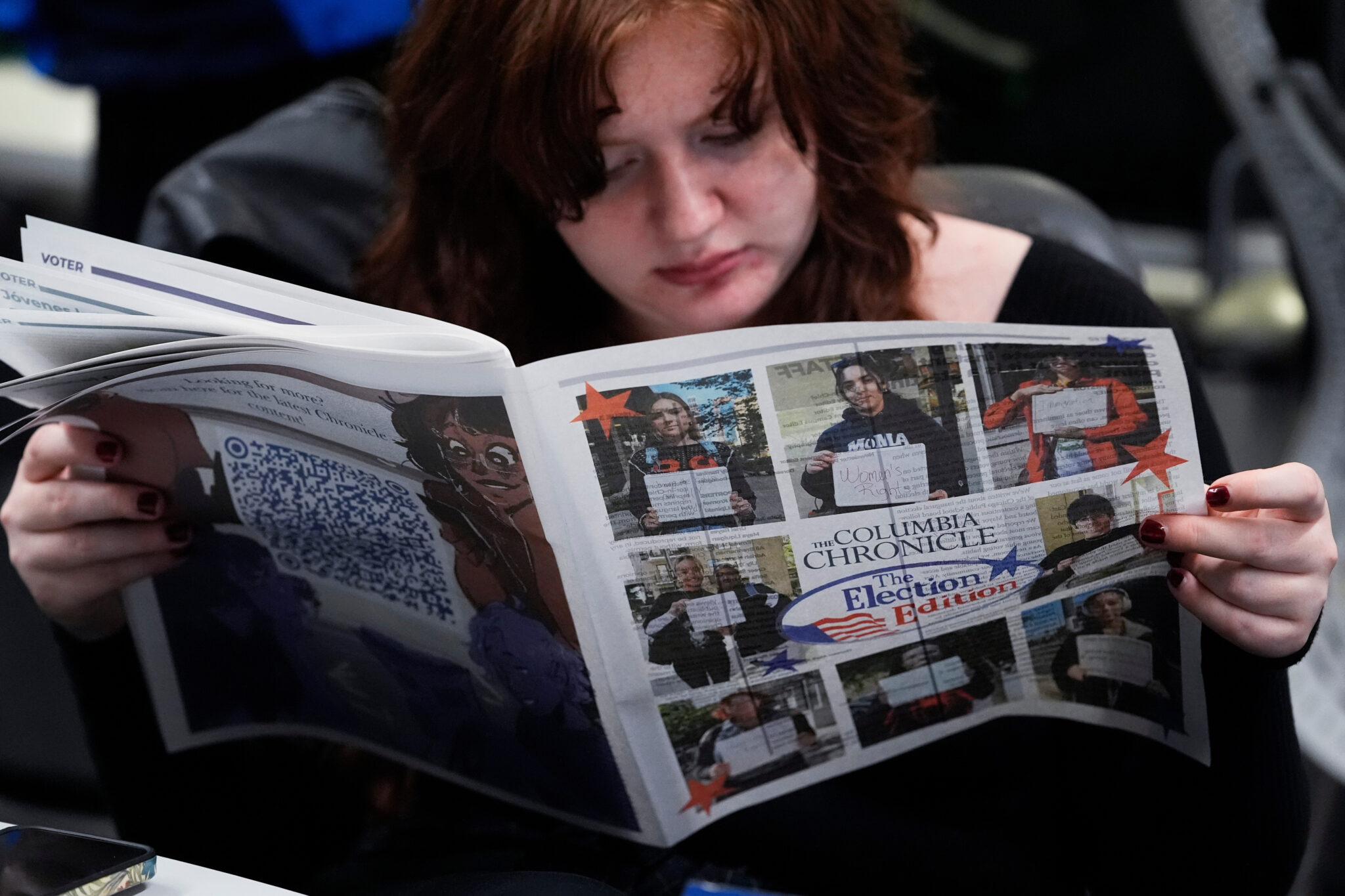
AP Poll Reveals Younger Americans Question Democracy, American Dream/ Newslooks/ WASHINGTON/ J. Mansour/ Morning Edition/ A new AP-NORC poll finds fewer Americans view democracy as central to the nation’s identity, while confidence in American exceptionalism and the American Dream continues to decline. Young adults are significantly more skeptical than older generations about the country’s future, political institutions, and opportunities for advancement. The survey highlights growing divisions over immigration, diversity, culture, and what defines American identity as the nation approaches its 250th anniversary.
AP-NORC Poll On American Identity Quick Looks
- Support for democracy as a core U.S. value has declined.
- Only one-quarter say America stands above all nations.
- Nearly one-third believe other countries are better.
- Young adults are most skeptical about U.S. institutions.
- Confidence in the American Dream continues to weaken.
- Political divisions shape views on national identity.
- Republicans remain more optimistic about America’s future.
- Democrats place greater importance on diversity.
- Concerns about political dysfunction are widespread.
- Survey conducted ahead of America’s 250th anniversary.
Deep Look
Fewer Americans View Democracy As Central To National Identity
As the United States prepares to celebrate its 250th anniversary, a new Associated Press-NORC survey reveals growing uncertainty about the country’s identity, institutions, and future.
The poll found that Americans are less likely today to view a democratically elected government as a defining characteristic of the nation than they were only a few years ago.
About two-thirds of Americans now say democracy is either “extremely” or “very” important to the country’s identity. That figure has fallen significantly from 80% in 2021.
The findings suggest a broader erosion of confidence in political institutions as voters across generations express frustration with government performance and political leadership.
Americans Increasingly Question U.S. Exceptionalism
The survey also found declining belief in the idea that the United States stands above other nations.
Only about one-quarter of Americans now say the United States is the greatest country in the world.
Another 44% describe America as one of several great nations, while roughly three in ten respondents believe there are countries that perform better than the United States.
That represents a notable increase from a decade ago. In a similar AP-NORC survey conducted in 2016, only 19% of respondents said other nations were better than America.
The data points to changing attitudes about America’s global standing as political polarization, economic concerns, and international competition reshape public perceptions.
Younger Americans Show Greater Skepticism
One of the clearest trends in the survey is the generational divide.
Americans under 30 were substantially less likely than older adults to view the United States as exceptional.
About 44% of younger adults said there are better countries than the United States, compared with only 22% of Americans aged 60 and older.
Younger Americans were also far less likely to view democracy as central to American identity.
Only about half of adults under 30 considered democracy a defining national characteristic, while more than 80% of older Americans held that view.
Many younger respondents expressed frustration with political institutions and questioned whether the nation’s system of government is functioning as intended.
Concerns About Political Leadership
Several poll participants cited dissatisfaction with elected officials rather than opposition to democracy itself.
Many respondents argued that political leaders have weakened public trust in government and failed to address pressing national issues.
Some questioned whether existing safeguards designed by the nation’s founders remain effective in today’s political environment.
The survey suggests that frustration with politicians, partisan conflict, and institutional gridlock continues to influence public confidence in American democracy.
Belief In The American Dream Continues To Fade
The poll also revealed widespread skepticism about one of America’s most enduring ideas: the American Dream.
Only about one-third of Americans said the American Dream still exists today.
Another 15% said it never truly existed.
Many younger Americans pointed to rising housing costs, economic inequality, and job market challenges as reasons for their skepticism.
Only 22% of adults under 30 said the American Dream still holds true, compared with 46% of Americans aged 60 and older.
Economic Pressures Shape Public Outlook
Concerns about affordability played a significant role in shaping attitudes.
Respondents cited challenges including:
- Rising housing costs.
- Student debt burdens.
- Difficulty building wealth.
- Economic inequality.
- Job market uncertainty.
- Higher living expenses.
The findings underscore growing concerns about economic mobility and long-term financial security.
Sharp Political Differences Remain
The survey found major differences between Republicans and Democrats on questions involving national identity and opportunity.
Republicans were considerably more likely to believe:
- The American Dream remains alive.
- America is the world’s greatest nation.
- Hard work still leads to success.
- Merit determines outcomes.
These political differences continue to influence perceptions of America’s strengths, weaknesses, and future prospects.
Americans Divided On Diversity And Immigration
The survey found no broad consensus on the role diversity plays in defining American identity.
About half of respondents said the ability of people from around the world to immigrate to the United States is an important part of the nation’s character.
A similar share viewed the mixing of cultures, traditions, and values as central to what makes America unique.
However, attitudes varied sharply along partisan lines.
Most Democrats considered cultural diversity an essential part of American identity, while fewer Republicans shared that view.
Shared Culture Becomes Less Important
The importance Americans place on a single shared culture has also declined.
Just over half of respondents said a common American culture and set of values are highly important to national identity.
That figure has dropped from 65% in 2017.
Younger generations were especially likely to embrace a broader and more diverse definition of what it means to be American.
America At 250: Pride And Anxiety Coexist
The findings paint a complex picture as the country approaches a historic milestone.
Many Americans continue to express pride in the nation and its founding principles.
At the same time, concerns about democracy, economic opportunity, political dysfunction, and social divisions have contributed to growing unease.
The survey suggests that Americans remain engaged in an ongoing debate over what defines the country and how it should move forward.
While opinions differ sharply across generations and political affiliations, the poll indicates that questions about democracy, opportunity, diversity, and national identity remain at the center of the American conversation heading into the nation’s 250th anniversary.