


House OKs Resolution to Halt Military Action in Iran, But Senate Rejects Similar One/ Newslooks/ WASHINGTON/ J. Mansour/ The House narrowly approved a resolution requiring congressional authorization for continued U.S. military action against Iran. The measure passed 214-208, but the Senate rejected a similar proposal by a 47-49 vote. The largely symbolic votes exposed growing concern in Congress about the war’s costs, objectives and escalation, although most Republicans continued to support Trump.

Quick Look
- The House passed the Iran war powers resolution 214-208.
- The Senate rejected a similar resolution 47-49.
- Several House Republicans joined Democrats in supporting the measure.
- Most congressional Republicans opposed limiting Trump’s military authority.
- The White House said the resolutions do not have the force of law.
- Trump says he has constitutional authority to protect the United States from Iran.
- U.S. and Israeli strikes launched the war in late February.
- A ceasefire was reached in April but collapsed in July.
- Eighteen U.S. service members have been killed since the war began.
- The conflict has disrupted the Strait of Hormuz and raised fuel prices.
- Democrats say they will continue forcing votes on the war.
- Recent polling shows most Americans disapprove of Trump’s handling of Iran.
Deep Look
House and Senate Split on Iran War Powers
WASHINGTON — The House narrowly passed a resolution Thursday seeking to halt American military action against Iran unless Congress authorizes the war.
The House approved the measure 214-208, with several Republicans joining Democrats.
Soon afterward, the Senate rejected a similar resolution by a 47-49 vote.
Although neither vote immediately ends the conflict, the close margins show that some congressional support for President Donald Trump’s Iran policy has weakened as the war continues.
Jayapal Says War Has No Clear Objective
Democratic Rep. Pramila Jayapal of Washington led the House effort.
She argued that the administration had failed to explain its long-term military and political strategy.
The war has had “no clear mission, no strategy, no end goal,” Jayapal said.
Most Republicans in both chambers opposed the resolutions and supported allowing Trump to continue military operations without new congressional authorization.
War Began With US-Israeli Strikes
Joint American and Israeli airstrikes launched the war in late February.
A fragile ceasefire agreement was reached in April. Trump declared the ceasefire “over” earlier in July after hostilities resumed.
The United States has since conducted repeated strikes against Iran, while Tehran has attacked American forces, regional allies, ships and infrastructure.
Trump has argued that the renewed operations do not represent a return to prolonged warfare.
White House Defends Trump’s Authority
The White House issued a statement Thursday urging lawmakers to reject the resolutions.
Administration officials noted that the measures do not have the force of law and argued that Trump already possesses the authority needed to act against Iran.
“The President has the Constitutional authority to defend the United States and our citizens from the danger posed by the Iranian regime,” the White House said. “This requires the ability to act decisively to ensure it never obtains a nuclear weapon.”
After the House first approved an antiwar resolution in June, Trump called the measure “unpatriotic” and “meaningless.”
Strait of Hormuz Conflict Raises Costs
American strikes have continued while diplomatic efforts show little public progress.
Washington and Tehran remain locked in a confrontation over the Strait of Hormuz, a critical route for global oil and natural gas supplies.
Shipping through the strait remains severely restricted, contributing to higher oil and gasoline prices.
The conflict’s economic effects have become an important political issue before the fall midterm elections.
Van Hollen Calls for Accountability
Democratic Sen. Chris Van Hollen of Maryland led the Senate resolution.
“We are in this new escalatory phase where Americans have been killed, and Americans are experiencing the rising costs — I think it’s important that people be held accountable,” Van Hollen said. “And this is a very unpopular war.”
The Senate’s rejection means the resolution will not advance, but Democrats intend to continue pressing lawmakers to take public positions on the conflict.
Republicans Point to Fallen Troops
During the House debate, Republican Foreign Affairs Committee Chairman Brian Mast of Florida read the names of 18 American service members killed since the war began.
“To belittle this mission is to belittle and demean the very service these members gave their life for,” Mast said. “Their sacrifice was not meaningless. This operation is bringing reckoning for the hundreds of times Iran has attacked and killed people of the United States of America.”
Mast and other Republicans argued that the military campaign responds to years of Iranian attacks against Americans and is necessary to prevent Tehran from obtaining a nuclear weapon.
Democrats Call War Unauthorized
Rep. Gregory Meeks of New York, the top Democrat on the House Foreign Affairs Committee, said presidents must make their case for war to Congress.
He said the fallen service members had made the ultimate sacrifice during “an illegal unauthorized war that the American people don’t want.”
Democrats argue that the Constitution gives Congress authority over decisions to initiate and fund war.
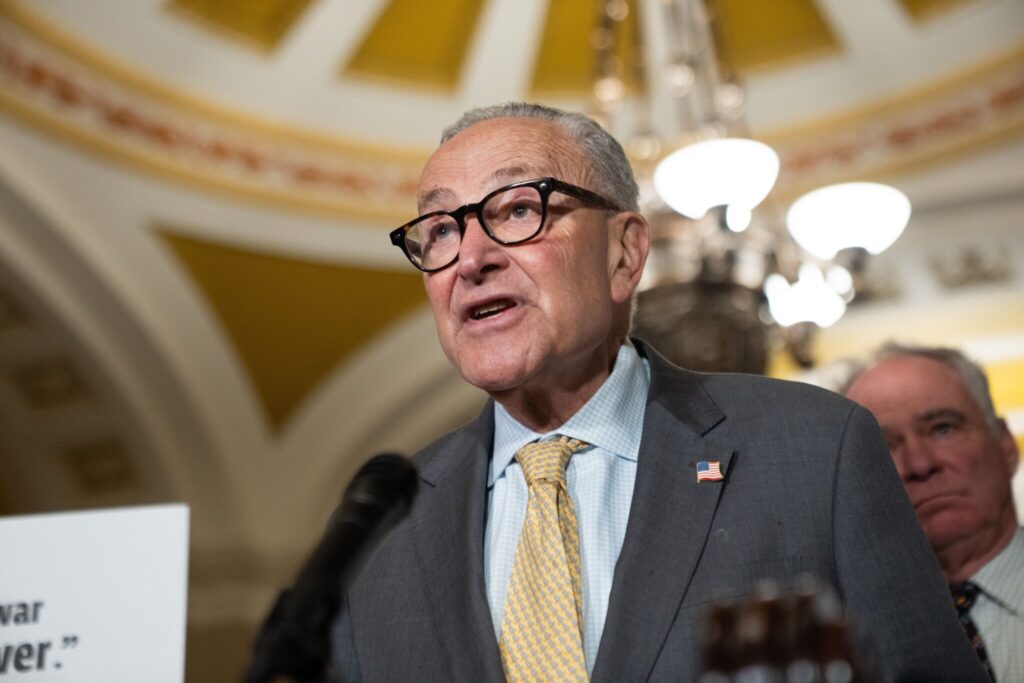
“If Donald Trump won’t listen to the people and end this war then Congress must,” Senate Minority Leader Chuck Schumer said.
Trump Pressures Republican Critics
Republicans who oppose the war face pressure from Trump and his political supporters.
Following the first House vote in June, Trump labeled the four Republicans who supported the resolution “GRANDSTANDERS!” and said they should be “ashamed of themselves.”
“They would rather have our Country fail than give me another, of many, victories,” Trump said.
When the Senate first approved an Iran war powers resolution in June, Trump called the four participating Republicans “losers” and confronted them at a GOP luncheon the following day.
Cassidy Changes Position After Briefing
Republican Sen. Bill Cassidy of Louisiana initially voted with Democrats to restrict the war.
“This was supposed to last four weeks. It’s lasted four months,” Cassidy said. “Our original objectives have not been achieved.”
Cassidy said he told Trump that the administration needed to provide the public with more information about the conflict.
He initially refused to change his position without a briefing. The White House later gave him a private meeting, and Cassidy reversed his vote during a late-night repeat vote before the Senate recess.
Cassidy opposed the resolution again Thursday.
Poll Shows Widespread Public Doubts
A July Washington Post/Ipsos poll found that most Americans disapproved of Trump’s handling of Iran.
Relatively few respondents believed the war was worth fighting. Most also lacked confidence that military operations and negotiations would prevent Iran from developing nuclear weapons.
About two-thirds of Republicans approved of Trump’s handling of Iran.
Roughly 6 in 10 Republicans said the war was worthwhile and expressed confidence in its ability to stop an Iranian nuclear weapon. About one-third remained unconvinced.
The polling and close congressional votes suggest the administration faces continuing questions about the conflict even though lawmakers have not succeeded in stopping it.






You must Register or Login to post a comment.