Hegseth: Blockade of Iranian Ports, Ships Now ‘Global,’ to Stay ‘as Long as it Takes’/ Newslooks/ WASHINGTON/ J. Mansour/ Morning Edition/ Defense Secretary Pete Hegseth said Friday that the U.S. blockade of Iranian ports and vessels has expanded globally and will remain in place for as long as necessary. The Pentagon confirmed two more Iranian-linked ships were seized in the Indo-Pacific, while 34 ships have now been blocked from moving through the Strait of Hormuz. Hegseth warned Iran to abandon its nuclear weapons ambitions or face continued economic collapse under sustained American pressure.
Hegseth Iran Blockade Quick Looks
- Hegseth says the U.S. blockade of Iranian vessels has gone global
- Two Iranian dark fleet ships were seized in the Indo-Pacific this week
- 34 ships have now been stopped or turned around in the Strait of Hormuz
- The blockade will continue during ongoing ceasefire negotiations
- Trump says the U.S. has “all the time in the world” for a deal
- Iran argues the blockade violates the ceasefire agreement
- A second U.S. aircraft carrier will join operations soon
Deep Look
Pentagon Says Iran Blockade Is Expanding Worldwide
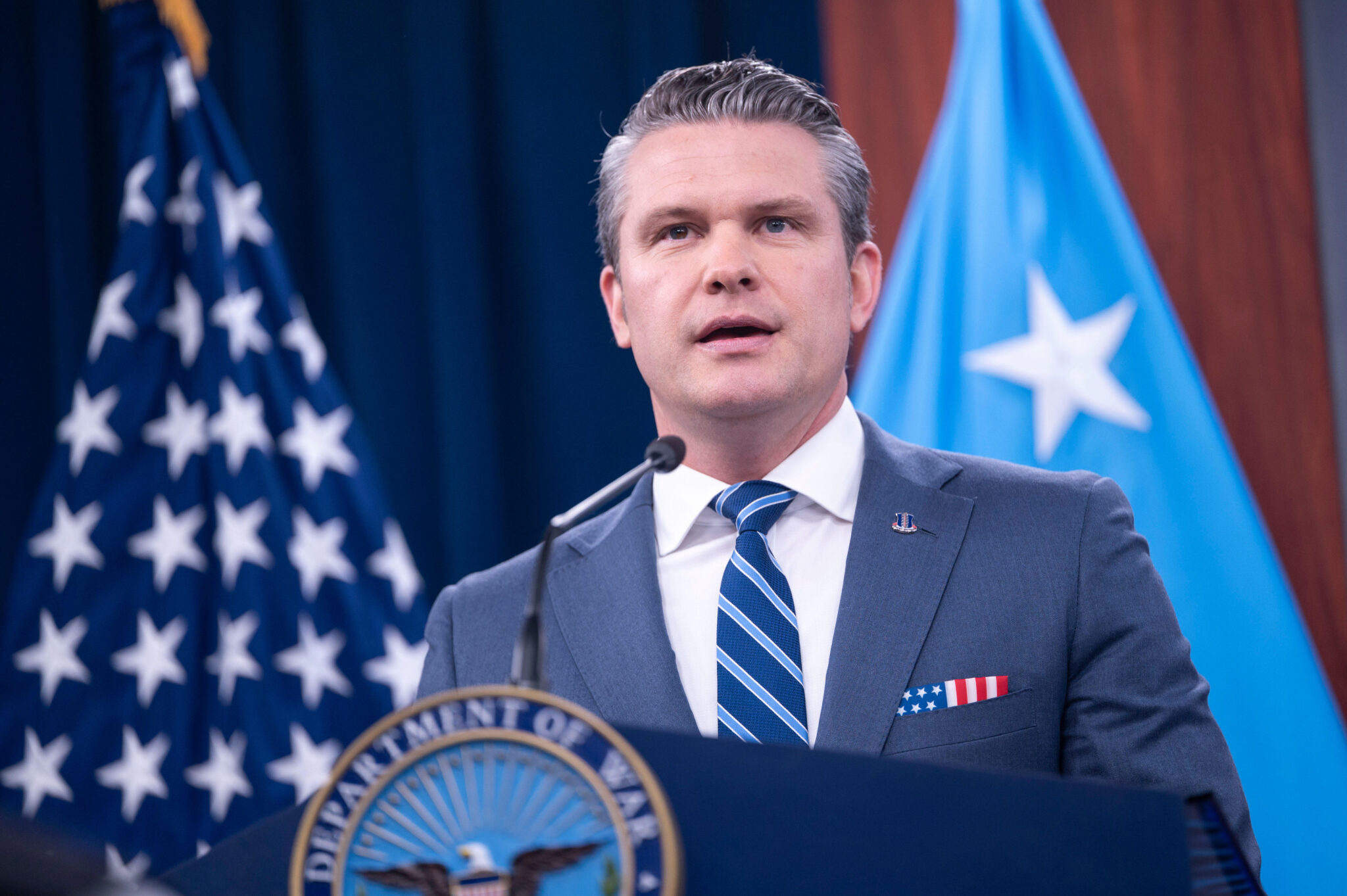
WASHINGTON — Defense Secretary Pete Hegseth said Friday that the U.S. naval blockade of Iranian ports and vessels has now expanded beyond the Middle East and become a global operation.
Speaking at the Pentagon, Hegseth said the Trump administration is maintaining intense pressure on Iran while ceasefire negotiations continue, and there is no deadline for ending the blockade.
“This growing blockade has also gone global,” Hegseth said.
He revealed that U.S. forces had seized two Iranian “dark fleet” ships in the Indo-Pacific region this week after they left Iranian ports before the blockade officially began.
“They thought they’d made it out just in time. They did not,” Hegseth said.
“We seized their sanctioned ships, and we will seize more. Our blockade is growing and going global.”
The comments signal that Washington is using both military power and economic pressure to force Tehran toward a broader nuclear agreement.
Strait of Hormuz Remains Center of Pressure
Hegseth said the number of Iranian-linked ships blocked or turned around in the Strait of Hormuz has now risen to 34, an increase of one since Thursday evening.
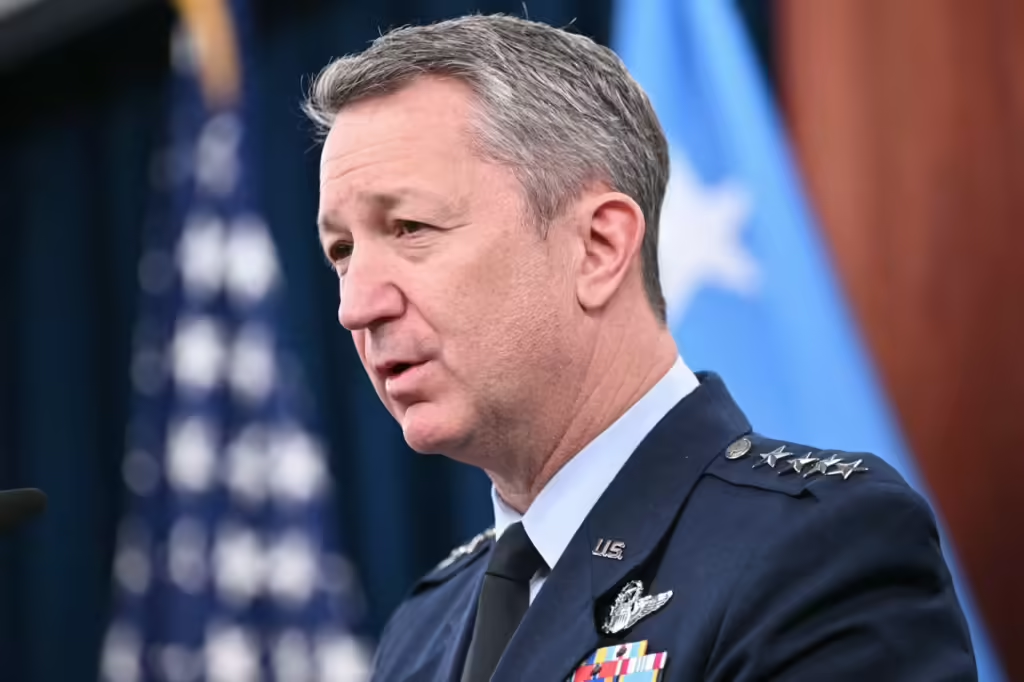
Joint Chiefs Chairman Gen. Dan Caine explained that the blockade applies to any vessel moving to or from an Iranian port or territory.
He said 34 ships had met the blockade and turned around, while one ship, the M/V Touska, was seized.
Two other stateless vessels linked to Iran — the M/T Tifani and M/T Majestic X — were also intercepted in the Indian Ocean and Indo-Pacific region.
Their crews remain in U.S. custody.
Caine said more maritime interdictions are expected.
“We will continue to conduct similar maritime interdiction actions and activities in the Pacific and Indian Oceans against Iranian ships and vessels of the dark fleet,” he said.
Trump and Hegseth Say No Rush for Peace Deal
Trump said Thursday that he has “all the time in the world” to make a deal and that the U.S. controls the pace of Operation Epic Fury, now nearing two months.
Hegseth echoed that same position.
“President Trump said it again yesterday. We have all the time in the world, and we’re not anxious for a deal,” he said.
Trump also said earlier this week that the U.S. had already crippled much of Iran’s military capacity during the opening weeks of the conflict.
“Now all we’re doing is sitting back and seeing what deal” would emerge, Trump said.
The administration believes the blockade and military dominance give Washington the advantage at the negotiating table.
Iran Given Clear Nuclear Ultimatum
He said Tehran still has an opportunity to choose diplomacy.
“Iran knows that they still have an open window to choose wisely,” Hegseth said.
“As we said previously, choose wisely at the negotiating table.”
He then delivered a direct warning.
“All they have to do is abandon a nuclear weapon — and in meaningful and verifiable ways.”
“Or instead, they can watch their regime’s fragile economic state collapse under the unrelenting pressure of American power.”
He added that the blockade would continue indefinitely if necessary.
“A blockade as long as it takes. Whatever President Trump decides.”
The White House views economic pressure as a key tool for forcing Iran into a final agreement.
US Warns It Will Destroy Mine-Laying Boats
Following Trump’s Thursday order for the Navy to “shoot and kill” any Iranian vessels placing mines in the Strait of Hormuz, Hegseth said commanders now have clear rules of engagement.
“If Iran is putting mines in the water, or otherwise threatening American commercial shipping or American forces, we will shoot to destroy. No hesitation,” he said.
The Pentagon did not give a timeline for how long mine-clearing operations could take, but Hegseth urged U.S. allies to assist with keeping shipping lanes open.
A second U.S. aircraft carrier is also expected to join blockade operations in the coming days, further strengthening the military presence in the region.
Iran Says Blockade Violates Ceasefire
Iran has sharply criticized the continuing naval blockade and says it breaks the terms of the ceasefire currently in place.
Trump extended the two-week ceasefire with Iran indefinitely earlier this week while negotiations continue.
At the same time, he made clear that the blockade would remain until talks are finished.
That strategy — ceasefire with continued economic warfare — has become the core of Operation Epic Fury.
Iranian officials argue that restricting commercial shipping while claiming peace talks are active increases the risk of renewed escalation.
Still, Washington has shown no signs of easing pressure.
Global Economic Effects Continue to Grow
The blockade is also having major economic consequences far beyond the Middle East.
The Strait of Hormuz normally carries about one-fifth of the world’s oil supply, making disruptions there a major global concern.
Shipping traffic remains well below pre-war levels, and Iran claims it has started collecting toll revenue from vessels still using the waterway.
Oil prices, insurance costs, and freight expenses continue to rise as commercial shipping becomes more difficult.
The seizure of dark fleet tankers directly targets one of Iran’s most important revenue sources — oil exports.
That economic pressure is central to Trump’s strategy.
No Clear End Yet
With the blockade expanding globally and no final peace agreement in sight, the standoff between Washington and Tehran remains far from over.
The Trump administration believes time is on its side and appears prepared to keep pressure on Iran indefinitely.
For Tehran, the options are narrowing: accept strict nuclear restrictions or continue facing deeper economic isolation and maritime disruption.
As Hegseth made clear Friday, the blockade is not temporary.
It will remain in place for as long as Trump believes it is necessary.
For now, the pressure campaign continues — and the world is watching the Strait of Hormuz more closely than ever.