
Senate Passes ICE Funding Plan to Reopen DHS/ Newslooks/ WASHINGTON/ J. Mansour/ Morning Edition/ The Senate approved a Republican-backed budget plan to fund ICE and Border Patrol, taking the first step toward reopening the Department of Homeland Security. The move comes after DHS has remained partially shut down since February, with Democrats demanding reforms following fatal shootings involving federal agents. Republicans are using budget reconciliation to bypass Democratic opposition and move the funding package closer to President Trump’s desk.
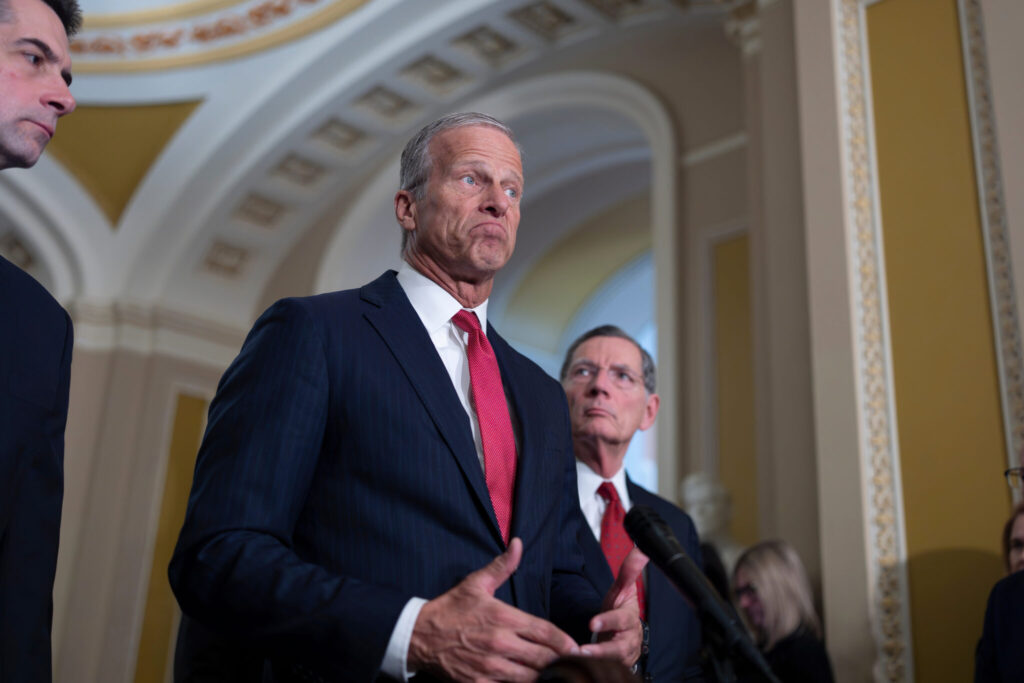
Senate ICE Budget Plan Quick Looks
- The Senate passed a budget resolution to fund ICE and Border Patrol
- Homeland Security has been partially shut down since mid-February
- Republicans are using budget reconciliation to bypass the filibuster
- The plan would provide $70 billion over three years
- Democrats want reforms on federal immigration enforcement before funding approval
- The final Senate vote passed 50-48 early Thursday morning
- The House must still approve the framework before final passage

Deep Look
Senate Moves to Reopen Homeland Security Department
WASHINGTON — The Senate took its first major step toward reopening the Department of Homeland Security Thursday by approving a Republican-led budget plan focused on funding Immigration and Customs Enforcement and Border Patrol.
The vote came after months of political deadlock and sends the measure to the House for the next stage of the process.
The department has remained partially shut down since mid-February after Democrats demanded policy changes following the fatal shootings of two protesters by federal agents.
Republicans, however, have insisted that ICE and Border Patrol must remain fully funded and are now using the budget reconciliation process to move the plan forward without Democratic support.
The Senate approved the final resolution 50-48 just after 3:30 a.m. Thursday.
Republicans Use Budget Reconciliation Strategy
Rather than seeking bipartisan support under normal Senate rules, Republicans are relying on budget reconciliation — a process that allows legislation to pass with a simple majority.
That approach helps them avoid the 60-vote filibuster threshold usually required for major bills.
Republicans hold 53 Senate seats, making reconciliation their clearest path to passage.
It is the same strategy they used last year to pass President Donald Trump’s tax and spending cuts package without Democratic votes.
Senate Majority Leader John Thune said the goal is to secure the border and stop what Republicans describe as Democratic efforts to weaken immigration enforcement.
“We have a multistep process ahead of us, but at the end Republicans will have helped ensure that America’s borders are secure and prevented Democrats from defunding these important agencies,” said Thune, R-S.D.
The process, however, also opens the bill to intense review by the Senate parliamentarian and requires long amendment votes that can stretch overnight.
Democrats Push Back on ICE and Border Patrol Funding
Democrats strongly opposed the Republican approach, arguing that Congress should first focus on reforming immigration enforcement practices rather than increasing funding.
They want stricter oversight of federal immigration officers, including clearer identification requirements, stronger use of judicial warrants, and other accountability measures.
Senate Minority Leader Chuck Schumer criticized the GOP focus on immigration enforcement while families continue to struggle with rising costs.
“Instead of pumping hundreds of billions of dollars into ICE and Border Patrol, Republicans should be working with Democrats to lower out-of-pocket costs,” said Schumer, D-N.Y.
During the overnight vote session, Democrats introduced amendments aimed at lowering health care costs and addressing broader economic concerns.
Republicans rejected those efforts and kept the bill focused on border security funding.
Shootings Sparked the Funding Standoff
The Homeland Security funding crisis began after federal agents shot Renee Good and Alex Pretti during protests in Minneapolis in January.
The incident intensified Democratic calls for changes to federal immigration enforcement practices and led to a standoff over how DHS should be funded.
Trump later agreed to separate Homeland Security funding from a larger government spending bill that eventually became law.
However, bipartisan negotiations over DHS reforms stalled, and funding for the department lapsed without an agreement.
Since then, much of the department has operated under temporary executive actions.
Trump has used executive orders to keep some department salaries paid, but officials warn that those temporary solutions may not last much longer.
What the $70 Billion Plan Includes
The Republican budget resolution would provide $70 billion for ICE and Border Patrol over the next three years, covering the remainder of Trump’s current term.
The Senate has already passed bipartisan legislation to fund the rest of Homeland Security, including agencies like the Transportation Security Administration, as airport security lines have grown longer during the shutdown.
But House Republican leaders have refused to consider that broader bill unless the Senate first makes progress on funding immigration enforcement.
GOP leaders say they want the final package narrowly focused on ICE and Border Patrol and hope to deliver it to Trump within the next few weeks.
Still, many Republicans see this bill as the last major legislative opportunity before the November midterm elections and want to add more priorities.
GOP Divisions Could Create Problems
Some Republicans in both chambers want to use the bill to pass additional Trump-backed priorities.
These include more financial support for farmers and the SAVE America Act, Trump’s proof-of-citizenship voting bill.
Senator John Kennedy of Louisiana briefly delayed the Senate voting process late Wednesday by pushing for those additions.
“This is the last train leaving the station,” Kennedy said, warning that there may not be another chance to pass major legislation before the midterms.
He later withdrew his objections, allowing the vote to proceed.
Still, his comments reflect broader divisions inside the Republican Party over how narrowly the final bill should be written.
House Approval Remains the Next Challenge
The House must still approve the budget framework before Congress can move to final passage.
House Speaker Mike Johnson and Thune have agreed on a two-track strategy — passing most DHS funding through the standard legislative process while using the party-line reconciliation bill specifically for ICE and Border Patrol.
But Johnson has not yet announced when the House will vote on the Senate bill that funds the rest of Homeland Security.
He has said House Republicans do not want the broader department funded unless immigration enforcement funding is secured first.
That sequencing remains a major issue.
Thune warned that if Congress moves too slowly, other parts of Homeland Security could run out of money before the process is complete.
He said the Senate’s budget resolution should signal to the House that Republicans are serious about finishing the job.
“We’ll see what they can do with it,” Thune said. “And if they can’t, I guess we will go to the next plan.”
Political Stakes Continue to Rise
The fight over Homeland Security funding has become one of the biggest political battles in Washington as immigration enforcement remains central to Trump’s second-term agenda.
For Republicans, passing the ICE and Border Patrol funding package is both a policy priority and a political message heading into the midterm elections.
For Democrats, the focus remains on accountability and limits on federal immigration authority.
With both sides holding firm, the future of Homeland Security funding now depends on whether House Republicans can unite behind the Senate plan.