

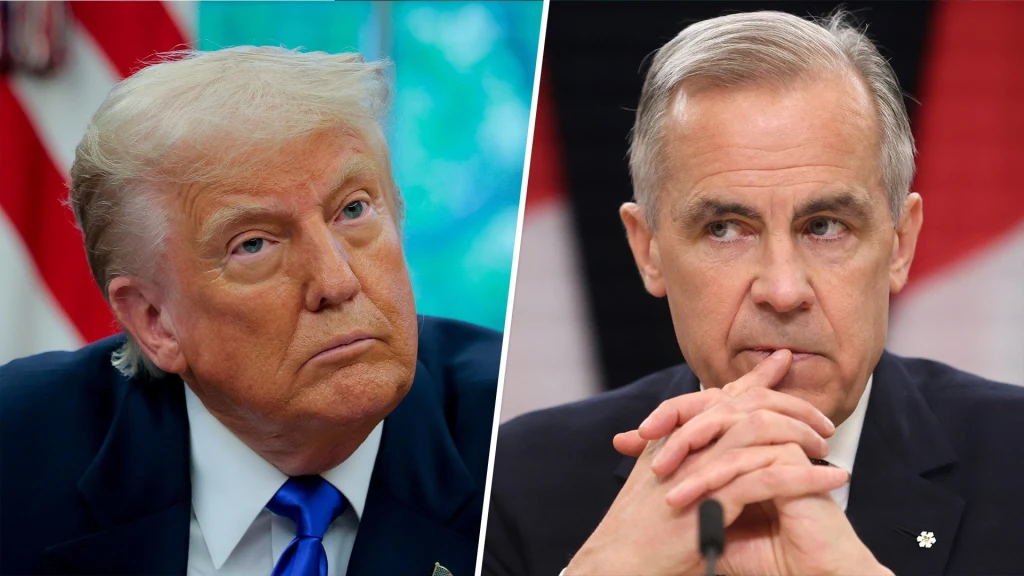
Trump and Carney Accelerate Trade Talks After US Imposes 50% Canada Tariffs/ Newslooks/ WASHINGTON/ J. Mansour/ Canadian Prime Minister Mark Carney said he and President Donald Trump agreed to accelerate trade negotiations after Washington announced 50% tariffs on many Canadian goods. The duties will take effect in 30 days and include some products previously protected by the US-Mexico-Canada Agreement, while excluding energy and several other major exports. Canadian premiers warned that the tariffs would raise costs, harm families and further damage relations between the neighboring countries.
Quick Look
- Carney spoke with Trump Tuesday morning.
- The leaders agreed to intensify trade negotiations in the coming weeks.
- The United States announced 50% tariffs on many Canadian goods.
- The tariffs are scheduled to take effect 30 days after Monday’s announcement.
- Energy, potash, fish and critical minerals are excluded.
- Some goods previously protected under the USMCA will face tariffs.
- The United States did not renew the 2020 trade agreement.
- New negotiations could continue until 2036.
- Trump accused Canada of discriminating against American autos, alcohol and dairy products.
- He said the trade tariffs are separate from threatened levies over wildfire smoke.
- Economists estimate the tariffs will affect about 5% of Canadian exports to the United States.
- The affected trade is worth approximately C$28 billion, or US$19.8 billion, annually.
- Chemicals, plastics, electronics and industrial equipment face significant exposure.
- Ontario Premier Doug Ford called for matching Canadian tariffs.
- Eight provinces have banned US alcohol from government-operated stores.
- British Columbia Premier David Eby said American liquor would not return to provincial shelves.
Deep Look
Carney and Trump Accelerate Trade Talks
VANCOUVER, British Columbia — Canadian Prime Minister Mark Carney said Tuesday that he and President Donald Trump agreed to intensify negotiations over a new North American trade agreement.
The conversation came one day after Trump announced 50% tariffs on many Canadian imports.
The new duties are scheduled to take effect 30 days after Monday’s announcement.
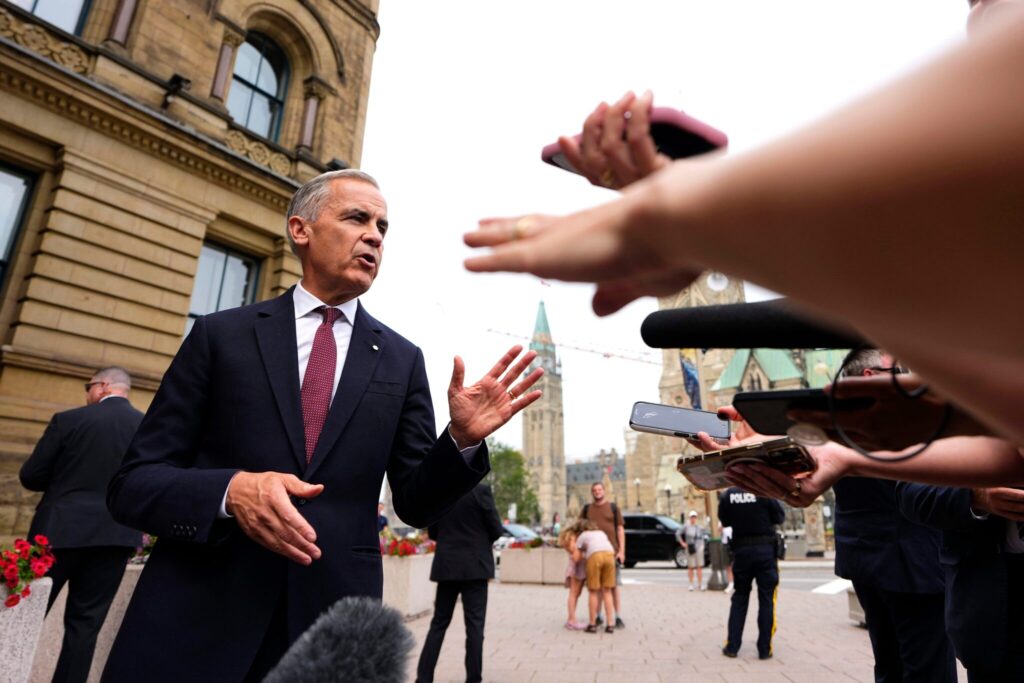
“I spoke this morning with the U.S. president and we agreed to deepen and speed up our negotiations over the next few weeks,” Carney said in Ottawa.
“Canada will do all that is necessary to support our jobs, our workers, our farmers and to make Canada stronger, more independent and more resilient.”
Trump Accuses Canada of Unfair Trade
Trump said Canada had unfairly discriminated against American automobiles, alcoholic beverages and dairy products.
A Trump administration official said Canada was among the few countries, other than China, that retaliated against the president’s previous tariffs.
The official argued that Canada must be held accountable for its response.
The new measures could increase inflation and further damage a relationship that was historically close before Trump returned to the White House.
Energy and Critical Minerals Excluded
The 50% tariff will not apply to every Canadian export.
Energy products, potash, fish and critical minerals are excluded.
The duties will cover some products previously protected from tariffs under the United States-Mexico-Canada Agreement.
Canadian economists said the measures were narrower than initially believed and would affect approximately 5% of Canada’s exports to the United States.
USMCA Was Not Renewed
The United States did not renew the US-Mexico-Canada Agreement, which took effect in 2020.
The expiration triggered a new round of trade negotiations among the three North American countries.
Those discussions could continue until 2036.
The failure to renew the agreement means some goods that previously crossed the border without tariffs will become subject to the new duties.
Carney Consults Provincial Leaders
Carney planned to meet virtually with Canada’s provincial premiers Tuesday.
The talks were expected to focus on the economic impact of the tariffs and Canada’s potential response.
Provincial governments control several policy areas affected by the dispute, including the operation of government liquor stores.
Canada’s premiers differed somewhat in tone but broadly criticized the new American measures.
British Columbia Premier Condemns Trump
British Columbia Premier David Eby sharply criticized Trump during a gathering of premiers and territorial leaders in Charlottetown, Prince Edward Island.
“This feels like an increasingly desperate and flailing approach to relationships with our country,” Eby said.
“There’s no question it will hurt families in British Columbia.”
Eby rejected the idea that economic pressure would force Canada to accept Trump’s demands.
He said the president was wrong to believe he could “bully us into whatever he wishes.”
Eby Says US Risks Isolation
Eby also argued that Washington was damaging its relationship with one of its closest allies.
“I feel sorry for Americans,” he said.
“If you can’t be friends with Canada, then you almost certainly do not have friends anywhere in the world, and that is a very lonely place to be.”
His comments reflected the increasingly hostile tone between Trump and some Canadian political leaders.
Saskatchewan Warns of Higher Costs
Saskatchewan Premier Scott Moe said tariffs would damage both economies.
“When tariffs are applied it increases the cost for families and to do business on both sides of the border,” Moe said.
“These tariffs do nothing for making a more competitive North American economy.”
Businesses importing tariffed goods typically face higher costs that can be passed to consumers through increased prices.
Ford Calls for Tariff Retaliation
Ontario Premier Doug Ford urged Canada to take a more aggressive approach.
“We always seem to be on our back heels,” Ford said.
“We need to be on the offense. Not constantly on the defense with President Trump. We need to stand up to the bully, and we need to hit him tariff to tariff, all the way across the board.”
Matching tariffs could increase pressure on Washington but would also raise costs for Canadian consumers and businesses purchasing American products.
Trump Says Canada Needs the US
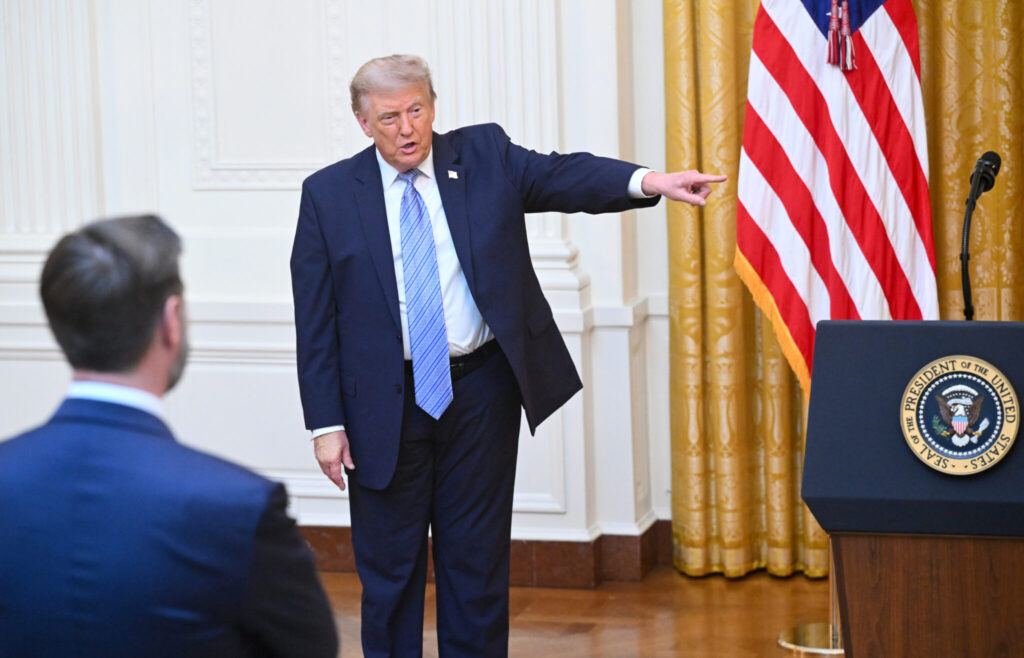
Trump told reporters in the Oval Office Tuesday that he loved the Canadian people but claimed the country depended on the United States to survive.
“Canada’s been very, very tough on us over the years, for many years, and no other president’s done anything about it,” Trump said.
He maintained that the new tariffs were necessary to address longstanding trade grievances.
Wildfire Tariff Threat Is Separate
Trump said the trade measures were separate from his threat to impose additional tariffs because of Canadian wildfire smoke.
Smoke from fires in Canada recently affected millions of people across the US Great Lakes, Northeast and Mid-Atlantic regions.
Trump again claimed that Canada had failed to manage its forests properly.
He has not announced the size, timing or legal structure of any separate tariff connected to wildfire pollution.
Economists Estimate Limited Overall Impact
Robert Kavcic, a senior economist at the Bank of Montreal, estimated that the new tariffs would cover about C$28 billion in annual Canadian exports.
That is equivalent to approximately US$19.8 billion.
The affected exports represent about 0.8% of Canada’s economy, Kavcic said in a note to clients.
Although the overall national exposure appears limited, the impact could be concentrated among particular businesses, workers and regions.
Products Facing New Tariffs
The affected goods include honey, liquor, cement and hockey sticks.
Kavcic said chemicals, plastics, electronics and industrial equipment appeared to be the largest targets.
Consumer products and forestry goods also face significant exposure.
Manufacturing machinery, agricultural products and food items make up additional portions of the tariff list.
US Alcohol Bans Remain
Eight Canadian provinces have prohibited the sale of American alcoholic beverages in government-operated liquor stores.
The bans were introduced in response to US trade measures.
Carney said provincial governments must decide whether to maintain or remove them.
The restrictions have become a significant point of frustration for Washington.
Eby Refuses to Restore US Liquor
Eby said British Columbia residents supported keeping American alcohol out of provincial stores.
“There is not a chance in hell that U.S. alcohol is going back on the shelf in British Columbia,” he said.
The statement indicated that at least one province intends to maintain retaliatory measures while federal trade negotiations continue.



You must Register or Login to post a comment.