

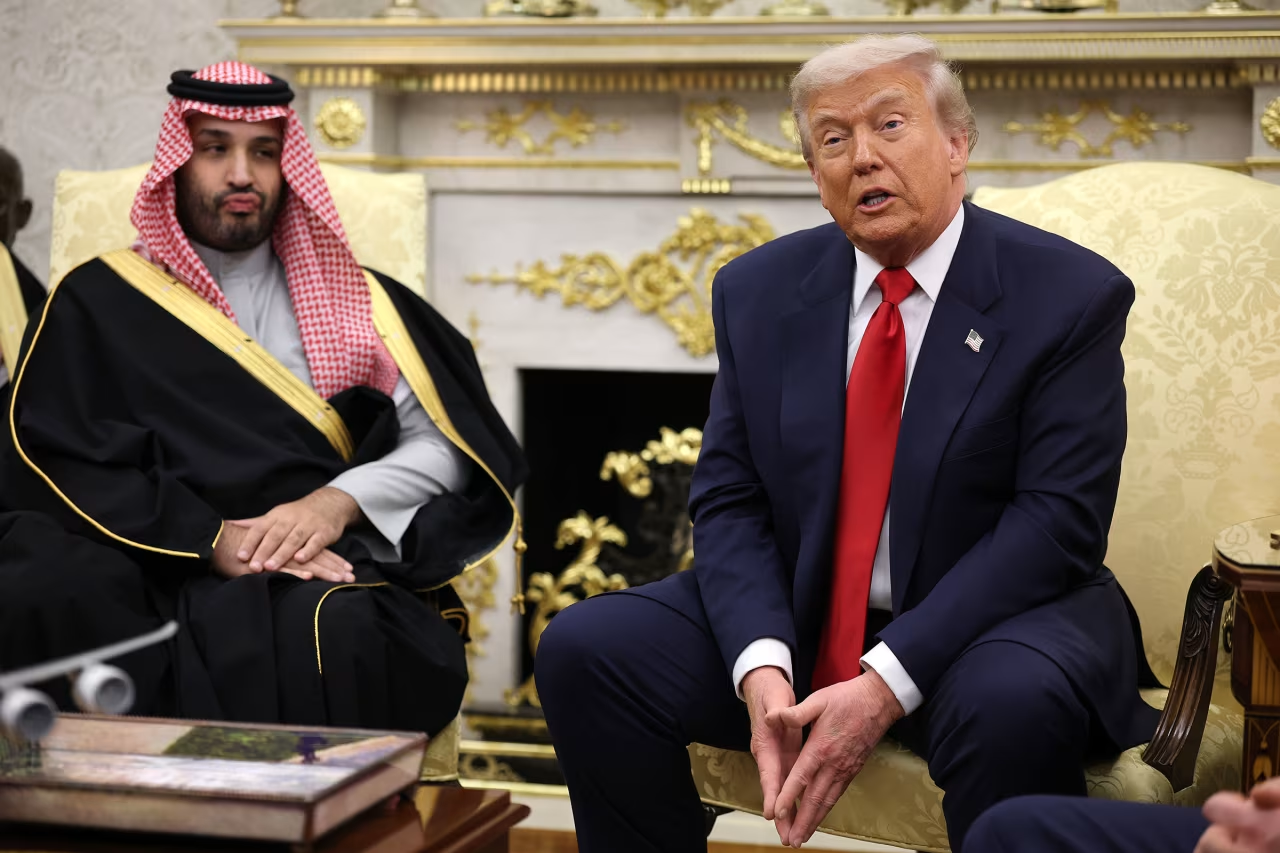
Trump Approves Saudi Nuclear Deal That Could Permit Uranium Enrichment/ Newslooks/ WASHINGTON/ J. Mansour/ President Donald Trump has approved a proposed nuclear cooperation agreement that could allow Saudi Arabia to enrich uranium, according to two people familiar with the decision. The 30-year deal is expected to involve U.S. companies and could permit an enrichment facility following a joint American-Saudi study. The reported agreement may face opposition in Congress over nuclear proliferation risks and its expected omission of enhanced international inspections.

Quick Look
- Trump reportedly approved a 30-year civilian nuclear agreement with Saudi Arabia.
- Two people familiar with the decision said it could be announced as early as Wednesday.
- The deal could allow Saudi Arabia to build a uranium enrichment facility.
- A joint U.S.-Saudi study would precede construction of any enrichment facility.
- American companies are expected to participate in developing the nuclear program.
- Congress is expected to review the agreement.
- The deal reportedly does not include the IAEA’s Additional Protocol.
- Nonproliferation experts warn that uranium enrichment could create a pathway toward a weapons program.
- The White House, Saudi officials and the U.S. Department of Energy had not commented.
- Enrichment capability does not by itself give a country a nuclear weapon.
Deep Look
Trump Reportedly Approves Saudi Nuclear Agreement
WASHINGTON — President Donald Trump has approved a nuclear cooperation agreement with Saudi Arabia that could provide the kingdom with the ability to enrich uranium for a civilian energy program, according to two people familiar with the matter.
The sources were not authorized to discuss the decision publicly because it had not been formally announced. They said an announcement could come as early as Wednesday.
Neither the White House nor Saudi officials in Riyadh immediately responded to requests for comment. The U.S. Department of Energy also did not immediately comment.
The Wall Street Journal first reported the decision.
Agreement Expected to Last 30 Years
The proposed agreement is expected to remain in effect for 30 years and involve U.S. companies in the development of Saudi Arabia’s commercial nuclear power program.
It could allow an enrichment facility to be built inside the kingdom following a joint study conducted by the United States and Saudi Arabia.
The agreement is expected to be submitted to Congress for review. Lawmakers could object over concerns that providing enrichment capability to Saudi Arabia might fuel nuclear competition across the Middle East.
Enhanced IAEA Inspections Reportedly Excluded
Saudi Arabia belongs to the International Atomic Energy Agency, the United Nations-affiliated body responsible for promoting peaceful nuclear energy and inspecting nuclear programs for possible covert weapons activities.
The proposed U.S.-Saudi agreement is not expected to include the IAEA’s Additional Protocol, according to one person familiar with its terms.
The protocol gives international inspectors greater access and verification authority, allowing them to investigate undeclared nuclear materials and facilities more effectively.
Its reported absence could become a significant issue during congressional scrutiny of the agreement.
Iran War Adds to Nuclear Concerns
The expected announcement comes during the U.S.-Israeli war against Iran, launched in part to eliminate Tehran’s ability to build a nuclear weapon.
Iran maintains that its enrichment program has peaceful purposes.
The prospect of allowing Saudi Arabia to enrich uranium could raise questions about consistency in Washington’s regional nuclear policy, particularly as the United States continues military operations against Iran.
Trump and Biden Both Pursued Saudi Deal
Trump and former President Joe Biden each sought a nuclear cooperation agreement that would allow Saudi Arabia to receive American technology.
Energy Secretary Chris Wright visited the kingdom in 2025, shortly before Trump’s trip there, and discussed developing Saudi Arabia’s commercial nuclear industry with his Saudi counterpart.
Saudi Arabia has long sought the capability to enrich uranium domestically as part of its plans to establish a civilian nuclear energy sector.
Experts Warn of Possible Weapons Pathway
Uranium enrichment does not automatically produce a nuclear weapon. A country must complete several additional technical steps, including developing a warhead and mastering the use of synchronized high explosives.
However, enrichment capability can provide material and technical knowledge that could support weaponization. That possibility has driven Western concerns about Iran’s nuclear activities.
Nonproliferation experts warn that operating centrifuges in Saudi Arabia could create an opening for a future weapons program.
Crown Prince Mohammed bin Salman, Saudi Arabia’s de facto leader, has previously suggested that the kingdom could seek an atomic bomb if Iran obtains one.
Saudi Arabia Has Defense Pact With Pakistan
Saudi Arabia has also signed a mutual defense agreement with nuclear-armed Pakistan.
The countries reached the pact after Israel attacked Qatar in an operation targeting Hamas officials. Pakistan’s defense minister subsequently said the country’s nuclear program “will be made available” to Saudi Arabia if necessary.
The comment was widely interpreted as a warning to Israel, which has long been believed to possess the Middle East’s only nuclear weapons arsenal.
UAE Agreement Viewed as Nonproliferation Standard
The neighboring United Arab Emirates previously signed a U.S. nuclear cooperation deal known as a “123 agreement.”
That agreement allowed the UAE to develop its Barakah nuclear power plant with South Korean assistance. The UAE gave up the option of domestic uranium enrichment.
Nonproliferation specialists have described the Emirati arrangement as the “gold standard” for countries seeking peaceful nuclear energy because it limits the risk that civilian technology could be redirected toward a weapons program.
Saudi Arabia’s reported insistence on retaining possible enrichment capability represents a different approach and could intensify congressional debate over the proposed agreement.






You must Register or Login to post a comment.