

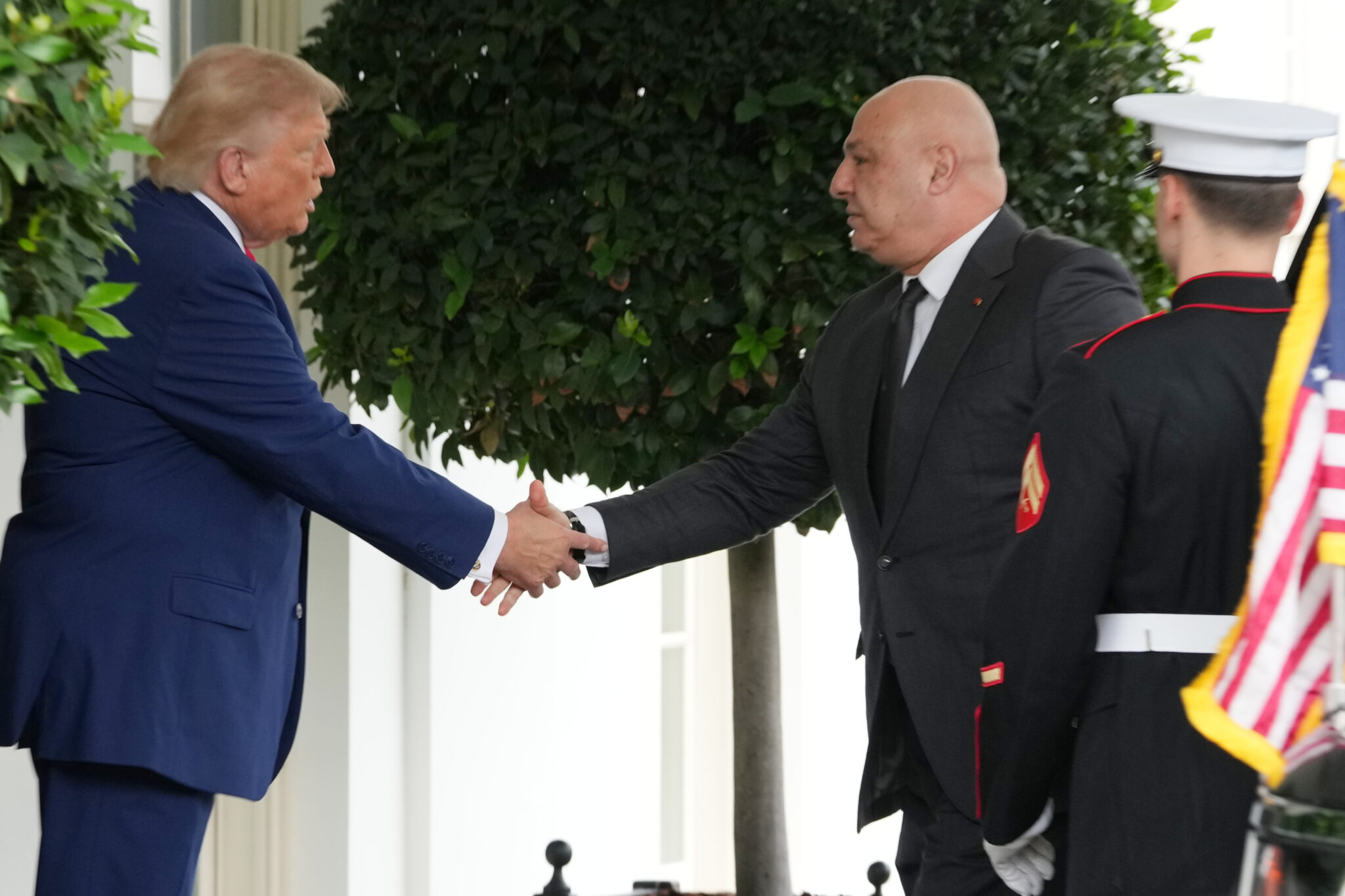
Trump Hosts Joseph Aoun as Lebanon Seeks Israeli Exit and Army Support/ Newslooks/ WASHINGTON/ J. mansour/ Morninig Edition/ Lebanese President Joseph Aoun met President Donald Trump at the White House to seek an Israeli withdrawal from southern Lebanon and greater support for the Lebanese army. The meeting comes as Lebanon and Israel implement a US-mediated framework covering Israeli troop withdrawals, Hezbollah’s disarmament and possible future peace. Operations have begun in three pilot villages, but continued Israeli military activity could complicate the Lebanese army’s deployment.
Quick Look
- Joseph Aoun met Trump at the White House Tuesday.
- It was Aoun’s first meeting with a US president.
- The visit was the first by a Lebanese president to the White House since 2009.
- Trump called Aoun “highly respected.”
- Lebanon wants Israeli forces to withdraw from occupied areas in the south.
- Beirut is also seeking financial and military assistance for the Lebanese army.
- Lebanon and Israel announced a “framework agreement” on June 26.
- The framework calls for Israeli withdrawal and Hezbollah’s disarmament.
- It also outlines steps toward a possible future peace agreement.
- Operations have begun in Froun, Srifa and Zawtar al-Gharbieh.
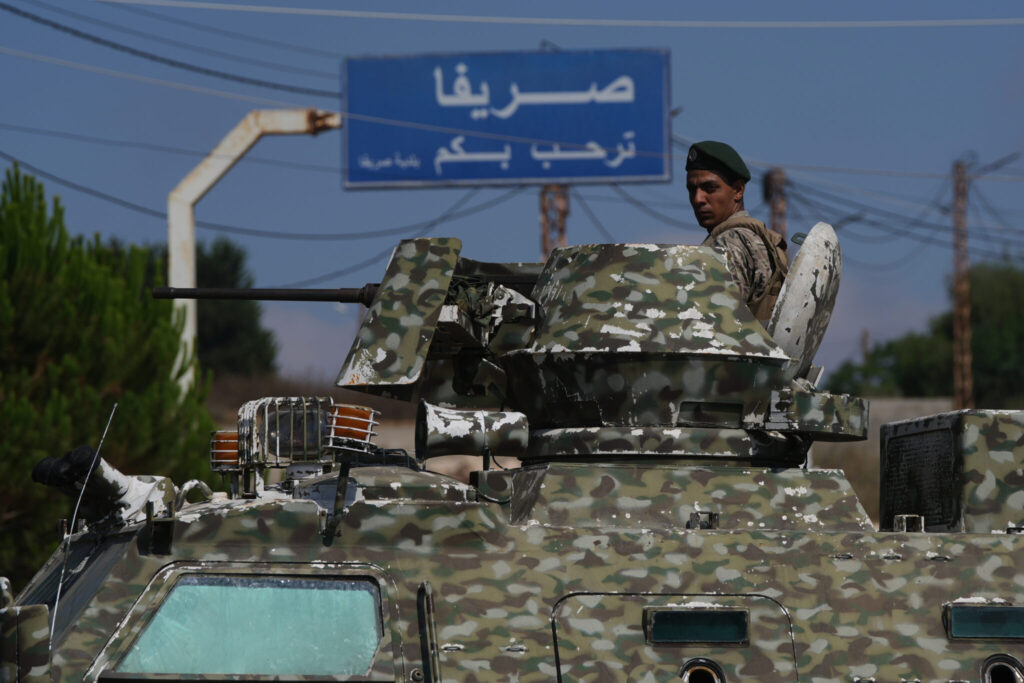
- The Lebanese army began deploying troops around Zawtar al-Gharbieh.
- Israeli troops had not begun withdrawing as of Tuesday, an Israeli official said.
- The Lebanese military reported Israeli fire near the deployment area.
- Secretary of State Marco Rubio promised US support for implementing the framework.
- Israeli officials have said forces could remain in a southern “security zone.”
- The war has killed more than 4,000 people and displaced 1.2 million in Lebanon.
Deep Look
Aoun Meets Trump at White House
WASHINGTON — Lebanese President Joseph Aoun met President Donald Trump Tuesday at the White House,
seeking American support for a lasting security arrangement following months of war between Israel and the Iran-backed Hezbollah militant group.
The meeting concluded Aoun’s four-day visit to Washington and marked his first talks with a US president.
It was also the first White House visit by a Lebanese president since 2009.
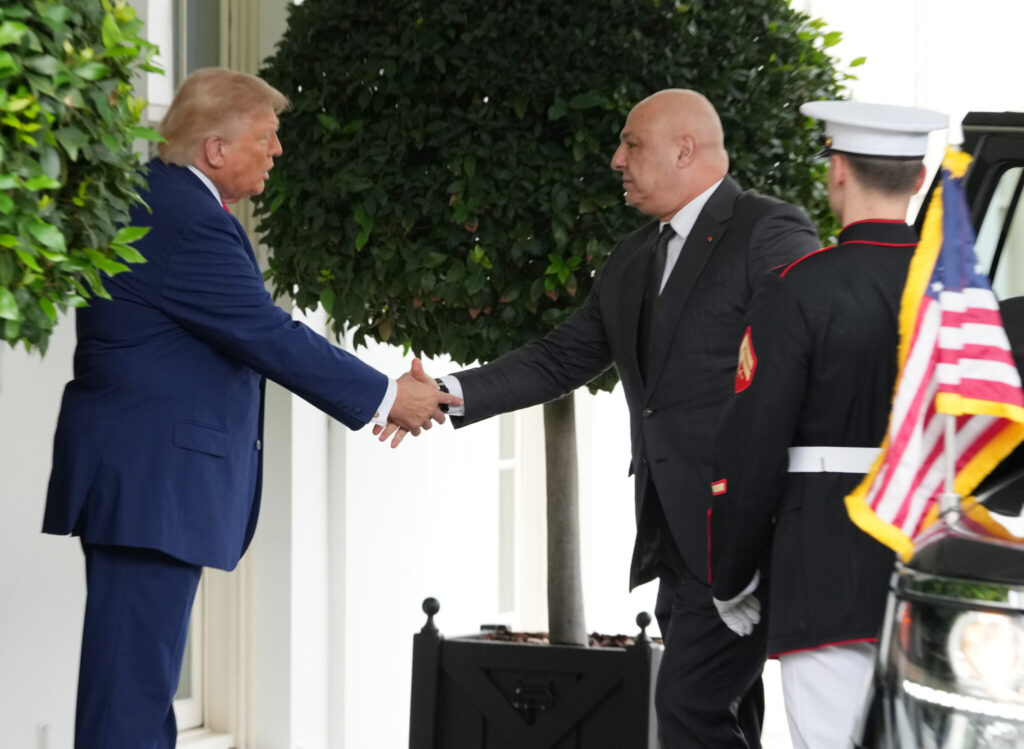
Trump greeted Aoun on the White House driveway, shook his hand and described him as “highly respected.”
Neither leader answered questions shouted by reporters about Lebanon and Israel. Trump pointed toward the White House and led Aoun inside.
Reporters were later invited into the Oval Office meeting, which had initially been listed as closed to the press.
Lebanon Seeks Israeli Troop Withdrawal
Beirut is also seeking additional international support for the Lebanese military so it can establish full control in locations previously dominated by Hezbollah.
Lebanese officials argue that a stronger national army is essential for maintaining security after an Israeli withdrawal and preventing armed groups from operating independently of the government.
Framework Includes Hezbollah Disarmament
Lebanon and Israel announced a US-mediated “framework agreement” on June 26.
The plan establishes a process for Israeli troops to withdraw from Lebanon and for Hezbollah to surrender its weapons.
It also outlines potential steps toward a future peace agreement between the neighboring countries.
Lebanon and Israel have never established formal diplomatic relations and have nominally remained at war for nearly eight decades, since Israel’s creation.
Their current direct discussions are rare and are being mediated by Washington.
Operations Begin in Three Pilot Villages
The State Department said Monday that operations had begun in three villages designated as a “pilot zone.”
Officials did not provide detailed information about the process.
Two villages, Froun and Srifa, are not under Israeli military control, and Lebanese soldiers are already present there.
Israeli forces occupy part of the third village, Zawtar al-Gharbieh.
The pilot project is expected to test whether the two sides can implement the broader security framework.
Lebanese Army Deploys Near Zawtar al-Gharbieh
The Lebanese army said it was preparing for Israeli troops to withdraw from Zawtar al-Gharbieh.
It began deploying forces Tuesday in anticipation of taking control of the area.
The Israeli military said it “will adjust its force posture in one of the pilot areas in order to enable the Lebanese Armed Forces to carry out their mission.”
Israel did not identify the specific location.
An Israeli military official said later that the withdrawal had not yet begun. The official spoke anonymously under military rules.
Israeli Fire Could Delay Deployment
The Lebanese military later reported that Israeli troops had fired near Zawtar al-Gharbieh.
It did not provide further details about the incident but warned that the shooting could delay the Lebanese army’s deployment.
Continued Israeli strikes and military activity have raised questions about whether civilians and Lebanese troops can safely enter areas included in the withdrawal framework.
Mayor Says Village Remains Uninhabitable
Zawtar al-Gharbieh Mayor Abed Ezzeldine said residents were waiting for the Lebanese army to confirm that it was safe to inspect their homes.
He expressed concern because Israeli troops remained in a neighboring village and Israeli attacks continued nearby.
“The villages are intertwined, so we don’t feel safe because the Israelis are present there, they’re on our borders and are not very far from us,” Ezzeldine said.
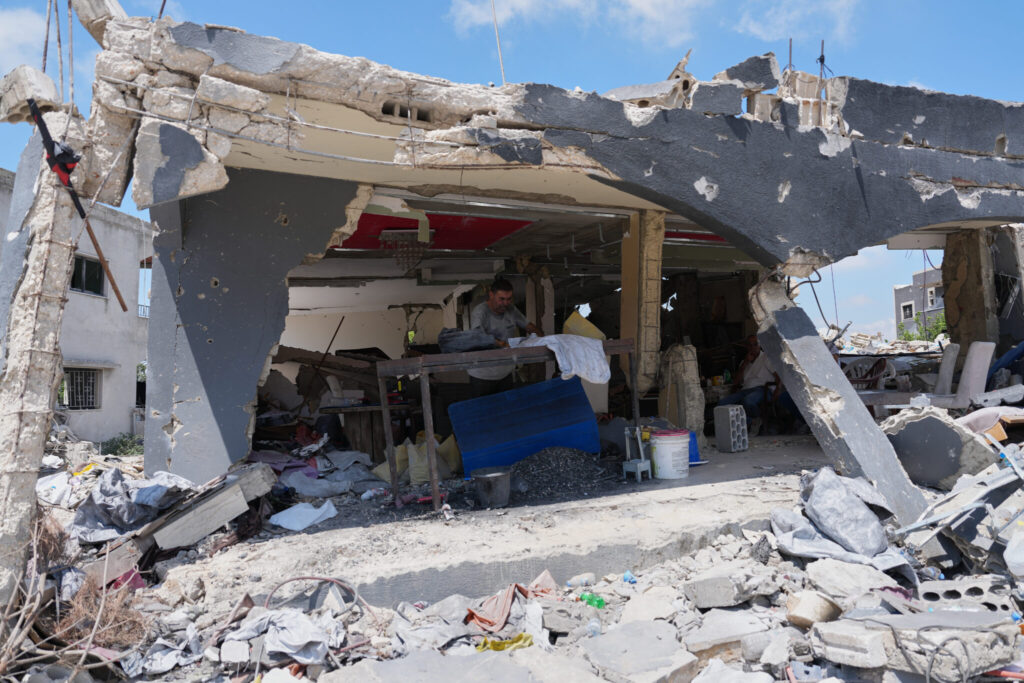
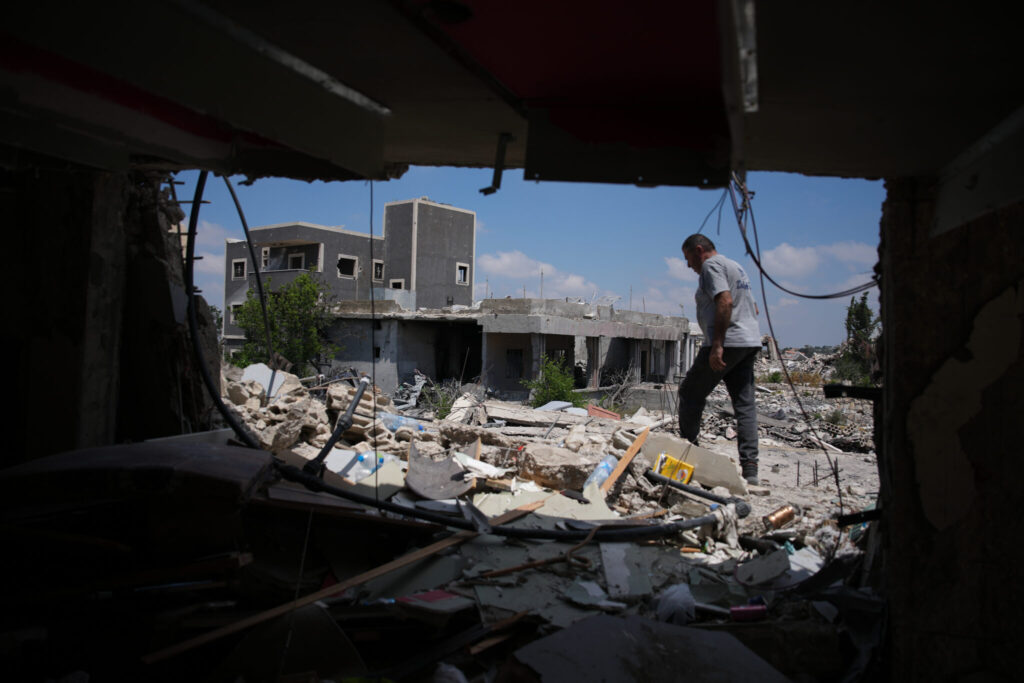
The mayor described Zawtar al-Gharbieh as uninhabitable because of extensive damage.
“Once the army gives us permission to enter Zawtar al-Gharbieh, we as civilians will go in, but only to check it out and see how things are and then we will leave,” he said.
“We can’t stay because the infrastructure is completely damaged and houses have been leveled. They (the Israelis) have bulldozed the roads.”
Lebanese Army Expands Southern Presence
The Lebanese military increased its presence last week in several areas expected to become part of the pilot zone.
Troops began patrolling and establishing checkpoints in and around the three villages.
Lebanon wants the army’s deployment to demonstrate that state forces can maintain security following an Israeli withdrawal.
The government says international financial assistance is needed to equip the military and sustain its operations across the south.
Rubio Supports Framework Agreement
Aoun met Secretary of State Marco Rubio Sunday as part of his Washington visit.
Rubio described their discussion as “very positive” and said the United States would continue supporting the Lebanese agreement and its complete implementation.
He warned that Lebanon would “never be fully at peace” until the issue of Hezbollah’s weapons and authority was resolved.
“How do you replace Hezbollah? You defeat and replace them with a government that is strong enough to be the sole force of arms in the country,” Rubio said.
Lebanese Officials Fear Internal Conflict
Some Lebanese officials and political observers fear that an attempt to disarm Hezbollah by force could trigger a civil war.
The militant organization maintains political influence and support within parts of Lebanon’s deeply divided society.
Lebanon’s government has called for international investment in damaged infrastructure, arguing that stronger state institutions will reduce Hezbollah’s power more sustainably than a military confrontation.
Rubio also emphasized the importance of economic investment.
“This is not just about military stuff,” he said. “This is about how can we attract more U.S. and international investment into Lebanon.”
Israel Signals Long-Term Military Presence
Israeli officials have said they intend to maintain forces in a southern Lebanese “security zone” over the long term.
That position could conflict with Lebanon’s demand for a full withdrawal and complicate implementation of the June framework.
Beirut maintains that restoring Lebanese sovereignty requires Israel to leave the country’s territory completely.
The disagreement remains one of the principal obstacles to a lasting security settlement.
Hezbollah Rejects Direct Talks
Hezbollah has dismissed the US-mediated talks between Lebanon and Israel.
Instead, the group supports negotiations between Washington and its primary ally, Iran, to end the wider regional war.
Hezbollah wants any agreement involving Iran to include an end to the conflict in Lebanon.
The group has not indicated that it will voluntarily disarm under the existing Lebanese-Israeli framework.
Lebanese Government Blames Hezbollah for War
Lebanon’s current government came to power in early 2025 on a reform platform.
It pledged to disarm all groups operating outside state authority, including Hezbollah.
The government blames Hezbollah for drawing Lebanon into another war with Israel in March.
Hezbollah fired rockets toward northern Israel two days after the United States and Israel attacked Iran.
Israel responded with a ground invasion and a major air campaign across Lebanon.
War Kills More Than 4,000
Lebanon’s government has condemned Israel’s military campaign, which has killed more than 4,000 people and displaced approximately 1.2 million.
The conflict has also severely damaged homes, roads and other infrastructure.
Lebanese leaders argue that an Israeli withdrawal and international support for the financially strained army are both necessary for a sustainable solution.
Aoun’s meeting with Trump was intended to secure Washington’s assistance in advancing those goals.




You must Register or Login to post a comment.