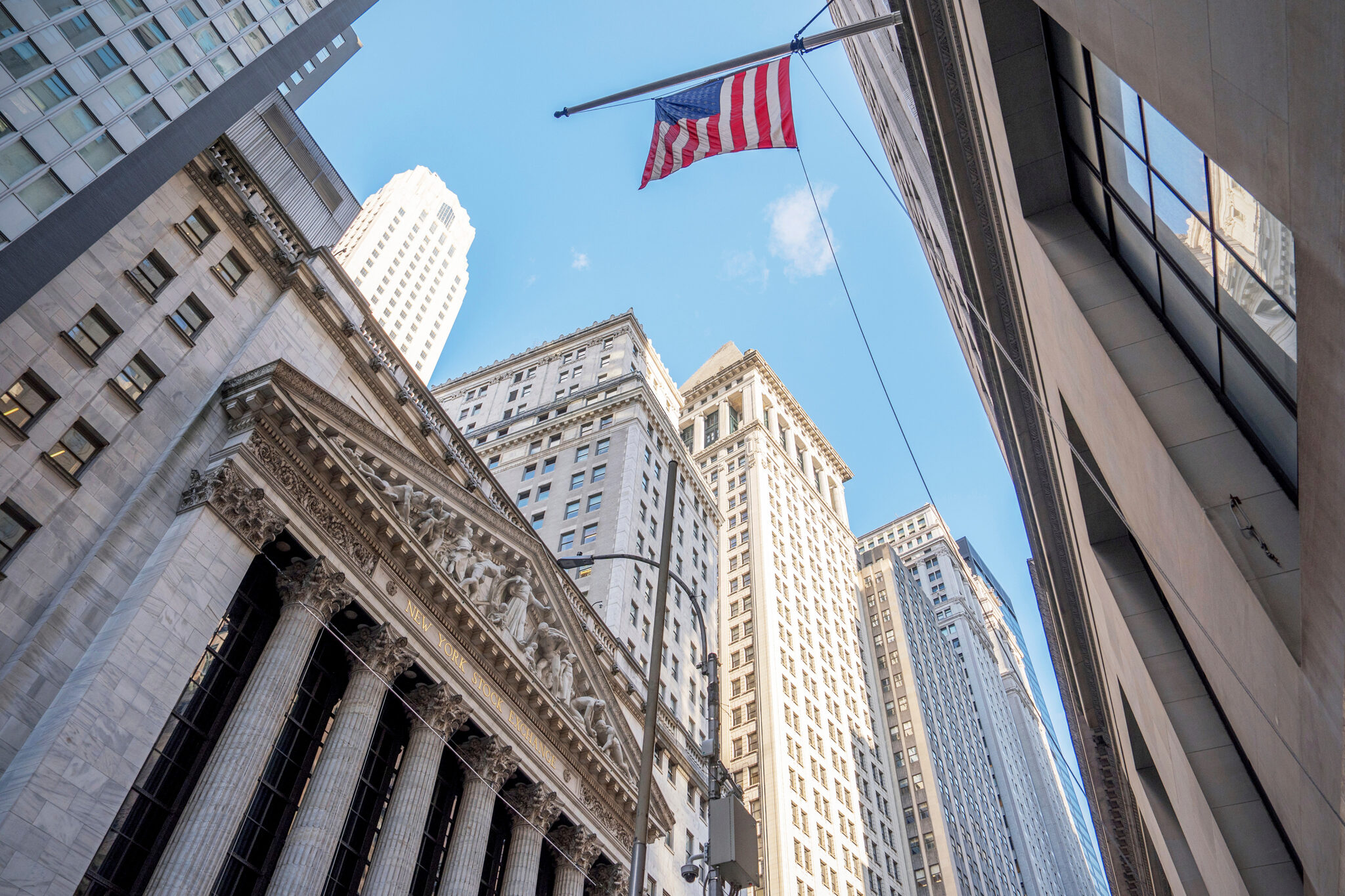
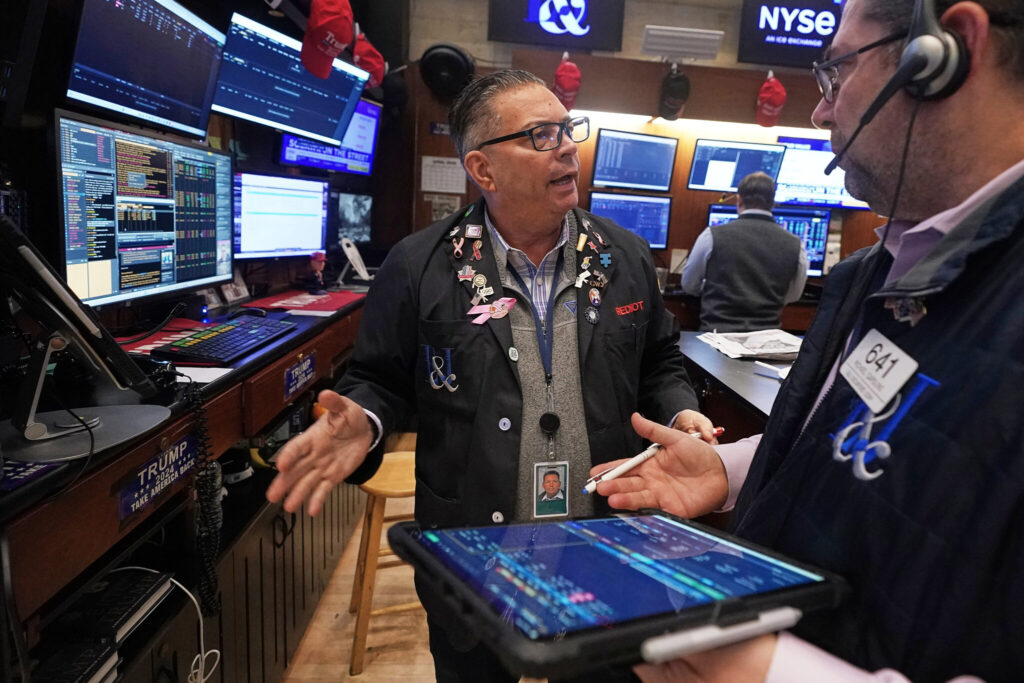
Wall Street Pulls Back as AI Selloff, Higher Oil Prices Pressure Markets/ Newslooks/ WASHINGTON/ J. Mansour/ Morning Edition/ Wall Street pulled back Tuesday as major AI stocks like Nvidia and Oracle dropped sharply while oil prices surged again due to continued tensions around Iran and the Strait of Hormuz. Investors are also watching upcoming earnings from major tech giants and the Federal Reserve’s next interest rate decision. Higher fuel prices and uncertainty around global energy supplies are adding fresh pressure to markets and consumers.
AI Stocks Oil Prices Quick Looks
- S&P 500 slips 0.5% from record highs
- Nasdaq drops 1% as AI stocks lead losses
- Nvidia falls 2.8%, Oracle drops 4.9%
- OpenAI spending concerns shake investor confidence
- Brent crude rises above $111 per barrel
- Strait of Hormuz remains effectively closed
- U.S. gas prices hit $4.18 per gallon
- Fed expected to hold interest rates steady Wednesday
Deep Look
Wall Street Rally Slows as AI Stocks and Oil Prices Hit Investors
Wall Street’s recent record-breaking rally lost momentum Tuesday as falling artificial intelligence stocks and rising oil prices created fresh uncertainty for investors.
The S&P 500 slipped 0.5% from its latest all-time high, while the Nasdaq Composite dropped 1% as technology shares led the decline.
The Dow Jones Industrial Average performed better, rising 116 points, or 0.2%, thanks to stronger performances from non-tech sectors like consumer goods and energy.
The pullback comes after weeks of strong gains driven by optimism around corporate earnings and hopes that the global economy could avoid major damage from the growing Iran conflict.
Now, both those assumptions are being tested.
Nvidia and AI Stocks Lead Market Declines
Some of the biggest losses came from companies tied closely to the artificial intelligence boom.
NVIDIA, whose chips power much of the AI industry, fell 2.8% and became the heaviest drag on the S&P 500.
Oracle dropped 4.9%, while CoreWeave slid 6.3%.
These companies have been among the biggest winners of the AI investment wave, but investors are increasingly questioning whether the enormous spending can continue.
The sudden weakness shows how quickly sentiment can shift when confidence in future growth starts to weaken.
OpenAI Spending Concerns Trigger Fresh Doubts
Much of Tuesday’s anxiety followed a report from The Wall Street Journal suggesting some leaders inside OpenAI are worried about whether the company can continue supporting its massive investments in data centers.
According to the report, OpenAI has missed targets for both new users and revenue growth.
That matters because OpenAI is seen as one of the key drivers behind the current AI spending boom.
If it slows down investment, critics argue it could confirm fears that the industry is becoming an expensive bubble built on expectations rather than profits.
Investors are now asking a critical question:
Is all this spending actually producing enough returns to justify it?
Big Tech Earnings Could Decide the Next Move
The market may get major answers this week.
Several of the biggest technology companies driving AI investment are scheduled to report quarterly earnings on Wednesday.
These include Alphabet, Amazon, Meta Platforms, and Microsoft.
Apple will report Thursday.
These results could shape investor confidence for the rest of the year.
Strong earnings may calm fears.
Weak guidance could deepen the selloff.
Oil Prices Climb Again as Iran Conflict Continues
At the same time, rising oil prices are adding another major source of pressure.
Just two months ago, Brent was trading near $70.
Now it is moving closer to the $119 peak reached during the most intense fears surrounding the Iran conflict.
The key issue remains the near-closure of the Strait of Hormuz, one of the world’s most important shipping routes for oil.
With tankers stuck in the Persian Gulf and the U.S. blockade of Iranian exports still in place, supply concerns are keeping energy prices elevated.
Strait of Hormuz Remains the Global Pressure Point
The Strait of Hormuz is one of the most strategically important waterways in the world.
A major share of global oil exports passes through it during normal times.
Its effective closure is creating major disruption not only for oil but also for liquefied natural gas, fertilizer, and shipping supply chains worldwide.
Iran has reportedly offered to reopen the strait if the United States ends its blockade and postpones discussions over Tehran’s nuclear program.
But the Trump administration appears unlikely to accept that proposal.
Secretary of State Marco Rubio suggested Monday that delaying nuclear negotiations is not an option.
That means the standoff may continue.
U.S. Drivers Feel the Pain at the Pump
Higher oil prices are already hitting American consumers directly.
According to AAA, the average national price for a gallon of gasoline reached $4.18 on Tuesday—the highest level since 2022.
That increase creates both economic and political pressure.
Consumers feel it immediately, and rising gas prices often influence public confidence about the economy.
For the White House and the Federal Reserve, that makes inflation even more difficult to manage.
Coca-Cola and Oil Companies Help Limit Losses
Not all sectors struggled Tuesday.
Coca-Cola rose 5.1% after reporting stronger-than-expected profit and revenue.
The company credited strong performance in China, the United States, and India for the results.
Energy companies also benefited from higher crude prices.
Exxon Mobil gained 1.7%, while ConocoPhillips rose 1.2%.
In London, BP climbed 0.9% after saying first-quarter profits more than doubled.
These gains helped prevent broader market losses from becoming worse.
Federal Reserve Decision Looms
Investors are also focused on Wednesday’s Federal Reserve meeting.
Most traders expect the Fed to leave short-term interest rates unchanged.
Lower rates would support economic growth and help markets, but they also risk worsening inflation—especially when energy prices are rising and tariffs are pushing up costs across multiple industries.
That balancing act is becoming harder.
The Fed must decide whether inflation risks are too high to justify cuts.
Jerome Powell’s Final Meeting as Chair?
Wednesday may also be the final Federal Reserve meeting led by Chair Jerome Powell.
His term as chair is scheduled to end next month.
President Trump has nominated Kevin Warsh to replace him, and the Senate Banking Committee is expected to advance that nomination this week.
Markets will be watching closely for any signs of policy shifts under new leadership.
Interest rate expectations can move stocks, bonds, mortgages, and consumer borrowing costs almost instantly.
Global Markets Also Show Caution
Markets overseas reflected similar caution.
European indexes mostly declined.
In Asia, Japan’s Nikkei 225 fell 1% after the Bank of Japan chose to keep interest rates unchanged following a split vote.
The central bank specifically cited uncertainty in the Middle East as a major risk to its economic outlook.
That shows how closely global markets are tied to the same energy concerns affecting Wall Street.
Investors Enter a Critical Week
This week could define the direction of markets for months.
AI earnings, oil prices, Fed policy, and Middle East tensions are all colliding at once.
The recent rally was built on confidence that profits would stay strong and global risks would remain manageable.
Now investors are testing both assumptions.
If earnings disappoint and oil keeps rising, the market’s record-setting momentum could fade quickly.
For now, Wall Street is pausing—and watching very carefully.